- How to Watch the Oiran Parade at Edo Wonderland, Nikko - 15 October 2026
- 8 Mistakes Not to Make in Autumn Leaf Season in Japan - 10 October 2026
- How to Spend One Day in Nara - 29 September 2026
Most people visit Hiroshima to see the Peace Museum and the Atomic Dome, but if you have more time, Hiroshima can also make a great base to stay for a few days with lots of interesting day trips available from the city. Here are ten you might want to try if you do make this historic city your base for a few days.
1. Miyajima Island
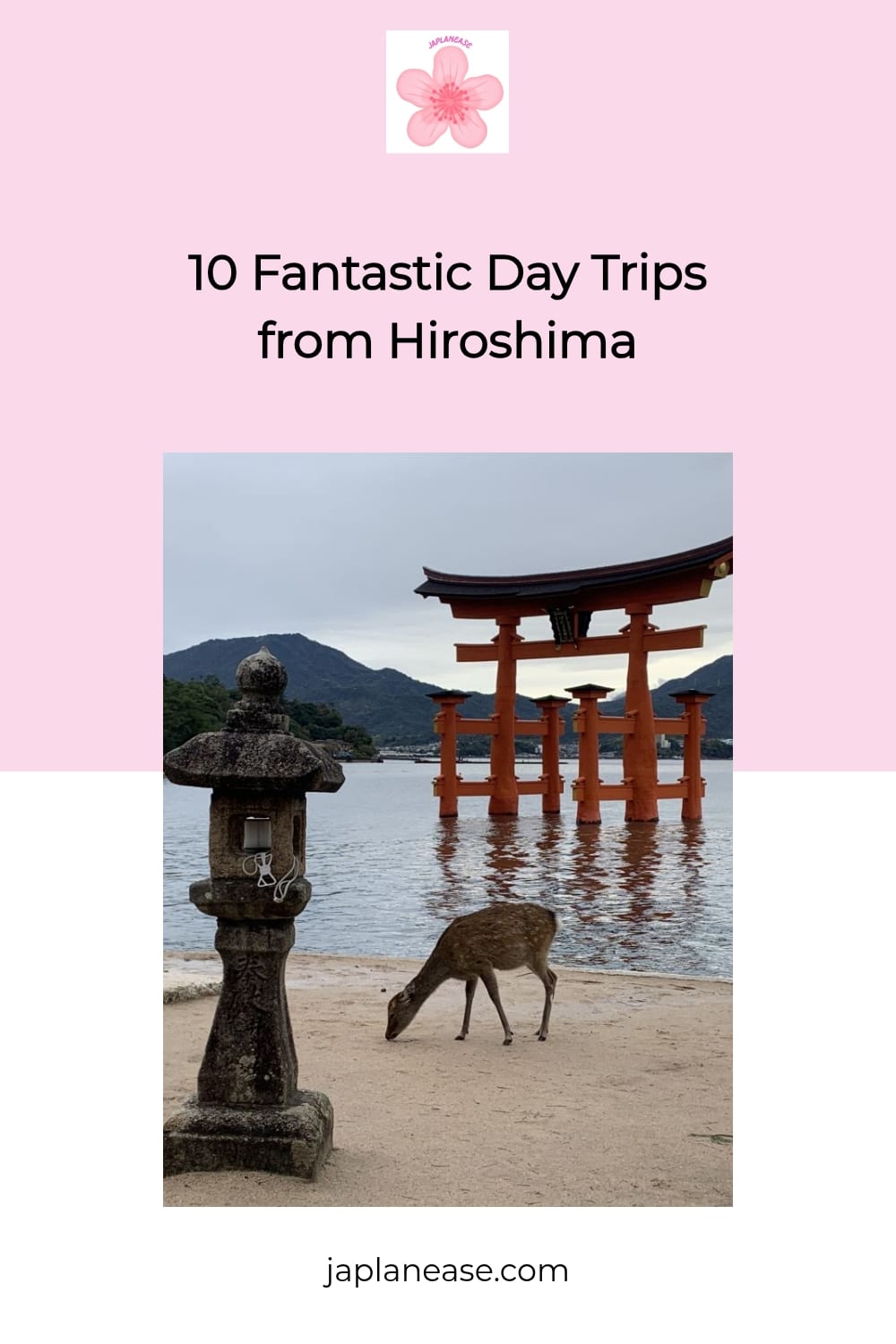
It’s the most common day trip from Hiroshima. This pretty island, with its iconic floating tori gate and herds of friendly deer trotting around, is 60-90 minutes away from Hiroshima, so it’s very easy to visit as a half-day trip from Hiroshima – but a longer day trip helps you explore more of the island.

Article by Helen Foster. Disclosure: Some links in this post are affiliate links. See our Affiliate Disclosure.
Once you’ve viewed the pretty torii gate, you can soar into the sky on the Mount Misen ropeway, eat Miyajima oysters and see some of the less well-known shrines, temples and buildings on the island. I sat for at least half an hour in the imposing space that is Hokoku-jinja, alone. I loved being perched high on the hill, just looking at the view and the artworks on the ceiling. See more details in our guide to the best things to do in Miyajima.
How to Get There
If you’re in the middle of Hiroshima, a ferry directly from the dock in Peace Park will take you to Miyajima in about an hour. It costs 2200 yen (on the day I write this).
Or you can catch the train from Hiroshima Station to Miyajima-guchi and catch the ferry from there. This takes about 53 minutes and costs 820 yen (on the day I write this).
When deciding how to get to Miyajima, it’s important to understand how the tide times affect traveling to the island. See more here.
If you’d like to learn a little bit about the island and shrine while you visit, you can also book a half-day walking tour (the price includes your ferry ticket).
2. Saijo Sake Town
I spent a fantastic morning learning all about sake on a tour of this area, an easy 42-minute train ride from Hiroshima Station.
The area is home to seven different sake breweries; my tour visited three of them. The exact mix of breweries you’ll visit varies by day, but the day I went, I got to try a delicious sake that was the drink chosen to serve to President Barack Obama when he visited Japan (and it was so good I bought a mini bottle to take home), and, at our last stop, I had the nicest plum wine I have ever tasted.

The area is still new to international tourists, and I was the only person there the day I traveled. But don’t let that put you off; this is a fantastic introduction to sake in a lovely old town.
Book the tour here. Don’t forget if you use the code JAPLANEASEKLOOK at checkout, you can get up to 10 per cent off some tours and tickets on Klook (T&Cs apply).
If you’d like more details, see our longer review of the Saijo Sake Tour
How to Get There
So easy. You just catch the Sanyo Line from Hiroshima Station to Saijo Station. The tour leaves from the Tourist Information Office in the station.
3. Iwakuni
Iwakuni is home to a large US military base, and, every so often, as you wander around, you’ll be buzzed by the sounds of fighter jets – but it’s also a pretty town, with a gorgeous bridge and a lot to fill a day trip. The park on the other side of the bridge is full of museums, a small castle, and other attractions that can easily amuse you for half a day alone.
Make sure you see the Kintaikyo Bridge, take the ropeway up to the castle and visit the white snake museum to see these fascinating albino reptiles that call the area home.

How to Get There
Take the JR Sanyo Line from Hiroshima to Iwakuni Station (50 minutes). A short bus ride from there will take you to the bridge area and from here you can walk everywhere you need to go. It’s easy to find the buses, and everything is clearly signposted in English.
If you’d prefer someone else dealt with the logistics, you can book an Iwakuni tour that picks you up at Iwakuni Station and takes you to the bridge and the castle.
4. Takehara Townscape Conservation Area
This is the only area on this list that I haven’t personally visited as, despite having three nights in Hiroshima to allow for lots of exploration, a rainy afternoon that slowed me down meant I ran out of time to get here – but it’s on the list for an upcoming trip as I definitely feel like I’ve missed out.
Takehara is an Edo-period town most famous for its area of Preserved Streets where you can wander through well-preserved wooden townhouses and old merchant homes – if you like the look of Kyoto or Kanazawa, but don’t like the crowds, this has a very similar feel – no wonder it’s known as the ‘Little Kyoto of Aki’.
You can also visit the sake brewery here, although if sake is your thing, you must go to Saijo as well.

How to Get to Takehara
The easiest route is to take a bus from Hiroshima Bus Station. You can find the timetable and details about the bus here. It is not a local bus, but more like a coach so it will be relatively easy to find and catch. You can get off at Takehara Station and walk to the preserved streets area. You buy tickets on the bus, and they take cash or loaded IC cards like Suica.
If the idea of a bus/coach is a bit daunting, you can take JR Sanyo and Kure Line from Hiroshima to Takehara Station (70 minutes), changing at Hiro on the way. The trains don’t run that regularly, so check the times and plan your trip in advance.
You can also book a tour that takes you from Hiroshima to Takehara and not only shows you around but lets you take part in the salt-making industry the area was founded on. You’ll also practise the art of ikebana and go to nearby Mihara for a Daruma mask painting class. All transport is included. See more about this all day Takehara tour here.
The Rail Pass to Consider
If you are basing yourself in Hiroshima and hoping to make a few day trips by train, then definitely look into the Kansai Hiroshima Area Pass. This costs 17,000 for five days and could take you on every day trip on this list – and further afield if you really want to get your money’s worth.
If you’re traveling between Hiroshima and Shin-Osaka it will also cover your bullet train trip to get there and back. And it goes as far as Tsugara, which is on the way to Kanazawa. I used this on my Hiroshima trip, saving me a lot of money. I think it’s one of the best rail passes in Japan.
5. Setoda (Ikuchijima)
This town and the fantastically over-the-top Kosan-ji shrine within it turned out to be one of my favourite places on one of my recent trips. You can wander the quiet main street, spotting all the goods made from lemons (the island’s specialty fruit) as you head to the ornate temple complex that’s the main attraction around here.
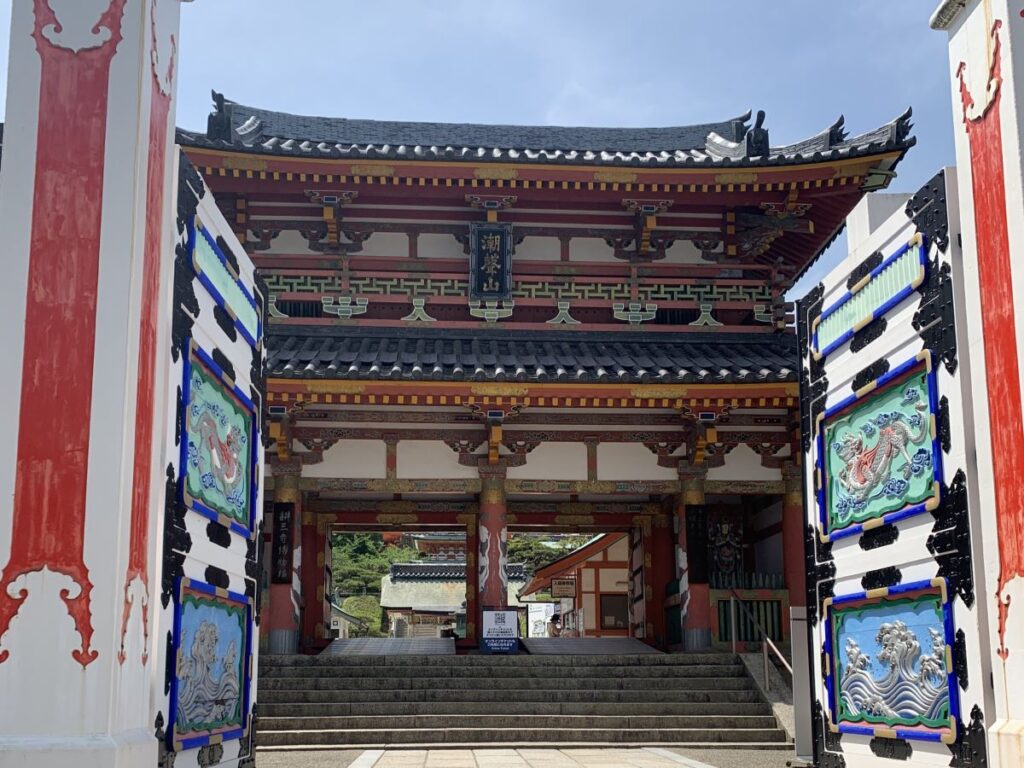
An Osaka businessman built Kosan-ji for his mother, and it’s just a bit over the top!
See more pictures and find more tips on what to see and, especially what to eat, in Setoda in our longer post on the town.
How to Get There
Setoda is located on the island of Ikuchijima. From Hiroshima, take the Shinkansen to Mihara Station (30 minutes) and catch the ferry from there (28 minutes).
Find the offical ferry timetable here or, if you prefer to try and check it in English, Navitime have a version here, just make sure you compare to it the official one to ensure it’s up to date.
6. Okunoshima (Rabbit Island)
Why would you not want to take a day trip to an island full of friendly rabbits on your holiday? Okunoshima, famously known as Rabbit Island, has a dark history as it was used to create and test poison gas during the war, but now it’s overrun with cute, twitchy-nosed furballs who are desperate for a pat or treat.
You can find more details on how to spend a day on Okunoshima in our longer post about visiting Bunny Island.

How to Get To Bunny Island
If you have a rail pass that includes the Shinkansen, catch this from Hiroshima Station to Mihara Station (30 minutes), then take the local train to Tadanoumi Station (25 minutes). From there, it’s a 15-minute ferry ride to Okunoshima. Just check the train timings carefully to make sure your Shinkansen meets the local train without a big gap
If you don’t have a pass, it’s around 2000 yen cheaper to take the local train between Hiroshima and Tadanoumi, although the journey takes a little longer. You can catch the Sanyo Line to Mihara and the train to Tadanoumi as above.
Or, take the Sanyo Line to Hiro and change trains there. This route takes longer, but, depending on the time of day, may still get you to Tadanoumi faster than the quicker route so, check Google Maps for the best option at the time you want to travel.
The bus to Takehara that I mentioned above ends its journey in Tadanoumi. It takes about an hour and 40 minutes and departs from Hiroshima Bus Station.
You can also book a tour of the island that also takes you to Takehara.
Need Extra Planning Help?
Our Japan trip planners can help. You might like our First-Timers Japan Planner, which will help you plan your trip to Tokyo, Kyoto and Osaka step-by-step, including tips on everything from picking hotels to sightseeing and dining. Or our super-duper Tokyo Disney Planner makes arranging your park trip MUCH easier. Find them in our Planners store – printable and digital versions are available.
7. Naoshima (Art Island)
This is quite a long day trip from Hiroshima, and because there’s a lot to do there you’ll need an early start and a late finish. So, while it’s doable, you might want to see if it’s possible to build in an overnight stay in Okayama on your way to or from Hiroshima or stay overnight in Naoshima itself to allow yourself more time. If you don’t have enough time in Japan to stretch to this, though, it can be done as a day trip, but you won’t see everything.
Naoshima is a must-visit for art lovers, known for its contemporary art installations and museums. There’s a lot to see here, including the Benesse House Museum, the Chichu Art Museum, the amazing Art House projects, and the island’s most recognisable sight – Yayoi Kusama’s Pumpkin Sculptures.

See more about how to schedule your day – and how to buy tickets to the various art exhibits in our guide to visiting Naoshima.
How to Get There
From Hiroshima, take the Shinkansen to Okayama Station (35 minutes) and transfer to a local train to Uno Port (50 minutes). Then, take a ferry to Naoshima (20 minutes). You can find the ferry times here.
Do You Want to Ride the Hello Kitty Shinkansen?
Then, taking a day trip from Hiroshima is actually a really great way to do it. The train leaves Hiroshima at 8.38 am, and it calls at Mihara, Onomichi, Shin-Kurashiki and Okayama early enough to allow for a decent day’s exploration.
See more about riding the train and find the exact timetable in our guide to the Hello Kitty Shinkansen.
8. Onomichi
It will take about two hours to reach the town of Onomichi from Hiroshima, but once you arrive, you’ll be greeted by a charming port town winding its way up into the hillside—and a retro shopping street that will make you wonder what year it is, but that still manages to hide cute modern cafes and artworks behind its Showa era facades.
The top sights here include the Temple walk, a trail connecting 25 historic temples, including the hilltop Senkoji Temple. Sensible people will take the ropeway up to this and then walk back down – I wasn’t sensible and my knees hated me after about 20 minutes of climbing upwards!
I also wasn’t sensible as I tried to combine Onomichi and Setoda on the same day – this was a bad idea as I meant I missed out on things in both places. They both deserve a day or at least the majority of one.

How to Get There
If you have a pass that contains the Shinkansen, one quick way to get to Onomichi is to take the Shinkansen to Fukuyama (maybe popping in to see the small castle near the station on the way) and then backtracking back to Onomichi on the local train. If you get your timings right, this can take as little as 50 minutes.
You can also catch the bullet train to Mihara (25 minutes) and link up with the local train to Onomichi (13 minutes), which will cost a little less.
The cheapest, easy route to get there is to take the Sanyo Line train from Hiroshima Station to Itozaki Station and then change to service for Onomichi. This takes about 90-100 minutes of travel time but only costs 1520 yen, taking the Shinkansen is double that.
Check the time of the connecting trains carefully, though, as there might be a wait. Try to time your journey for the shortest wait possible to cut down on the time.
9. Okayama
I have stayed here a couple of times as it’s a great jumping-off point for day trips, but it also makes a great half-day trip in its own right.
The highlights include the beautiful Korakuen garden, which I personally thought was prettier than the one in Kanazawa and which is not nearly as crowded. There’s a castle and the Kibitsu-jinja shrine complex, a short train ride out of town, which is famous for its 400-metre wooden walkway, but the rest of the complex is huge and also worthy of a few hours of exploration.

How to Get There
If you take the Shinkansen, Okayama is just a 35-minute train ride away from Hiroshima. It’s a bit too far to do on the local trains. It will cost around 6200 yen, so, again. If you want to come this far on your day trips, I definitely consider if the Kansai Hiroshima Pass is worth it for you.
10. Kurashiki
This pretty canalside town is a very popular day trip destination. You can spend time wandering around the many gift shops, cafes and restaurants of the Bikan Historical Quarter, eat blue ice cream on Denim Street and visit some fun museums like the Moneybox Museum which is crammed to the gills with old toys, old money boxes and other assorted tat – some of which is for sale.

How to Get There
Take the Shinkansen to Okayama (you could easily visit the garden and museum and then head to Kurashiki afterwards) and then the local Hakubi Line to Kurashiki. It will take about an hour from Hiroshima. The Bikan Historical Quarter is a short walk from the station.
So there you have it. Ten interesting trips that might encourage you to stay a little longer in Hiroshima and explore some less well-known and less-crowded destinations from here instead of one of the more common cities like Osaka or Kyoto