
- How to Watch the Oiran Parade at Edo Wonderland, Nikko - 15 October 2026
- 8 Mistakes Not to Make in Autumn Leaf Season in Japan - 10 October 2026
- How to Spend One Day in Nara - 29 September 2026
Now reopened after four years of renovation, the Edo-Tokyo Museum has over 9,000 square feet of exhibition space, but what’s inside, what’s new and is it worth visiting for English speakers?
‘Overwhelmed’ was my thought as I left the Edo-Tokyo Museum. And not the normal way that Tokyo overwhelms you with lights, noise, hustle, bustle – instead, I was overwhelmed with facts, details, charts and family trees of the shogun – and how you respond to that statement will determine whether you will absolutely love your visit here or want to run screaming toward the nearest teamLab building to lie on the floor watching digital flowers float across a ceiling!
If it’s the former – read on. If it’s the latter, head to our guide about which teamLab is right for you instead.
No, seriously – you can still enjoy the museum without taking in a trillion facts about samurai history. And this guide will tell you how.
What’s The Edo-Tokyo Museum About?
The point of the Edo-Tokyo museum is to show how Tokyo evolved from Edo, a relatively small trading town, to one of the world’s biggest and most populated cities in just 400 years – and it does it in immense detail.
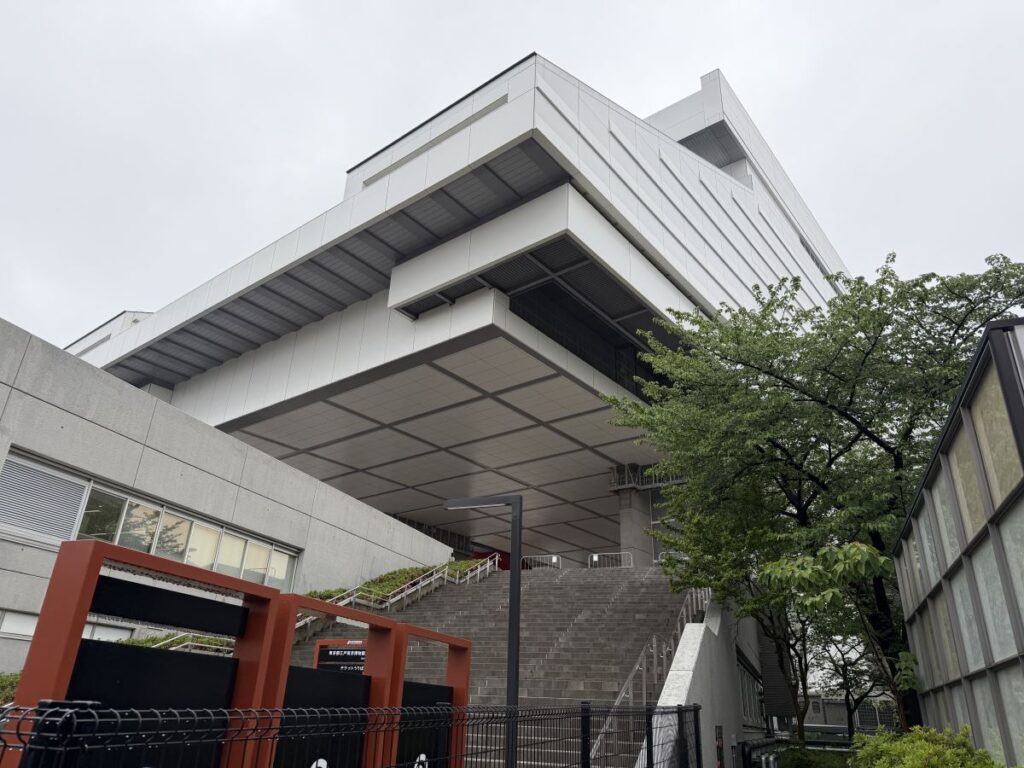
The museum is located on floors 5 and 6 of the huge, modern, Kiyonori Kikutaki-designed building in the Ryogoku area of Tokyo
You enter on ground level, then take the lift up to the 6th floor, then work down to the 5th floor.
What’s Inside The Museum?
The museum mixes different types of displays to convey the history of how Edo evolved and to give a feel of what it was like living there. It’s meticulously done, and history buffs will be in heaven. You’ll find…
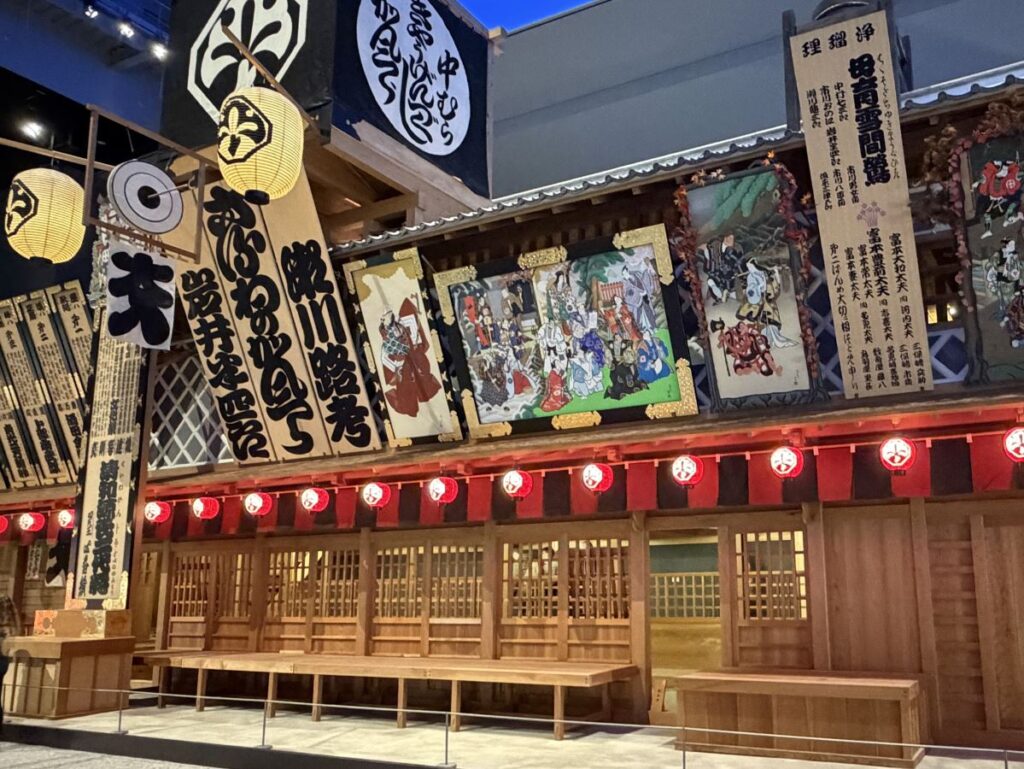
- Large-scale models of important buildings like the kabuki theatre above, or day-to-day ones like shops or houses, so you can see how people lived.
- Smaller diorama-style models, like street scenes full of tiny people living their daily lives in Edo, that you can spend ages spotting details in.
- Exhibits you can move, sit in or play with. These are the fun parts of the museum that help you bring Edo to life as you wander around, seeing if you can fit into one of the palanquins that the ladies of the day were carried around in or lift carrying poles weighted so you can see how much the traders of Edo carried on their shoulders every day.
- Traditional museum-type cases containing artifacts and objects – the first group you see, full of samurai armour, is particularly impressive, and the detail on the helmets is fascinating.
- Written information – knowledge panels, charts, documents, etc. – that explain everything you’re seeing.
What Changed During the Renovation?
The four-year renovation of the Edo-Tokyo Museum that took place between 2022 and 2026 was mostly to bring the building up to modern standards, better earthquake resilience, waterproofing, new air-conditioning and improving accessibility. There’s even a section of glass floor where you can see the new earthquake ‘springs’ that they added.
However, if you’ve been to the museum before, you’ll also notice a few changes to the exhibits that might mean it’s worth a second look.

The main one is the new, historically accurate recreation of the Hattori Watch Shop – pictured above. Those aren’t model figures underneath it – they are actual people, which shows its scale. This has replaced the former Asano Newspaper Company model. Another big change is that the recreated Nakamuraza Kabuki Theatre is now a walk-through exhibit.
Additionally, more accurate historical details have been added to some of the smaller models, and more English information has been added around the museum.
New Edo street scenes, including a tempura stall and a morning glory flower seller, have also been added.
The 6th Floor of the Edo-Tokyo Museum
This is where you enter the museum, and when you first leave the lift, you come face-to-face with a life-sized replica of the Nihonbashi bridge stretching metres into the distance. This leads you toward the main exhibition area.
To your left, peer over the railing and you’ll spot a full-scale model of the Nakamura-za Kabuki Theatre. On the right is the new model of the Hattori Watch Shop.
At this point, you can’t see anything else, and I admit I thought ‘Is that it?’ but no… the main displays are hidden by white curtains at the end of the bridge.
Pull back those curtains, though, and you step back in time 400 years to Edo.

Here you’ll find a crash course in the history of the founding of modern Japan.
There are some attention-grabbing, intricate models and exhibits of samurai outfits with those helmets that need to be seen to be believed – but the jewel in the crown, if you love history, is a timeline that runs around the room explaining how the whole feudal system worked.
My advice, if you do want to understand all of this, is to take your time in this section and go through it in chronological order. If you jump around, it makes no sense. There are a lot of names and titles to understand. Once you’ve got your head around it all, you can head down the escalator to floor five.

If you aren’t interested in knowing the ins and outs of Edo history and society, skip the charts and display boards and enjoy the more traditional exhibits of things like samurai armour and the models of daily life in Edo – and then head downstairs where things get a bit less scholastic!
Exploring The 5th Floor of the Museum
This is split into two sections – Edo and Tokyo.
Edo is all about old Tokyo, where people lived, how they made their living, what they wore, ate, read, and watched. There are nine different areas to explore, each covering a different subject.
You then walk into the Tokyo section. This starts at the Industrial Revolution and follows a timeline covering modern Japan and pop culture. It shows what makes Tokyo the city it is today.
This has 10 different areas.

Small details like the stall selling giant-sized sushi, showing how the food had changed over time, were really interesting. And I did learn a lot here.
Again, there’s a mix of normal museum-type pieces, small models and walk-through sets in this area. I did feel that the exhibits of actual historical items on the Edo side were a little bit lacking, but not only does the museum rely on personal donations of items to create its exhibitions, they also say that one of the things they emphasised in the renovation was ensuring that the galleries placed emphasis on how ordinary people actually lived and the city’s evolution, rather than simply displaying artefacts.
I loved the displays in the Modern Tokyo area, though. You’ll find best-selling toys and technology, typical meals and other trends of the time that give a real idea of what day-to-day life was like.

It was particularly interesting to see an area on COVID (included mainly for how it impacted the 2020 Tokyo Olympics), as it made me realise that while we were making sourdough and doing Zoom trivia, we were also living through an era of history that people will be talking about in the future, in the same way as we studied the plague back in school.
How Much English is There?
I’ve been to some museums in Japan that don’t translate anything into English, so you have to wander around oblivious or wave your phone around hoping Google Translate picks up the important parts. This is not like that.
There’s a lot of translated information. And not just English – some displays have an electronic panel next to them, which translates that text into other languages.
There is also an audioguide in English and other languages.

Two small criticisms – the panels on the traditional exhibits aren’t always quite so thorough. For example, there is only one line of English on this display of samurai armour, while the Japanese description flows on for a while, explaining exactly what the garments are made of. Google Translate is your friend here if you do want to read more.
Also, not all the charts are translated – only the headlines are. This means you can see what the chart is about, but not really decipher all the information within it, which can be a bit frustrating if you’re stuck beside someone who can – and is spending a few minutes taking it all in.
But, in general, this is an amazing place to learn about Japanese history, even if you don’t speak a word of the language.
Is It Worth Visiting?
At just 800 yen for entry, this is an easy yes – especially if you’re a history lover.
You’ll learn so much. This museum’s strength is the sheer depth of information: knowledge panels and charts lining the walls that walk you through 400 years, step-by-step, plus larger-scale exhibits that help you experience what life was like.
But that’s also its challenge. It’s a lot, especially in the early Edo section covering the Tokugawa hierarchy, and if you don’t already have a basic grasp of that history, it can get overwhelming fast.
Also, if it’s a busy day, the pace through that first section can feel glacial as there’s more to read in Japanese than English, but skip ahead and you lose the thread.

The fifth floor is more forgiving, letting you wander at your own pace. I loved learning about the everyday life of people in the Edo area – but also about modern Tokyo. I particularly enjoyed how the displays here covered social trends. Who knew there was a craze for flower-covered thermos flasks in Tokyo in the 1970s?
There were some areas I wish I’d been covered in a little more detail – but I guess even in a space as big as this, they have limitations.
All in all, I really enjoyed the museum, especially the 5th Floor – and it was a fantastic way to escape truly awful weather for a morning (although this did increase the crowds). The surrounding area also has a lot going for it, as it’s the home of Sumo in Japan and also home to a couple of other interesting museums, so it’s definitely worth checking out while you’re here.
If you do decide to visit, make sure you read the next section, though, as it will help you have the best day.
Tips for Enjoying the Museum
While wandering around, I came up with a whole heap of tips that I wish I’d had before my visit…
If You’re Not a History Buff
If you’re not hugely into history or travelling with children who might get bored easily, the best tip I can give is to focus on the parts of the museum you enjoy. There’s enough variety in here to do that.
You might want to focus more on the exhibits, models and mini towns on the 6th floor and skim the wealth of information around the edge so they aren’t done before you’ve even got to the next floor, which is bigger.

If you LOVE History
- Budget a whole day. If you’re genuinely interested, this isn’t a quick walkthrough. It will take you a full half day to visit (at least) – but there’s also a lot of interest in the surrounding area, so combining the two can easily take a full day of your itinerary.
- Brush up on Tokugawa Ieyasu. The first section leans heavily on his importance in growing Edo – and there’s a lot on family trees and political structure; it can all be a bit much to take in, in one go. Having an idea of who he was before you go in might help, as you can skip a few bits.
- Avoid weekends, Golden Week (or other peak periods) if you can. I visited on a rainy day in Golden Week, just after the museum reopened, so the crowds were at their peak. It’s a big space, so this wasn’t a problem in most areas, but as I said, in the first section, you can get stuck behind people moving more slowly, as they can read everything you can’t! This can be frustrating, but if you skip ahead, you’ll get lost. Go at a time when there might be fewer local guests.
- Use the re-entry policy to your advantage. You can go in and out of the museum. If you’re reaching ‘knowledge saturation point’, take a break after finishing the Edo section, before moving into Modern Tokyo – it gives your brain a chance to reset. Step outside, grab some air, a coffee or lunch at the on-site cafe or restaurant.

- Check what each section is about as you enter: It’s easy to lose your bearings on the 5th floor as the rooms connect in unexpected ways, and it can get confusing. I found it helped to anchor myself by checking what the room was about when I entered, so I knew if I was about to read about publishing or the pleasure district.
- English speakers are well catered for overall, and many displays have electronic multilingual translation panels – but the printed English descriptions are noticeably shorter than the Japanese ones in some places, so you won’t always get the full nuance from text alone. Google Translate is your friend here.
- If you’d rather listen than read, hire the audio guide (available in multiple languages via smartphone) – but remember, it’s not the done thing to use your phone on speaker, so bring your own headphones if you don’t want to hold your phone to your ear for extended periods.
- There’s a cafe and restaurant on-site, so you don’t need to leave for food if you want to make a full day of it.
Opening Hours And Ticket Prices
The museum is open six days a week – closed on a Monday – from 9.30 am to 5.30 pm most days. There are extended opening hours until 7.30 pm on Saturdays and some Friday nights.
Admission to the permanent exhibitions described above costs 800 yen for adults. Those over 65 pay 400 yen, University Students pay 480 yen, High School Students (15-17 years old) pay 300 yen, and those under enter free.
The museum also has temporary exhibitions with an additional entry fee. Check the website for details on those.
Other Questions
A few other helpful points to know…
Do You Need to Book in Advance?
I wished I had! As I said, I went during Golden Week on a day of heavy rain, and the queue was lined up in rows outside the building – it looked more like Disneyland than a museum.
There was instructions to book online, but I could only get the site to work in Japanese. Now it does seem to translate into English okay (there’s a flag in the top right corner if you need to switch it), but you do need to register and set up a Webket account, so maybe do that at home first. Find details here.
If you don’t book, though, don’t worry. The day I went, the queue was so long I nearly walked away – but it did move fast, and if you’re visiting on a normal weekday, you’ll be unlikely to experience crowds that big.
Once inside, you buy tickets from a machine – and these take both cash and cards and have an English setting. There are also staff there to help.
Important Note: As I write this, you can’t buy tickets for the museum via the normal English-language third-party booking sites. They do sell tickets with tours attached, but they are very expensive compared to visiting independently.
Also, be careful, the Edo-Tokyo Museum and the Edo-Tokyo Open Air Museum are not the same thing. The latter does offer tickets via places like Klook – don’t get confused and buy the wrong thing.

What’s the Closest Station?
Ryogoku, on the JR Sobu Line or the Toei Oedo Line.
The museum is a three-minute walk from the West Exit on the JR Sobu Line, or seven minutes from the East Exit.
If you’re using the Toei Oedo line, use Exit A3/A4, and you’ll come up right by the building.
It can be a little confusing to enter the museum itself. There are two entrances, but they are both at the end of the building, away from the main road. On the day I visited, they were only using one entrance – the North Entrance.
Is the Museum Accessible?
Yes. As I said, improved accessibility was one aim of the renovation, and there were several people there in wheelchairs when I was there.
Getting up to the 6th Floor, where you enter the museum displays, is via a lift. Once inside, there is an escalator down between the 5th and 6th floors – but there is also a lift, you just have to ask staff for access.
Access down from the 5th floor to the Exit is also via an escalator, but again, there is a lift. It’s a bit hidden, so ask staff at the Information Counter right by the escalator exit to point you toward it.
There are also accessible toilets on multiple floors in the building.

Can You Store Luggage?
There are coin lockers in the building and cloakroom storage for larger bags.
What Else is Nearby?
A lot. Ryogoku is the Sumo area of Tokyo, so you’ll find sumo stables, restaurants selling the famous sumo stew Chanko Nabe and sumo shows nearby. You might want to start your day by watching a Sumo practice, then head to the museum.
The area was also hit by the Kanto earthquake, and the nearby museum and memorial are also interesting.
The Japanese Sword Museum is also a short walk away.
Art lovers will want to visit the Hokusai Museum across the road.
You can easily spend a day in this area.
And I think that’s everything you need to know.
Who Writes This Blog?
My name is Helen Foster, and I’m a journalist and author. My travel articles have appeared in publications including The Australian, Escape, RAC Horizons, Jetstar Magazine, Sainsbury’s Magazine, and more.
I’ve travelled to Japan nine times before – solo and with my partner and visited over 50 towns and cities. My last visit was in April 2026, so everything here is pretty up to date.

