
- How to Watch the Oiran Parade at Edo Wonderland, Nikko - 15 October 2026
- 8 Mistakes Not to Make in Autumn Leaf Season in Japan - 10 October 2026
- How to Spend One Day in Nara - 29 September 2026
Most people visit Nara as a day trip from Osaka or Kyoto, but is one day really long enough in Nara? Our guide can help you decide the perfect amount of time to spend in Nara for you.
Article by Helen Foster. Disclosure: Some links in this post are affiliate links. See our Affiliate Disclosure.
When Half a Day Might Be Enough
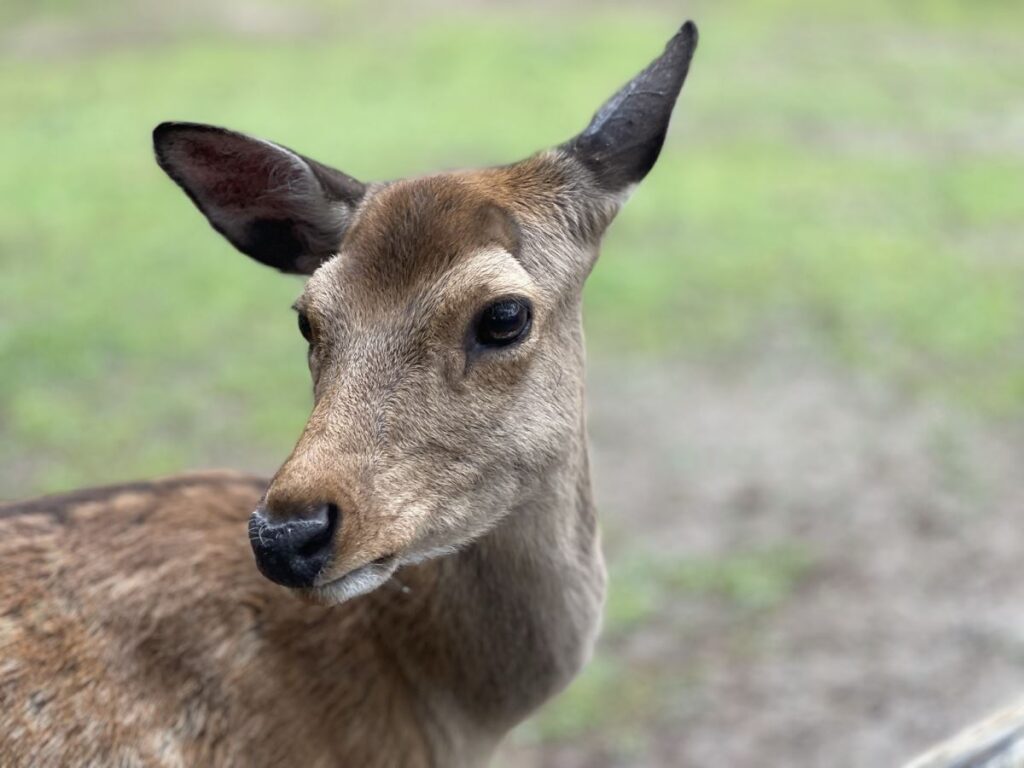
If you are only coming to Nara to see the famous bowing deer, half a day will be enough.
However, if you want to visit the deer before they get overstimulated, overfed and over people, make that half day in the morning, as early as possible.

On my second visit here, we arrived by 9.00 from Osaka, and there were only a handful of people in the park. This meant the deer were happy to see us and, most importantly, were generally rather chilled. I had them resting their heads on my lap at one point, like a Disney princess.
However, by 10.30, more people arrived, and as more people started running and shouting, the deer got more agitated and butting and nipping started.
Related Read: How to safely meet Nara’s famous deer
When One Day Will Be Perfect
The most popular sights in Nara include the deer, Todai-ji temple with its immense Buddha statue and imposing gate, the famous mochi-pounding shop and pretty Kasuga Taisha, and you can visit all of these in a day trip from Osaka or Kyoto.

If that’s what you’d like to see in Nara, then one day will be enough for you – but expect to hit crowds in at least two of the spots, as most people will be trying to do the same thing.
When You Might Want to Spend Longer in Nara
The first two times I went to Nara, I was mostly there to see the deer. I nipped in, fed them some crackers, had a quick look at the temples and headed back to Osaka or Kyoto, but, on my last trip, I spent three nights in Nara and realised that staying overnight here gives you a very different picture of the city.
So, should you add a night or two in Nara to your plans? My answer would be yes if you fall into any of the groups below…
Do You Dislike Crowds?
Spending the night in Nara meant I could arrive at places well before the tour groups did – or explore smaller sights once most of them had gone home.
I already mentioned why this is important for visiting the deer, but arriving at the Kasuga Taisha shrine at 7.15 in the morning, when there was barely anyone around, and the deer were shyly peeping out between the beautiful moss lanterns, was magical.
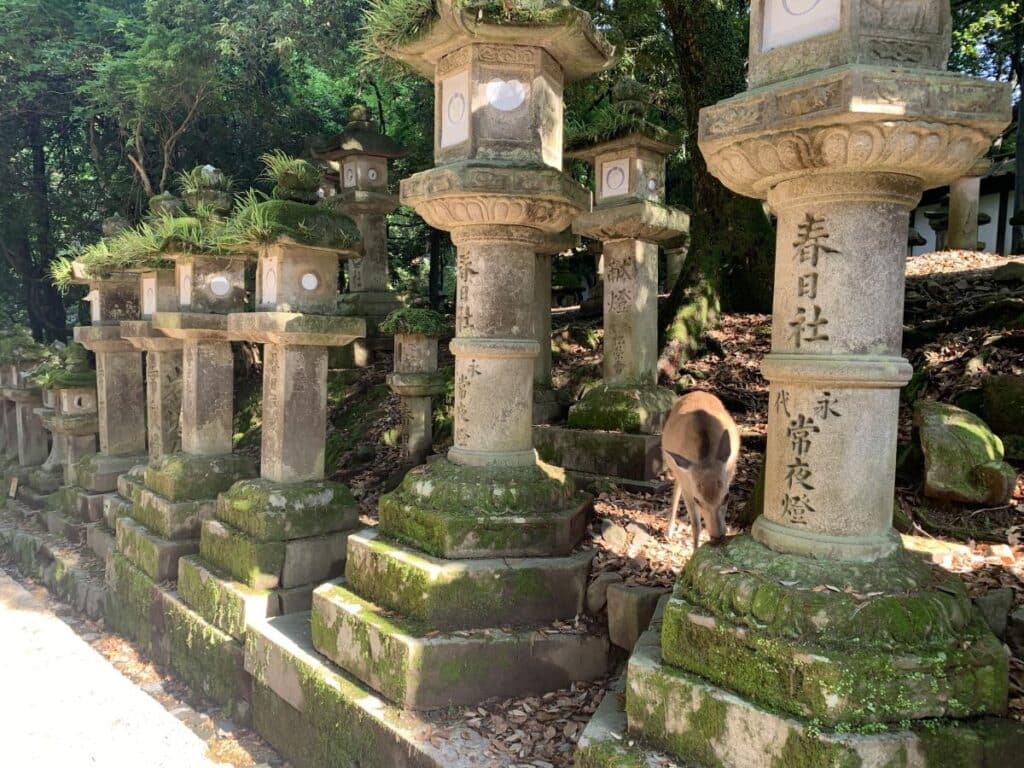
Because this shrine is a little way out of the centre of Nara, I hadn’t tried to make it work in my plans before, but I think that worked in my favour. Seeing it in the early morning silence has become one of my top 10 favourite moments in Japan. I’m not sure it would have had the same impression later in the day when it was full of people.
Do You Want to Do More than Tick Boxes?
With more time in Nara, I also explore smaller sights in the centre that you might not get to in a one-day visit.
I had my fortune told by placing it on a piece of ice, ate a strawberry daifuku with a tiny deer cookie on top, and explored the pretty Yoshikien Garden. I wandered around the backstreets at Golden Hour, visiting smaller shrines before they closed – and got some pretty pictures of the Pagoda (which was being repaired when I was there and so not open to guests).

Another afternoon, I went to explore the Nara machi district, which is full of old houses, small shrines and craft shops – yet, the only other foreign tourists I saw were those in the sake brewery, enjoying a leisurely tasting.
I also went out into the suburbs and headed to a shrine full of tiny Daruma and a goldfish art museum
The simple loop-based bus service in Nara makes it really easy to travel around the city, and there is a great value one-day bus pass that makes it easy to explore further afield.

I also went to the quirky Koriyama. This is home to many of Japan’s goldfish farms, and the town has some fun, quirky goldfish-based touches dotted around.
Some things I had seen in my research (like the phone box aquarium) have been removed, so it’s not somewhere I’d suggest you head out of your way to visit, but with Nara as my base, it was only a 4-minute hop away, so I didn’t feel like a waste of time to explore for an hour. Find a more detailed guide to Koriyama on Japlanease’s sister blog that covers the quirkier parts of Japan.)
Are You Also Visiting Uji?
I wasn’t supposed to visit Uji from Nara – I had an out-of-the-way temple on my list, but when I woke up that day, I decided I needed a break from doing things on my list; I ripped up my plans and jumped on a train.
I had a fantastic day finding hidden shrines, seeing the famous Byodoin and actually finding a matcha snack I enjoyed. See more details in my guide to spending a day in Uji.

Most people visit Uji from Kyoto, which is only 20-minutes away, but it’s also a nice, easy journey from Nara. It takes 37 minutes via the JR Nara line.
Do You Want to Spend Time in Nature?
According to the Nara tourist board, only 23% of Nara Prefecture is habitable – the rest of it is green space and, in the city of Nara, the whole eastern side of the city is surrounded by forests and mountains.

If you enjoy walking, or just need a bit of time in greenery, you can easily explore walking trails winding their way up to the famous Mount Wakakusa or the Kasugayama Primeval Forest Trail, which you join near Kasuga Tisha. If you’re happy to take the bus to the start of a trail head, you might also want to look at the Yagyu Kaido Trail. There are three different routes to take within this.
Unfortunately, the fantastic Nara tourism website, which had a great article listing details on all the trails, their highlights, levels of difficulty, etc., is being taken offline soon after I publish this, but head to the Nara Tourist Information Office by Nara Station when you arrive, and they will be able to provide you with more advice on walking in the Nara area.
Do You Want to Save on Accommodation?
Because fewer touists stay in Nara than in Osaka and Kyoto, you may find hotels a little cheaper here.
I stayed at the Daiwa Roynet near the station as I liked the deer motifs on the wall, and checking prices, a room there for a date in September is AU$121 – a Daiwa Roynet Premier in Kyoto for the same night is AU$226. Admittedly, they aren’t quite the same grade of hotel, so I looked at a couple of other chains.

The fun Henn na robot hotels have properties in both cities – the Nara hotel costs AU$84, while Kyoto costs AU$144. Onyado hotels, which come with lovely onsens, are also in both places – the hotel in Nara costs AU$165, while the one in Kyoto costs AU$387.
It can take as little as 45 minutes to get to Kyoto from Nara, it’s also easy to visit Uji, and you can also reach Osaka in 50 minutes – so, it might be a good place to use as a base if you’re trying to keep the costs down.
So there you have it, my guide to how many days might be right for you in Nara. I hoped it helped you decide.

Who Writes This Blog?
My name is Helen Foster, and I’m a journalist and author. My travel articles have appeared in publications including The Australian, Escape, RAC Horizons, Jetstar Magazine, Sainsbury’s Magazine, and more.
I’ve travelled to Japan nine times before – solo and with my partner and visited over 50 towns and cities. My last visit was in April 2026, so everything here is pretty up to date.

