
- What to Do (or Not Do) When Meeting Nara’s Famous Deer - 18 February 2026
- How Long Should You Spend in Nara? - 12 February 2026
- Where to Stay in Hiroshima - 10 February 2026
The deer of Nara are one of Japan’s most iconic sights – and one of its cutest. But they are wild animals, and they can bite if you’re not careful. Our guide explains where to find Nara’s famous furry residents – and how to interact with these gorgeous animals in a way that keeps them – and you – safe.
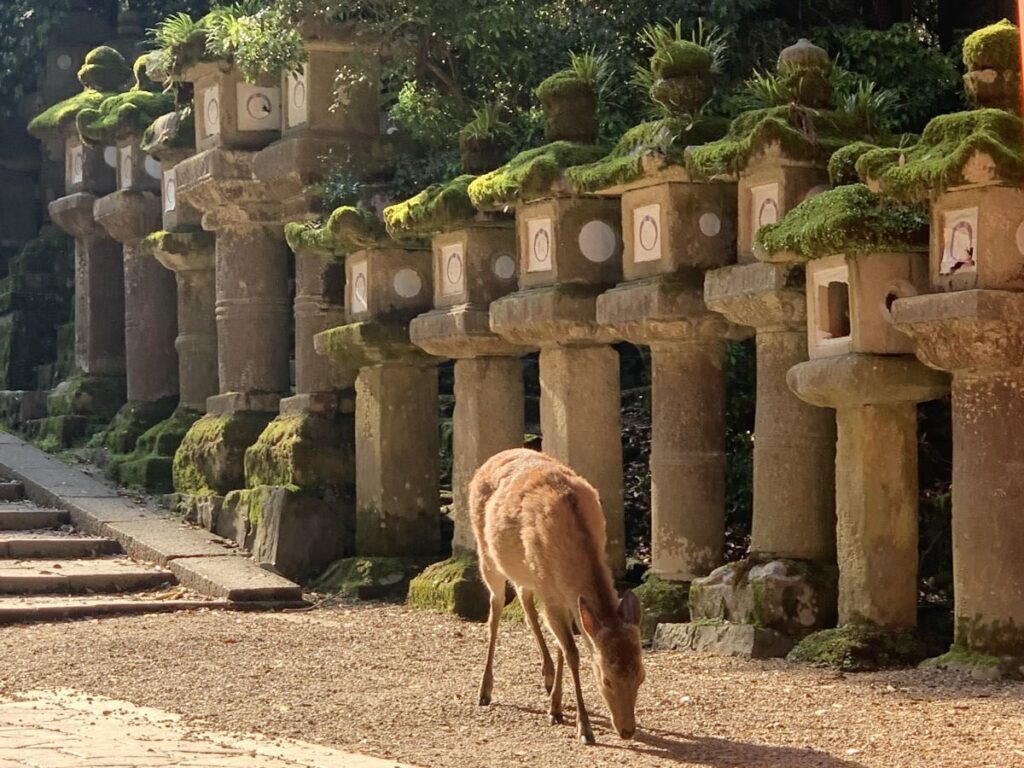
Article by Helen Foster. Disclosure: Some links in this post are affiliate links. See our Affiliate Disclosure.
Okay, so I admit, this post is partly written so I can put lots of cute deer pictures on the internet. And, as I have been to see the Nara deer three times so far, I have a lot of cute deer pictures to choose from.
But it’s also to protect you and the deer, as everything goes a lot smoother if people follow some simple rules when meeting them, but before getting to that, why are there over 1000 deer living in a park in Nara?
What Kind of Deer Live in Nara?
The deer found in Nara are sika deer (Cervus nippon), a species native to Japan and East Asia. The word for deer in Japanese is shika, and the name is thought to be derived from this.
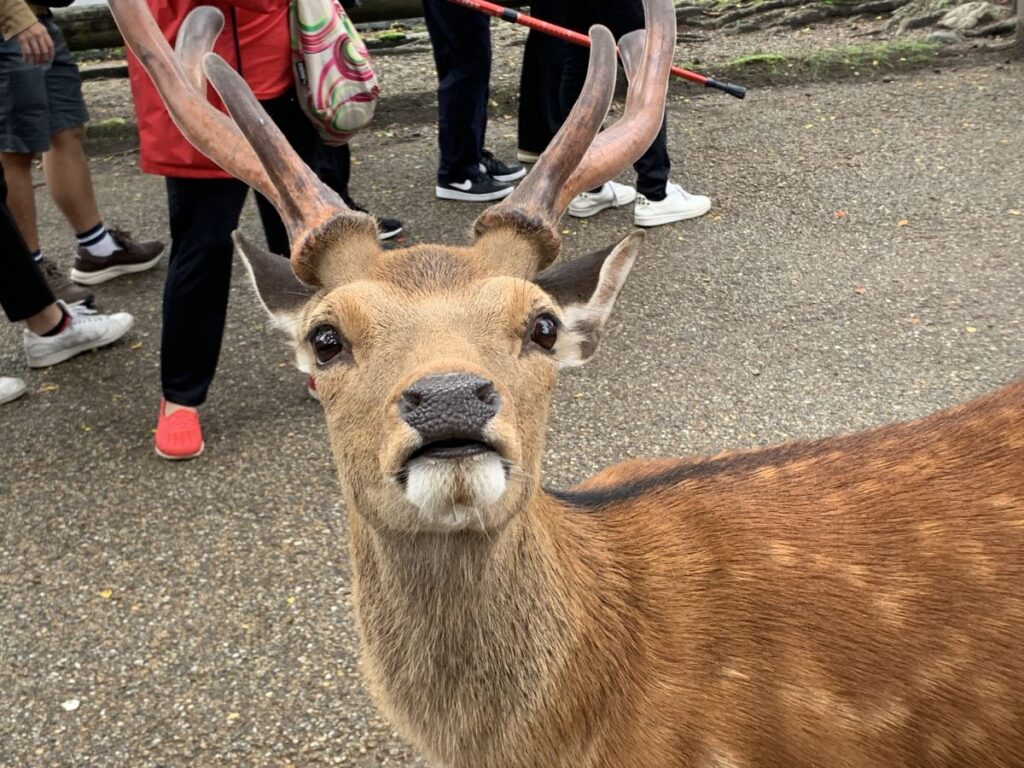
Sika deer are relatively small compared to other deer species, weighing between 25 and 110kg and usually standing under a metre tall; however, you might not think they are that tiny if you’re confronted by a male with very large antlers demanding a deer cookie.
Sika deer are also unusual as they keep their spots into adulthood; as Japanese breeds of sika have light spots, this will be more noticeable if you visit in the summer months when their coats are also lighter.
Why Are There Deer in Nara?
The deer have been in the park for over a thousand years – in fact, it’s said that the original protector of the city arrived in Nara riding a white deer, making deer sacred messengers of the gods. Because of this belief, deer are sacred in Nara and so the herd as been protected.
At one point, harming a deer in Nara was once punishable by death. Sadly, that is no longer the case, but after an increase in incidents of idiot tourists doing things like trying to kick the deer, you can now be fined, or even imprisoned, if you are found guilty of hurting one. I’m hoping I don’t have to tell you not to do this!
Related Read: Things Tourists Do That Are Annoying the Japanese People.
Where Do The Deer Live?
This was something I wasn’t sure about when I first visited Nara. Would it be like getting off the ferry in Bunny Island, and I’d walk out of the station to find a Bambi-strewn paradise, or would I have to hike into the depths of the park to find them?
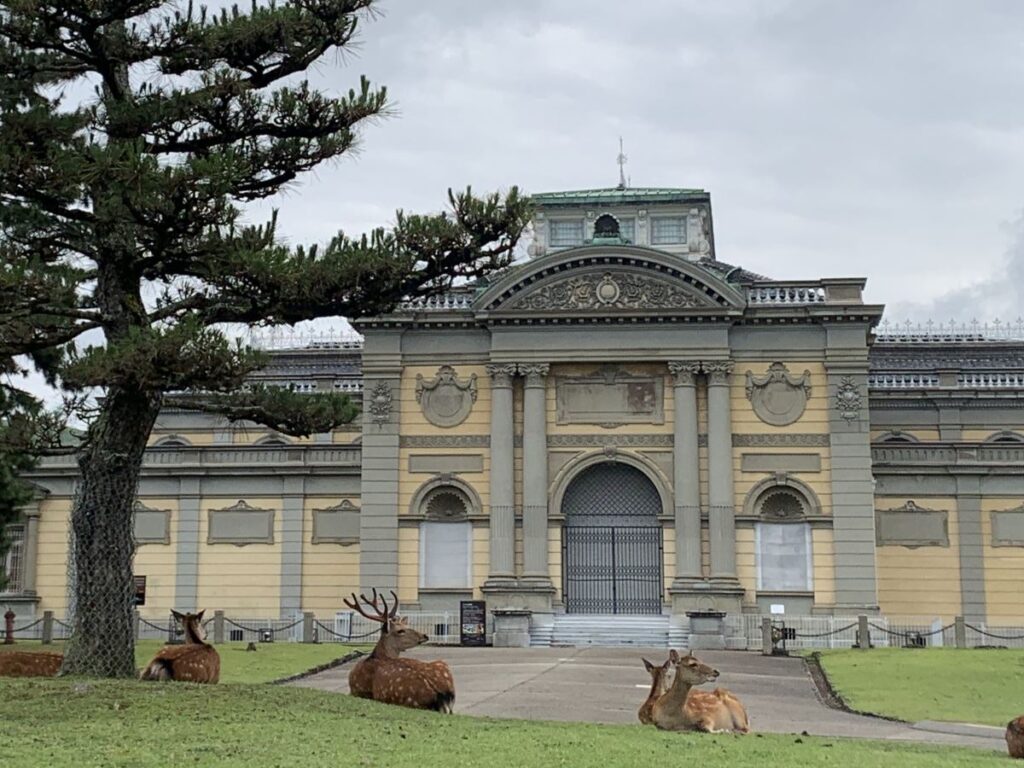
The answer is somewhere in between. If you want to see the deer, you’ll find most of them chilling out in and around the Nara Park area, particularly in the areas around Todai-ji temple and the Nara National Museum.
Depending on the weather, they might be resting under trees, wandering the shops looking for snacks, or hanging around the ladies and gents selling deer cookies.
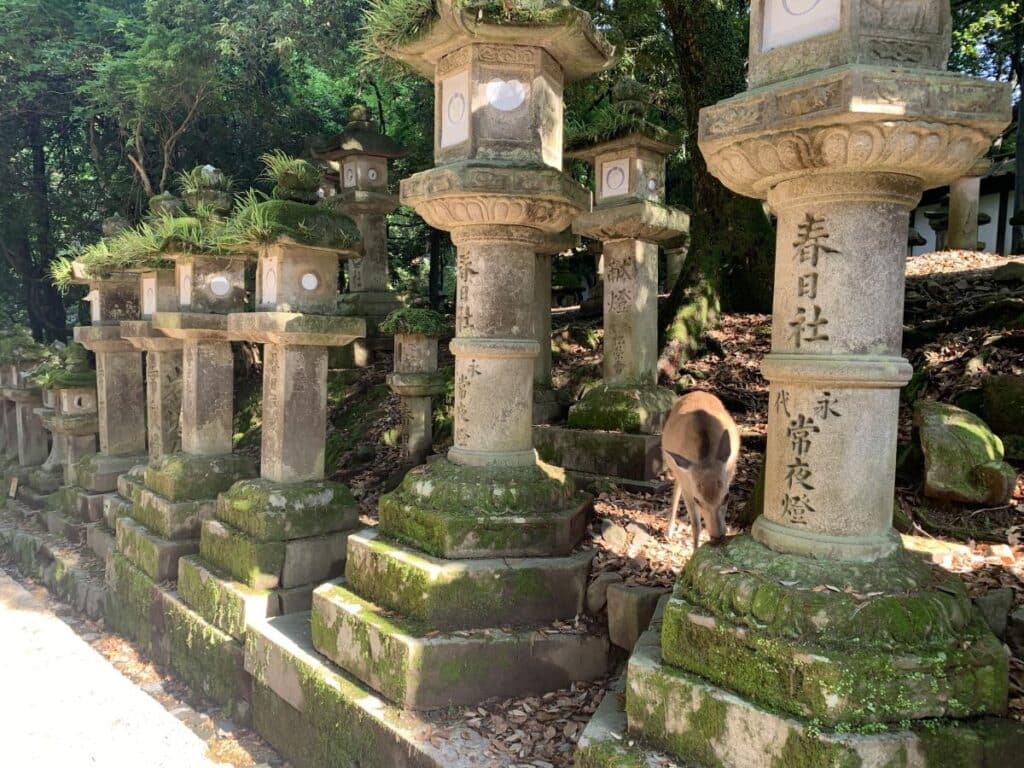
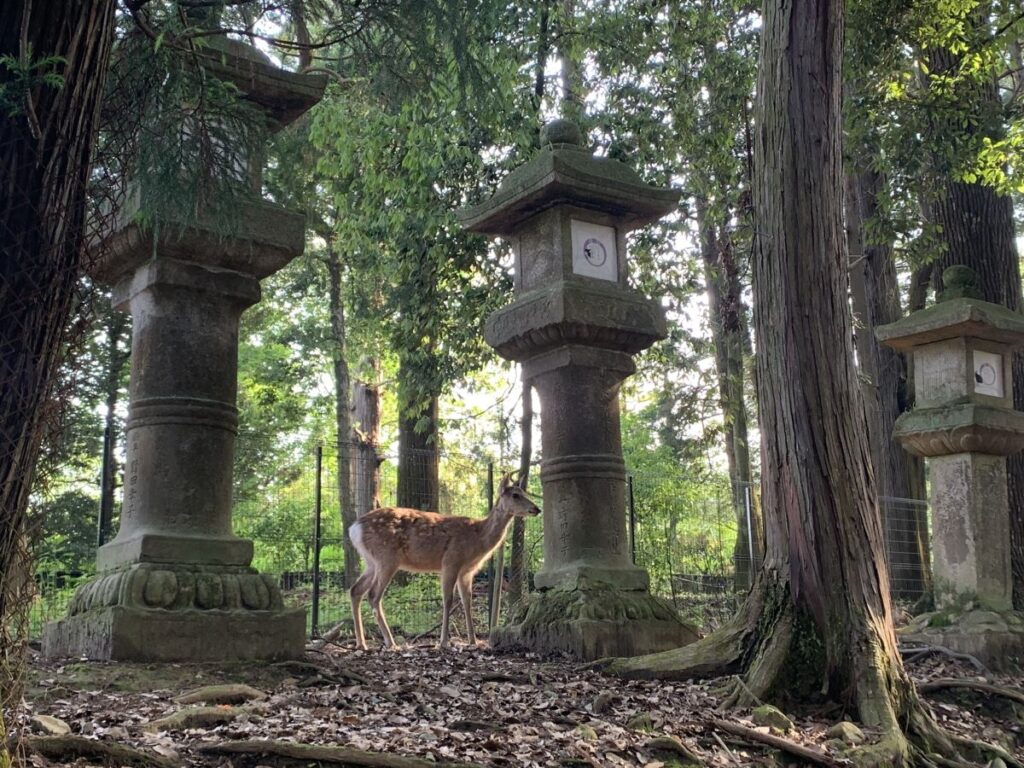
But also keep your eyes peeled as you explore elsewhere. If you’re very lucky, you’ll spot them peeping out between the lanterns at Kasuga Taisha, which was one of the magical moments on my last Nara trip, but you’ll also spot them curled up, relaxing, or munching grass in smaller shrines around the park.
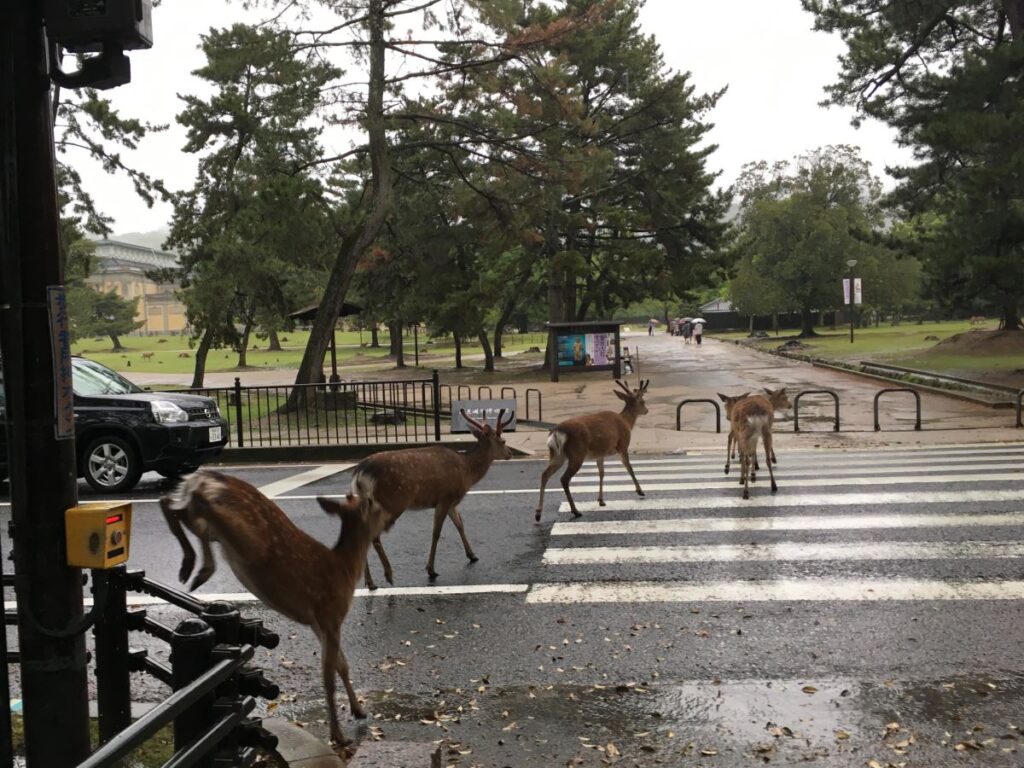
It’s even fun watching them wait to cross the roads. They know how to use the pedestrian crossings (although I don’t think they’ve quite worked out the buttons yet) and will often wait for the lights to change before heading off where they want to go!
Staying Safe Around the Deer
Despite all this cuteness, the Nara deer are wild animals, not pets, so remember, even though they might seem tame, they aren’t – and they can get a bit overexcited in the presence of deer cookies.
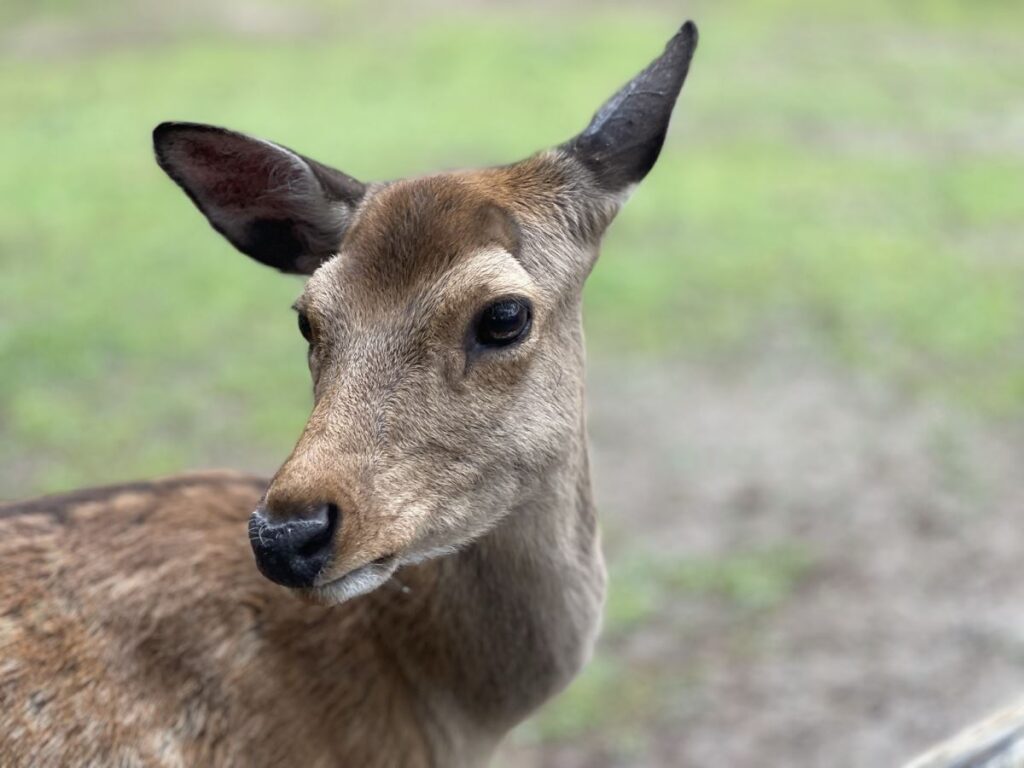
I’ve found them to be calmer in the morning before lots of people arrive in the park – the more people that run around screeching at them, the more hyped up they get.
If you want to have a calm interaction with the deer, key points to remember:
- Do not tease or chase them
- Avoid sudden movements or loud noises
- Never corner a deer or block its escape route
- Keep cookies, bags, maps, and paper items out of reach
- Don’t pull at them, push them – or try and ride them
- Watch little kids around them closely
Times to Be Extra Careful
It’s always good to remember that the deer are wild, but there are a couple of times of year when you do need to be extra careful around them…
Mating Season
Also known as the rut, this typically occurs from September to November.
During this time:
- Male deer can become aggressive
- They may chase other deer or people
- Antlered males are more territorial
Be extra careful around the male deer at this time – avoid approaching them, especially if they are making loud noises or displaying dominant behaviour.
Fawning Season
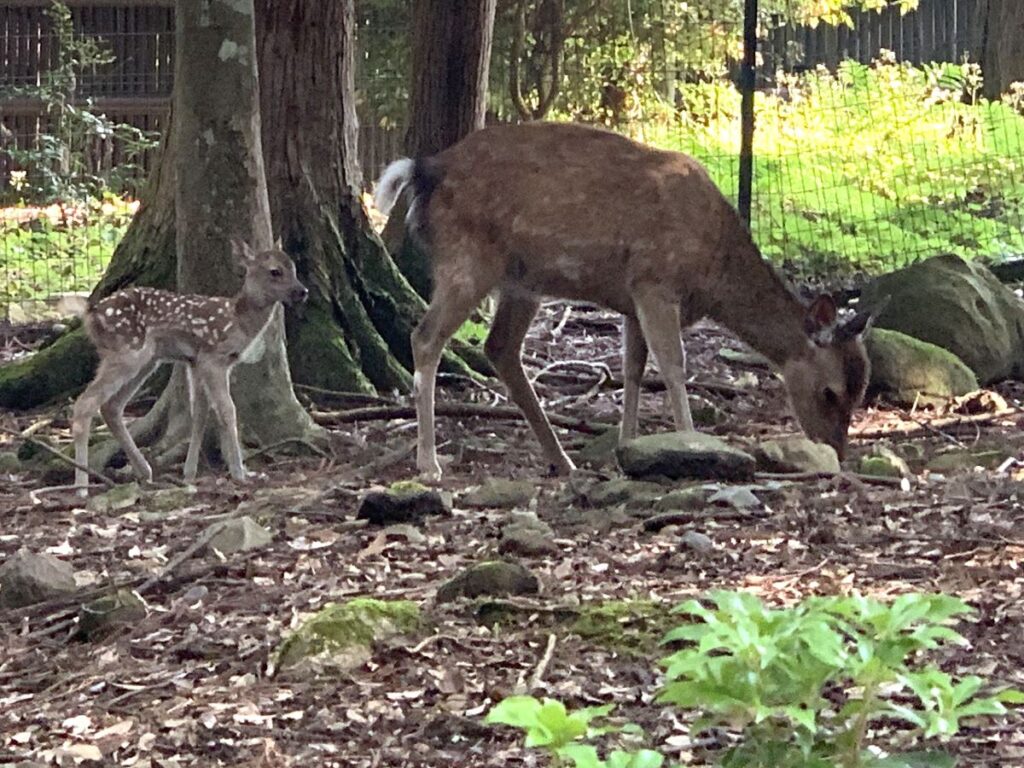
Female deer can become a bit overprotective when they have fawns. These are usually born between May and July.
Don’t approach the fawns (you’ll notice the picture above is a bit blurry as it’s taken from a distance!), try not to stand between a mum and her fawn, and, if you see a fawn alone, don’t worry, mum is usually nearby – they’ve just left the baby somewhere they think is safe while they eat.
Tick Season
Like all wild animals, Nara’s deer can carry ticks, and these can carry disease. Prime tick season in Japan is from April to October. It’s a good idea to check yourself after spending time in the park, but also take a few precautions beforehand.
- Avoid sitting directly on the grass
- Wear long trousers when you visit
- Apply deet-based insect repellent to exposed areas
- It’s generally a good idea to wash your hands after feeding the deer
Feeding the Deer
You are allowed to feed the deer in Nara (which is not the case for those in Miyajima), but you can only feed them ‘shika senbei’, a special deer cracker sold throughout Nara Park.
Again, the first time I went, I wasn’t sure where you bought these, but it’s not difficult to find them in situ; you’ll see stalls set up at different points around the park.
If you don’t find one as you walk through, there is usually one close to the Mori Nara Duke souvenir shop on the approach to Todai-ji.
The cookies cost 200 yen a pack, the last time I bought some.
You buy a packet of them and can feed as many deer as you like until you run out.
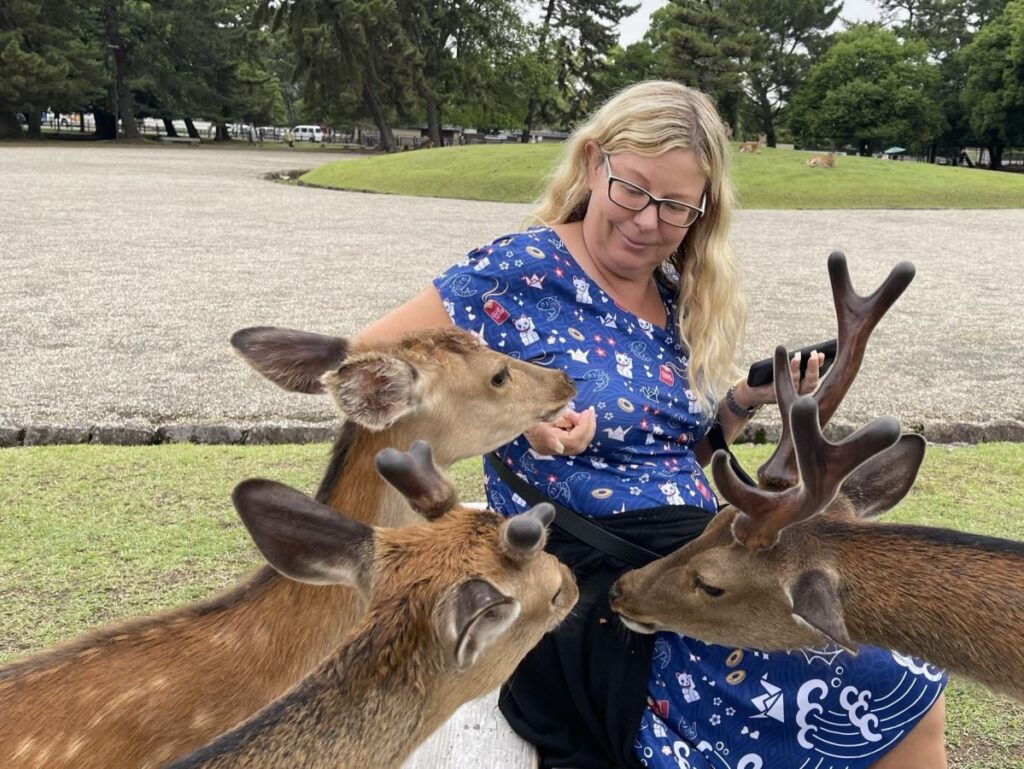
Top Tip – bring a bag with you and put the bag of cookies in it. Bring out one at a time. As you can see by the one on the right above, who is heading toward my bag, they know where the cookies are hidden, but they can’t get to them!
Remember, the presence of deer cookies will hype up the deer. If you don’t want them coming near you, or potentially butting or nipping, do not buy the cookies.
The deer don’t need the cookies to survive; there is plenty of natural vegetation around for them to nibble on, so you don’t have to buy them if you don’t want to.
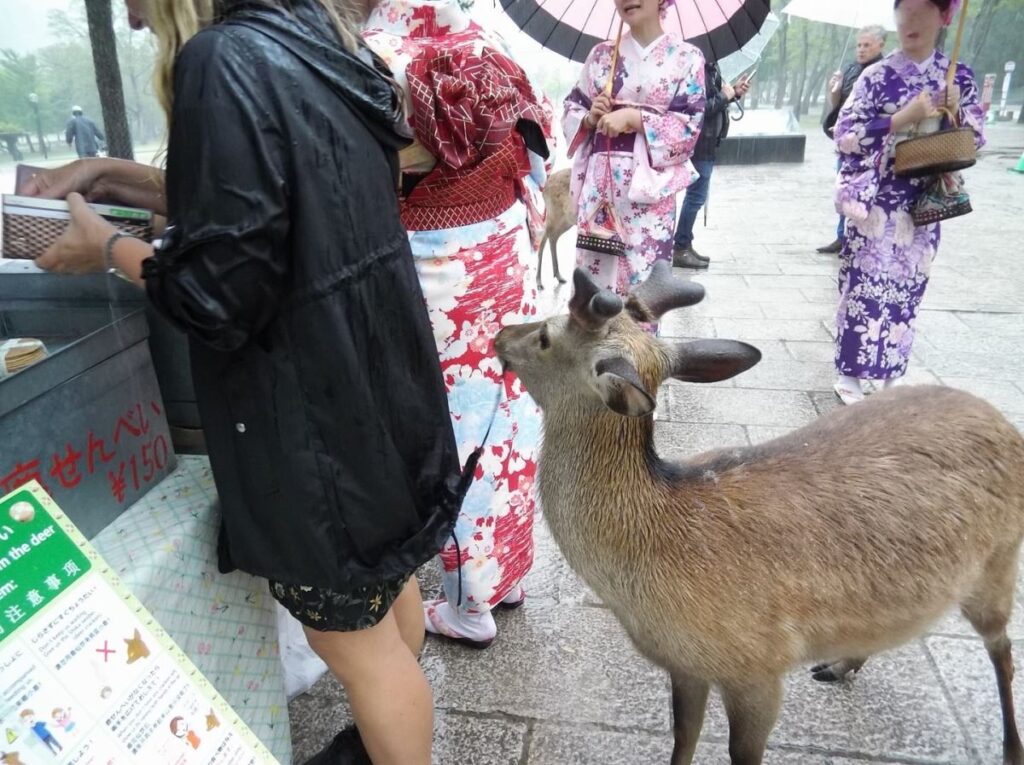
Also, don’t tease them with the cookies – it’s a sure-fire way to get nipped – and, if you decide to stop feeding a deer, hold up your hands so they can see there are no cookies left.
Sometimes you can choose the deer to feed – sometimes they choose you! The picture above is one of my favourite pictures ever – this one decided to hang onto the toggles on my coat to ensure I knew he was there and fancied a snack.
Save Money with Klook & Japlanease
If you plan on buying tickets or tours from Klook for when you’re in Japan, you could save up to 10 per cent by using the code JAPLANEASEKLOOK at the checkout. Click here to see what’s on offer.
T&Cs apply. Some items, including Tokyo Disney and USJ tickets, are not available for discounts.
Why Do the Deer Bow?
One of the most famous behaviours of Nara’s deer is that they will bow if you have cookies – or, if you bow to them.
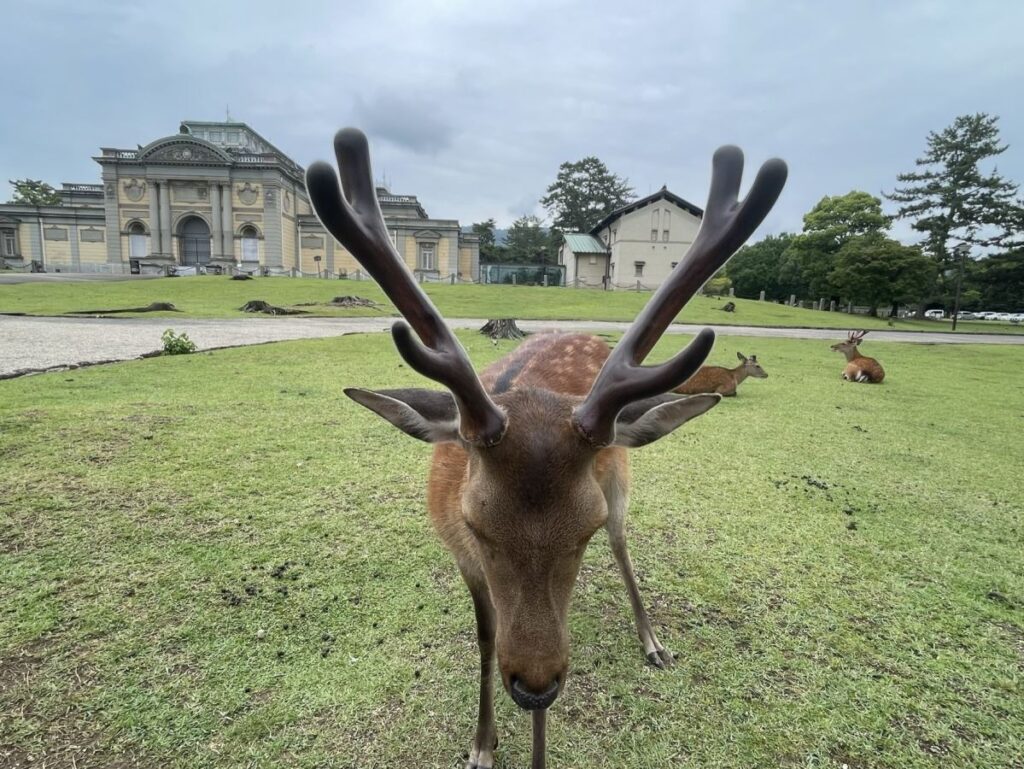
This could be to do with their status as divine beings – or maybe, they’ve learned that bowing adds cute points and maximises the chance of extra snacks!
Other Ways to Protect the Deer
The biggest dangers to the deer in the park are traffic accidents and eating things they shouldn’t. This can make them very sick or even kill them, so try to follow the following rules in the park.
If you are driving, stick to speed limits, and watch for deer by the side of the road. September and October, when the male deer are a bit more feisty and not quite thinking straight, are the worst times for collisions.
Be very careful with paper and bags – they do like to chomp on these, but they do nothing for their digestive system.
Take rubbish home with you. There are no bins in the park itself to try to prevent the deer from eating things they shouldn’t – littering puts it right in their path.
Outside of the park and around the shops, etc., you will find bins. If you use one, put the rubbish right inside. Deer will pull out rubbish otherwise. If a bin is full, please carry your rubbish out of the park until you find one with more space.
Eat human treats elsewhere: The deer don’t care that the ice cream belongs to your toddler – it’s at mouth height, so it’s fair game. If you or your kids have snacks or treats, eat these before interacting with the deer.
Special Events to Check For
The deer live in the park year-round, but there are a few special events involving them that you might want to visit if you’re here at the right times…
Antler Trimming
The Rokuen Centre in the park look after the deer if they need medical attention. They also trim back the deer’s antlers in autumn to reduce the risk of them harming people in mating season.
If you’re here at the time of the official ceremony, called Shika no Tsunokiri, you can view it.
The picture below was taken in May, so you can imagine how long the antlers get by autumn.
Cutting the antler doesn’t hurt. It’s like cutting your fingernails or hair – and deer antlers naturally fall off once a year anyway.
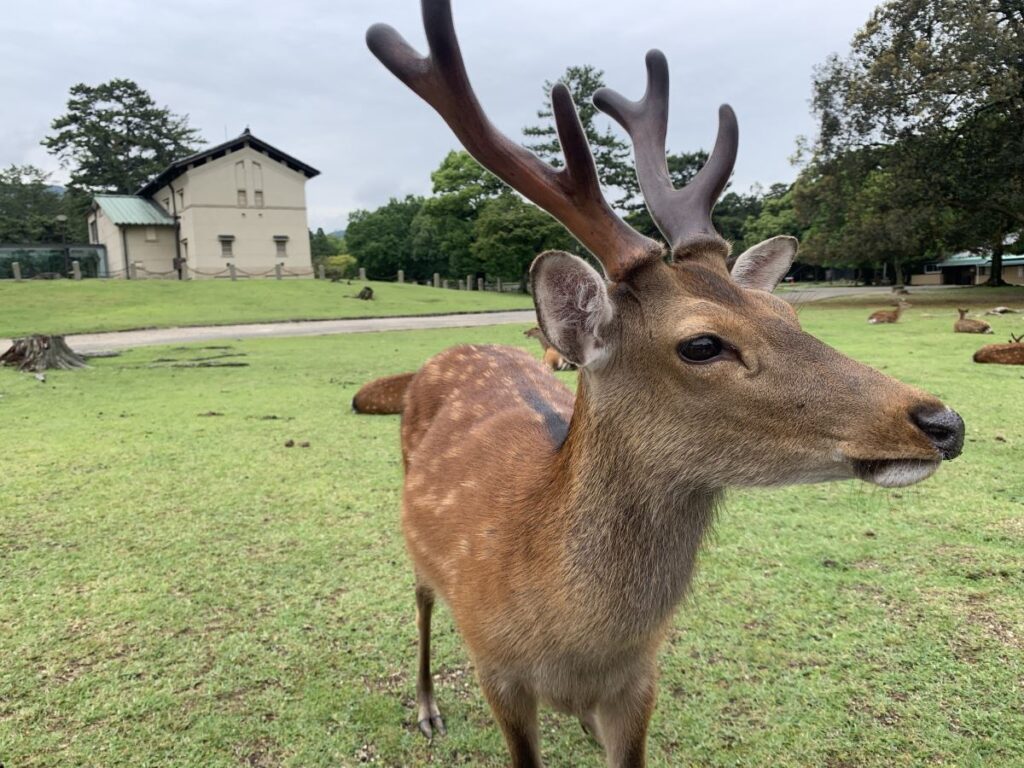
Check the Nara Deer website or at the tourist information office for exact details of the dates and times – it is normally the second weekend in October, but it was moved to November in 2025. There is a small entrance fee.
Fawn Viewing
The Rouken Centre also looks after pregnant deer and their fawns, and in June, they host an event where you can come and see the newborns at the centre.
Entry costs just 100 yen, but the money goes to help fund the work at the Centre.
Find details of timings for this year’s event here.
Shikayose
Keep an ear out for this very special treat. Shikayose sees a member of the Nara Deer Preservation Foundation playing a passage from the fifth movement of Beethoven’s Symphony No. 6 “Pastoral” on the French horn.
This brings the deer from all around to listen – plus they are given acorns as a reward.
This ritual has traditionally been held at weekends during July and August and December on the south side of the approach to Kasuga Taisha Shrine, but recently, they have been doing it more regularly.
Check the Deer Calling section of the Nara Deer website, or speak to the staff at the tourist information office to find out the exact dates and timings.
If you aren’t here for the free, public event, you can also reserve your own private deer calling for a fee.
Hotels With Views of the Deer
My hotel room at the Daiwa Roynet at Nara Station had deer drawings on the walls. But if you want to stay somewhere with real deer views from your room, then look at 四季亭 Shikitei, a traditional inn located on the edge of the deer park, but also a short walk into town.
Or, immerse yourself fully in Nara’s beautiful natural surroundings by booking a stay at Tsukihitei, which is located deep in the forest.
Other Deer Goodies To Look Out For
You can buy various deer-shaped souvenirs in the shops around Nara Park, but also look out for deer-themed manhole covers, vending machines and gachapon toys as you wander around.
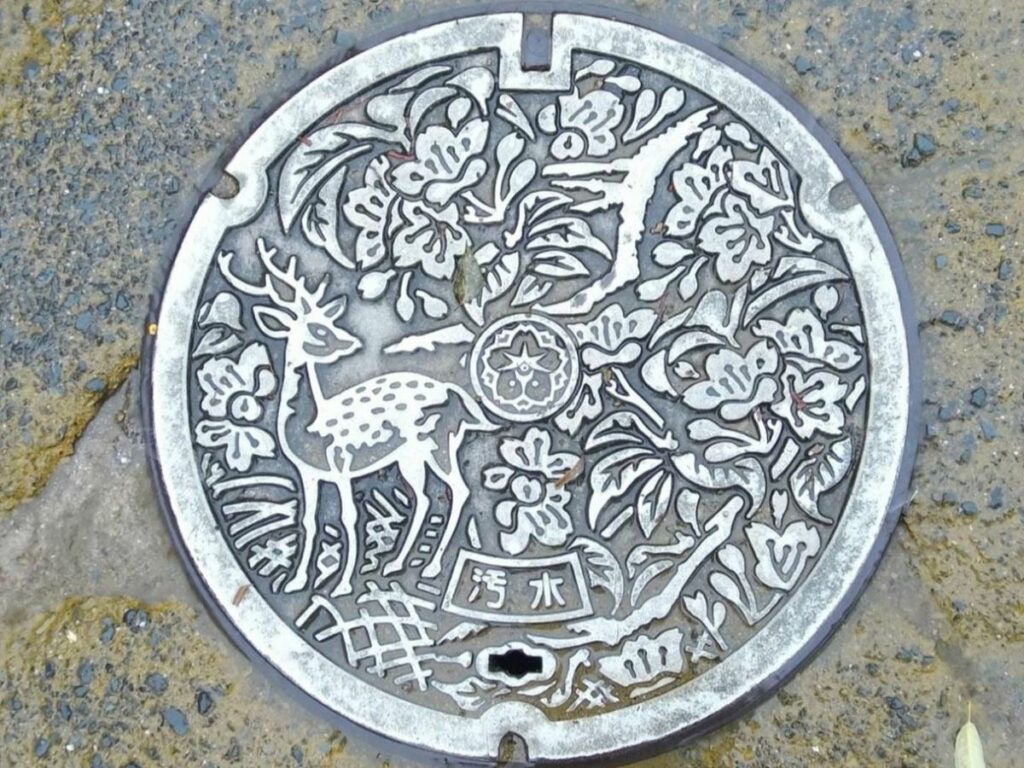
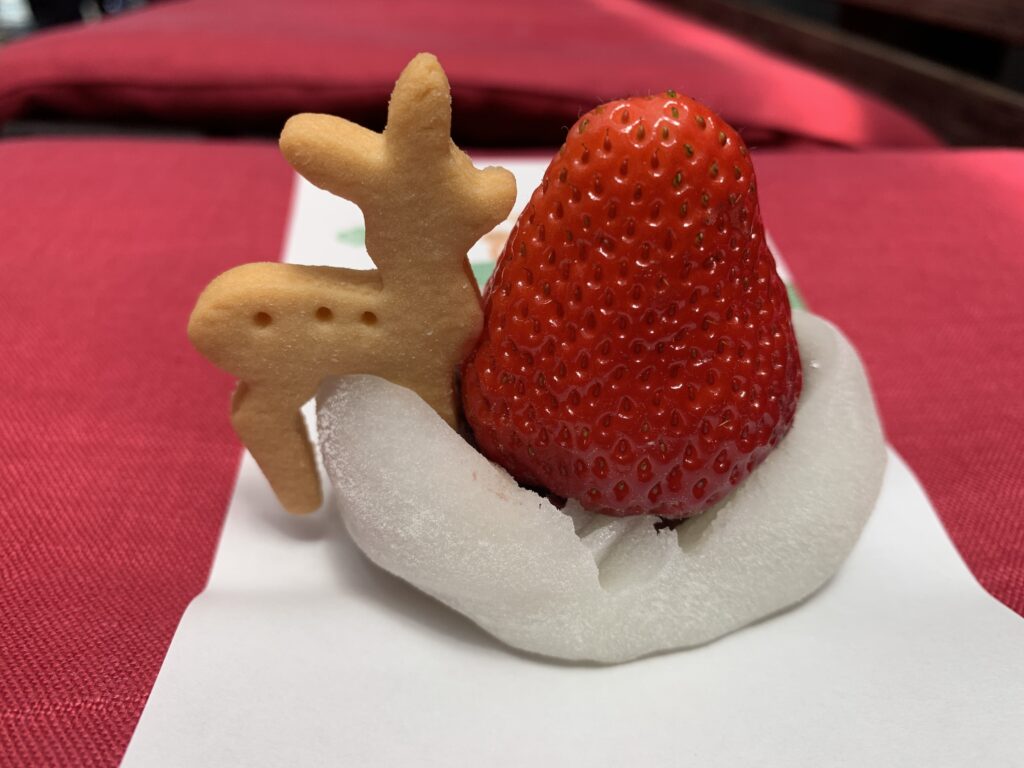
You’ll also find various deer-themed snacks sold around town.
Some of my favourites were the deer-shaped macarons at Over Macaron, and the deer-topped strawberry daifuku from Daibutsu Ichigo.
As you can see, the Nara deer are an important and sacred part of Nara’s culture and not just a fun thing for tourists to play with. I hope you enjoy your encounters with them as much as I have.
Who Writes This Blog?
My name is Helen Foster, and I’m a journalist and author. My travel articles have appeared in publications including The Australian, Escape, RAC Horizons, Jetstar Magazine, Sainsbury’s Magazine, and more.
I’ve traveled to Japan eight times before – solo and with my partner and visited over 25 towns and cities. My last visit was November 2024 so, everything here is pretty up to date.