- Top 10 Things to do in Nara - 6 March 2026
- Do You Need to Book Shinkansen Tickets in Advance - 1 March 2026
- How to Get to Katsuo-ji, Osaka – And What To Do When You Arrive - 27 February 2026
Nara is a popular day trip from Osaka and Kyoto, but it also makes a great spot to spend a few days. Here are the top 10 things we suggest you eat, see, and do once you are here… and it sees you hitting the main sights with a few surprises.
Article by Helen Foster. Disclosure: Some links in this post are affiliate links. See our Affiliate Disclosure.
There’s a lot to do in Nara, but the same things get repeated over and over again – and they’re usually very heavy on religious sights! I therefore tried to make this list a bit different. It’s my pick of the best things I’ve found to do in the city after three visits, so it includes a few smaller things to see that people only visiting for a day might not have spotted.
But of course, it starts with the most famous sight of all in Nara…
1. See the Deer
It’s the number one reason why most people go to Nara – and they can be adorable. They will come and say hi, they bow if you bow at them (or if you hold a cookie), and, if you go there at the right time of year, seeing the fawns with their mums is like being in a Disney movie.
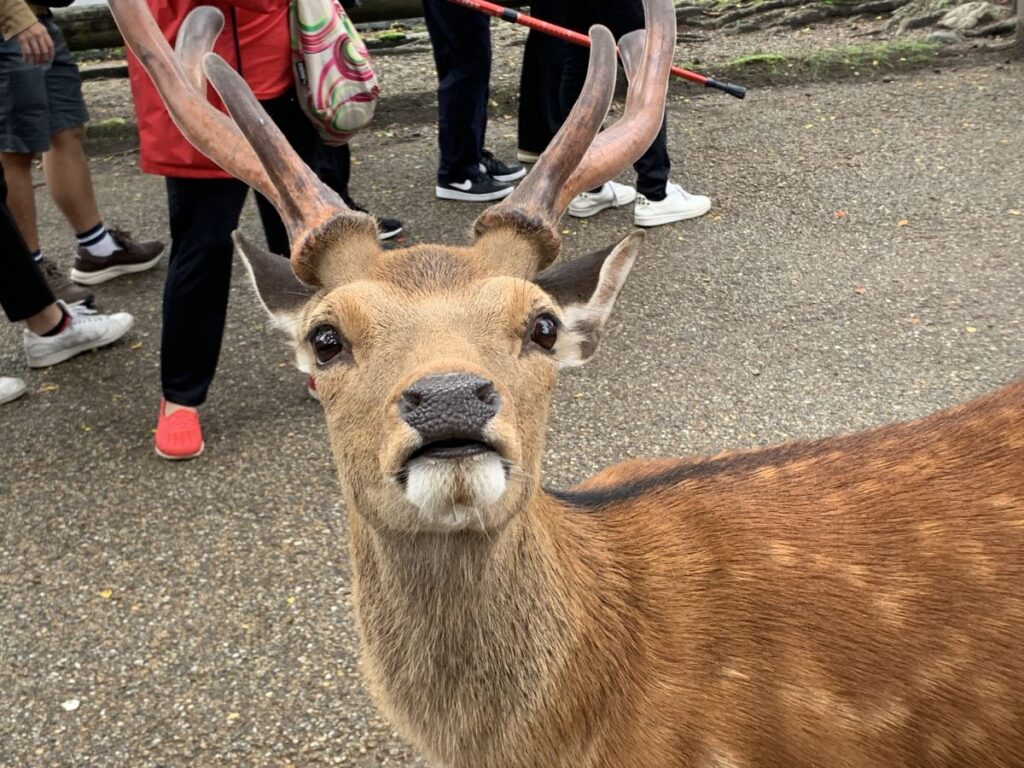
But you do have to treat the deer with respect. Not least because they are sacred to Nara and heavily protected, but also because if you don’t, they can bite, nip and butt.
Our longer guide to meeting the Nara deer explains everything you need to know – from where to see them, the best time of day to visit, where to buy deer cookies and more.
2. Visit Kasuga Taisha
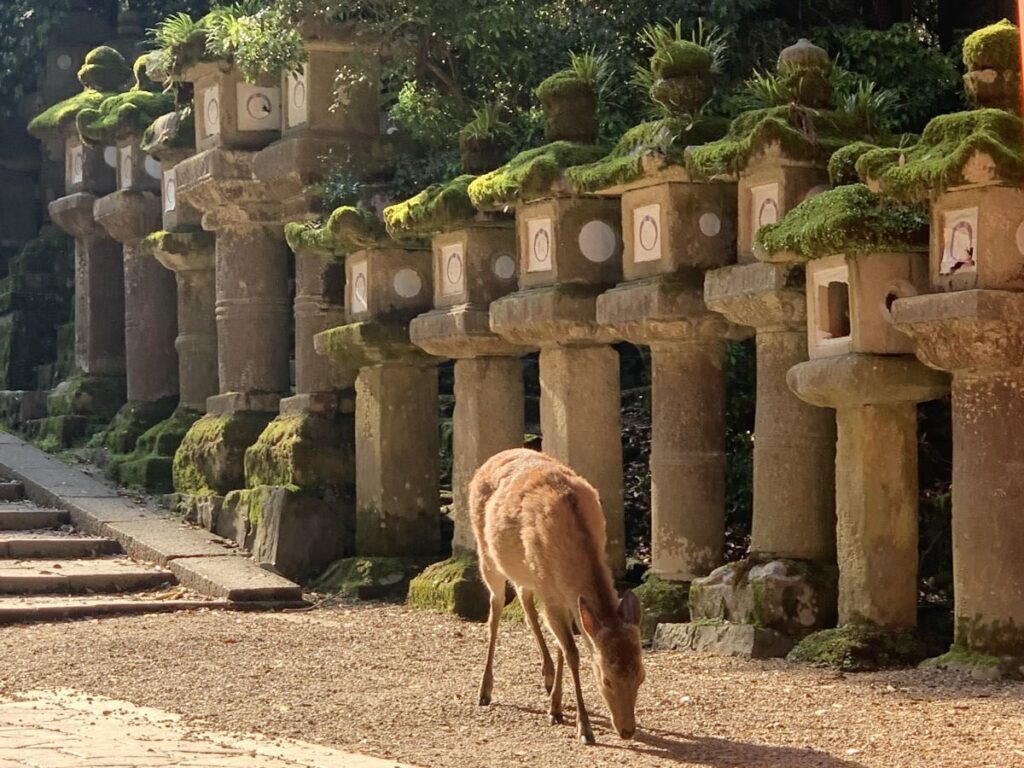
If there were ever a reason to stay in Nara overnight, visiting this magical shrine first thing in the morning, where the deer nibbling the moss on the stone lanterns that line the walkway to the main shrine hall outnumber the people walking past them, would be it.
Kasuga Taisha is the oldest shrine in Nara, built at the same time as the city was established.
It spans a huge area with small sub-shrines surrounding the main hall, but what really stops people in their tracks here are the lanterns.
From the 2,000 stone, moss-covered monoliths that line the pathway, to the 1,000 bronze and gold lamps that hang alongside the main hall.
Donated by local businesses, if you’re lucky enough to be there in February and August when they are lit, it’s a sight to behold.
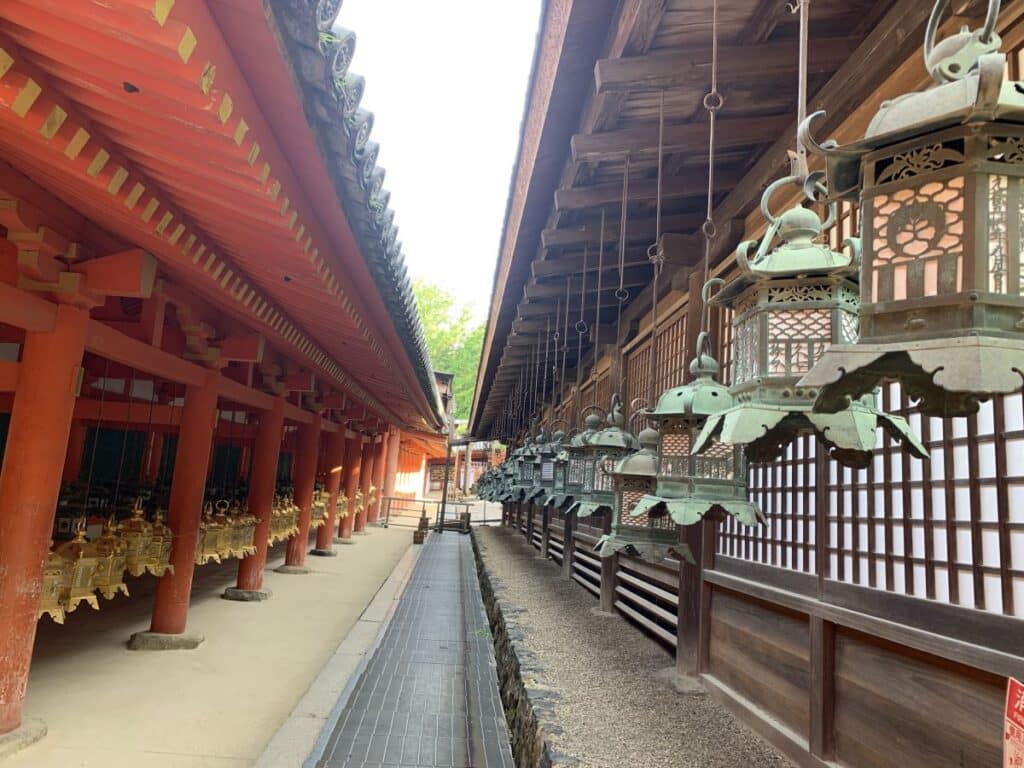
Kasuga Taisha is open seven days a week. The grounds are open 24 hours, the buildings start opening at 7 am, but the shrine is only fully open at 10 am. The buildings close by 5 pm. There is no entry fee to explore the outside areas of the shrine, but if you want to visit the inner hall, Treasure Museum or Botanic Garden, tickets cost 700 yen per area.
Kasuga Taisha is a bit of a walk from JR Nara Station, so it will be best to catch the bus. Numerous routes stop nearby, so check maps when you arrive for the quickest and easiest option.
3. Tell Your Fortune With Ice
This was the thing I wanted to do most in Nara.
As you enter Himuro Jinja, a small shrine on the west of Nara Park, you will see giant blocks of ice sitting around the shrine.
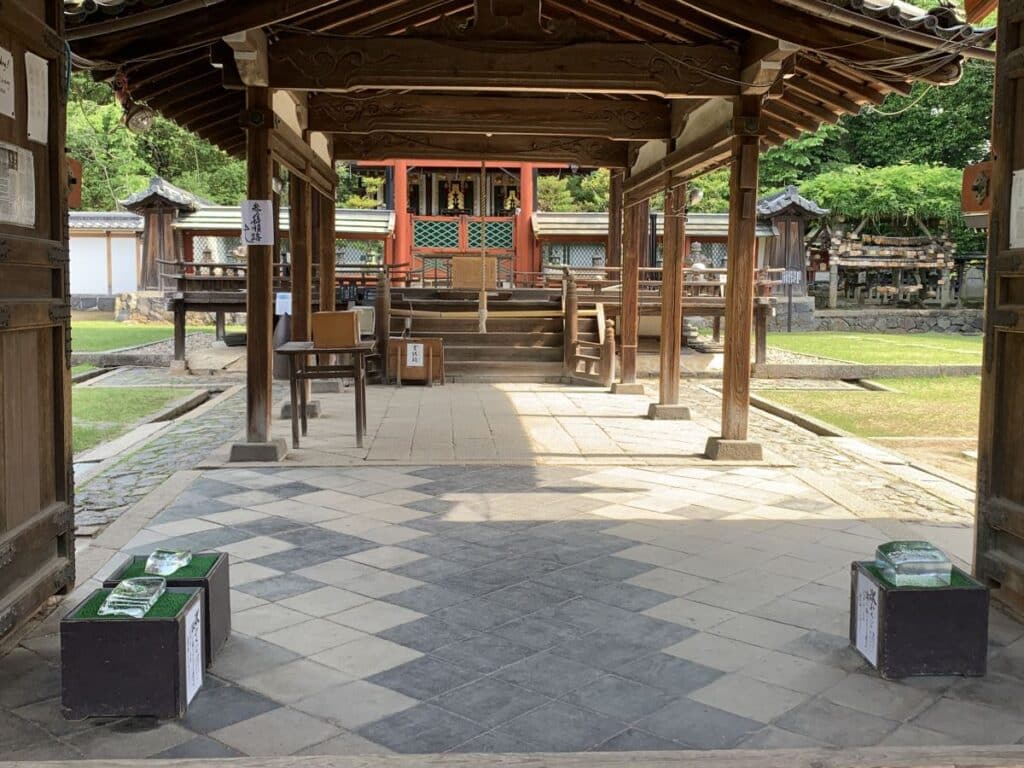
Head to the small shop to the right of the door and buy a fortune slip. Then, place it on one of these ice blocks. As the paper gets cold, you’ll start to see your fortune emerge. It will be in Japanese, so you’ll have to snap a picture of it quickly to translate it.
Mine told me to ‘be nice to my mother’, wait to get married and choose a doctor – which considering I had a planned surgery two weeks later wasn’t the ominious advicce it might have been otherwise!
See the fortune emerge here.
Himuro, in Japanese, means ice room, and the shrine is actually dedicated to the skill of ice-making, which was essential for food preservation back when the shrine was built. People also come here to pray for good weather for crops.
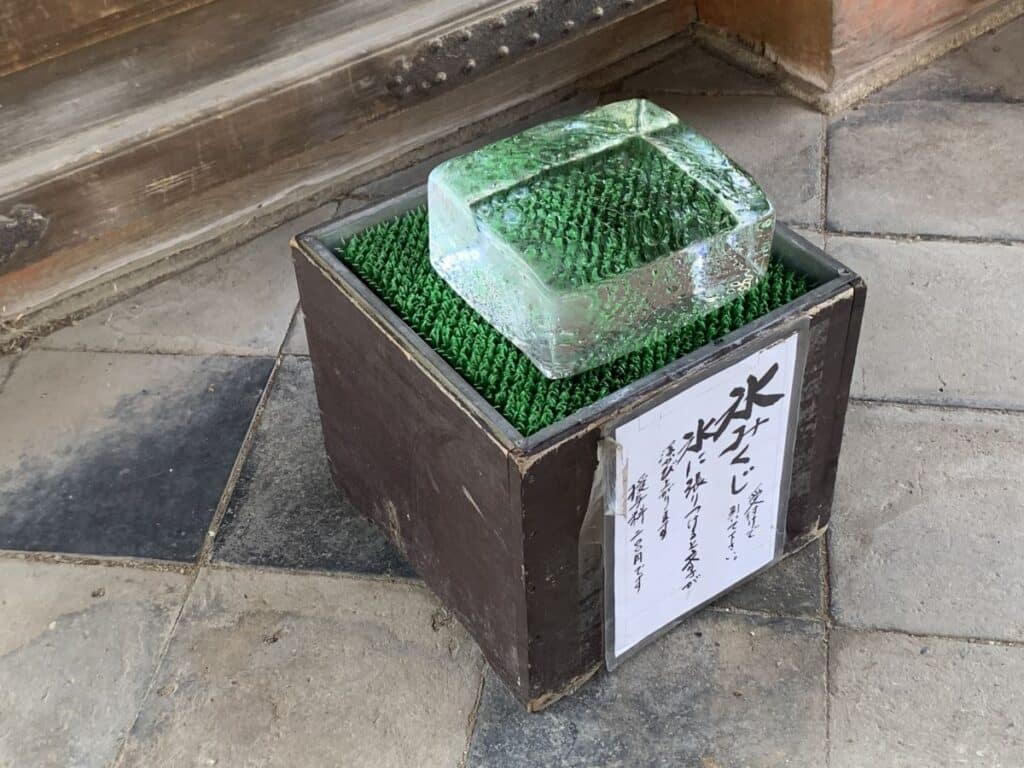
While the ice fortune is available every day of the year, on the first of each month, ice lanterns are lit around the shrine at sunset.
During the summer months, you can also buy shaved ice at the shrine. First, you offer this to the gods by presenting it on one of the tables at the shrine while you pray for a resolution to your problems. After this, you can take it away and eat it – and the shrine even provides syrup for you to add on top!
If you are here on May 1st, there is also a big ice festival at the shrine that you will want to check out.
The shrine is open year-round from 6 am to 6 pm, April to October, and 6.30 am to 5.30 pm, November to March. Entrance is free.
Getting To Nara
Nara has two stations. JR Nara Station (lines include the Nara and Yamatoji lines) and Kintetsu Nara Station on the Kintetsu Line – the one you arrive in depends on which line you take into Nara. Both link to Kyoto and Osaka.
Kintetsu Nara is closer to Nara Park – about a 10-minute walk. I do suggest walking this as, while many buses go along this route, they are often full by the time they reach the stops here.
JR Nara Station is further away from the park. You can take a leisurely walk through town to get here; it will take about 30 minutes if you don’t get distracted on the way. Or, catch the bus from the station. The bright yellow Loop buses (No1 and No2) aim at tourists and make everything easy.
Once you reach Nara Park, most sights are within walking distance of each other. Where they aren’t, I’ve mentioned simple bus directions in each section, but as the bus service in Nara is excellent Google Maps will offer the best route for the exact time you’re travelling.
4. Go to Todai-ji
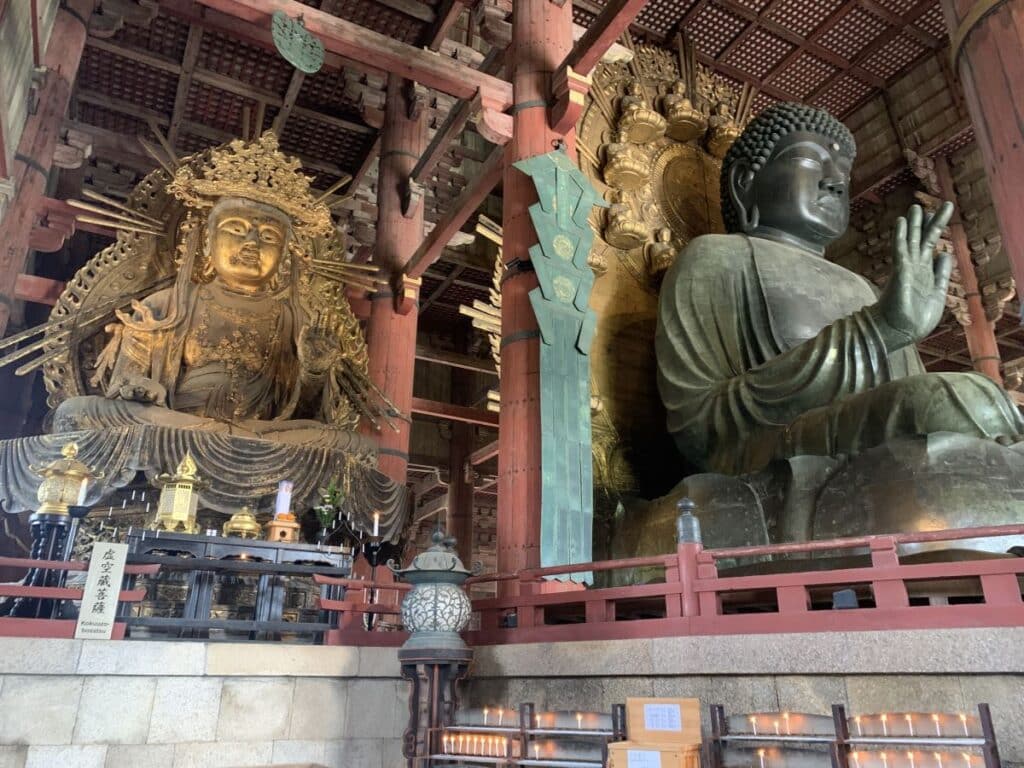
This is another of the headline sights in Nara – it’s home to a wooden gate over 25 metres high that dwarves you as you approach it. It’s the biggest wooden temple gate in Japan, but even reading that, you don’t really appreciate the scale until you’re standing underneath it, feeling insignificant.
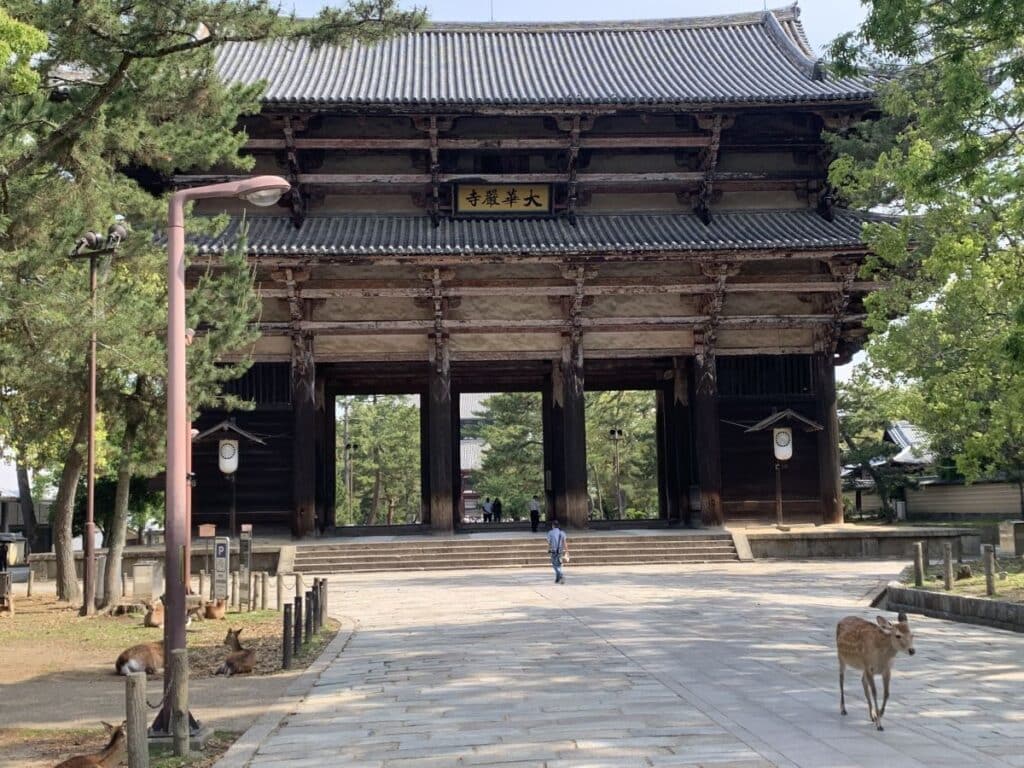
I actually found it more impressive than the Buddha inside.
However, this doesn’t mean you shouldn’t go inside and see the Buddha.
Fifteen metres high and weighing 500 tonnes, you don’t really get a sense of its scale when standing in front of it, so, before you enter the complex, look to your left as you walk up the path toward the temple. Outside the Todai-ji Museum, you will walk past a life-size model of the Buddha’s hand, and that does give you an idea of how big the statue actually is.
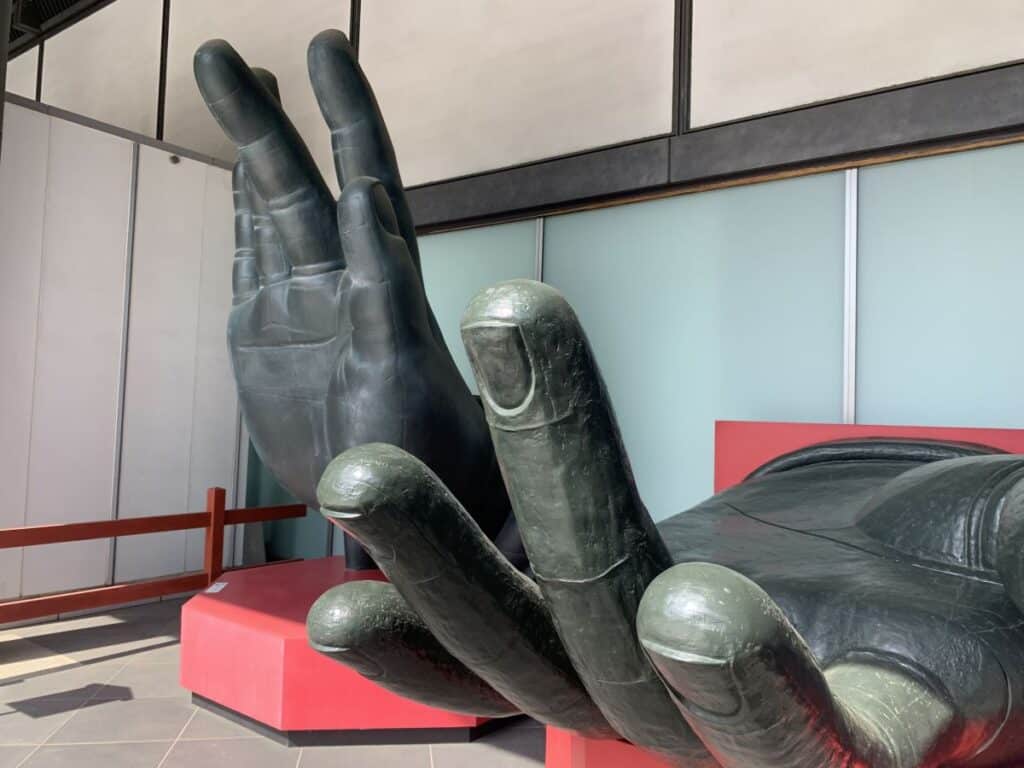
If you are smaller in stature than I am, you can also try to pass through a hole in one of the pillars in Todai-ji. It’s said that this is the size of the Great Buddha’s nostril and, if you can get all the way through it, enlightenment beckons. Do not get stuck!!!
Todai-ji is open seven days a week, with the Great Buddha Hall accessible from 7.30 to 5.30 from April to October and 8 am to 5 pm, November to March. The Museum opens from 9.30 am and closes at the same time as the main complex. There is an entry fee of 800 that covers the Giant Buddha Hall and other associated shrines and buildings in the complex. If you want to go inside the museum, you can buy a combined ticket for 1200 yen.
5. Explore Nara Machi
Nara Machi isn’t on the average Nara day trip route so, it’s a great way to escape the crowds that throng Nara Park.
The area is full of old wooden houses, many of which now house independent shops, cafes and restaurants, but you can also wander into old merchant homes with beautiful gardens, explore small shrines and visit the local sake brewery for a tasting.
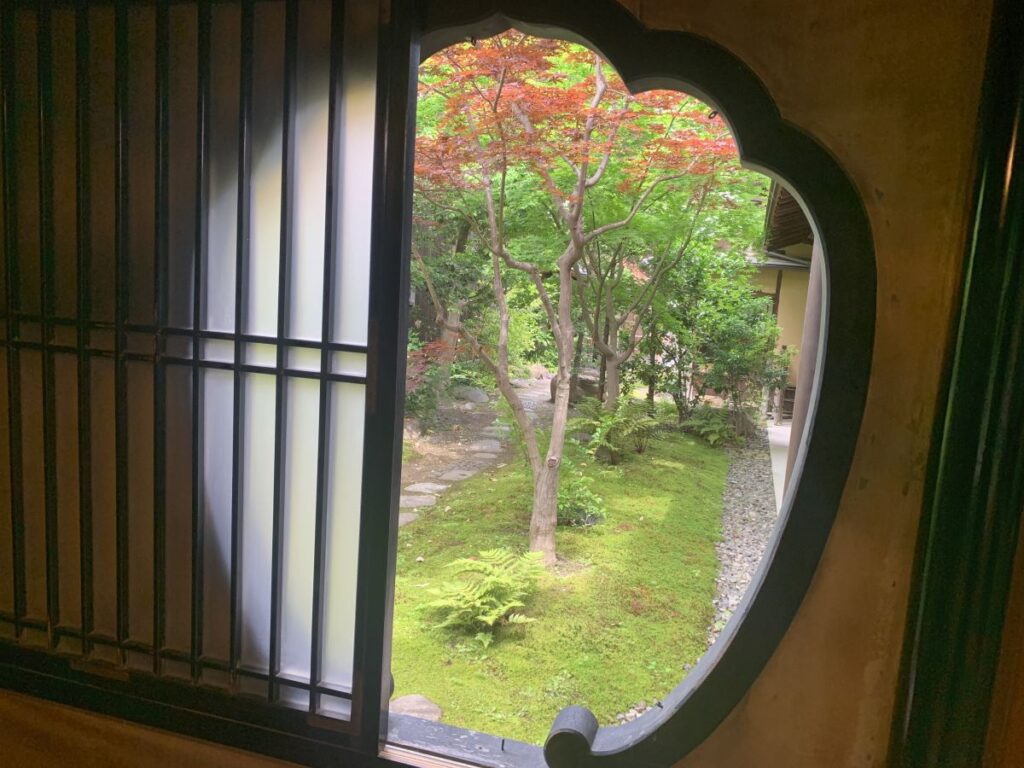
Some of the highlights include the old house, Naramachi Nigiwai-no-le, Konshido with its monkey statues, the shrine with a friendly pup, and the fun-sounding Museum of Dung Beetles!
Also look out for the hanging red ornaments that look a bit like boxing gloves – these are Migawari Zaru ‘substitute monkeys’ and hanging them outside your home is said to ward off bad luck. If you visit the Naramachi Museum, you can buy your own Migawari Zaru to take home.

One important thing to note is that many sights in Nara Machi close on a Monday and some other days in the week, so check the opening hours of things you are particularly interested in.
You can walk to Nara Machi from Nara Park in around 10 minutes, but if you’re coming from Nara JR Station, it’s best reached by bus. You can catch the tourist-friendly No. 1 bus from outside the station building.
6. Do Something Fishy
If you’re a goldfish fan, there are two sights in Nara you might want to investigate. The first is the Nara Kingyo Museum. Like the Art Aquarium in Tokyo’s Ginza, this is a display of fish exhibits in ornate tanks and bowls.
It’s a bit out of the centre of town, but if you have a couple of days in Nara, it’s easy to get here by bus no 48 from Nara Kintetsu Station.
The stop name is in Japanese, but Google Maps will guide you. It’s then a thirteen-minute walk from the stop. At this point, though, you might get a bit confused as you won’t see it. The museum is inside the M! Nara Mall. Head inside and go to the fourth floor, then the signs will lead the way.
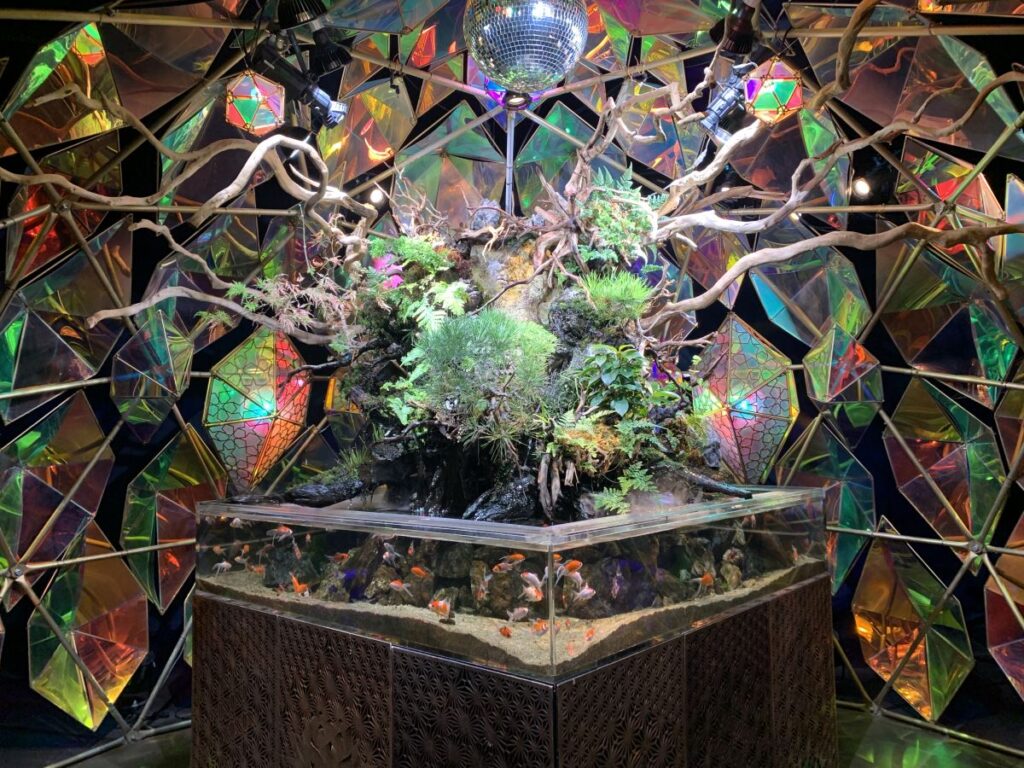
The museum is open from 10 am to 6 pm, seven days a week and costs 1300 yen for adults and children of Junior High School age, then 800 yen for elementary school-aged children, 300 yen for those aged 4 to school age, while under 4s get in free.
The other fun-fish option is to take a four-minute train ride on the Yamatoj line from Nara Station to the town of Yamato Koriyama. It’s not a town full of jaw-dropping torii gates or cuddly deer, but if you’re looking for a small Japanese town with a quirky side to wander around, this is it.
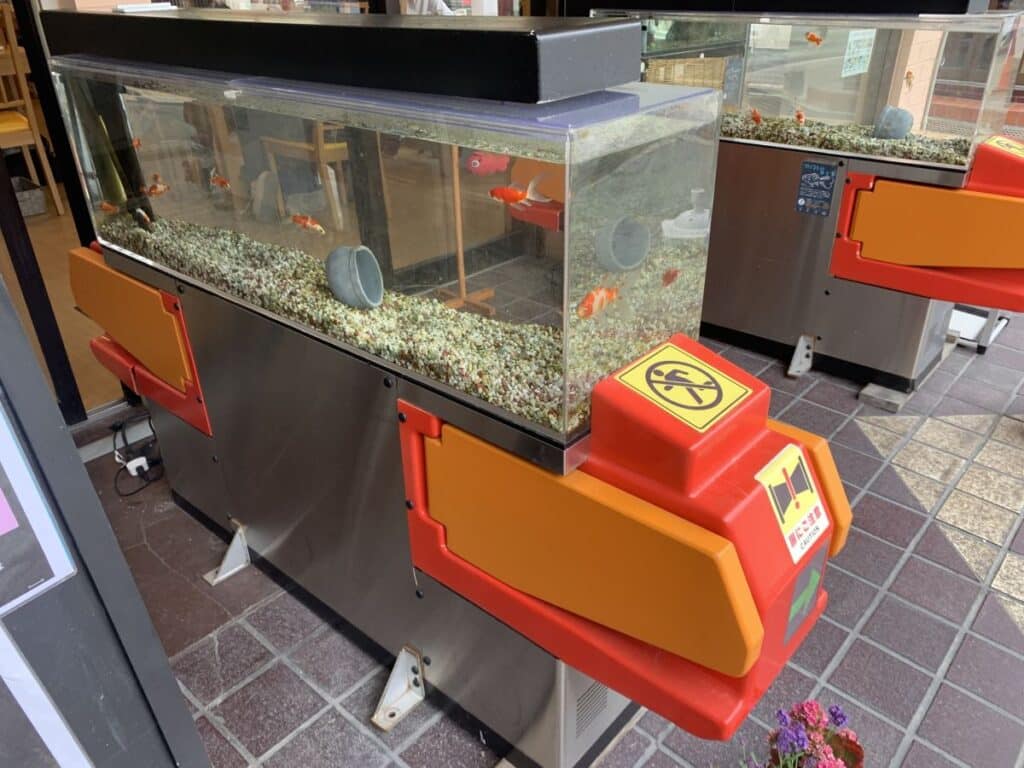
Goldfish from this area are prized all over Japan, and the town has lots of different goldfish touches all over it. I wrote a walking guide to all the sights on Japlanease’s sister blog, Differentville, which looks at smaller, quirkier things to do. Read the Guide to Japan’s Goldfish Town.
Need Extra Planning Help?
Our Japan trip planners can help. You might like our First-Timers Japan Planner, which will help you plan your trip to Tokyo, Kyoto and Osaka step-by-step, including tips on everything from picking hotels to sightseeing and dining. Or our super-duper Tokyo Disney Planner makes arranging your park trip MUCH easier. Find them in our Planners store – printable and digital versions are available.
7. Enjoy the Gardens
If you have green fingers, you’ll love Nara. You’ll find gardens attached to a number of the shrines, including the Manyo Botanical Gardens attached to Kasuga Taisha and Todai-ji, plus there are two main gardens to visit.
Isuein Garden actually consists of two different types of garden – the first is Japanese-style and planted in the 17th century, while the second is a 20th-century-style garden. There are also four tea houses in the garden.
It’s open every day except Tuesday (guess what day I was in the area!).
It costs 1200 yen to visit Isuein – but this also includes entry to the Neiraku Museum, which contains 2000 pieces of art of China, Japan and Korea.
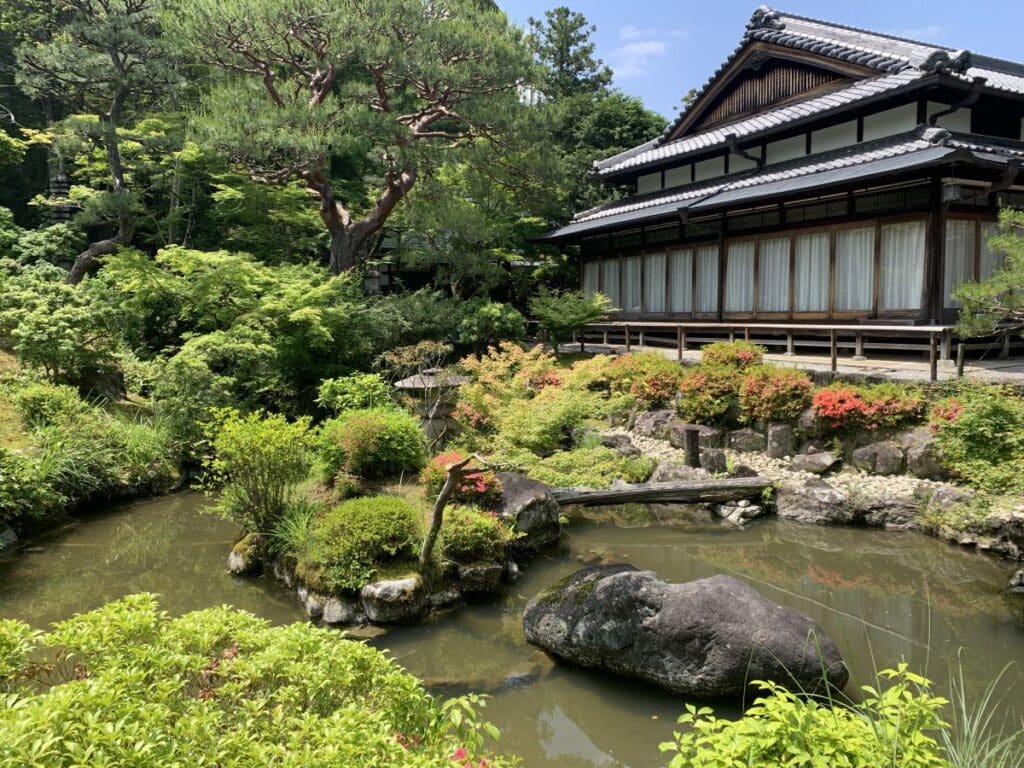
Yoshikien Garden (above) is virtually next door to Iseuin, and it is free to visit.
It’s also open every day of the week (except for the last few days of February) from 9 am to 5 pm.
It contains three different types of garden – the garden with a pond, a moss garden and a garden with flowers. There is also a teahouse.
Despite being just steps away from Nara Park, the garden gets a fraction of the visitors; if the crowds (or the deer) are getting too much, wander in for a lovely, peaceful reset.
8. Eat Mochi from Nakatanidou
If you’ve spent any time on social media, you’ll have seen the workers in this shop pounding the mochi in a fantastic show of synchronicity – what they don’t show is the scrum of people crowding into the road outside and the stressed-out security guard trying to stop people getting run over while it happens.
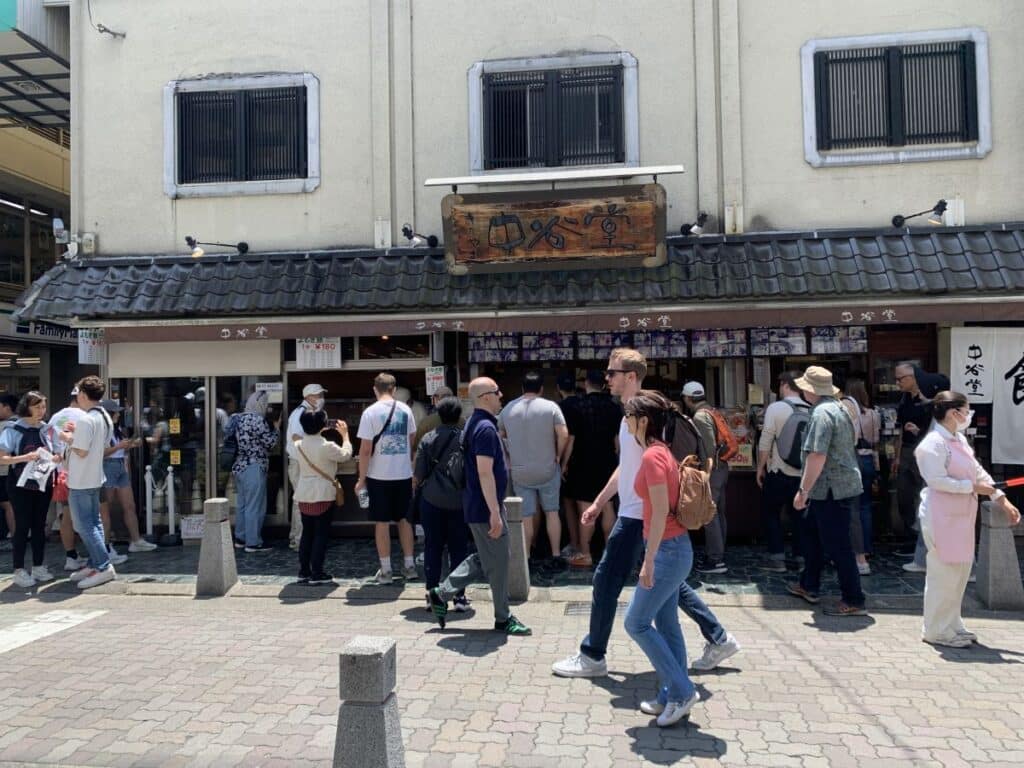
So, in a controversial opinion, I would say skip the show (watch it on someone’s Instagram instead) and stop in afterwards to just pick up the mochi.
If you’re staying in Osaka before or after your Nara visit, you can try mochi pounding yourself, which sounds far more fun than cramming into a scrum of 200 other tourists with their phones in the air.
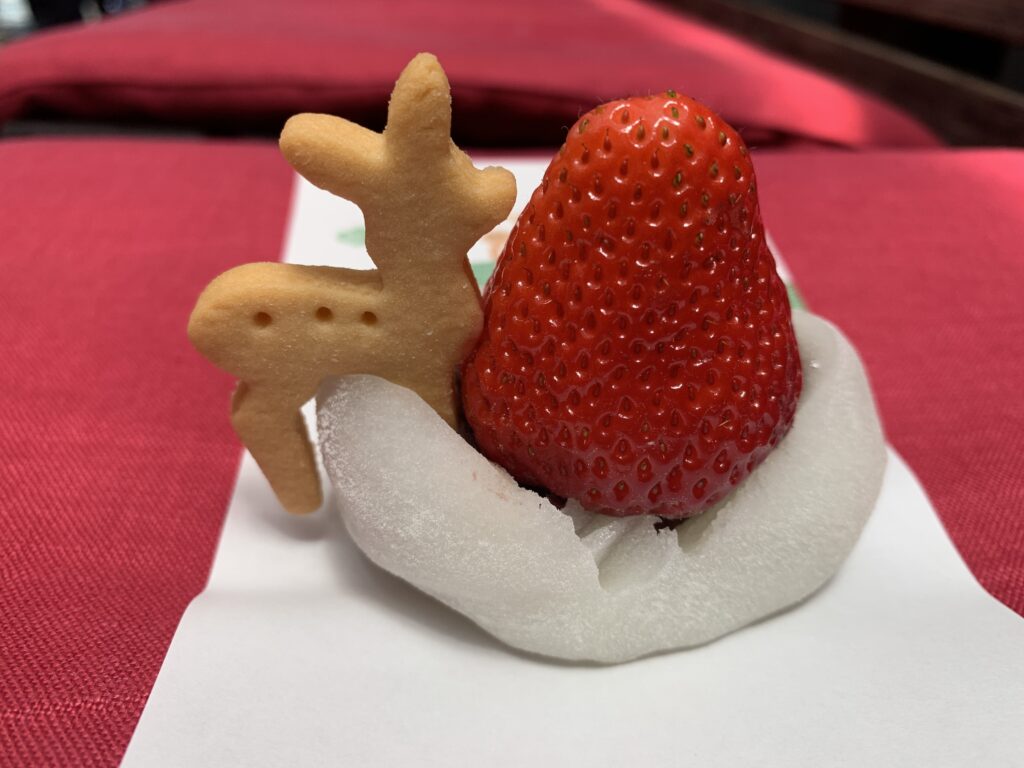
If you’re looking for a cute, sweet treat, head down the road to Daibutsu Ichigo, who sell mochi, but also daifuku (mochi filled with a sweet bean paste) topped with a delicious strawberry and a cute deer-shaped cookie.
Save Money with Klook & Japlanease
If you plan on buying tickets or tours from Klook for when you’re in Japan, you could save up to 10 per cent by using the code JAPLANEASEKLOOK at the checkout. Click here to see what’s on offer.
T&Cs apply. Some items, including Tokyo Disney and USJ tickets, are not available for discounts.
9: Stay Somewhere Unusual
Opening in June 2026, an interesting new hotel is coming to Nara – Hoshino Resorts is opening a hotel in the old Nara Prison building.
The old shell of the building has been retained, and the 48 rooms are occupying the old cells – but don’t worry, I know Japanese hotel rooms are usually small, but here they’ve combined a few to make each space (the room types are named after the number of cells they used).
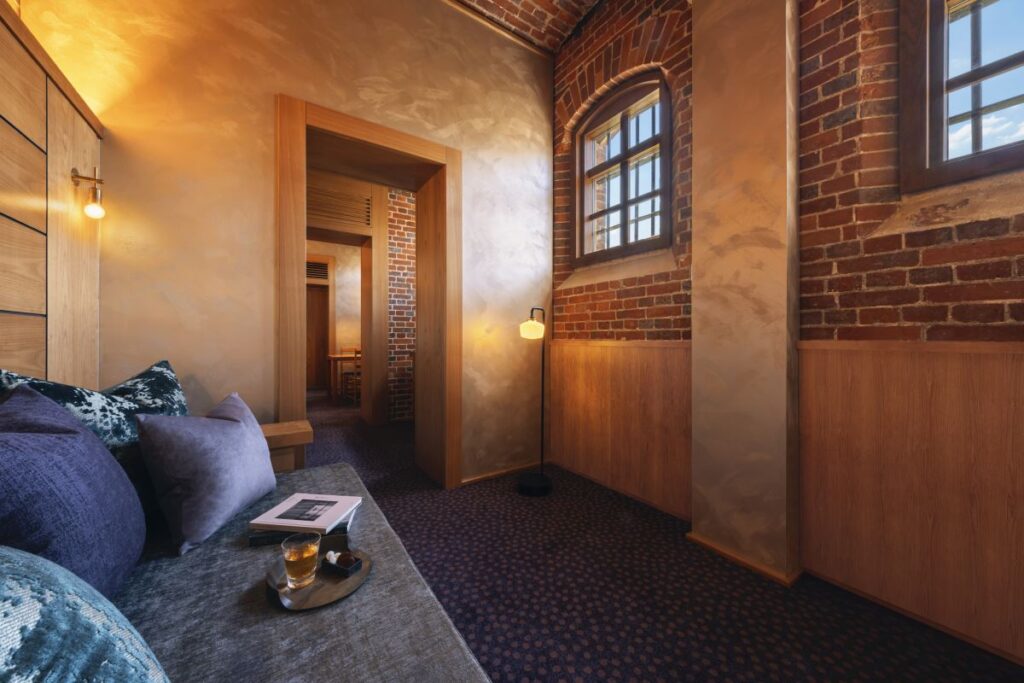
As with all Hoshino hotels, activities are an important part of the experience of staying here, and they offer a perfume-making class for guests.
There is also a museum opening on site, which will also be open to people not staying at the hotel. Tickets need to be booked in advance.
It’s an interesting choice for a luxury hotel, but if you’re looking for somewhere a bit different to stay during your Nara visit, it should go top of your list. Find rooms and rates here.
10. Ride the Ayoniyoshi
You might have seen this purple and green train on social media – and, if you’re coming to Nara from Osaka or Kyoto, it might be a cool way to get here. It will bring you to Kintetsu Nara Station.

I admit, while I think the train is really pretty, I wouldn’t do the trip for the scenery alone, and it does cost more than the normal train – but if you want to arrive in style, you might want to check it out.
Bookings are essential. For full details of how to book and when – because it does sell out – check this longer guide to riding the Aoniyoshi.
And I think that’s it, but don’t be fooled. There’s still a lot more to do in Nara than just these ten things – from small shrines hidden away in backstreets, an impressive pagoda (which was under restoration when I visited), traditional old shops selling everything from caligraphy brushes to very expensive pickles and the Nara National Museum that will be a must-see for anyone interested in traditional Japanese artworks or Buddhism. There’s a lot more to Nara than the deer!