- Hakone’s Venetian Glass Museum – The Biggest Surprise in Town - 19 March 2026
- How to Fill in Your Visit Japan Web Arrival Documents for Japan - 18 March 2026
- The Beginners Guide to Getting on the Shinkansen - 16 March 2026
When many of us think about Japanese food we tend to think about the fish dishes – sushi and sashimi – which leads a lot of people to wonder what on earth they are going to eat in Japan if they don’t like fish. Well, here are 13 suggestions for types of Japanese food – without fish – that you might want to try…
When this question comes up in some Japan groups, it’s quite often met with comments like ‘Japanese cooking isn’t just raw fish, you know’ – but, the thing is, unless you have been to Japan before, or actively seek out Japanese restaurants before you go away, how do you know that? So, this is our guide to what to eat in Japan if you don’t like fish…

A Quick Explainer
First up, let’s clarify what I mean by fish in this piece, as, when it comes to Japanese cuisine, that’s not so simple!
I’m primarily focusing on dishes that don’t contain actual chunks of fish like sushi or sashimi do. However, a lot of Japanese cooking does contain fish-based ingredients, even though you can’t necessarily taste them. I’ll point out below where they might be used in the most common dishes for anyone who is very sensitive to the taste of fish. Some dishes, like soba for example, might also offer a fish variant, which I’ll highlight below so you know to avoid it.
For this reason, this isn’t intended as a guide to those with a fish allergy.
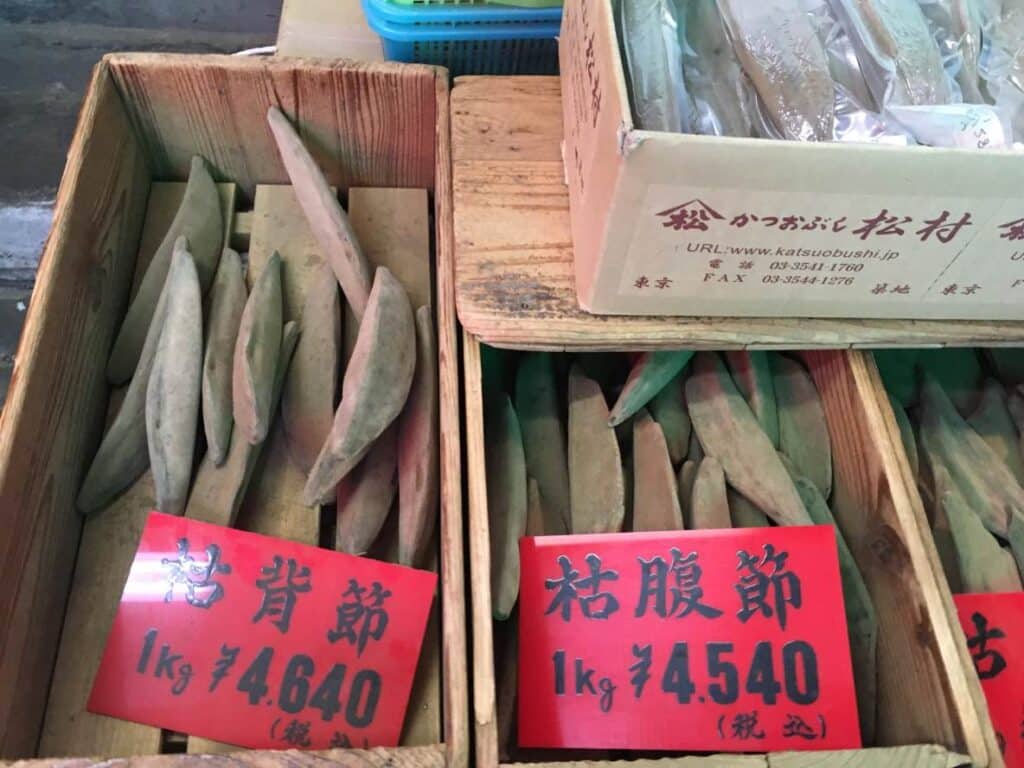
It’s too hard to know whether an individual restaurant might add a fish cake, use a stock with a splash of dashi (a broth made from a fish called bonito – that’s it above) or top a dish with bonito flakes.
If you have an allergy to fish or shellfish, it’s always a good idea to carry an allergy card that explains what you can’t eat. There’s a good one here that you can print off to make sure there’s no fish or shellfish at all in your dish.
The Quick Version
Don’t like fish but want to visit Japan? You’ll be fine!
Here are 13 delicious options for you – crispy tonkatsu (breaded pork), comforting curry rice, grilled yakitori skewers, cook-your-own yakiniku beef, karaage fried chicken, rice bowls (donburi), hot pot shabu shabu, hearty ramen, buckwheat soba noodles, thick udon noodles, omelet rice (omurice), pan-fried gyoza dumplings, and kushikatsu (fried foods on sticks).
Read on for more details, plus you’ll find a final section of tips for eating at some popular sushi restaurants with the family.
Tonkatsu
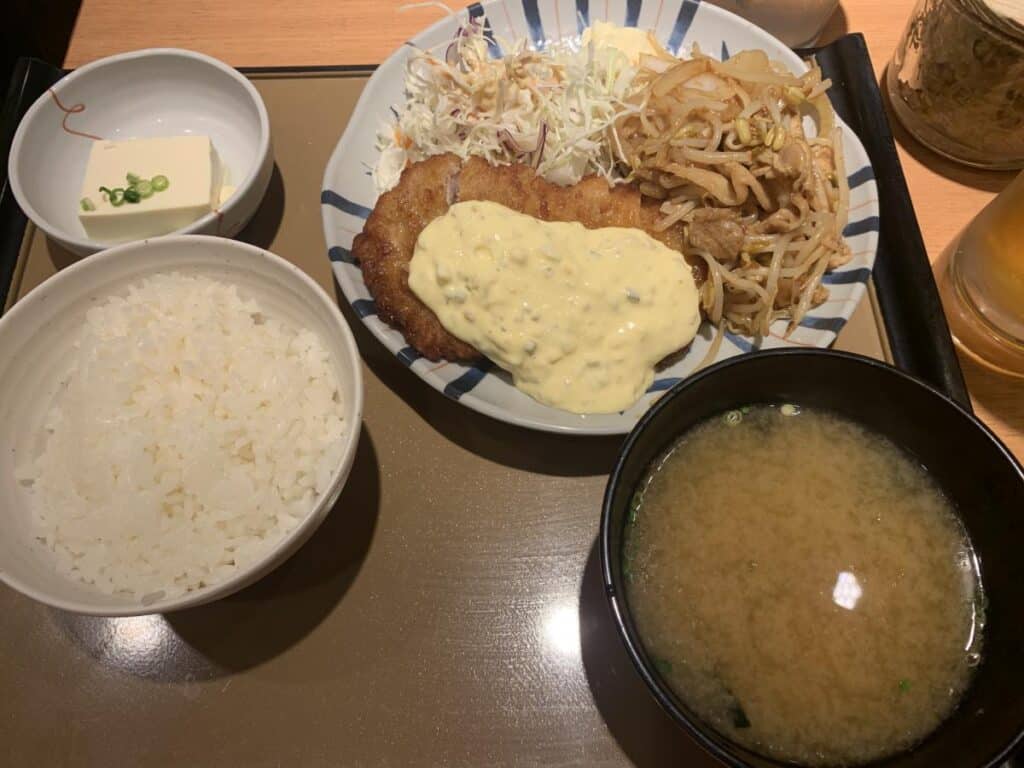
Thick slices of pork covered in breadcrumbs and deep-fried, tonkatsu is usually served with a pile of shredded cabbage (often with the most amazing dressing that will make you want more cabbage), a side of rice and sometimes miso soup or pickles as part of the set, or on the table.
Tonkatsu is one of my most frequently consumed meals in Japan (mainly because I’m obsessed with the dressing on the cabbage).
Where to Find Tonkatsu
You can go to a specialist Tonkatsu restaurant (Tonkatsu Sugita mentioned in our Asakusa guide is famous for theirs), or, I tend to get mine in a type of Japanese restaurant you’ll see listed as a Syokudo and Teishuoku restaurant.
These serve cheap-as-chips, set meals, many of which contain tonkatsu. and, while they might not be gourmet, they are a great way to fill up after a long day’s sightseeing – and they’re brilliant for families or groups, who might all have different tastes, as there are usually a few different options on the menu.
If you’re staying around Gojo Station in Kyoto, Machikadoya Karasuma Gojo is my go-to around there. There is also a branch of Yayoi – which is another chain of Syokudo restaurants that you’ll find all over Japan next door.
Curry Rice
If you’re a fan of spicy food, you might find Japanese cuisine lacking a bit in zing. When that day comes, curry rice is what you head for.
This is Japanese comfort food and it consists of a plate of white rice, served with a curry sauce. It’s a little sweeter than Indian curry and, tends to be less heavy on meat with just a few chunks of beef. It’s also not usually ‘blow your head off’ spicy – although that’s available if you know where to go!

It’s also one of the dishes that is easy to make cute-looking, so you’ll often find it in theme restaurants – the Baymax curry in Tokyo Disneyland is also particularly cute.
If you do want to increase the fill-up factor or your protein intake, pick a katsu curry that comes with a cutlet of breaded pork.

Where to Find Curry Rice
A lot of chains offer curry rice. Coco Ichibanya is a very popular one that has a huge range of dishes, but I also like Go Go curry (pictured above).
They let you choose the heat, you can customise the dish with extra chicken steaks – and they do really good pickles.
They have a branch in Shibuya, or look for their easy-to-spot gorilla logo near where you’re dining.
Yakitori
There’s something about spending an evening in a smoky yakitori joint that says, yep, I’m in Japan – although, make sure you don’t sit downwind from the chef or it might get a bit too smoky.
Yakitori is grilled food on skewers – and, yes, seafood like squid can be on the menu, but the beauty of yakitori is that you order by the skewer and so, you can order just meat, just chicken, just vegetables, or a mix of all three and not go near anything that swims!
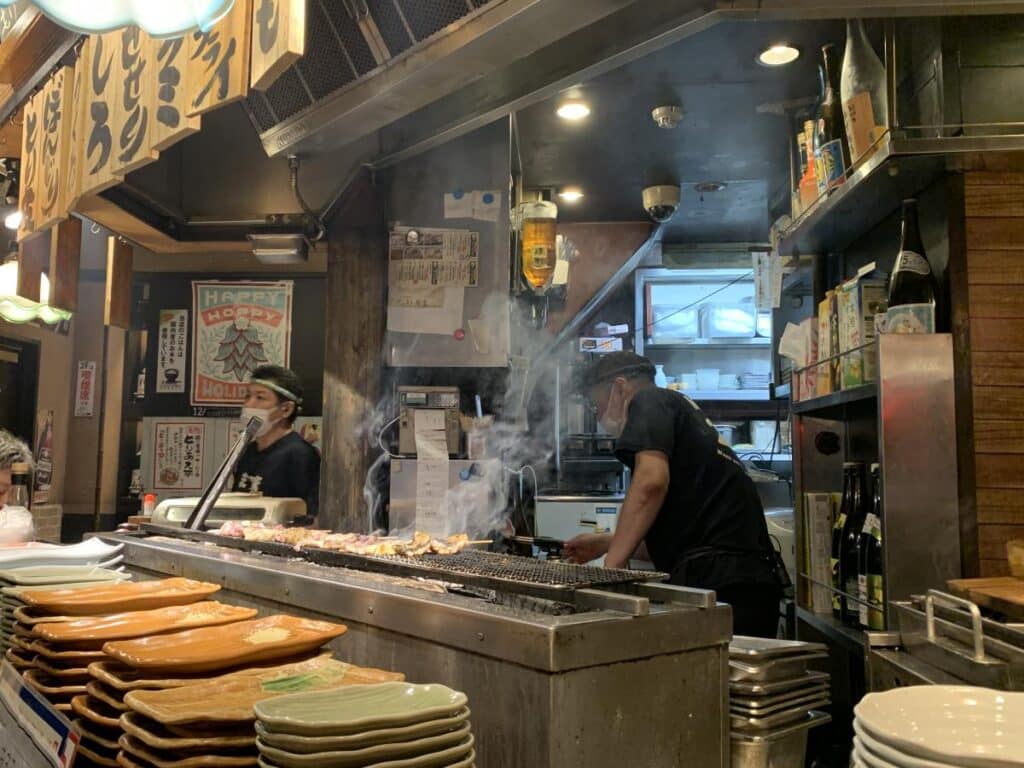
One slight downside of yakitori is, that the bill can mount up as you can get a bit carried away.
Also, expect to see some interesting dishes on the menu as all different parts of the animal can be used – intestines are a lot better than they sound, but, I don’t need to try chicken cartilage again any day soon.
If you’re an adventurous eater yakitori is a good place to try some new things without a big financial commitment.
Where to Find Yakitori
Some of the most atmospheric places to eat yakitori are found in the area under the train tracks at Yurakucho near Ginza in Tokyo.
I also had some great yakitori at Masuya in Hamamatsucho – their Tsukune, a meatball yakitori, was one of the yummiest ones I had, and I’ll be heading back there on my next trip for another plate. They have an English menu, which makes ordering simple.
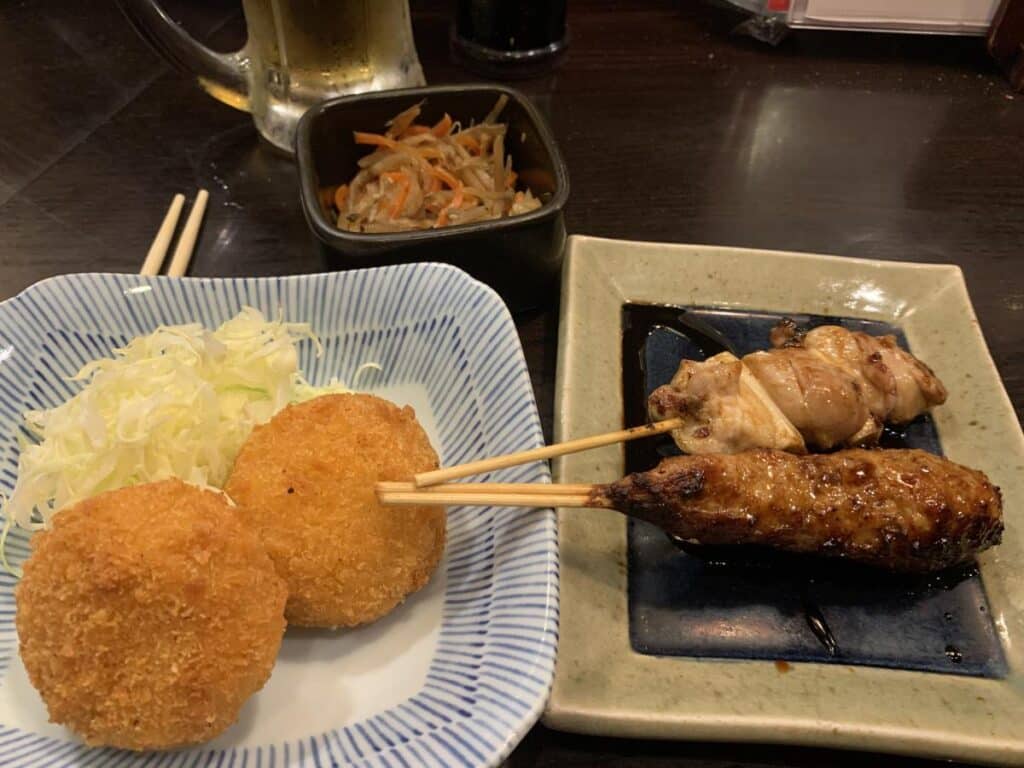
If you want to keep the cost simple, visit the chain Torikizoku where every set of skewers costs 360 yen (inc tax). Their online menu (use Google Translate) also explains the different characteristics of various parts of chicken.
Yakiniku
Yaki means grilled in Japanese, Niku means meat – so, you can probably work out what you’re going to get served here. But in Japanese yakiniku, the meat is served in small bite-size pieces, which you then cook yourself over a barbecue at your table.
Different cuts of beef and pork are commonly found on the menu – and some will sell wagyu, or other high-grade types of Japanese beef. You’ll also find chicken and vegetables on the menu. Offal (known as horumon in Japan) can also be common. Some yakiniku restaurants specialize in this.
Like with yakitori, you might see seafood and squid on the menu, but you don’t need to order them.

When you order in a Yakiniku, you can either order a set containing portions of different meats and sometimes, side dishes, or go a’ la carte, where you order a portion of different types of meat and any side dishes you need like salads, rice, noodles etc.
Where to Find Yakiniku
Yakiniku restaurants can be a very expensive fine dining experience or a cheap fun night out with friends so check prices before you head in – if you want to taste everything without the worry of a nasty surprise on the bill at the end, try a budget option like Yakinuki Like (which even have grills for one). They clearly show what’s in their sets and start at a very cheap 800 yen or go for an all-you-can-eat option. Lunch is also a cheaper time to try yakinuki than dinner.
Karaage Chicken
Japanese fried chicken! You’ll find this on menus in most izakaya (Japanese bars) but there are also restaurants specialising it in – and winning awards too!
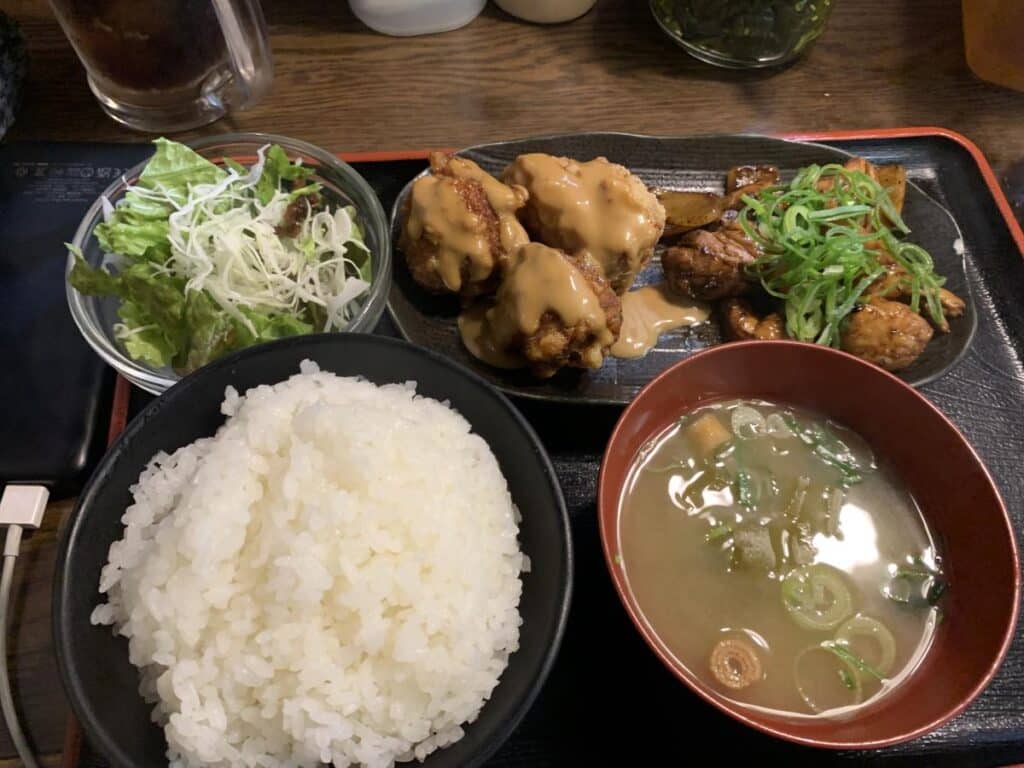
Where to Find Karaage Chicken
It’s everywhere, but the plate above came from Dogyan in Shinsaibashi, Osaka and it was fantastic.
However, the best fried chicken in Japan (according to the Karaage Grand Prix awards) is found Nakatsu in Kyushu, which has a number of fried chicken shops.
If you’re not going to Kyushi, try Karaage-ya Oshu Iwai in Asakusabashi, Tokyo, which won one of the coveted prizes in 2023 Grand Prix (2024 is voting now)
Donburi
This dish is a bowl of rice covered in toppings, and, while you might find fish or seafood-based toppings on the menu, the most common toppings include beef, egg, chicken (or a very popular combination of both egg and chicken known as oyako) and katsu chicken.

The sauce used in Donburi can contain some dashi along with soy sauce and mirin, but, if you’ve ever eaten in Yoshinoya, I think you’ll know that this is more sweet than fishy.
Where to Find Donburi
Some of the main chains in Japan sell Donburi, including Yoshinoya, Nakua, Sukiya and Matsuya – who do a very comforting beef and cheese bowl that really does not photograph well (which is why my image is of the shop rather than my dinner), but it does taste good!.
Shabu Shabu
This is another cook-your-own experience in Japan. In Shabu Shabu, very thin slices of meat and vegetables are cooked in boiling water by swishing them quickly through boiling water with your chopsticks.
You then dip them in sauce (usually soy sauce, ponzu sauce or a sesame sauce) and eat them – rice is served as a side dish. Beef is the most common meat served in shabu-shabu, but you might also find pork or chicken.
Need Extra Planning Help?
Our Japan trip planners can help. You might like our First-Timers Japan Planner, which will help you plan your trip to Tokyo, Kyoto and Osaka step-by-step, including tips on everything from picking hotels to sightseeing and dining. Or our super-duper Tokyo Disney Planner makes arranging your park trip MUCH easier. Find them in our Planners store – printable and digital versions are available.
Ramen
This soup-based noodle dish is found everywhere in Japan, and there are a number of regional variations and ramen types. Tonkatsu ramen, for example, uses broth made of thick pork stock and is usually quite milky in colour, clearer broth is more likely to be chicken-based.
Most ramen is topped with slices of pork (known as Chashu), a boiled egg, some spring onions and maybe some seaweed – fish is rarely used as a day-to-day topping, and the restaurant will be known for this if it does use it.

When to Watch Out
- Sapporo-style ramen will use fish in the broth
- Dashi might be used, but not in big enough quantities to overpower the other tastes.
- Fish Cakes: If there’s a swirly pink and white circle topping your soup, this is fish-based.
Where to Find Ramen
You’ll never be far from a ramen shop in Japan.
If you want to try all different types of ramen, you might want to visit one of the ramen ‘museums’ – there’s one in Yokohama, and another one in Odaiba (see details of that in our Odaiba guide).
Or, try Tokyo Ramen Street in the maze of shops and restaurants underneath Tokyo Station or Kyoto Ramen Koji, on the 10th floor of Kyoto Station.
Soba
Soba are noodles made from buckwheat, they can be served in soup-like dishes topped with tempura or tofu, or, on their own as a set with extras like tempura or curry. Or as dipping soba, where the noodles are uncoated, the ‘toppings’ are served on the side and there’s a sauce for you to plunge the noodles into.
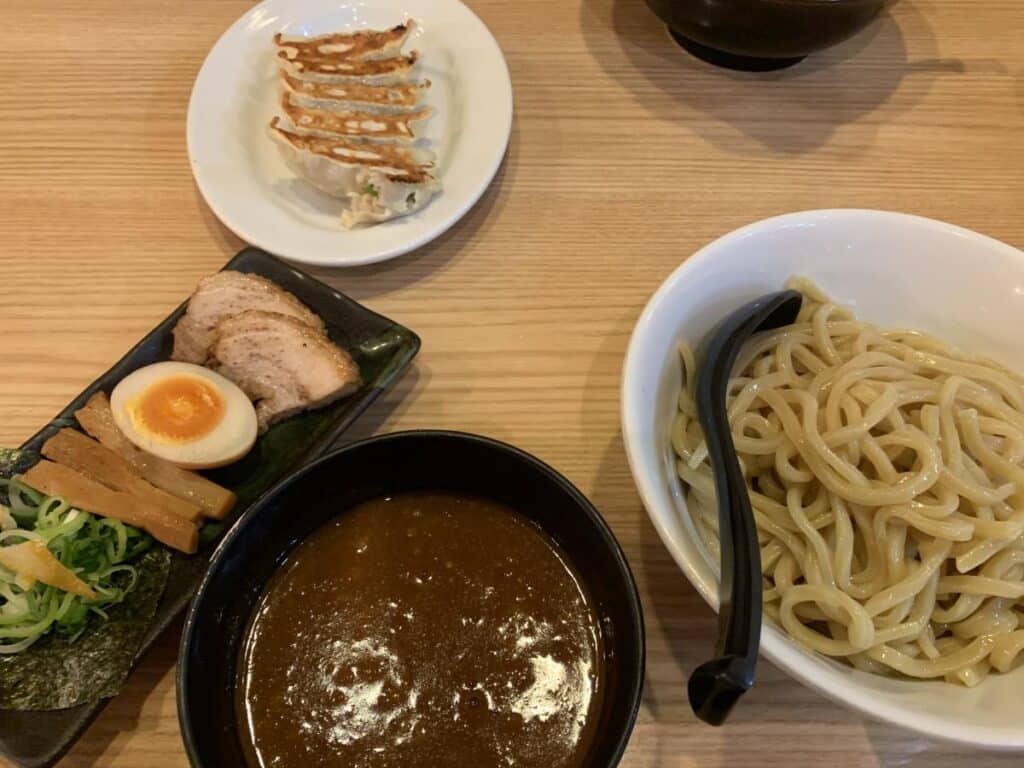
There are a few soba dishes that might contain fish-based ingredients – and two that might have actual fish.
When to Watch Out
- Soup-based soba: Contains dashi (mild fish taste)
- Nishin soba: Topped with herring (avoid!)
- Kake soba: Can come topped with a fish cake
- Tempura sets: Often include whole prawns
If you aren’t sure what’s what on the menu, check the pictures, or the plastic food outside the restaurant to check – you’ll easily spot the nishen as it looks like silvery fish, while prawns will beleft whole and the tail is left sticking out.
For the minimum chance of ‘obvious fish presence’ stick with what’s known as Kitsune Soba (one of our must-eat Osaka dishes) – which is topped with tofu or curry soba, which comes with a side of curry rice.
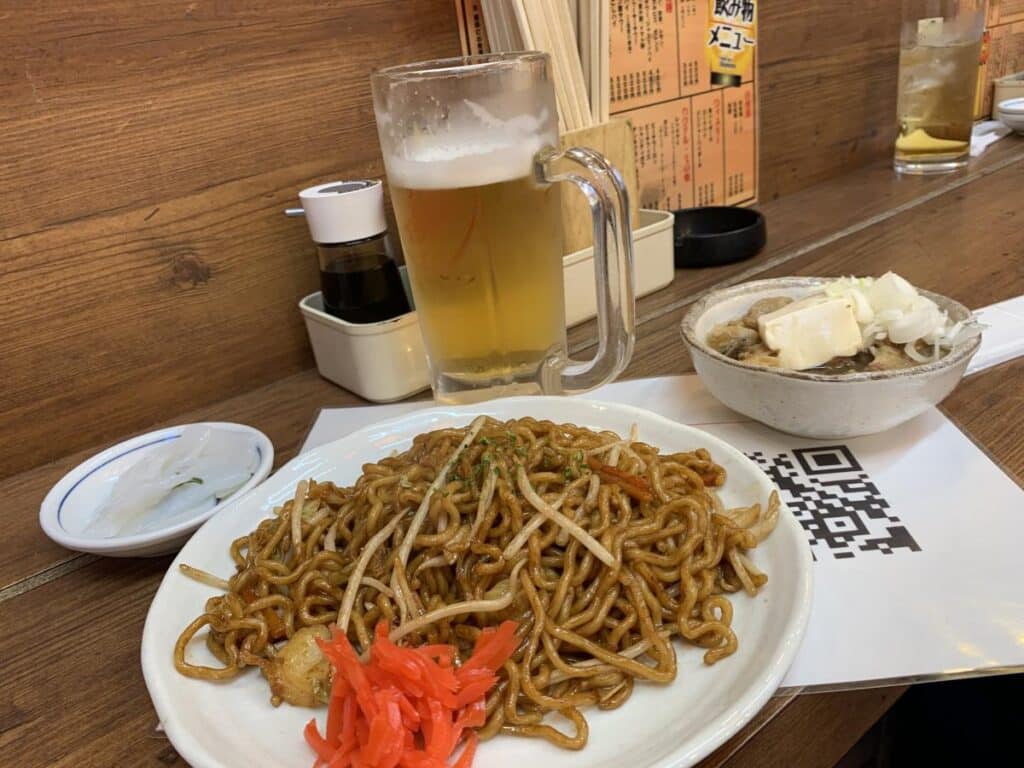
Yakisoba is fried soba noodles – these are made with vegetables and meat, but, you might find prawns or squid are also added in some restaurants.
Udon
Udon is a thicker noodle than soba and is made from plain wheat rather than buckwheat.
It can be served in a soup, which again, might contain a splash of dashi or as a cold dish of ‘naked’ noodles which you dip in sauce – again, this might have some dashi.
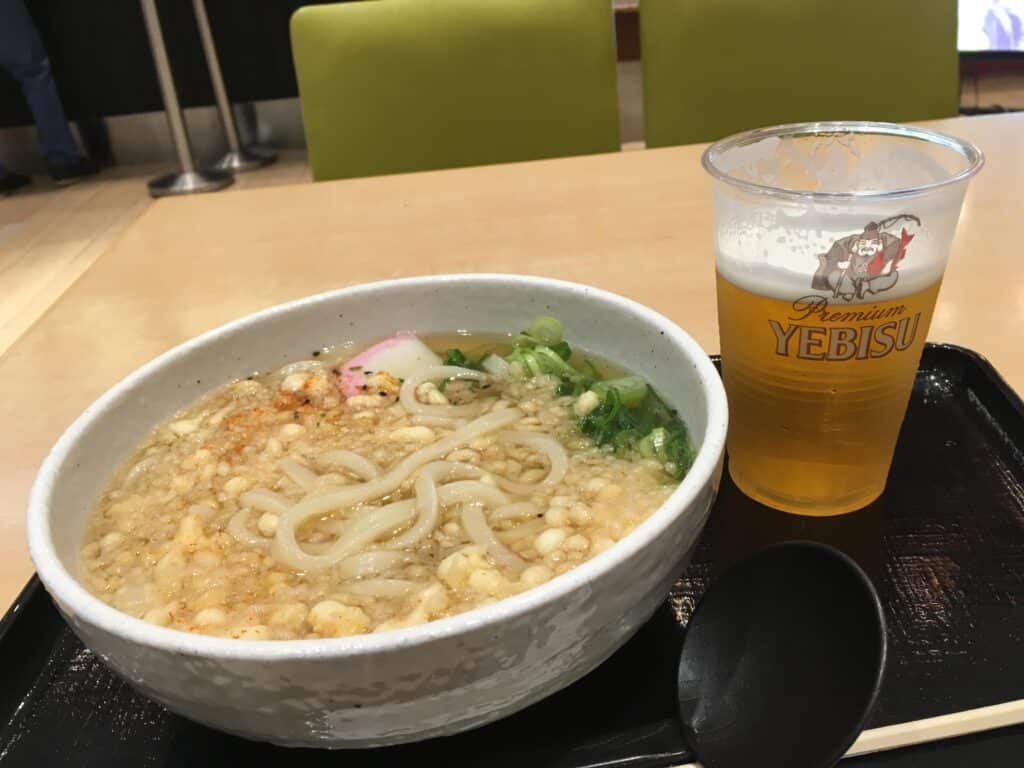
Like with soba, you might find a fish cake on top of the more plain types of udon – or prawns used in the tempura part of the dish.
Omurice
This is an omelet, usually slightly runny inside, filled with chicken rice, and topped with either a red or brown ketchup-like sauce. It’s another Japanese comfort food said to have been invented in Osaka.
Where to Find Omurice
You’ll usually find it in restaurants described as Westernized Japanese.
One of the most famous Omurice restaurants currently in Japan is Kyoto’s Kichi Kichi Omurice, which is as famous for its theatrical chef as the food they serve.
They require advance reservations. But they change the system as to how to do this regularly. The best place to keep up to date with the latest way of getting in is to visit their Instagram page and find the latest announcement on how to make a booking.
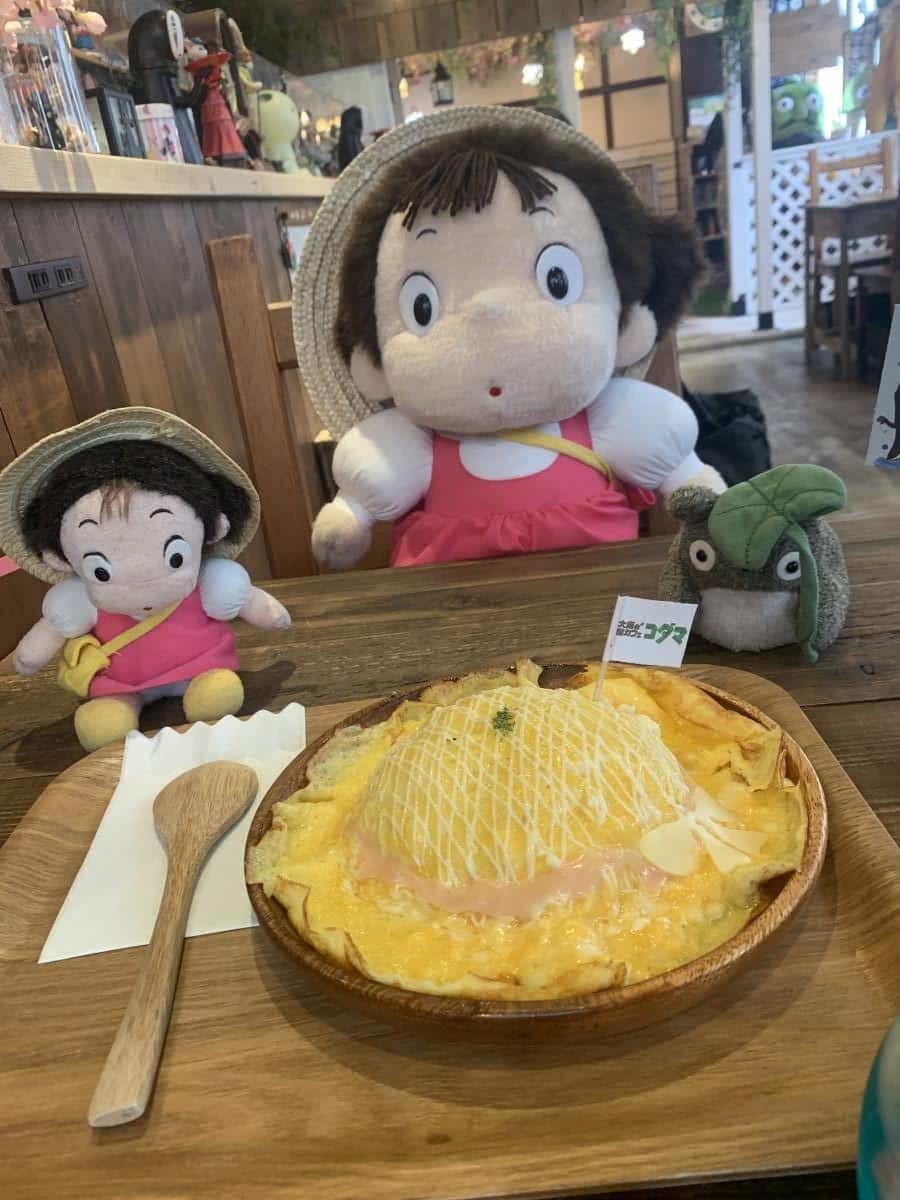
In Tokyo, you can try Kissa You in Ginza. They only open at lunchtime and you might have to queue here as well – also note, they only take cash. They also have other dishes on the menu if you’re traveling with those who don’t like eggs.
The cutest omurice I’ve eaten though has to be the one at the Ghibli-themed Moriacafe Kodoma in Nagoya – look how adorable it is. Reservations are essential here so message them via Instagram. This is also when they post their opening hours as they can vary slightly.
Everything is in Japanese on their social media, so you’ll need to use Google Translate, but, they do take reservations in English and they have an English menu. They only take cash.
Gyoza
These fried dumplings are usually filled with a mix of meat (often pork) and vegetables and served with a dipping sauce. They can be served as a side dish in many restaurants, are usually on the menu at an izakaya, or, order a few portions to make up a main meal.

Where to Find Gyoza
Gyoza is pretty easy to find in Japan as many restaurants including ramen joints, soba joints and Chinese restaurants all sell it – and, but, you’ll also find specialist gyoza restaurants.
I liked the chain Dandadan (which I mentioned in the list of where to eat in our Shinjuku Guide); their dumplings were great and they came with an amazing coriander salad.
KushiKatsu
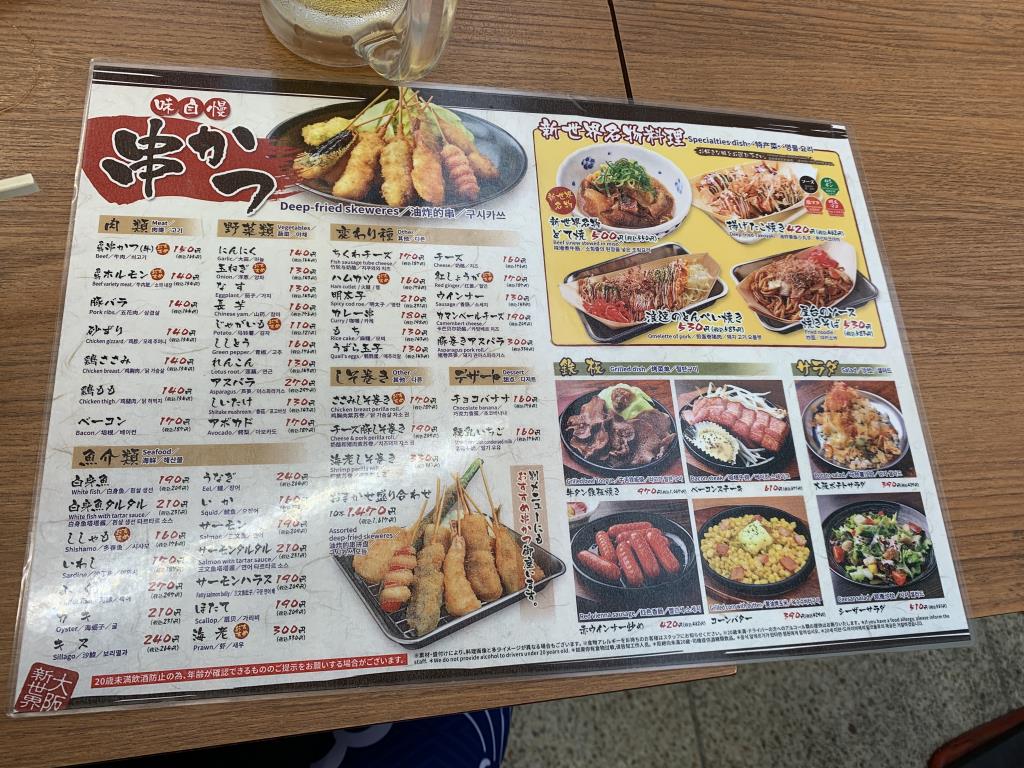
Fried, breaded food on sticks – what more do you want? Like yakitori, you might see fish or seafood on the menu, but, you can pick your own options – always have the cheese!!!
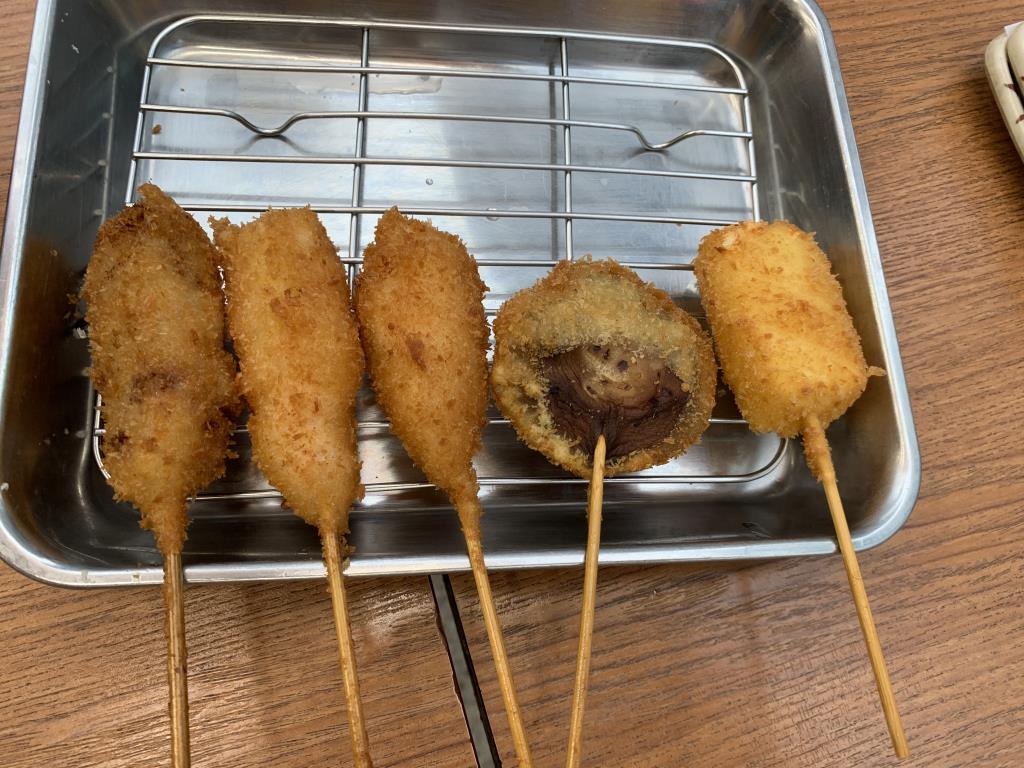
The sticks are then dipped into a thick sauce and the number one rule with kushikatsu is to never double dip as the sauce stays on the table (although the last place I went to in Osaka served the sauce in individual portions).
Instead, you use the cabbage leaves you’ve given with the meal as a kind of scoop to ladle on more sauce if you need it.
Where to Find Kushi Katsu
One the easiest places to try kushikatsu is the Daruma chain which you’ll recognise by the giant chef’s head model, or statue, outside – but, if you go to Shinsekai in Osaka, you’ll find a lot of restaurants offering it.
What Can You Eat In a Sushi Restaurant
If you don’t like fish then you’re probably best steering away from an expensive sushi restaurant where the chef decides what you’re going to eat, as that’s likely to all be fish-based but, say the rest of the family want to visit a sushi train – is there anything there for you?
And the answer is yes… especially if you go to one where you can order off a menu, or a screen in front of you as well as just selecting from what’s on the conveyor.
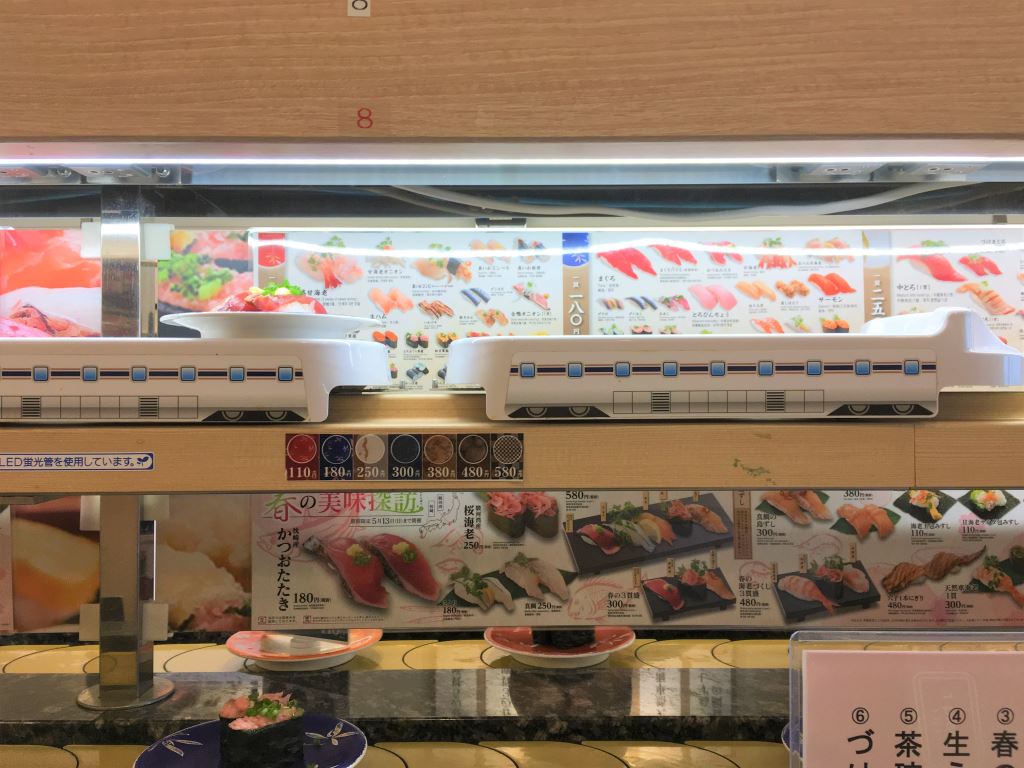
If you’re a bit nervous, a chain like Kura, Sushiro, Uobei (which delivers your meal on a mini bullet train and is my favorite choice) or the very popular Genki in Shibuya will also have an English menu so you know exactly what you’re getting.
Some of the dishes without fish that you’ll be able to choose from include sushi filled, or topped with, cucumber, avocado, beef, omelet and vegetables. Outside of the sushi selection, you can order miso soup, teriyaki chicken, beef bowls, gyoza, fried chicken, and Kura even sell udon or ramen dishes.
So, there you go – a list of 13 different types of food you can eat in Japan if you don’t like fish. There’s obviously lots more fish-free single dishes like edamame, sausages, potato salad, Japanese omelet, croquettes you can order. And a wealth of international fish-free cuisine including stir-fries, burgers, pizza or 7-11 sandwiches that you can try as well. You’re certainly not going to starve in Japan just because you don’t like fish.

Who Writes This Blog?
My name is Helen Foster, and I’m a journalist and author. My travel articles have appeared in publications including The Australian, Escape, RAC Horizons, Jetstar Magazine, Sainsbury’s Magazine, and more.
I’ve traveled to Japan eight times before – solo and with my partner and visited over 25 towns and cities. My last visit was November 2024 so, everything here is pretty up to date.