
- How to Eat More Vegetables in Japan - 28 July 2026
- Tokyo to Kawaguchiko: Is the Train or Bus Better? - 23 July 2026
- How to Try Kintsugi on Your Japan Trip - 21 July 2026
One common complaint of people visiting Japan is that the cuisine is devoid of vegetables and they’re craving a fibre fix by day four. But is that true? And if it is, how can you eat more of them? Our guide has all the answers.
I am guilty of falling into the ‘Japanese food has no veggies’ thought trap.
I always think that the only veg I consume the whole time I’m there is cabbage, so on my most recent trip, I decided to look a bit harder at what I was consuming – and yes, there was a lot of shredded cabbage, but also green beans, onions, lots of mushrooms, seaweed and other sea vegetables, green peppers, leeks, corn and more.
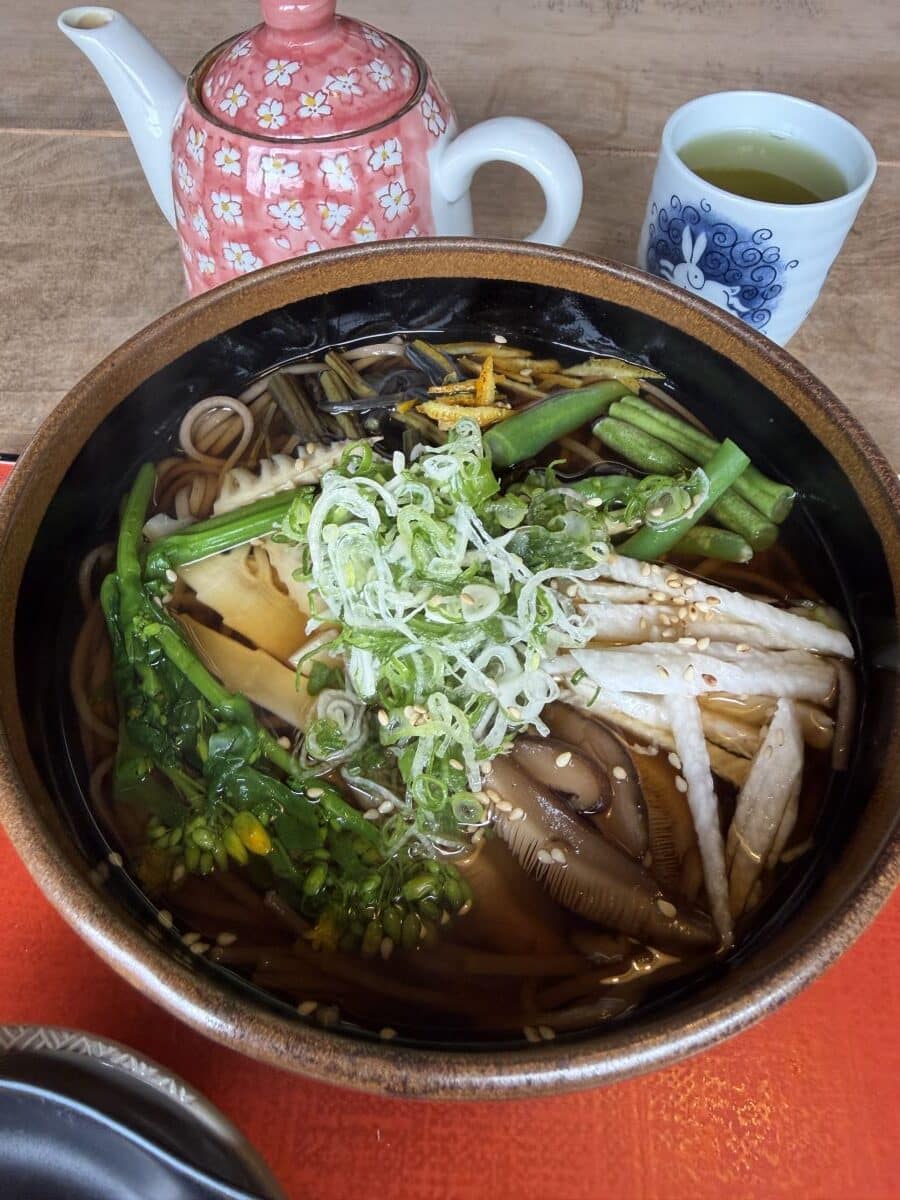
At this point I realised something – it’s not so much that you don’t get vegetables in Japanese cuisine, it’s just not necessarily the types you are used to eating, which can skew your judgement a bit.
Plus, they perhaps aren’t served as obviously as they might be in a Western dish.
Traditionally, the Japanese balance their meals via a principle called ichi-juu san-sai – one soup, three dishes. A meal fitting this will contain miso soup, a bowl of rice, the main part of the dish (meat, fish, tofu, etc) and two small side dishes. These sides are often where the vegetables fit in, but if you’re used to the Western proportions of ‘meat and two veg,’ the servings of these can seem a little small.
This means you need to think differently about getting your vegetables in Japan, and if you’re a heavy consumer, perhaps having to make a little bit more effort to seek them out. Here’s what might help…
Don’t Just Think Familiar
I think this is the number one reason people don’t think they aren’t getting enough vegetables on their Japan trips – you’re unlikely to see common veggies you might be used to, so you don’t realise how many you’re actually taking in.
According to YouGov, the most popular vegetables eaten in the USA are potatoes, sweetcorn, broccoli, carrots, onions, green beans, tomatoes, cucumbers and romaine lettuce. I have never been served any of those as an included side dish in Japan – but I have eaten almost all of them on my travels, either as part of my main dish or as an added, extra side dish.
The bowl of soba below, for example, has four different vegetables in it.
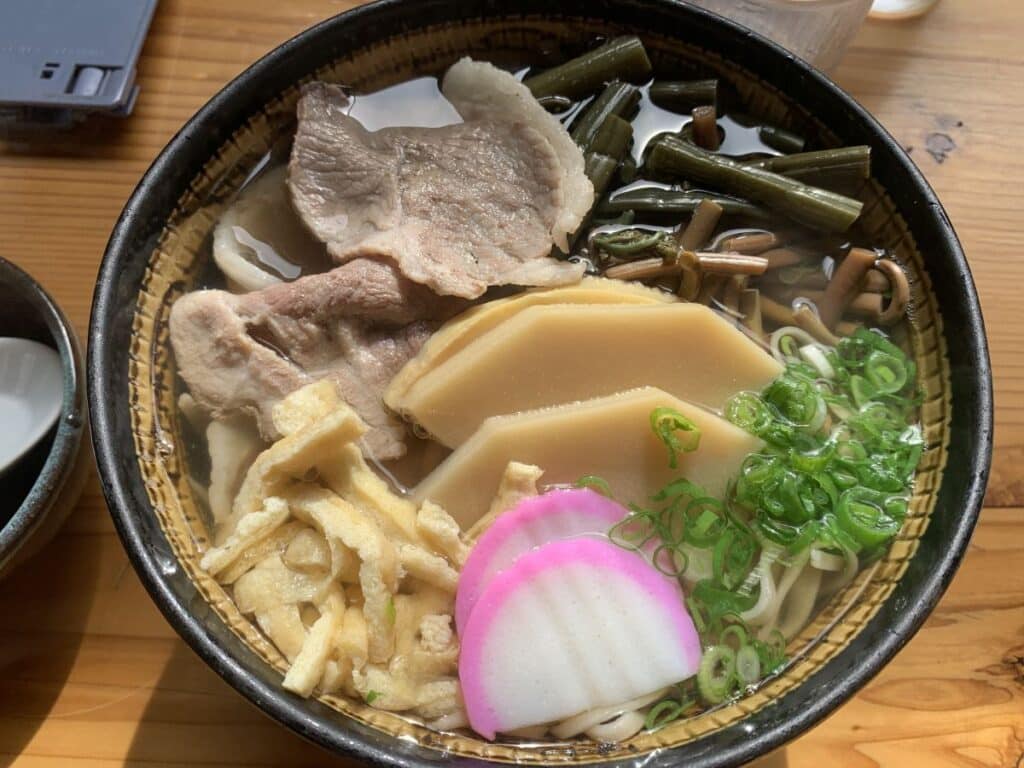
I rarely eat tomatoes when I’m there (something I have daily at home), but I do regularly eat lots of different mushrooms, spring onions, lotus root, bamboo shoots, green cabbage, pickles, eggplant, green peppers/padron peppers, leeks, watercress, coriander (used as a salad base like we’d use lettuce) and a lot of sea vegetables I still don’t know all the names for. All of them delicious.
So don’t just judge your veggie consumption by the ones you’re used to.
Pick The Right Cuisines
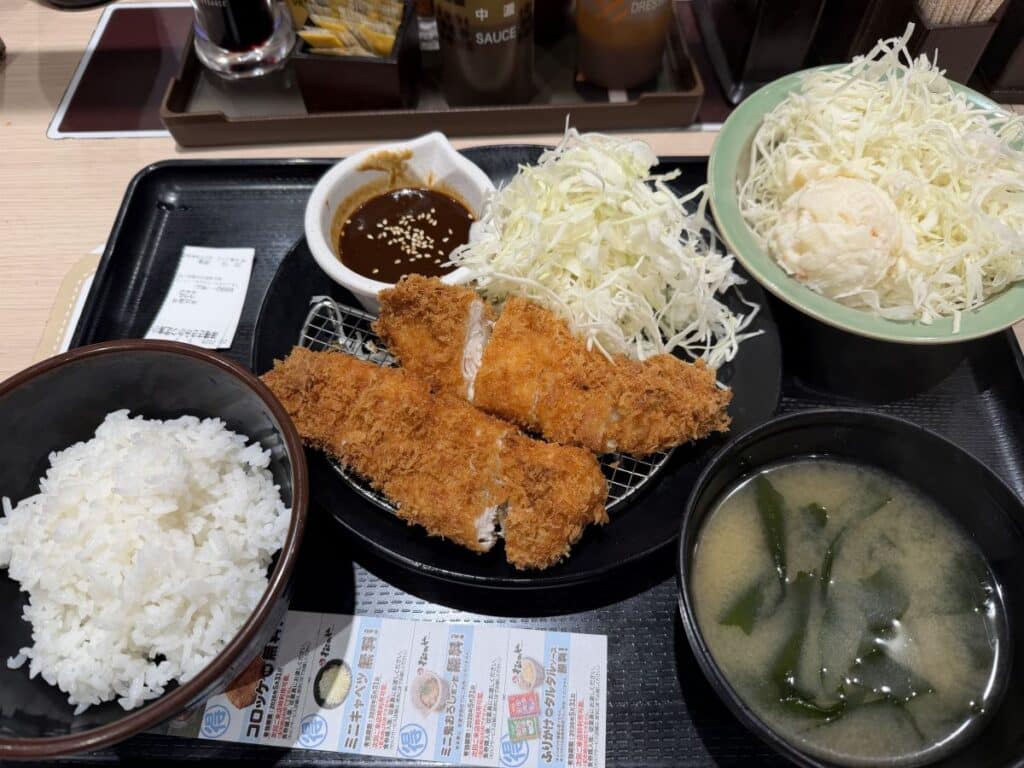
Some types of food in Japan are more likely to come with an opportunity for vegetables than others – if you’re eating tonkatsu, for example, your veggies are likely to be limited to a side of shredded cabbage.
Go to a sushi restaurant, and you’ll be lucky to get anything green at all.
However, go for yakitori, and you’ll find different types of veggie skewers on many menus; yakiniku offers vegetables to grill, shabu shabu and sukiyaki can see you cooking many different types of leafy veg, oden is a stew packed with different types of vegetables, nabe-style hotpots can be vegetable-heavy as can some soba dishes.
If you eat in a type of Japanese restaurant called teishokyu, these offer set meals that usually include rice, miso soup, a main dish and a small side that usually has a vegetable or pickle in it.
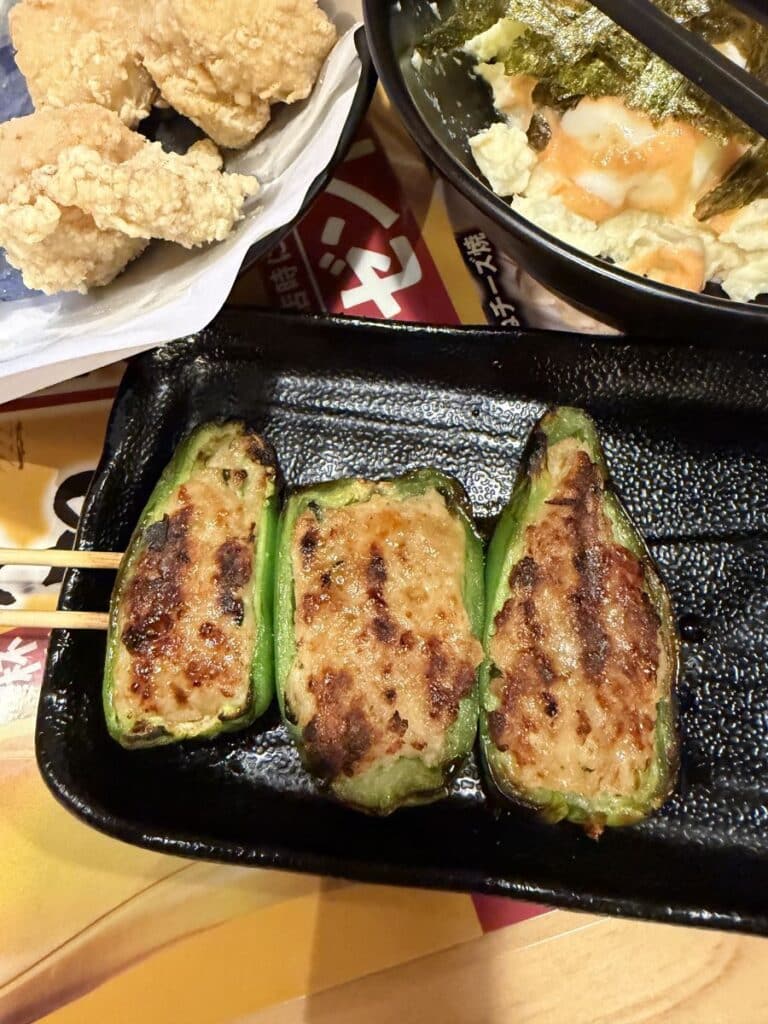
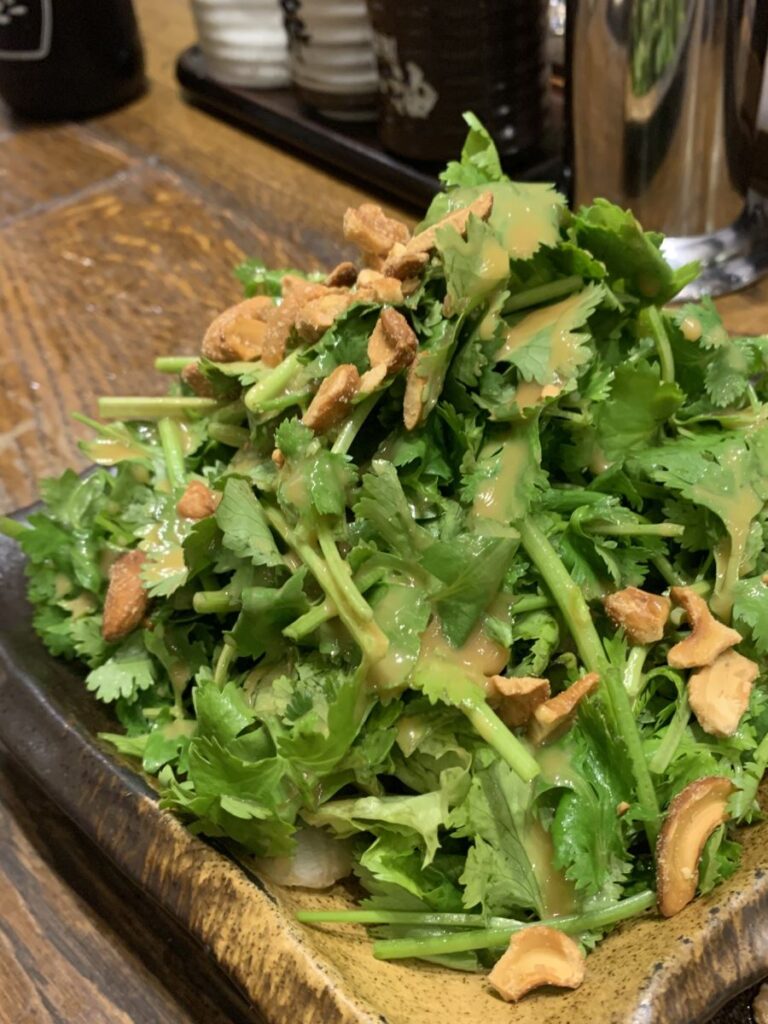
However, the ‘secret’ spot for searching out vegetables is the nearest izakaya. While you might not think of drinking spots filled with fried dishes that pair well with beer as a veggie paradise, you’ll actually find decent-sized side dishes like cucumber salad (which often comes with the most amazing dressing), sliced tomatoes, edamame, watercress or coriander salads, and grilled corn ribs or peppers on menus.
Search Out Specialist Veggie-Heavy Options
While the above are all common Japanese food choices that you’ll find on any street in Japan, there are also some specific vegetable-based cuisines to seek out if you’re looking to be served a wider selection of vegetables.
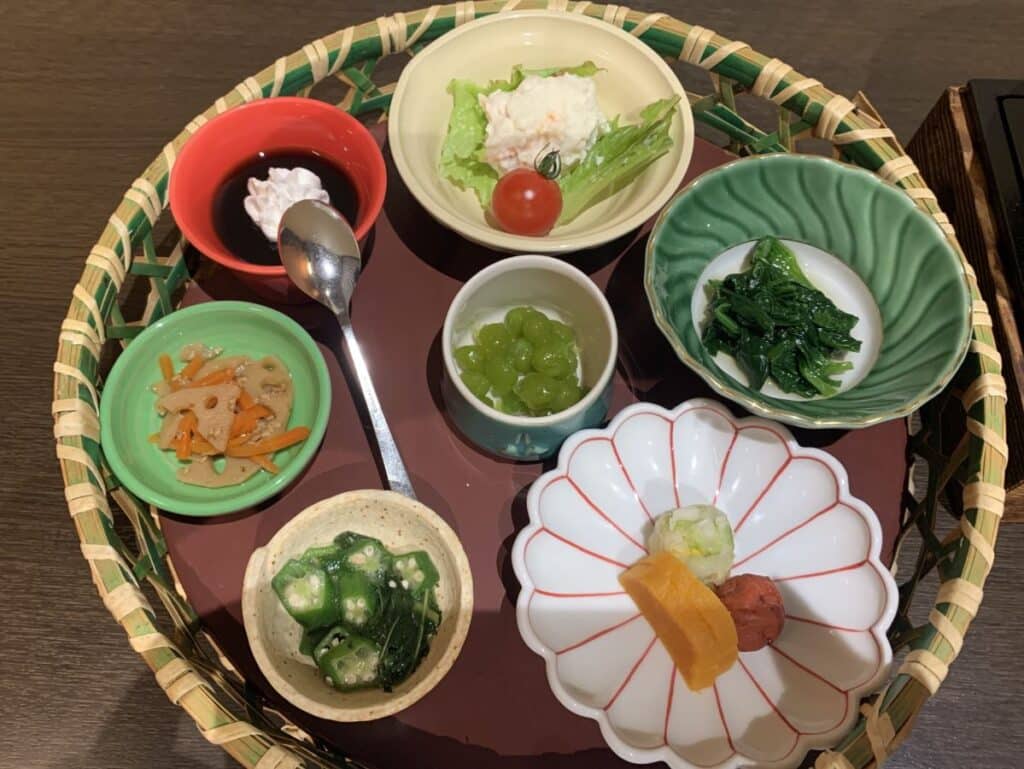
Obanzai – Kyoto home-style cuisine featuring numerous small vegetable dishes made from seasonal ingredients
Shojin Ryori – Traditional Buddhist temple cuisine that’s completely vegetarian, focusing on seasonal vegetables, tofu, mountain vegetables, and mushrooms.
Kaiseki – Traditional multi-course dining that emphasises seasonal produce. Vegetables often play as important a role as fish or meat. In the meal above, these were the side vegetables, but there was also an entire basket of meat and vegetables to be grilled.
Add the Extras
Another reason I tend to think I lack vegetables on my own trips is that I love ramen and so eat it for one meal a day most days, and it’s not always a dish exactly brimming over with veggie goodness.
However, you can usually add extras to your dish if you find the right button on the machine – this might mean extra spring onions, bamboo shoots, seaweed (my normal addition) and corn.
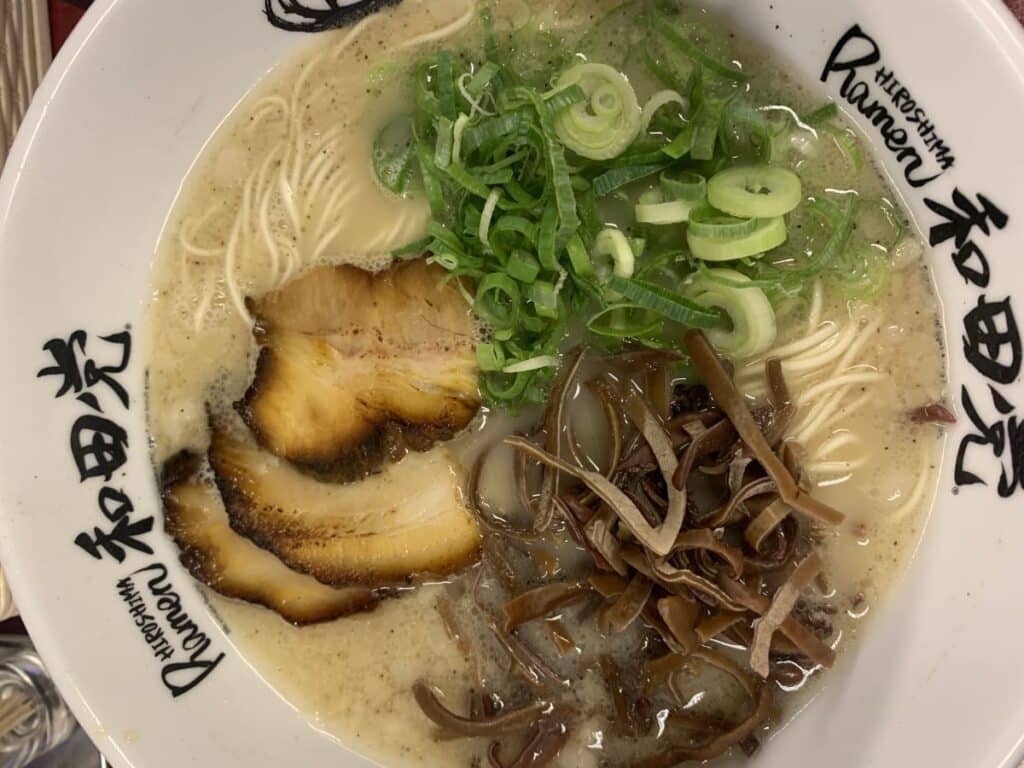
If you’re eating in Japanese chain restaurants such as Matsuya (famous for its beef and rice bowls), they have salad dishes on their side menus, or you can add a portion of kimchi.
Other restaurants might have pickles as a side, or served on the table – load up on these, and that’s more vegetables in your day.
Eat the Otoshi
Otoshi is a dish that’s served in many Japanese bars when you order your first drink.
It’s not free; you’re charged for it, so you might as well try it – especially as it’s often vegetable-based. Again, it might not be vegetables you recognise, but experiment.
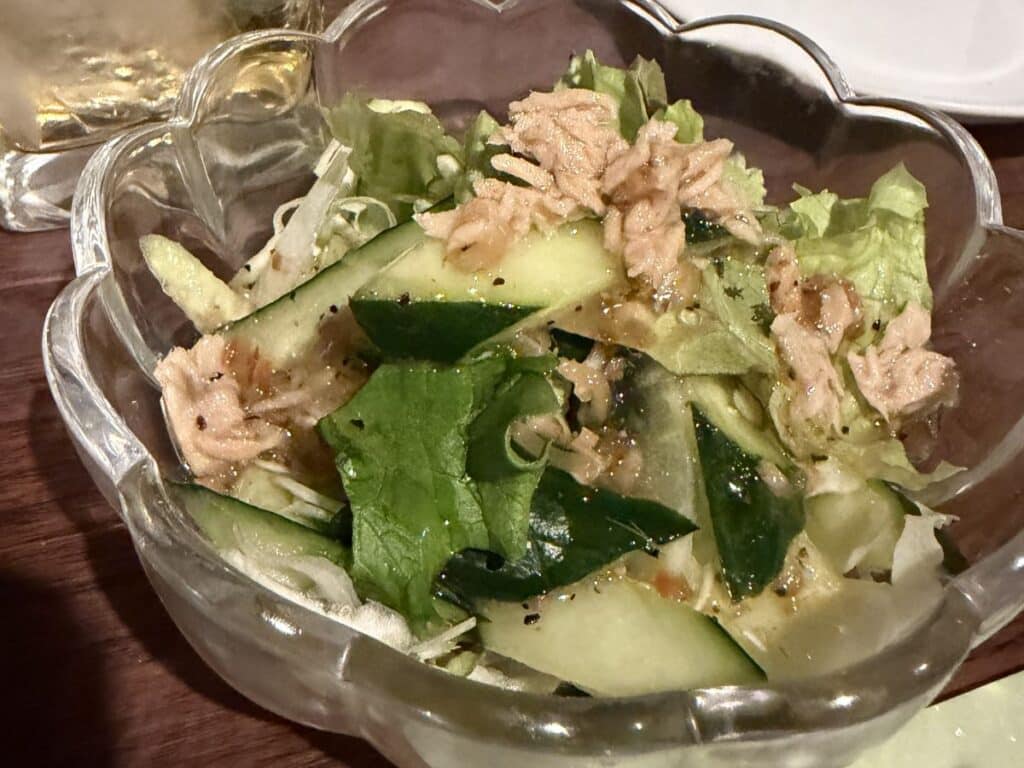
I have had lotus root, hijiki (a black sea vegetable), shredded carrot in a sesame sauce, and this amazing cucumber-and-tuna salad at a tiny bar in Fujiyoshida.
Related Read: What is Otoshi?
Snack on Salads
If I’m feeling particularly veggie-deprived on my trip, I’ll head off to 7-11. They have an amazing selection of small pots of side dishes that tend to be very vegetable-heavy, and I’ll pick one of these up to snack on (I’ve also eaten them for breakfast before now). The other convenience stores do these as well, but I prefer the options at 7-11.
You can also buy main course side salads – and while they do tend to be quite white cabbage heavy, you’ll also find corn, tomato, seaweed and more snuck in there as well.
Find a Supermarket
Convenience stores are on every corner in Japan, so they tend to be where most tourists head when they need a quick, easy meal – but, if you can find a supermarket, you’ll find an entire vegetable aisle to pick from.
Some good supermarket chains to look for include AEON, Seiyu and LIFE – you’ll find your nearest on Google Maps marked with a shopping trolley logo. If you have a kitchen, you can easily load up on vegetables here – and you’ll also find premixed salad bowls in some supermarkets as well.
Another option is to visit a depachika. These are the food halls in the basement of many department stores. You’ll often find mixed salads for sale in these – although watch out, the prices can mount up as they are sold by weight.
Head for Home
No, not literally, but it’s not cheating to enjoy a meal from outside Japan once in a while on your trip.
Go for Indian, Chinese, Italian or Thai and load up on veggies or try a Japanised Western restaurant. Japan’s cheap, family-restaurant chains are also good places to pick up decent-sized salads.
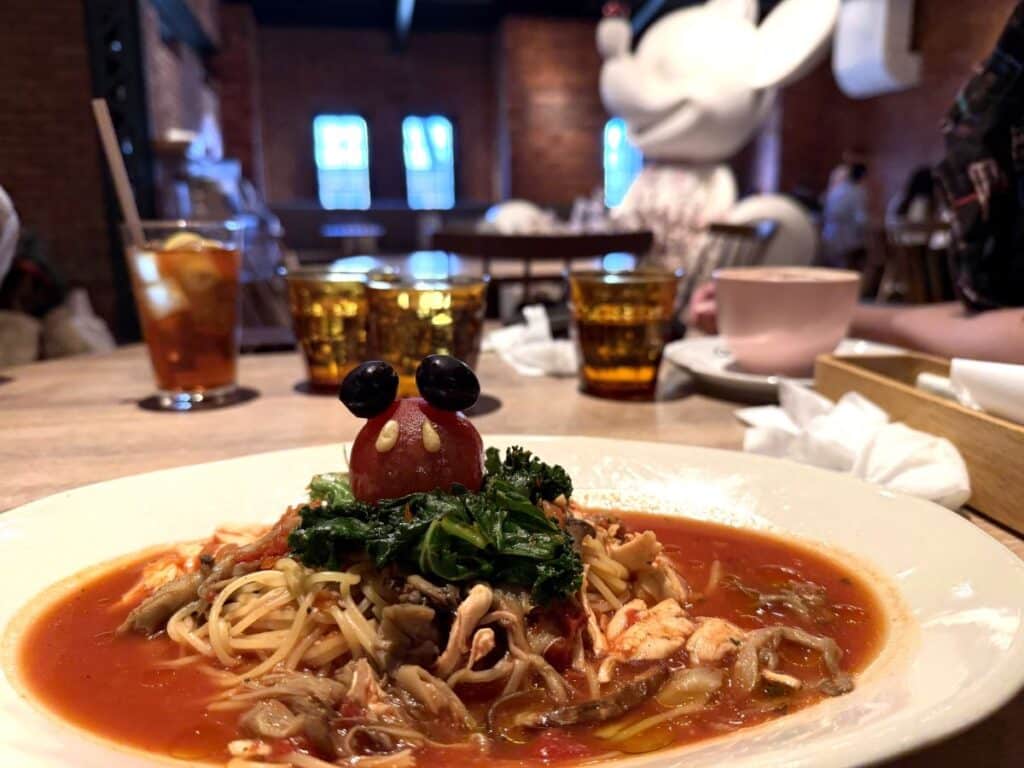
The dish below is from Disney Harvest, the Disney-themed restaurant in Yokohama, and I totally ordered it for the tomato sauce and the kale – the tiny Mickey Mouse-shaped tomato on top was a bonus!
Try a Japanese Breakfast
This might sound strange, as in Western culture vegetables aren’t necessarily a big part of breakfast, but Japan is very different – salad can be a common inclusion in many Japanese breakfasts. So, if you’re craving a big plate of lettuce, your hotel breakfast buffet might be the place to find it.
Know the Salad Chains
There are several popular salad chain restaurants in Japan, so stopping by these once or twice a week could supply a decent veggie fix. Look out for branches of Crisp Salad Works, WithGreen, Green Brothers and Chopped Salad Bar.
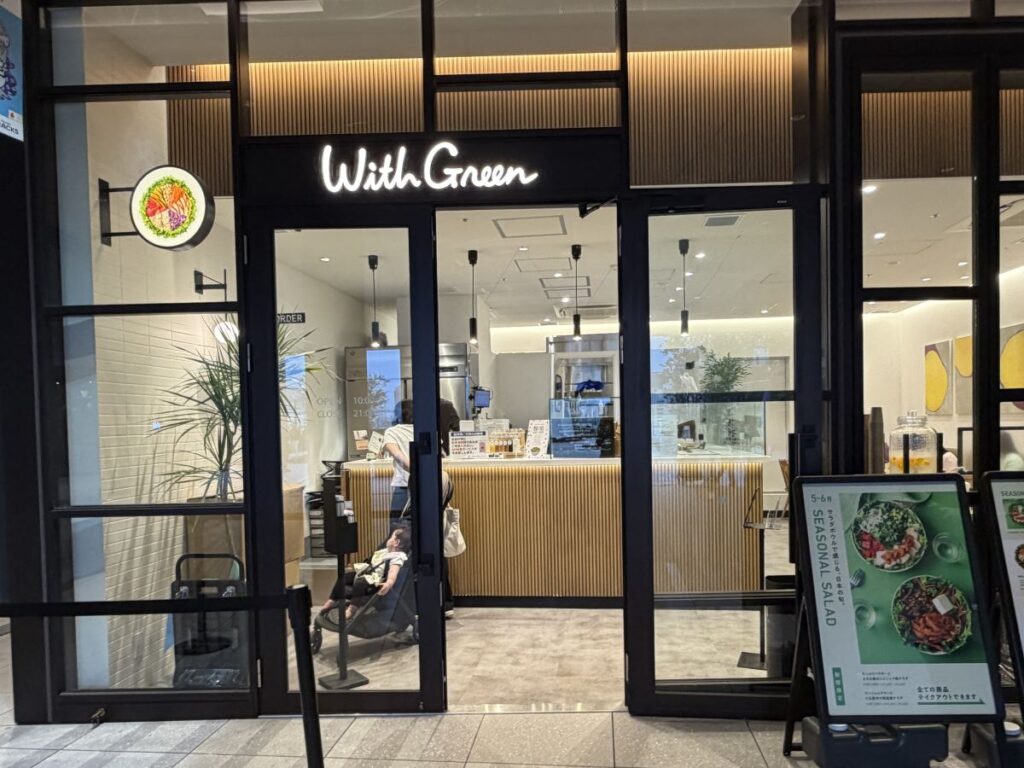
The exact offerings change seasonally, but you’ll usually find blends of 3-4 veggies like red cabbage, carrots, celery, tomatoes, and avocado served on a lettuce base and finished off with tasty dressings and proteins. You can also customise most of these to add more veg if you’d like it.
Green Brothers also offer a make-your-own salad from scratch service where you can pick a base and as many toppings as you like!
Keep Your Eyes Peeled
Finally, you never know when you might find a vegetable in Japan. There I was in Shimizu, walking to visit the famous view of Mount Fuji at Miho no Matsubara, when I came across a cherry tomato vending machine.
It was selling bags of delicious cherry tomatoes for just 200 yen.
See the video of me making my purchase here – I then snacked on them for about three days!
So, as you can see, Japan might not be the veggie-desert that you perhaps have been led to believe. You just need to think differently for a few weeks – who knows, you might find a whole new set of favourites to add to your weekly menu if you do.

Who Writes This Blog?
My name is Helen Foster, and I’m a journalist and author. My travel articles have appeared in publications including The Australian, Escape, RAC Horizons, Jetstar Magazine, Sainsbury’s Magazine, and more.
I’ve traveled to Japan eight times before – solo and with my partner and visited over 25 towns and cities. My last visit was November 2024 so, everything here is pretty up to date.