
- Hakone’s Venetian Glass Museum – The Biggest Surprise in Town - 19 March 2026
- How to Fill in Your Visit Japan Web Arrival Documents for Japan - 18 March 2026
- The Beginners Guide to Getting on the Shinkansen - 16 March 2026
Kyoto is busy – sometimes it can feel busier than Tokyo as in Tokyo, people are heading in all different directions, whereas in Kyoto, people are all in the same places at the same time. It’s one reason why I can’t spend too long in the main tourist sights in Kyoto – but it is possible to escape the crowds, with a few tips.

Article by Helen Foster. Disclosure: Some links in this post are affiliate links. See our Affiliate Disclosure.
General Crowd-Busting Tips For the Big Sights
If your Kyoto itinerary includes big sights like Kiyomizu-dera, the Higashiyama district, Fushimi inari, and Arashiyama, you’re going to encounter crowds, but to encounter smaller crowds at these sights, follow these tips.
Avoid Weekends and Holidays
Not always possible, I know, but it’s not rocket science to realize that the big sights are going to be busier when more local tourists are also in town – that means weekends, and public holidays, particularly the big ones like Golden Week, Obon, and New Year.
I ended up in Kyoto on a public holiday on my trip last November after I had to change plans at the last minute, and it was AWFUL. I was going to quiet places, but trying to get to those on the bus was nearly impossible. Avoid it if at all possible.
But also, watch out for the week after Golden Week (around the 12th of May). This is when I normally travel to Japan, and on my last trip off, I went to Kyoto. I got to the station to see hundreds of school children—all getting into a specially charted Shinkansen. Aww, how cute, I thought—until I got off at Kyoto and realized that’s where they had got off, too—and that they had been joined by hundreds more.

Early May is school excursion time in Japan and it can lead to big groups of school kids everywhere, particularly the important sights. The good news is, they are remarkably quiet and well-behaved – but, they do increase the numbers by a LOT.
Know the Two D’s
On another previous trip to Kyoto, I rocked up on the bullet train and went to Kiyomizu-dera at noon thinking ‘How bad can it be?’ – the answer is, terrible! There were people everywhere, you had to queue to go into the black room under the building, you had to queue to buy amulets, and the deck was heaving with people.
I know it was my fault for arriving at peak hour, but after 5 minutes, I was done. Considering Kiyomizudera opens super early, I was also stupid.

So, the number one rule, and the most repeated, to beat the crowds in Kyoto, is the two Ds – dusk and dawn. Get to the most popular sites early, or if something is open later in the evening, that’s another good time to go and check it out.
For example, my friend Kendall went to the normally busy tatami mat Starbucks with very little wait when she showed up in the evening. When she and I last went to Kyoto together, we also visited the Yasui Konpiragu relationship stone at Enkiri shrine at dusk. There is a queue to get through it during the day but no queue at night.

Here’s what time some of the main sights open so you can plot your activities…
Kiyomizudera – opens 6 am to 6pm
Ryoan-ji – opens 8 am to 5 pm
Kinkaku-ji – opens 9 am to 5 pm
Ginkaku – ji – opens at 8.30 in Summer, 9 am in winter to 4.30 or 5 pm
Fushimi Inari – is open 24 hours. Get there before 8 am or after 6 pm.
Arashiyama Bamboo Forest – open 24 hours. Again, get there before 8 am or after 6 pm
Yasaka Pagoda Street, Ninenanzaka and Sannenzaka – open 24 hours.
If you want to get the famous pagoda shot in good light with no people in, you need to be there by 7am. But don’t expect to be alone. Lots of people are getting up early for this and there’s only one place to get that picture.
Do note, shops, including the places to buy goshuin or amulets at shrines, won’t keep those hours so if you want to shop, or get a stamp, you’ll need to go between 9-4pm to catch the shops open.
Find a full list of early opening temples and shrines on this site from Kyoto Tourism.
The Dusk and Dawn rule is one reason why we suggest you spend four whole days in Kyoto in our piece on how many days you should spend in Kyoto – there is pretty much no way to get all the sights in – and beat the crowds otherwise.
Check the Crowd Calendar
If you’re not sure if it’s better to go somewhere early or late, it’s no longer just theme parks that have crowd planners, Kyoto does too – it gives a rough idea of how busy things are likely to be on a date or time.
Google Maps also has a graph that shows when things are busiest, which you can use to plan whether to go early or late.
Open the map, click on the place you want to visit and scan down and you’ll see a graph called Popular Times, that can give you an idea of when things start to peak – or drop off.
Need Extra Planning Help?
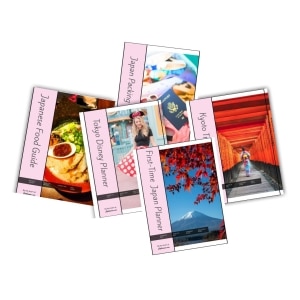
Our Japan trip planners can help. You might like our First-Timers Japan Planner, which will help you plan your trip to Tokyo, Kyoto and Osaka step-by-step, including tips on everything from picking hotels to sightseeing and dining. Or our super-duper Tokyo Disney Planner makes arranging your park trip MUCH easier. Find them in our Planners store – printable and digital versions are available.
Don’t Be a Lemming!
The first picture you see in this post is the sight you are greeted with as you enter Kinkaku-ji, aka the Golden Pavilion. Everyone stops to take a photo, one after the other, like lemmings – but, there’s an entire lake around this thing – head a bit to the right and you get this picture – which was taken no more than a minute after the first one.

No, maybe it isn’t going to win any prizes, but, if all you want is a memory of where you’ve been why stand in a scrum?
Avoid The Shopping Streets
Once the shops open, the sloped streets of Ninezaka and Sannenzaka in Higashiyama, and the main street at Arashiyama become a sea of people as shoppers mingle with people trying to get around the nearby sights.
If you’re not interested in shopping, take the backstreets around Ninezaka and Sannenzaka – these can often be completely deserted. This picture was taken at about 2 pm when Higashiyama was very busy – but look, hardly any people.

It’s a bit harder to circumvent the main street at Arashiyama, but, if you’re heading up to say Otagi Nenbutsu ji (which you should because it’s fabulous), jump on the 62 or 92 bus from the stop opposite Arashiyama station (Randen Line).
This avoids most of the people and allows you to walk back down via the quieter backstreets (see our plan for this in our four-day Kyoto itinerary).
Visit Gion During the Day
Many people visit Gion in the evening for the bars and restaurants – and the hope that they might see a geisha (find out about some important changes in the Gion geisha district here), but if you go in the middle of the day there might only be a few people in rickshaws, who frankly, make your pictures look better not worse!

The same goes for Pontocho Alley, if you’re as interested in the pretty scenery as the bars and restaurants within them, going mid-morning or mid-afternoon will be less busy than during lunchtime and especially in the evening.
Specific Tricks To Beat the Bamboo Forest Crowds
Arashiyama Bamboo forest isn’t that big, so, if you come here at lunchtime you’ll be jostling with others – and have no hope of getting a picture with no people in it.
Conversely, I went at 8 am a while back and it was relatively easy to get empty pictures as the path is curved so you could just wait for the few people that were there to disappear around the corner – it’s busier now though so, I’d get there earlier if you can.
In winter, the busiest times are 8 am to 4 pm – things tail off from 4 pm as darkness falls. In summer, you can expect things to be busy from 8 am to 5-6 pm.

Come at Night
Evenings are a bad time for holiday snaps here as the trees are tall and block the light and that means there are fewer people. So, if you just want to see the trees and listen to the bamboo (see more about why the noise is important in our piece on Small Things not to Miss in Japan), or, if you are a photographer with the right equipment, the forest, which is open 24 hours a day, can look amazing at night.
If you’re a bit wary of going alone, you can book a moonlight tour of Arashiyama which covers some very pretty nighttime spots.
Or, for the brave – you can even take a ghost tour in the forest.
Note – during December the bamboo forest can have an illumination event which will make it busier in the evening.
Take a Rickshaw Ride
The rickshaws have a separate path in the forest they go down so there are no people. They will take cute photos of you on the rickshaw down there. Book the ride in advance here.
Seek an Alternative
There are at least another five bamboo forests in Kyoto that you can visit. If you’re not that keen to deal with hundreds of people taking snaps at the main one, then, head to one of the others. They are…
Kodai-ji: This temple close to Higashiyama has a small bamboo forest within it. It’s also home to three of the good luck statues in Kyoto so you can make some wishes while you’re there.

Adashino Nenbutsu-ji: This is actually the forest on all the Kyoto tourist posters, but do note though this is a temple dedicated to the souls of those who died alone so please treat it with respect and don’t come here in a ballgown for a photoshoot (I’ve seen the pictures of this – please don’t be that person).
Fushimi Inari: There is a bamboo forest east of Fushimi Inari, about 20 minutes walk away.
The Bamboo Temple: Also known as Jizo in Temple, this has a pretty bamboo grove inside.
Take no Michi: A short train journey outside of town, this path is almost 2km long and, at certain times of year is lit with beautiful candles in the evening.
Tricks for Beating the Crowds at Fushimi Inari
If you want to avoid crowds at this shrine famous for its thousands of red gates, you must arrive early, or, late. In winter crowds start building around 8 am and fall off around 6 pm. In summer, it runs about an hour later. Note if you are here at dusk or dawn, wear insect repellent as there are mosquitos here.
Try a Night Walk
Fushimi Inari is open in the evening and lit with lanterns, although I wouldn’t climb the whole thing at night as it’s still quite dark. The warnings you see about boars are not just there for fun—and wildlife is always more active at night.
If you’re a bit wary about going to Fushimi Inari at night on your own, there is a night walking tour on offer via AirBNB Experiences.

Climb Higher
If you are here in the middle of the day, get your comfy shoes on and head up the hill. The higher you climb, the fewer people there are. It doesn’t mean you need to go the whole way to the top – the round trip to do this takes about two hours, but, crowds noticeably thin after about halfway as people take the turn-off paths back down the hill.
Embrace the Outfits
There are two reasons that the picture above is the one I pretty much always use to illustrate any mentions of Fushimi Inari on this site – one is that we were there after lunch, and so there were lots of people and it was before I was writing this blog and so I didn’t focus on getting 100 pictures without them in them!
And the second is that I like the way it looks with the couple in. Sometimes, having people around, especially somewhere they are likely to be wearing kimono or yukata, is not a bad thing.
Three Other Shrines with Torii Tunnels
They aren’t in the same league as Fushimini Inari, but there are a few other shrines where you can get a picture of yourself in a tunnel of red torii gates with considerably fewer crowds.
Take a look at Nezu Shrine and Hei Shrine in Tokyo, or if you’re in Western Japan, Motonosumi Inari is a shrine with over a hundred torii gates set on a fantastic rugged cliff.
Other Crowd-Busting Ideas
Seek Out Cool Quiet Sights
There are over 2000 shrines and temples in Kyoto and most of them have a handful of people in them at any one time even though they have features like giant statues, quiet gardens, and beautiful paintings. Seek these out when you need a rest from the masses.
Some of my favorites include…
Ryozen Kannon, with its huge Kannon statue, Konkai Kymoji has a quiet pond to sit by, and outside of cherry blossom season, most of the shrines along the Philosopher’s Path have just a handful of people in them. Komyo-in has a beautiful zen garden, while the paintings of Kennin-ji are amazing.
For fun, take a trip to the Daruma temple with its hundreds of bright red daruma. And if you can’t find a space in the Shimogama shrine complex, there’s something very wrong as it’s huge. The main hondo here is one of the prettiest I’ve seen. I was also the only person in the Hoshun-in Bonsai Garden for at least 20 minutes – and that was on a public holiday. You’ll find them all listed on Google Maps.
Kyoto Tourism has also released details of areas they refer to as their hidden gems, so you might want to check these out. They include Nishikyo in west Kyoto, Ohara, Takao, and Keihoku in north Kyoto, and in south Kyoto, Yamashina, and, the areas of Fushimi that aren’t the shrine itself. See more about these in their guide.

Do Activities Mid-Day
This is when the sites are at their busiest so, it’s a good time to do things that limit access to a set number of people – so, take a tea ceremony, try one of the experiences where you get to meet an apprentice geisha (called a Maiko), go on the Sagano Romantic Train (bookings essential in fall foliage season).
They may still be ‘full’ but, at least there’s only a handful of people in there with you.
Pick Branches Outside of the Tourist Areas
I saw this tip on the Instagram of Franklin the Woman who has some great content on Japan.
Kyoto has a lot of cute food – from coffees with faces on, cakes shaped like clouds, and ice creams with ornate flowers on top – and, the more Instagram-famous these things become, the longer the queues to try things. However, some of these stores have a couple of different branches, and she suggests choosing the ones in less busy areas.
This will not only see you queuing for less time, it might improve your chances of actually snagging one of the covetable creations – the cloud cakes were totally sold out by the time I walked past at 3 pm in Arashiyama.

Image: this is Shizen, used with permission
She suggests visiting the Kyoto Kawaramachi location for Kumo no Cha cloud cakes and getting your flowered-covered ice cream from the cafe called this is Nature rather than their branch named this is Shizen.
Of course, she also has over 230 thousand Instagram followers who also now all know this tip, so things might have got a bit busier but, it’s worth a try! Watch the reel here for more info and pictures of all the pretty food.
If our articles or Facebook advice have helped make planning your trip easier, you can Buy Me Coffee (or, more likely, some ramen, a Sapporo or an egg sandwich) by making a small donation at our Buy Me a Coffee page.
So, there are my tips for helping see Kyoto with fewer crowds – you’re never going to avoid people entirely here (although I admit, at some of the places above I have been the only person in there), but, at least you know how to take a break from them.
Who Writes This Blog?
My name is Helen Foster, and I’m a journalist and author. My travel articles have appeared in publications including The Australian, Escape, RAC Horizons, Jetstar Magazine, Sainsbury’s Magazine, and more.
I’ve traveled to Japan eight times before – solo and with my partner and visited over 25 towns and cities. My last visit was November 2024 so, everything here is pretty up to date.

