
- How to Fill in Your Visit Japan Web Arrival Documents for Japan - 18 March 2026
- The Beginners Guide to Getting on the Shinkansen - 16 March 2026
- How to Use Buses in Nara - 11 March 2026
We’ve prepared a thorough breakdown of the weather and some key events happening in each season so you can decide when to go.
Let’s get started!
Article by Helen Foster. Disclosure: Some links in this post are affiliate links. See our Affiliate Disclosure.
Things to Consider When Deciding When to Visit Kyoto
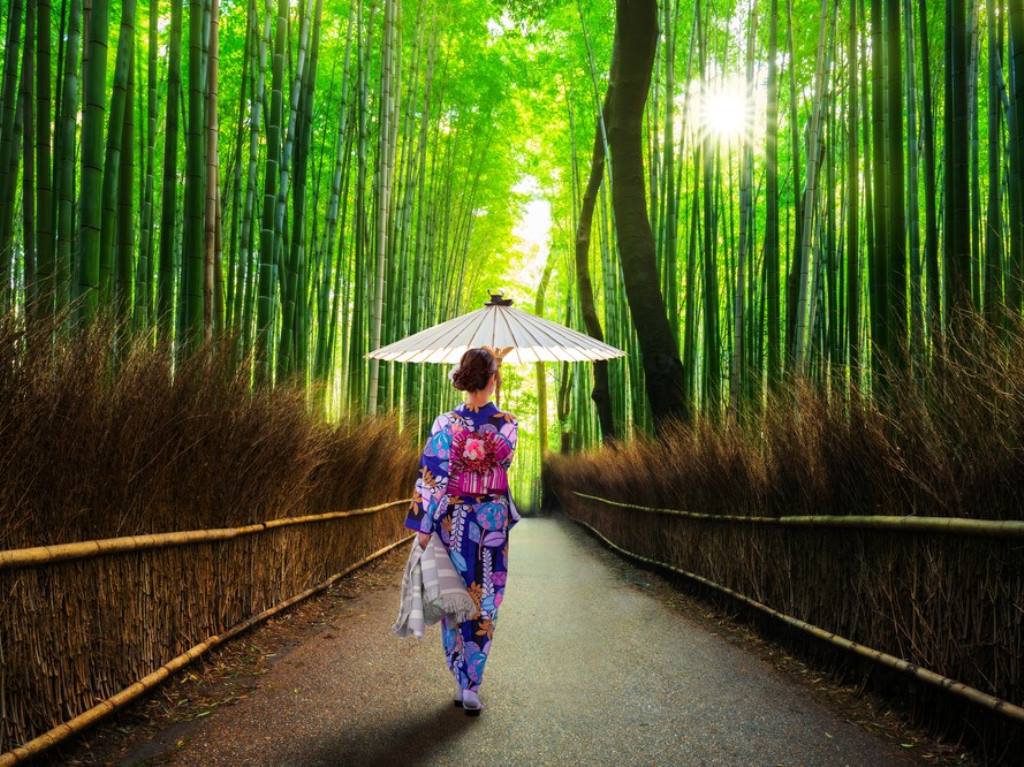
You’ll spend much of your time outside exploring shrines, temples, and attractions like the pretty bamboo forest (one of the Top 10 Kyoto must-dos for your first visit), so weather matters.
Many of the sights you want to see are also set on beautiful grounds, so this might affect what season you want to visit. Do you prefer autumn leaves or sprightly cherry blossoms?

However, the number one factor when deciding when to visit Kyoto is crowds.
Not only is Kyoto popular with international tourists, but local Japanese travelers also want to see the beautiful old streets and impressive shrines and temples, and Kyoto, particularly the main sights and Gion can get very crowded.
Choosing more off-peak seasons will not only help reduce crowds, but can also see prices of hotels and ryokan (traditional Japanese inns) fall making this a better option for travellers on a budget.
Best Time to Visit Kyoto – The Quick Version
In my opinion, the best time to go to Kyoto to get the best mix of fewer people and good weather is Spring outside of both Cherry Blossom season and Golden Week – which means earlier in March, mid-April, or mid-May.
Or October and early November, before the peak of autumn leaves season begins.
Worst Times To Visit Kyoto – The Quick Version
Summer in Kyoto is blisteringly hot, and, considering how much you’re outside, it might not be the most pleasant time to visit if you’re not used to heat.
Personally, I can’t bear the crowds in Kyoto so visiting in peak Cherry Blossom season or the height of the autumn leaves is my idea of a nightmare – but, I appreciate both are beautiful so I’m prepared for you to disagree with me there.

Any public holiday will also see an influx of Japanese tourists enter Kyoto swelling the crowds. I ended up there on the November Culture Day weekend after I had to change plans at the last minute and it was unbearable. It had been there two weeks before and crowds were manageable, but this was just ridiculous. You could not get on a bus to get anywhere – and I wasn’t even going to the main tourist sights.
But what if you’re planning on traveling at another time of year. Here’s what you need to know.
Need Extra Planning Help?
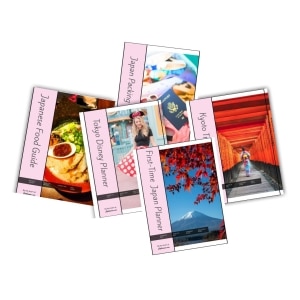
Our Japan trip planners can help. You might like our First-Timers Japan Planner, which will help you plan your trip to Tokyo, Kyoto and Osaka step-by-step, including tips on everything from picking hotels to sightseeing and dining. Or our super-duper Tokyo Disney Planner makes arranging your park trip MUCH easier. Find them in our Planners store – printable and digital versions are available.
Spring in Kyoto
Springtime in Kyoto is the prime time to see the historic and cultural capital of Japan burst with gorgeous colors.
As you take a stroll down the cobbled streets of Gion or walk through the perfectly kept temple gardens, you’ll see an essence of bright greens and vibrant flowers as springtime flowers come into bloom.
Spring Weather and Temperature in Kyoto
March 14°C / 3°C
April 20°C / 8°C
May 25°C / 14°C
Spring in Kyoto lasts from March until the end of May. The weather is usually very dry and sunny, and can sometimes feel like summer!
The humidity is quite high at around 77% on average during the spring months.
However, Kyoto only gets approximately 8-9 days of rain per month at this time so if you can stand the humidity, you’ll be in for a pleasant experience when traveling to Kyoto in the spring.
If you’re traveling to Kyoto around this time, you should pack layered clothing as it can be warm in the day and then drop at night, so you might need to layer up if you get cold. You’ll find more packing tips in our Japan Packing Guide. It tells you what to bring – and what to leave at home
What to Do in Kyoto in Spring
Cherry Blossoms: The Big Draw
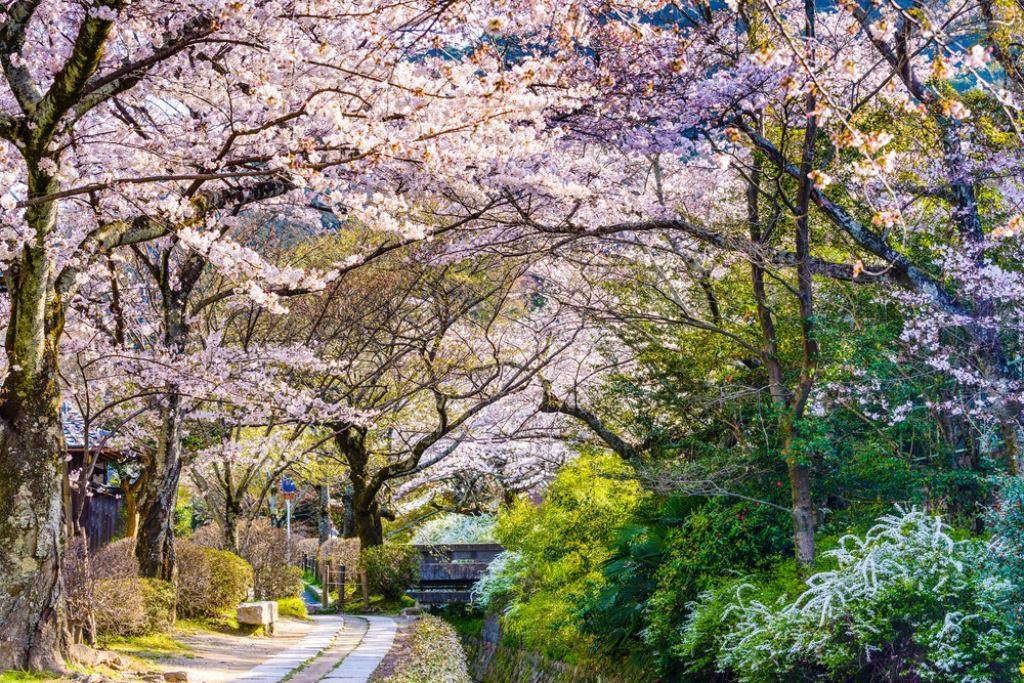
Traveling to Kyoto in the Spring is a great idea, as the cherry blossoms come into bloom for just one week from the end of March until very early April. Because their flowering season is fleeting, witnessing the cherry blossoms, especially in the most historic city, is a once-in-a-lifetime opportunity.
Top Tip
There are many areas to see cherry blossoms in Kyoto – including the Philosopher’s Path and around many of the temples. But if you want to take part in cherry blossom parties, known as hanami, the best place is visit is Maruyama-Koen Park – it gets pretty busy.
Don’t Miss the Geisha Dances
To celebrate the blooming of the cherry blossom trees, there are Geisha dances that take place throughout the month of April.
While you might imagine Geisha wandering the streets of Gion freely as they do in movies, in today’s society, this is simply not the case.
Geisha tend to only be seen at private events in Kyoto and like to stay out of the limelight throughout most of the year.
In April however, Geisha, maiko (apprentice geisha), and their dance teachers offer public dances to thank the gods for a successful bloom.
For that reason, spring is the best time to visit Kyoto for cultural events.
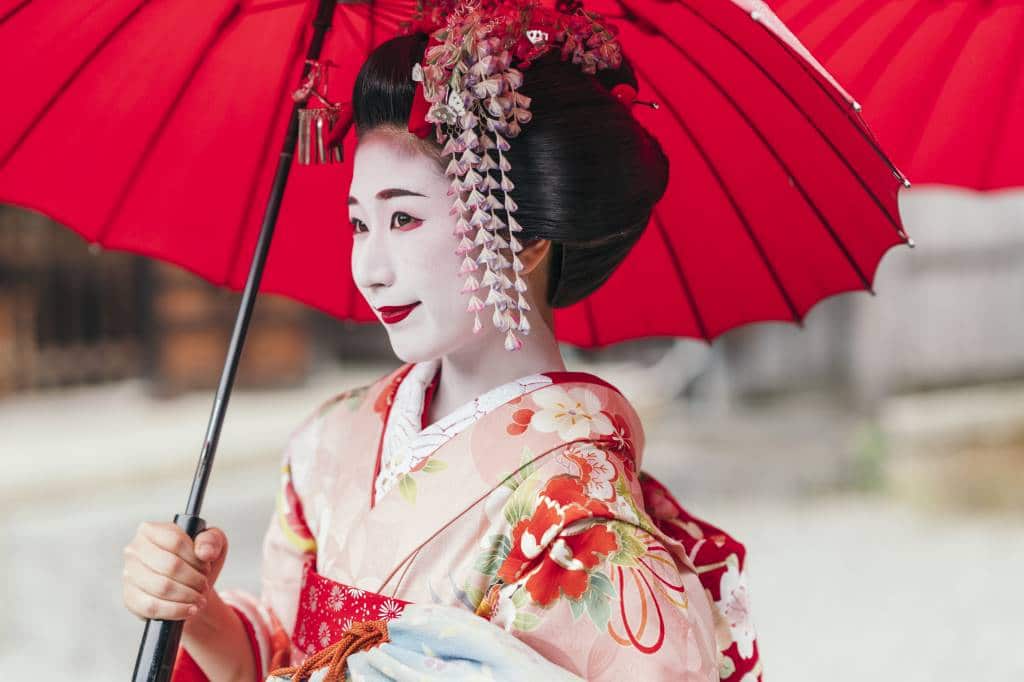
The public dances, known as the Miyaki Odori take place in the Gion Kobu Kaburenjo Theatre. There are three performances a day during the month of April.
Reservations are essential, and you can book them via the official site here.
Watch Out For
Golden Week
Spring also brings Golden Week – a time of year when four consecutive public holidays happen, giving locals a 10-day vacation. It happens between April 29th and May 6th.
While Tokyo can actually be more empty during Golden Week (and hotel prices actually fall), the opposite happens in Kyoto. It’s very busy, hotel prices go through the roof, and booking seats on the bullet trains can be tricky.
If you do need to travel then, make sure you book your accommodation and bullet train seats as soon as possible.
Summer in Kyoto
Summers in Kyoto can be very hot and humid, but looking on the bright side, the gardens are in full bloom and the springtime crowds are dispersing.
Summer is also the rainy season in Kyoto, it does not rain all day, and every day, you will find some dry spots to go out and explore – but it’s a good idea to always have a few indoor ideas planned for if/when rain does come.
Summer Weather and Temperature in Kyoto
June 28°C / 19°C
July 32°C / 23°C
August 33°C / 24°C
If you’re thinking of enjoying a blissful summer in Kyoto, you may be in for a surprise. The summer months in Kyoto tend to be very hot and wet.
On average, Kyoto receives 8-12 days of rain per month during the summer and reaches highs of 33°C during the day.
The humidity is also quite substantial. The humidity can reach an average of 78% in June/July and reach up to 82% in August, which is the same humidity as Bangkok. You’ll need to stay hydrated.
Late summer marks the start of typhoon season, which typically lasts from August until October. Most typhoons occur in August and September, which are the wettest months of the year.
When visiting Japan in the summer, it is recommended that you wear lightweight summer clothing but take waterproof clothing, such as a raincoat.
Also, if you’re flying out of Tokyo, make sure you arrive back a day before your flight – if heavy rain or a typhoon does come through Kyoto, trains can be delayed or stopped for the day.
What to Do in Kyoto in Summer
The Big Draw: Gion Matsuri
One of the main reasons to visit Kyoto in Summer is to witness the Gion Matsuri, the city’s most important festival.
This hugely popular event takes place in July, and many events take place in Kyoto’s Shinto shrines around this time, especially at the Shinto Yasaka Shrine, the festival’s patron shrine.
Gion Matsuri is all about purifying germs, bacteria, and other things that cause disease. It is celebrated with an incredible parade known as Yamaboko Junkō, where a procession of floats adorns the streets on July 17th and 24th.

While the parade is the highlight, nightly festivities occur in the center of Kyoto three days before each parade, with pedestrianized areas full of street stalls—and most importantly, the parade floats are displayed on the streets.
This can be a great way to see the floats close up or without the crush of viewing the parade.
The event happens on and around the Shijo Karasuma intersection in the middle of town. Just follow the crowds!
If you’re in town at this time, you won’t want to miss the Gion Matsuri – but it will be filled with lots of others who have the same idea, so again, book accommodation, train seats, and tours well in advance to ensure you don’t miss out.
The Byobu Matsuri
Lovers of Japanese art or history should also check out a special event called the Byobu Matsuri, which occurs on the nights around Gion Matsuri.
This sees private homes displaying the beautiful folding screens that help divide Japanese rooms. Some of these have passed through the generations, and it’s very special to see them in the homes in which they live.
Exactly which properties take part varies each year, if you’re interested in this, ask your hotel for updates, or try the Kyoto tourist information office at Kyoto station, which should be able to help you with a list of opening times and ticket reservations.
Try Flowing Noodles
One element of traditional Japanese cuisine is that the dishes are very seasonal – and, in Kyoto, Summer means it’s time to try a particularly interesting dish called Nagashi Somen – or flowing bamboo noodles.
This sees you scooping up noodles as they flow past you in a stream of water through a bamboo pipe. You snatch them up from the flow with your chopsticks then dip them in the sauce provided.
The dish is available from May to September in Kyoto, and Hirobon in Kibune, about an hour out of town, is one of the most famous restaurants that serves it. Make a reservation with them to ensure you get a spot.
It goes without saying that you should only try this if you have good chopstick skills; otherwise, you might go very hungry!
Nagashi Somen is part of a summer eating style in Kyoto known as Kawadoko, which means eating by the sound of the stream or water.
During Kawadoko season, many restaurants actually rearrange their dining rooms to be as close to water as possible, and some even build a floor over the top of the running water. As with Nagashi Somen, Kibune is one of the best areas to try this.
For Cooler Temperatures, Visit Kyoto by Sea
If you are on a more leisurely trip and want to beat the heat, you might want to book a day trip or even a few days north of the city. Temperatures here can be 10 degrees cooler than in the main city of Kyoto itself, and it might surprise you to discover that Kyoto actually has a waterfront area, known as Kyoto by Sea.
This area is the Northernmost part of Kyoto prefecture and it takes the beautiful old-world charm of Kyoto and adds to it stunning natural scenery and waterfront views.
One of the highlights is staying in the old fishing village of Ine.

The gateway to the area is about two hours north of Kyoto by train. Once you get up there you’ll need to master buses and other local transport, but have a look at this guide from the JNTO for more details of what you might find.
You can also visit Ine on a day tour from Kyoto
Watch Out For
Obon
This festival celebrating your ancestors is a four-day holiday in Japan, and many people travel back to their hometowns.
This can mean that some smaller family businesses might be closed – but also that trains might be a bit busier than normal.
It takes place between August 13-16 and so if you’re travelling then make sure you’ve booked your hotels. This is also one time of year when you must book your bullet train tickets in advance.
Autumn in Kyoto
Autumn is one of the best times of the year to visit Kyoto.
The weather is still warm, and the rainy season has ended, leaving cloudless skies and bright sunshine. Autumn probably has some of the best weather in Kyoto of the year.
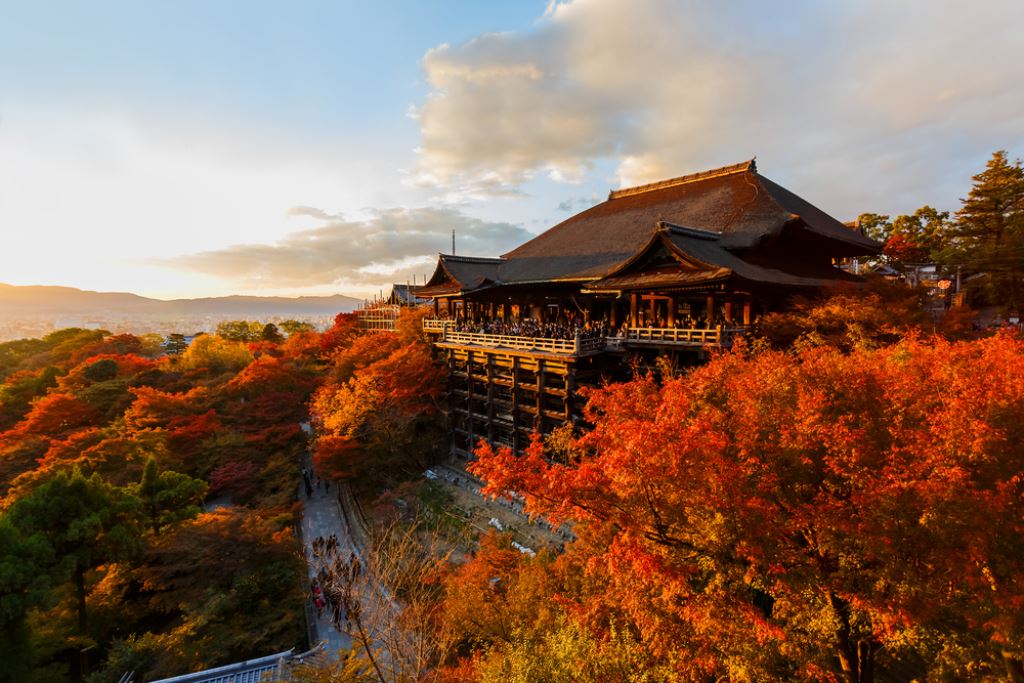
Also, if you time it right, visiting late October and early November, it’s also one of the less crowded times to visit. If you want to skip the crowds though, you also have to skip one of the most beautiful sights in Kyoto at this time of year the autumn leaves.
Weather and Temperature in Kyoto in Autumn
September 29°C / 20°C
October 23°C / 13°C
November 17°C / 7°C
The beginning of Autumn is still typhoon season, with September being particularly wet and often still lasting until the beginning of October.
However, the Autumn temperatures are still quite warm, and the humidity is around 81-82%.
As Autumn comes to a close, November temperatures drop considerably. On average, there are around six days of rain in November.
Depending on whether you’re visiting early or late Autumn, you should pack layered clothes as it can be hot in September, October is variable (I was in short sleeves in 2024) but you’ll want warmer clothes November.
Things to Do in Kyoto in Autumn
See the Autumn Leaves
Kyoto has quite a lot of open spaces and nature, particularly the grounds of shrines and temples, and as the leaves change color in autumn, the area is full of lustrous tones of orange and yellow, and you can get some really impressive photos if you’re into photography.
In Kyoto, the Autumn colors are at their brightest in November and the beginning of December.
The temple of Kiyomizu-dera is one of the most beautiful spots to see the leaves but you’ll find pretty sights everywhere.
The temple is also illuminated at night from mid-November to the end of November, so people can see the leaves at night—but anywhere you find Japanese maple trees in Kyoto, you’ll also find beautiful autumn leaves. This is one of the most popular times to ride the Sagano Romantic Train. If you’re traveling them, you must book well in advance.

Illuminations are also held at other shrines and temples in Kyoto from mid-November to early December. Keep an eye out for posters in your hotel at this time advertising the locations, dates and times as they vary year by year.
If you’re here, definitely take advantage of this unique sight—it’s also a good way to extend the day’s sightseeing, as many of the shrines and temples normally close in the early evening.
Fire!
If you’re thinking of heading to Kyoto for cultural displays, you should definitely plan your trip around the Kurama Fire Festival, which takes place on October 22nd.
The festival is a reenactment of a ceremony that was held in 940 AD after an earthquake struck Kyoto.
In order to protect the shrine, called the Yuki Shrine, which was in the area the earthquake hit from any further disasters, they moved it to Kurama – and this ceremony was performed that day to welcome the spirits.
The festival lasts all day, but it is best seen at night, where you can see small bonfires on stands called ‘kagaribi’, which are lit at around 6 pm and then carried through the town from the Yuki Shrine to Kurama Temple.
Kurama is north of Kyoto city and it takes about an hour to get there by train from Kyoto station.
There are many ceremonies and festivals in Kyoto in Autumn, but this one is definitely the most spectacular to witness.
Winter in Kyoto
Winter in Kyoto is very cold, locals say it feels even colder than it should be for the published temperatures due to winds coming in from the mountains, and you can sometimes expect to see snow.
However, there is something so magical about Kyoto in the winter – it’s the ideal time to sit in an onsen and feel the cool air on your face and the warmth of the mineral water on your body.

It’s also a good time to enjoy indoor activities such as having a tea ceremony or visiting the museums.
However, if you’re expecting to build a snowman, you may be disappointed. While it often snows in Kyoto, the snowfall is light, and you are more likely to experience frosts at night.
Kyoto is well prepared for winter. Most places and transportation are well-heated, but do be mindful that shrines and temples are usually outside, so wrap up in warm clothes if you’re visiting them.
Kyoto also has a few hilly areas, so watch out for ice and snow on these.
If you get to Kyoto and are unprepared for how cold it is, head to one of the city’s Uniqlo stores and stock up on their thermal range – or pick up a haramaki.
These thin tubes of material are like little scarves for your middle, and it’s remarkable how warm they make you. They also take up very little space in your luggage.
You’ll find haramaki in shops in Japan, or, you can buy one before you go – which I’m aware is a bit like taking coal to Newcastle but if you don’t want to shop on your trip it could be a good investment.
Weather and Temperature in Winter in Kyoto
December 11°C / 2°C
January 9°C / 1°C
February 10°C / 1°C
Kyoto’s winters are often very dry and cold, with only 5-8 days of rain during December – February. It is also the most humid time of year with an average humidity of 80-82%.
It is recommended to wrap up as temperatures can get to almost freezing, with an average daytime temperature of 9°C and dropping to an average of 1°C at night.
It can also snow in Kyoto, which makes for amazing photography.
Just in case it is essential you pack warm clothes, grippy shoes that can handle snow, and a hat, scarves, and gloves when visiting Kyoto in the winter.
So why else is winter a great time to visit Kyoto …
Things to Do in Kyoto in Winter
Snuggle Up in a Ryokan
Kyoto is the perfect place to stay in one of these traditional Japanese inns – and arguably Winter is the best month to add one to your Kyoto itinerary.
One of the ryokan’s main features is that it is a self-enclosed accommodation. Your host usually cooks a beautiful dinner that’s served in your room, and many ryokans have an in-house onsen (hot bath).

If it’s cold and frosty outside, you might be happier snuggling down and making the most of everything a ryokan has to offer than if it’s a beautiful sunny evening.
Because winter is Kyoto’s low season, accommodation prices tend to be lower, which means it could be the perfect time to add a ryokan to your trip for less.
Gorgeous Ryokan to Investigate
Arashiyama Benkei
Highly rated by other travelers, you’ll find both indoor and outdoor onsen and dinner can be served in your room. It’s not inexpensive, but if it’s a honeymoon, or a one-night, once-in-a-lifetime experience why not splash out? It looks gorgeous.
Check out rates and pictures for Arashiyama Benkei here.
Yuzuya Ryokan
Also comes highly recommended. It offers a private onsen and pretty gardens. It’s located in central Kyoto which makes it great for exploring when you do decide to leave.
Check out rates and pictures for Yuzuya Ryokan here.
Tamahan
Smaller, but also traditional – and, more budget-friendly than the ones above!
Have a look at more details on Tamahan here.
Yadoya Kitokuso
If you don’t mind sharing a bathroom, Yadoya Kitokuso offers a beautiful traditional experience. Guests say they’re made to feel like one of the family.
Have a look at pictures and rates for Yadoya Kitokuso here.
If none of those quite float your boat, then you can spend a lovely evening looking at these beautiful old Japanese homes.
Find a full list of Kyoto ryokan here – just remember to select Ryokan on the side panel to screen out the other types of accommodation.
Also, make sure that you book somewhere with heating – this is true if you decide to stay in one of the adorable wooden houses Kyoto is famous for.
These are called Michiya, and if they haven’t been modernised, they can be quite chilly in winter.
If you’re still deciding where to stay in Kyoto, you can learn more about the different types of hotels in Japan here.
Christmas Lights
Christmas in Kyoto is also a wonder to behold. Thousands upon thousands of lights, lanterns, and illuminations are set up around the city and are free to see.
The best places to see the Christmas lights include the Kyoto Hotel Okura, Kyoto Botanical Gardens, Doshisha University, Kyoto Station, and the ROHM Illuminations.

Book a Tea Ceremony
The perfect way to spend time on a chilly day – and the ritual and tradition of the ceremony it suits the ambiance of Kyoto perfectly.
In fact, Kyoto is home to some of Japan’s most revered tea schools so, if you’re going to try it, this is one of the best places in Japan to do so (Matsue is another).

One of the best tea ceremonies for tourists is run by Camellia, who run two teahouses in Kyoto.
At a Camellia, your host speaks both English and Japanese, and while the ceremony is full of the touches that make a Japanese tea ceremony special, you won’t feel like you’re going to offend anyone if you can’t sit on your heels for the whole thing as you might in a more traditional and formal house.
If you do try and sit in the traditional kneeling style posture, the key to making it comfortable for longer, apparently, is to rest your body weight on your heels – I still couldn’t do it for more than about ten minutes without wriggling though.
Where to Book a Tea Ceremony
As we said, the Camellia tea ceremonies come highly recommended and are in a great location near Kiyomisudera temples, Gion, and Higashiyama which makes them easy to fit into your day.
You can learn more about the Camellia tea ceremonies here. You can also choose to wear a kimono for the ceremony, but you must book it in advance.
You can also book a Camellia ceremony via ByFoodwho also offer many other foodie tours and experiences and restaurant bookings. Here’s where to see more information.
If you’d rather someone else wear the kimono, another option for tea ceremonies in Kyoto is to book a ceremony with a Maiko—an apprentice geisha.
I also enjoyed the Ju an Tea Ceremony which is a little more wallet-friendly.
Watch Out For
The New Year
The first days of the year are very important in Japan, and as such, they’re another big holiday season. Watch out for unusual opening hours, particularly for small businesses and you might find Kyoto, and the trains, more crowded.
If you’re in Kyoto on the first day of the year, bear in mind many local people will be going to a shrine to bless their year ahead.
While visiting one shrine to pay your own respects might be a good idea, this might not be the best time to schedule a whole day of shrine hopping as things will be crowded.
So, there you have it, our guide to the best time of year to visit Kyoto. So, when do you think you’d most like to visit Kyoto and why? Let us know in the comments
Who Writes This Blog?
My name is Helen Foster, and I’m a journalist and author. My travel articles have appeared in publications including The Australian, Escape, RAC Horizons, Jetstar Magazine, Sainsbury’s Magazine, and more.
I’ve traveled to Japan eight times before – solo and with my partner and visited over 25 towns and cities. My last visit was November 2024 so, everything here is pretty up to date.

