
- How to Watch the Oiran Parade at Edo Wonderland, Nikko - 15 October 2026
- 8 Mistakes Not to Make in Autumn Leaf Season in Japan - 10 October 2026
- How to Spend One Day in Nara - 29 September 2026
If you want a cheap, clean, budget hotel in Japan, a business hotel is a good place to start – but, how do you find one and what do you need to know before you book to make your trip a success? Check out our guide to staying in a business hotel in Japan.
As the name suggests, the main market for Business Hotels in Japan are travelers visiting a city for work – but, because they can be found in many, many locations around Japan, they’re also a good holiday choice – if you go into them knowing what to expect.
In a nutshell, the room will be small with no frills – but the location will be in the middle of the action or near a train station. The price will be moderate – the rates in business hotels are designed to fit the expense account of the average salaryman or woman. If you book early you can get some fantastic bargains – I’ve stayed in Tokyo and Kyoto for AU$40 a night in a business hotel!

Article by Helen Foster. Disclosure: Some links in this post are affiliate links. See our Affiliate Disclosure.
I think they’re a great choice for solo travelers, those who are happy with twin beds (and aren’t carrying much luggage!), or a couple who don’t mind getting cozy!
It’s also better if you’re a more independent style of traveler. If you want lots of advice on tours or touristy activities you’ll be better off looking at a more tourist-orientated hotel – you might find a better type of hotel for you in our guide to the different accommodation types in Japan.
Pros and Cons of Business Hotels in Japan
Pros of Staying in a Business Hotel
Fantastic choice of locations
Prices are usually pretty reasonable
Some offer baths or onsens
They often have single rooms which can cut costs further
They tend to be very quiet
Cons of Staying in a Business Hotel
Rooms and beds can be small
They can still have smoking rooms
Don’t expect extras like gyms or a hotel bar
In smaller towns, English might not be widely spoken. Google Translate is your friend.
Top Tips When Booking a Japanese Business Hotel
Business Hotels are my preferred choice of hotel to stay in when I’m traveling solo as they can be very cheap – and the rooms are perfect for one person, but, here are a few things to look at, especially if you’re not solo and thinking about staying as a couple.
Check the Room Size and the Bed Size
16 square meters can be roomy for a business hotel – and, even if they say it’s a double bed, sometimes you’d be hard-pushed to get two people in it comfortably. It’s fine if you’re a couple who sleep snuggled up, but if you need your space, consider booking a twin room.
Also, look where the bed is positioned – they are usually against the wall which can be annoying if there are two of you. I quite like the coziness of business hotel rooms when I’m staying on my own. If I’m traveling with Mr Japlanease though we need something bigger – or, we book a twin.
Watch for Smoking Rooms
Some older business hotels, or those in less touristy towns, still have smoking rooms and smoking floors – and, if you don’t specifically book a non-smoking room you could end up in one of these.
You’ll often see smoking and non-smoking rooms listed separately on booking websites, so if your hotel has both, make sure you know which you’re booking.
Pick Up Your Goodies
Business hotels are fantastic for packing light as they tend to provide a lot of additional amenities like toothbrushes, razors, skincare, and even bath salts. You’ll also usually find pajamas on your bed.
However, not all of these things will be in your room. You’ll usually find them in a box or cupboard in reception, like this one at the Sotetsu Fresa Inn Daimon Ekimae, and you can just collect what you need each day.

Don’t Expect Daily Cleaning As Standard
The last time I went to Japan, I found many of the business hotels I stayed in didn’t offer daily room cleaning as standard – you had to stick a sign on your door if you wanted the room cleaned, or to request fresh towels. However, if you didn’t ask they would still clean every third day. Part of this is economizing, but, I guess it’s also because business hotels have a high guest turnover so they need to prioritize freeing up the rooms with new guests coming in.
Need Extra Planning Help?
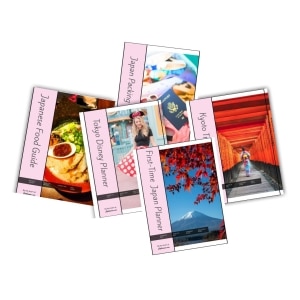
Our Japan trip planners can help. You might like our First-Timers Japan Planner, which will help you plan your trip to Tokyo, Kyoto and Osaka step-by-step, including tips on everything from picking hotels to sightseeing and dining. Or our super-duper Tokyo Disney Planner makes arranging your park trip MUCH easier. Find them in our Planners store – printable and digital versions are available.
You’ll Probably Need to Climb into the Shower
No matter how small the hotel room in Japan, if it aims at Japanese travelers your room will likely have a bath in it – but what this means is the shower is usually on the wall and you must climb into the bath to use it. And the baths can be deep – see the layout below from The Knot Hotel in Shinjuku to see what I mean.
If you have mobility issues, and climbing over the bath edge might be challenging, check the configuration before booking the room.

Check-in Might Be Virtual
Don’t expect to walk in and find a big swanky reception desk – you might check in by machine with no obvious people in sight.
One interesting touch at the JR Mets hotel I stayed in in Shibuya was that the screen connected to a person who spoke English sitting in an office.
If you get stuck though there’s always someone to help. Because I was arriving at 6am, I had booked the night before at the Sotetsu Fresa in Daimon so I could get into my room as soon as I arrived – but the computer did not understand that at all. There’s always a button to call the staff though.
Find Your Brand
Because business hotels are parts of chains, they usually look very similar between branches. I really enjoyed my stay at the Sotetsu Fresa Inn Daimon in Tokyo and was a bit sad to check out – but when I arrived at my next stop, the Sotetsu Fresa Inn Kyoto Kiyomizudera, the lobby, lift, and signs looked the same, so I immediately felt at home.
And, as you can see from the two pics below of the hotels, the design and color scheme are the same across the brand. It definitely helped me settle in faster.
5 Business Hotels in Great Locations
You’ll find business hotel chains all over the main booking websites, but brand names to look for include APA, Smile, Dormy Inn, Super Hotel, Sunroute, Sotestsu Fresa,Toyoko Inn, B Hotels, and Daiwa Roynet.
You’ll find these on all the major booking sites like booking.com or Agoda but because there can be so many, I tend to decide where I want to stay, then search the hotels around that area on a map – then check the prices and reviews on the booking sites to make my final decision.
Good options for tourists include…

My Top Choice In Tokyo: Sotetsu Fresa Inn Daimon Ekimae
This is now my go-to solo hotel in Tokyo. I’ve booked it again for my next trip. The room is clean, super quiet, and perfect for one person, but the thing I love most is the area around Daimon Station.
It’s full of little bars and restaurants that are English-friendly enough to welcome you – but, non-touristy enough to feel local! It’s also a fantastically easy train ride to and from Haneda airport.
Note – there are two Sotetsu Inns with similar names in this area – the one above is Daimon Ekimae. The other one is called Hamamatuscho Daimon – I’m suspecting I’d like it as much!
Also In Tokyo: APA Hotel Shinjuku Kabukicho
Located in the middle of Tokyo’s nightlife district, you can’t beat the location for the price.
The standard room sizes are small, even by Japanese standards – just 11 square meters – if there’s more than one of you book the Deluxe Twin to gain an extra 10 square meters.

Is Kabukicho Safe?
I like it there, but staying in Kabukicho isn’t the best choice for everyone, especially at the APA which is tucked away down a backstreet – it’s safe, but, it is in a busy ‘entertainment’ district. See more about what this means in our guide to deciding if Kabukicho is right for you.
In Kyoto: Daiwa Roynet Hotel Kyoto Shiijo Karasuma
The name is a bit of a mouthful, but with a good central location about 5 minutes away from Nishiki Market and relatively large rooms that start at 18 square meters, it’s a good place to start your Kyoto hotel hunt.

In Osaka: Dormy Inn Premium Osaka Kitahama
A nice touch about the Dormy Inn brand is that they tend to have onsens in their hotels.
Dormy Inn Premium is their slightly more upscale offering so prices are a little higher than the basic Dormy Inn brand.
This one is in a fairly central location near Osaka Castle, has relatively large rooms and a nice onsite onsen – and, as we’re checking rates today, costs about a third of the price of the chain’s branch in Namba!
If you’re really tired, you can also enjoy free nightly ramen onsite – more money saved!


In Nara: Daiwa Roynet Nara Natural Hot Spring
Even though this is part of the business chain, it has a touristy edge as the rooms are decorated with images of Nara’s famous deer. I stayed here on a recent Nara trip, and every time I looked at the room design (above) I felt happy .
The on-site onsen was great. It’s located close to Nara Station, which makes it perfect if you’re basing yourself in Nara but doing day trips – or have a one-night stay and don’t want to lug your luggage too far. Plus, you’re just steps away from where I had the BEST gyoza I’ve eaten so far (location revealed in this post)

Other FAQs About Business Hotels in Japan
Will Staff Speak English?
Not necessarily fluently, but you’ll both make yourself understand. Because their main market is Japanese guests, you won’t find the same level of English as in a Western-Style hotel.
One exception to this was the Sotetsu Fresa Inn Kiyomizu in Kyoto (room pic below) where everyone spoke very good English. If you need a proper concierge to organize things for you, a business hotel is probably not the best choice for you.

Are TVs in English?
You might find one, maybe two, English channels like BBC World News or CNN – but most channels will be in Japanese.
Japanese television is an art form though, especially the game shows – I usually sit there with a totally baffled expression on my face, trying to work out what’s going on, and not just because I don’t understand it. I highly recommend watching an hour of TV one evening on your trip.
Can Children Stay in Business Hotels?
This isn’t a problem with the big chains. The hotels are unlikely to have family-sized rooms, but in some hotels, if you’re happy to share a bed with your child, kids might even stay free (check individual hotels for their exact policies). But, do remember, that the hotels are designed for people working, so, it wouldn’t be done for children to say, play in the hallways.
Can Business Hotels Accept Luggage Transfer?
Most of them do, but you need to check with your individual hotel to be sure. They will only accept luggage paid in advance. Most hotels will store luggage before check-in and after check-out, but again, just double-check. If you don’t know what luggage transfer is, I’m about to change your life and make your trip much, much easier.
What Time is Check in?
Normally 3 pm – but, I have found some Business Hotel chains do a 4 pm check-in – the Tokoyo Inn I stayed in in Toyama in the Japanese Alps region is one example of this.
This might not be a problem if you’re sightseeing, but if you’re stretching out the day after a night flight the extra hour could feel like torture, and you are very unlikely to be allowed to check in early without paying extra at a business hotel – APA for example charges 1000 yen an hour for early check-in (you might also want our guide to beating jetlag in Japan).
And don’t miss checkout time or you might also incur a fee.
So, that’s everything I think you need to know about booking and staying in a business hotel in Japan, but if you do have any more questions, head over to our Facebook group and I’ll do my best to answer them.
Who Writes This Blog?
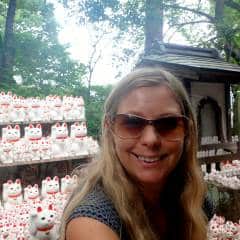
My name is Helen Foster, and I’m a journalist and author. My travel articles have appeared in publications including The Australian, Escape, RAC Horizons, Jetstar Magazine, Sainsbury’s Magazine, and more.
I’ve travelled to Japan nine times before – solo and with my partner and visited over 50 towns and cities. My last visit was in April 2026, so everything here is pretty up to date.

