
- How to Fill in Your Visit Japan Web Arrival Documents for Japan - 18 March 2026
- The Beginners Guide to Getting on the Shinkansen - 16 March 2026
- How to Use Buses in Nara - 11 March 2026
If dressing in a kimono is on your list of things to do on your Japan trip, you might be wondering if it’s okay to do so. Can foreigners wear kimono in Japan without seeming disrespectful? I have the answer – from some people who live there.

Article by Helen Foster. Disclosure: Some links in this post are affiliate links. See our Affiliate Disclosure.
Quick Summary
I asked a panel of Japanese people all of whom said it’s fine for foreigners to wear a kimono and most Japanese see it as a way of showing a keen interest and respect for Japanese culture.
However, there are a few ‘rules’ to follow when wearing a kimono that help reinforce that respect like walking more slowly and daintily than you might normally and positioning your arms correctly. So, if you want to wear your kimono like a local, read on and we’ll explain things in more detail.
My Experience of Wearing Kimono
Whenever I’ve been asked this question before, my answer goes back to my own experience of wearing a kimono. The time I did this was on a trip hosted by the Japan National Tourism Organisation, and it was for a lunch where we met a lot of local dignitaries. I didn’t think that they would do that if it wasn’t accepted in Japan.
Also, as we walked to the lunch – a group of about six women in kimonos – the local Japanese ladies were smiling and complimenting us, so again, I felt that must be okay – but, I’m not Japanese so, what do I know?
So, that’s why, when addressing this question here, I decided to send out some feelers and ask some people in Japan whether it’s okay for foreigners to wear kimono – but, also, even if they were generally okay with it, was there anything we shouldn’t do when wearing this elegant outfit? And, here’s what they said…
Should Foreigners Wear Kimono in Japan? Our Experts Say…
Yes, says every one of the six people who helped us with this piece. Not one of them said that they thought foreigners wearing kimono were disrespectful or something they didn’t like to see; instead, they said…
‘When I see people from overseas wearing kimono, I feel they are enjoying Japan,’ says Mr Kazuhiro Mabuchi from the Kanaya Hotel in Nikko.
Mrs Noriko Kasuya, Managing Director of the Kyoto Ookini Zaidan – the Kyoto Foundation for the Promotion of Traditional Performing Arts, agrees, adding, ‘Kimono is not just something to look at but something to wear. It’s good to have people experience it. It shows that they enjoy Japanese culture.’

How to Wear Kimono Like a Local
So, six for six with people saying that it’s okay to wear a kimono, but I wanted to take this one step further and find out if there was anything tourists might do in kimono that might not be so respectful. And, it turns out there are a couple of things to try and do if you want to wear your kimono like a local.
Watch Your Collar
This won’t be something to worry about if you are professionally dressed in kimono as this will be correct, but if for any reason, you have to rearrange your dress make sure that the front collar is in the correct position. It must fold left over right – ‘folding right over left is only worn by the dead,’ says Ms Meiko Shinohara who works at the iconic Tokyo Skytree.
Don’t Fight Your Kimono
You’re naturally slightly constrained when wearing kimono, especially if you have also chosen to wear the traditional zori or geta shoes with them, and our experts say not to try and fight that – which might require a little adjustment to how you normally move.
‘Wearing a kimono may be constricting and hot, making it difficult to move and walk in zori, but Japanese people experience the same issues. But this is a rare opportunity to enjoy designs and colors that would be impossible in everyday clothing, so transform yourself to the fullest!,’ says Mrs Kasuya.
To wear kimono as the Japanese do, take smaller steps rather than big strides, try not to sit with your legs crossed or open, and don’t pull the kimono around as this will move the complex setup – and wearing your kimono in a disheveled way could be seen as less respectful.

Be Careful of Your Sleeves
Kimono sleeves are loose and long, but despite this, it’s good kimono etiquette to keep them as close to your wrists as possible. This is a throwback to days gone by when showing too much skin was a no-no, and it’s still how many Japanese women will try and move when wearing kimono today.
Try not to wave your arms around too much (ignore me in the picture above; I’m just trying to show the sleeves!). ‘And don’t push your sleeves up,’ says Mrs Kasuya. If you really want to move like a local, hold your sleeve with your opposite hand if you are reaching for things or using your phone.
‘When eating, be careful not to get your “tamoto” (sleeves) dirty or catch them while walking,’ adds Mrs Kasuya.
Don’t Squash Your Obi
The obi is the belt tied around the middle of the kimono, and it’s beautifully fashioned – so try to protect it. When you’re sitting on a chair, don’t lean all the way back, and try not to lean against walls or the inside of trains to prevent squashing it.
Pack Light
Kimono day is a day to carry just the essentials! You’ll likely be offered a small bag with handles as part of your outfit and it’ll be just big enough to pack a phone, a small purse, and a couple of other small things – carrying a giant bag, using a shoulder strap or backpack will ruin the look your kimono expert has achieved.
Don’t worry if you don’t remember all of these, the Japanese people will still appreciate you wearing their beautiful kimono.
How Your Dresser Chooses Your Kimono
When you get to your kimono rental shop you’ll probably choose the pattern you would like, or, in my case, as we were a large group, we were given boxes that contained the whole kimono already selected for us.
The colors, designs, and fabrics will differ depending on the season you are in. ‘Try and use a kimono rental that can provide you with details on such matters,’ says Ms Matsumoto, President of KyoGokoro, a Kyoto-based company that offers kimono rental and other cultural experiences.
Understanding the different elements of kimono will help you appreciate the beauty of the garment further so don’t be afraid to ask questions. ‘We would like tourists to not only wear the kimono but also learn more about how kimonos are made, the process involved and to visit the makers to get a deeper appreciation of the art,’ suggests the Traditional Industries Division, Kyoto City.
If you’re booking the kimono for a special occasion or a formal event, tell the shop in advance as they might suggest a more formal design. Most of the designs offered to tourists will be more casual and suitable for walking around town.

Extra Tips For Kimono Wearing
Allow Enough Time
Getting dressed in a kimono is not a quick process. It’s not just a dress that you pop on, there are actually seven parts of the whole outfit. When I was fitted for mine it took two ladies and about 20 minutes to put it on.
You also need to allow time to choose your kimono, and if you’re having your hair and more makeup done, you’ll probably need to allow another 20 minutes. So, let’s say an hour—plus maybe a little bit more time if the shop is busy.
If you’re wearing your kimono outside of the shop, allow a bit more time to get from A to B so you can embrace the slowness.
Protect Your Feet
Blisters are going to ruin the rest of your trip. ‘And if you are not used to wearing zori (Japanese footwear), don’t forget to bring some Band-Aids because they hurt between your toes,’ says Mrs Kasuya.
The shoes do finish the outfit beautifully, but, you don’t want to cause a problem that could ruin the rest of your trip. Unless you are going to a very formal event, no-one is really going to mind if you wear your normal shoes underneath. I did, my feet always end up blistered in Japan, I don’t need any further help there.

Don’t Wear Strong Perfume
In our Japanese packing list, we mentioned that you should leave strong scents at home anyway, but some kimono stores also ask you not to wear strong perfume when wearing their garments.
Also, kimono are expensive, so try to protect your kimono against damage. Pick up the hem when you go to the bathroom or if you are anywhere there is mud or dirt, and use a napkin when eating. Also, try to stay away from anything that might rip, tear, or burn the garment.
Plan for the Weather
Kimono are quite difficult to care for so, Ms Matsumoto asks that you try not to wear them on heavy rain days. When you’re booking your kimono appointment, maybe do it closer to the beginning of your trip in case you need to reschedule for bad weather.
Getting Beautiful Kimono Pictures
Chances are you’ll want to take pictures of yourself in your kimono, so we asked our experts for tips on how to get the best pictures.
Be Courteous
Mrs Kasuya asks, ‘Please do not take photos on public roads, such as cobblestone streets, as this will disturb passersby and residents living in the neighbourhood.
Also, please do not enter private property to take pictures without permission, even if it is a nice place to take pictures in kimono, such as a “lattice door” or a “noren” (a traditional Japanese curtain).’
Also, make sure you are not in one of the areas in Gion where photos, even of buildings are banned. From April 2024, access is going to be restricted to some smaller roads in Gion to protect property and the geishas working there – check out our post on the Gion rule changes for more information.
Tips for Kyoto Kimono Pictures
Not surprisingly, Ms Matsumoto suggests Gion and Arashiyama as two of the most beautiful places to have your kimono photos taken. ‘But Kyoto is a town where kimonos just look good so any place would be nice,’ he adds.

Don’t miss getting a shot on what’s said to be Kyoto’s prettiest road – Shirakawa in Gion (that’s it above). The willow trees and bridges over the small river made for particularly pretty pictures. If you come here earlier in the morning it tends to be less busy.
The Arashiyama Bamboo Grove is popular for pictures, but, by the time you have dressed in your kimono, it will be very, very busy – a fun and different spot to take pictures instead is the Kimono Forest at Arashiyama station. This art exhibit is made up of columns full of kimono fabric.

You’re not going to be short of pretty places to find your shot. But do remember that some areas of Gion have no photography rules so, as beautiful as it is there please don’t break them just to get the perfect shot.
If you want to hire a kimono in Kyoto, consider Kyo-Gokoro, owned by Ms Matsumoto. This is located close to the Heian Shrine which has pretty gardens to take photos.
One place you might not want to explore fully in kimono is Fushimi Inaria Tasha. ‘The far side of this is almost like climbing a mountain and because it is difficult to move your kimono will not stay in place,’ says Ms Kasuya. If you really want the pretty scarlet gates in your picture stay in the lower levels.
You’ll also find a number of Kyoto kimono rentals on Klook.
Taking Kimono Pictures In Tokyo
Ms Shinohara from Tokyo Skytree loves the idea of tourists wearing kimono saying ‘The experience of wearing a kimono in Japan, including the comfort of wearing it, will be an unforgettable experience.’
She suggests using Tokyo Skytree as a backdrop as it creates a lovely juxtaposition between the tradition of kimono and the modernity of Tokyo. ‘Try shooting on a bridge crossing the Sumida River to get the Skytree in the background,’ she suggests.

You can also then take the bus into Asakusa to find some more traditional-looking backgrounds. We have a few suggestions in our guide to what to eat, drink, and see in Asakusa
Tokyo Skytree offers a package that includes both kimono rental and entry to Tokyo Skytree. See more details here.
Or, again, you’ll find many kimono rental shops on Klook, particularly around the Asakusa area. Take a look here for a top pick.
Save Money with Klook & Japlanease
If you plan on buying tickets or tours from Klook for when you’re in Japan, you could save up to 10 per cent by using the code JAPLANEASEKLOOK at the checkout. Click here to see what’s on offer.
T&Cs apply. Some items, including Tokyo Disney and USJ tickets, are not available for discounts.
Day Trips to Wear Kimono
If you have a bit more time during your Tokyo trip, Mr Mabuchi suggests two places near Tokyo that you might want to visit and combine with your chance to wear kimono.
The first is the Kawagoe area which is an hour’s train ride from Tokyo ‘This is a town of buildings from the Edo period, Hikawa Shrine, a famous matchmaking shrine, and Kashiya Yokocho, with its Showa period atmosphere, are very photogenic spots,’ he told us.
You can find details on a recommended store in Kawagoe here.

The second is also Nikko, where he is based. ‘There are many photo spots in Nikko, and I think it would be special to visit “Nikko’s shrines and temples” World Heritage sites in kimono, i.e. Nikko Toshogu Shrine. I think a meal (or afternoon tea) at the Nikko Kanaya Hotel dining room with kimono would look very nice.’
You can details on a recommended store to rent kimono in Nikko here.
It takes about two hours to get to Nikko via the Tobu Railway train, add the time to get dressed in your kimono so, if you have more time you might want to make it an overnight trip.
For more ideas on what to do in Nikko take a look at this post on how to spend the perfect day in Nikko – with tips from another local.
Who Are Our Kimono Experts?
The people we asked for their opinions and advice in this piece were Mrs Noriko Kasuya, Managing Director of Kyoto Ookini Zaidan – the Kyoto Foundation for the Promotion of Traditional Performing Arts, Ms Meiko Shinohara from Tokyo Skytree, Ms Matsumoto – President of KyoGokoro, who offer kimono rental and other cultural experiences in Kyoto, Mr Kazuhiro Mabuchi from the Kanaya Hotel in Nikko, Ms Yu-Yu Chien who works for the Tobu Railway and representatives from the Traditional Industries Division, Kyoto City.
Thank you also to Maki Watabe from The Doq and Alison Roberts Brown from Tourism Garden for help organizing, and translating the interviews.
Who Writes This Blog?
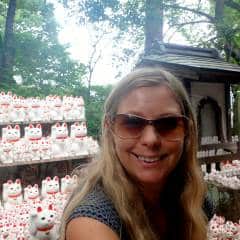
My name is Helen Foster, and I’m a journalist and author. My travel articles have appeared in publications including The Australian, Escape, RAC Horizons, Jetstar Magazine, Sainsbury’s Magazine, and more.
I’ve traveled to Japan eight times before – solo and with my partner and visited over 25 towns and cities. My last visit was November 2024 so, everything here is pretty up to date.

