
- How to Watch the Oiran Parade at Edo Wonderland, Nikko - 15 October 2026
- 8 Mistakes Not to Make in Autumn Leaf Season in Japan - 10 October 2026
- How to Spend One Day in Nara - 29 September 2026
Quick Summary
The Whole Japan Rail Pass increased in price by 70 percent in October 2023. It’s therefore now only worth buying if you’re traveling, say, from Tokyo to Nagasaki. and back, in a short period.
For most other people, buying individual Shinkansen tickets and/or regional rail passes will now be more economical. You might even save money flying, taking the bus, or renting a car. Read on to find out which option might be best for you.

Article by Helen Foster. Disclosure: Some links in this post are affiliate links. See our Affiliate Disclosure.
How Much Does the Japan Rail Pass Cost Now?
The prices went up by 70 percent meaning that the Adult 7-Day Japan Rail Pass now costs 50,000 yen in Ordinary Class (70,000 in Green Class), the 14-Day pass is 80,000 yen (110,000 in Green Class), and the 21-Day pass is 100,000 yen (140,000 in Green Class).
As you can see, it’s quite an outlay and the route most first-time travelers to Japan take from Tokyo to Kyoto/Osaka and back, at around 28,000 yen for a return ticket, does not cost enough to make the Rail Pass pay.
When Is The Rail Pass Worth it Now?
The only way the whole Japan Rail pass is worth it now is if you’re traveling from, say, Tokyo to Nagasaki and back within a week – which costs around 53,000 yen. Or, going down to Nagasaki, returning back to Tokyo – and taking a lot of longer day trips in a 14-day period. Or, if you’re going up to Hakodate and doing another day trip on the bullet train you might break even on a seven-day pass. But they aren’t normal journeys for most travelers, let alone first-time ones.
Most first-time travelers traveling from Tokyo to Kyoto and/or Osaka with a few small day trips around those points – and for those a Whole Japan Rail Pass will not pay off – EVER. One exception is if you’re doing Tokyo, Kyoto, Hiroshima and back to Tokyo all in a week, but even then there’s a cheaper way of doing it.
Two Better Options for Taking the Train
So, if the Japan Rail Pass is no longer worth buying – what other options are there for getting around? There are a few, so let me try and explain them as simply as I can.
1. Buy Individual Train Tickets
This is likely to be the best option for most first-time travelers who want to use the train going forward. To buy a single Shinkansen Ticket to cover the trip between Tokyo and Kyoto costs 13890 yen per adult. So it’s 27780 for a return. Children are half that price.
One reason so many people bought the JR Pass in the first place was they were a bit nervous about buying individual tickets, but they are easy to buy in Japan from ticket offices or machines, in advance (for some routes) from the Smart Ex App.
Or, you can also buy them in advance from Klook who some of you might also be using for things like your USJ tickets.
See more about Klook Shinkansen tickets here.
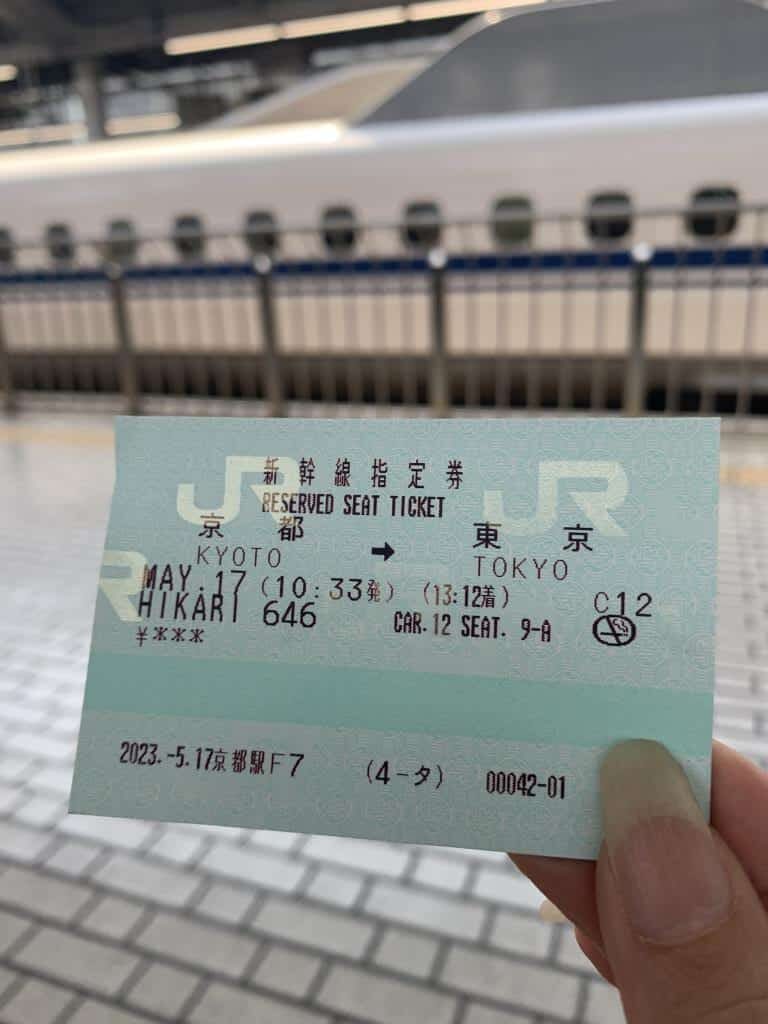
We discuss the pros and cons of each of these – and explain which might be best for you in our specific article on buying long-distance train tickets in Japan.
If you are then just traveling around locally to areas like Nara, Osaka, and Kobe, you can either buy individual tickets on the local lines or, look into one of the local passes like the Kansai Area Pass which might save you money.
See our detailed post for more advice about when the Kansai Area Pass pays for itself.
2. Buy Regional Rail Passes
Each region of Japan offers specific rail passes that highlight their region. There are over 20 of these and trying to work out which one you might need, and whether it will save you money, can be a bit complex, but here are three that first-time travelers might be most likely to benefit from.
The Kansai Hiroshima Area Pass
If you are staying in Kyoto or Osaka and are going to take a day trip to Hiroshima, or, taking a return between those two cities within five days, this 17,000 yen pass will pay for itself immediately (as a return to Hiroshima costs 23,920 yen).
It also covers Naoshima, Okunoshima (Bunny Island), Himeji, and many of the small towns in between – plus it lets you ride the Hello Kitty Shinkansen.
I’m using this pass on my next trip to visit Hiroshima, Miyajima, Takehara, Onomichi, Kurashiki, and Naoshima or Teshima – and I do not have enough days to see some of the other amazing sights it covers.
Click to check the availability of the Kansai Hiroshima Area Pass on Klook.
Or see a fuller breakdown of the pass, and the other Kansai area passes you might want to consider in our article on the passes that cover the Kansai Region.

The Hokuriku Arch Pass
This can take you between Tokyo and Kyoto/Osaka/Nara – the long way round.
It costs 30,000 yen so it isn’t cheaper than going directly to any of those cities, but if you have time and want to visit the famous snow monkeys or other sights in Nagano, the amazing snow walls of the Alpine Route, and the pretty geisha town of Kanazawa on your way to Kyoto, this seven-day pass will save you money over booking that route individually.
See more about the Hokuriku Pass on Klook.
JR Tokyo Wide Pass
If you’re planning to visit Mount Fuji and Nikko on day trips from your Tokyo hotel, and want to use JR Trains, this pass will save you about 5,000 yen. It costs 15,000 and lasts three consecutive days, so you’ll need to squish up your day trips. You can also use it to get around Tokyo the day in between.
See more about the JR Tokyo Wide Pass here.
Depending on where you are flying into, and where you are hoping to explore, combining both individual Shinkansen tickets and a regional rail pass might be the most economical way to get around.
To work out if a Regional Rail Pass is worth it for you, use the Navitime app. It allows you to filter journeys by the specific regional passes so you can see which routes are covered and how much they would cost you without the pass. See our post on Navitime for more details.
Is it Cheaper to Fly Between the Big Cities?
When we used to compare flying vs the Japan Rail Pass, flying didn’t come out on top. The costs were around the same as buying the old pass but there was a lot more hassle involved with catching a plane – but what about now? How does flying compare to getting on the Shinkansen?

Let’s look at the costs between Tokyo and Osaka again.
I’m going to throw in a date at the end of March as, because I’m updating this in October I should find some good deals – the day I write this, the cheapest option is ANA which costs 9950 yen (one way) flying from Haneda.
Which is slighter cheaper than taking the train. However, do remember that prices will go up the closer to your trip that you try and book, or during busy periods – in comparison, Shinkansen tickets are always the same fixed price.
Also Consider…
Timewise, the two are similar. It takes 70 minutes to fly to Osaka, plus time getting to the airport, checking in, clearing security, etc, and, waiting for luggage. If you’re like me and get to the airport 60 minutes early for a domestic flight, you probably won’t save that much time over the train (which takes 2hrs 27 minutes from Tokyo Station to Shin Osaka).
And it will definitely take longer to fly if you are traveling to Kyoto which doesn’t have its own airport so you need to travel about an hour from Osaka to reach your hotel.
Plus, you have the hassle of airports. Getting on the bullet train is one of the least stressful travel experiences in the world and part of the fun of traveling to Japan. The train is also kinder to the environment.
I personally wouldn’t choose to take the plane over the train in Japan, especially on a short route like Tokyo to Osaka, for the cost-saving it provides.
If You Do Decide to Fly
If you haven’t already booked your international flight, also look at adding internal flights to your main flight with Japan Airlines (JAL) or ANA as this can often be cheaper than booking a flight yourself.
Or, for budget flights look at Jetstar Japan or Peach which both offer easy booking in English. Skyscanner is a good place to start.
What About Buses?
If you have plenty of time in Japan, then you might want to look at using the bus (well, they’re more what we’d call a coach – the one below is a bus!) to get around Japan.
Willer Express is one company that travels between most of the major cities you might want to visit.
A single bus fare from Tokyo to Osaka or Kyoto starts at 4400 yen, although prices vary a lot throughout the day so you’ll need to book in advance and be flexible to pick the cheapest deal.

The booking site is very easy to use and you can pick from a number of different pick-up and drop-off points and choose your type of seat. There are even nighttime buses you can sleep on which can save you the cost of a hotel.
The downside is the time it takes to get from A-B – the nighttime buses take about 10 hours from Tokyo to Osaka. Daytime ones take about 7 hours.
Those in Japan with a foreign passport (which as a tourist you will be) can also buy the Japan Bus Pass which allows you to travel on up to three different buses a day for three days (they do not have to be consecutive) from 10,200 yen. Five and seven-day passes are also available. If you have plenty of time to spend in Japan, this might save you even more money.
See more about the buses, routes, and passes here.
Other bus companies to look at include Highway Bus Japan which offers a lot of different routes. Find the Highway Bus website here.
Need Extra Planning Help?
Our Japan trip planners can help. You might like our First-Timers Japan Planner, which will help you plan your trip to Tokyo, Kyoto and Osaka step-by-step, including tips on everything from picking hotels to sightseeing and dining. Or our super-duper Tokyo Disney Planner makes arranging your park trip MUCH easier. Find them in our Planners store – printable and digital versions are available.
Train Tickets vs Car Rental
If you are traveling as a family or group of friends, you might be wondering if it’s cheaper to rent a car than get train tickets for each of you.
On Kayak, a 7-day rental picking up and dropping off in Tokyo booked six months out, will cost from 37,500 yen for a simple small car with basic insurance.

But Don’t Forget the Extras
For starters, you might want to reduce the excess on the insurance which is likely to add about 10,000 yen.
Then there are tolls. Many Japanese roads have these and they aren’t cheap – the tolls between Tokyo and Kyoto, for example, would add close to 10,000 yen (US$90) each way.
So excluding fuel and parking, you’re paying 67,500 yen. Parking might add up though – at Hotel the Flag Shinsaibashi, one of the few hotels in Osaka that offers parking, you’ll be paying 3600 yen a night to park.
You’ll also need an International Driving Permit, or an official Japanese translation of your license – which you need depends on where you live. it’s totally possible to rent a car in Japan.
You have to apply for this in your home country and there will be a small fee for it (in Australia where I live, for example, an International Driving Permit costs AU$42). This translates your driving license into different languages that can be read abroad
For a couple, it won’t save money, but for Mum, Dad, and two kids under 11 who would pay around 84,000 for return train tickets from Tokyo to Osaka, it might save a little bit.
But do note – if you want to drop off the car in Osaka and not drive back to Tokyo, the price almost doubles.
Again, for the actual money it saves, personally, I’d rather take the train between the cities. A car will only really come into its own if you’re going somewhere more rural, or around the Mount Fuji area where a car will allow you much more freedom.
If you do want to go down this route. Kayak will search available cars for you and show you the best offers.
So, there you have your options for getting around Japan now that the Japan Rail Pass is unlikely to pay for itself. I’ve kept it as simple as I can so, if you do have further questions, please ask them in the comments, or, for a quicker answer, head over to our Facebook group where I, or other travelers, can help you out.

Who Writes This Blog?
My name is Helen Foster, and I’m a journalist and author. My travel articles have appeared in publications including The Australian, Escape, RAC Horizons, Jetstar Magazine, Sainsbury’s Magazine, and more.
I’ve travelled to Japan nine times before – solo and with my partner and visited over 50 towns and cities. My last visit was in April 2026, so everything here is pretty up to date.

