- How to Fill in Your Visit Japan Web Arrival Documents for Japan - 18 March 2026
- The Beginners Guide to Getting on the Shinkansen - 16 March 2026
- How to Use Buses in Nara - 11 March 2026
While it wouldn’t be the perfect Japanese trip without stumbling into some mom-and-pop restaurant, ordering from the menu even though you’re not quite sure exactly what you’ll get, and enjoying the whole experience of being somewhere out of your comfort zone, sometimes you might just want to eat somewhere quick and easy. This is where the Japanese chain restaurants come in very handy.

Chain restaurants are my fall-back position in Japan when I’m tired – partly because they are often the closest place to my hotel, and they’re friendly to solo travelers, but they’re also just easy.
They sell cheap, filling meals and often have English menus. You usually also order by machine, so you don’t have to worry about making yourself understood. As well as being very great for solo travelers as they often have seats for one, they’re super family-friendly, so you don’t need to worry about whether your children will be welcomed, and, unlike more traditional restaurants, many of them don’t just specialise in one thing, which is handy if you’re traveling with picky eaters or there’s a night no one can agree on just one type of food to consume.
And because they are usually filled with Japanese people also grabbing a quick, easy meal, you don’t feel like you’re cheating like you might if you went to say McDonald’s (although you should do that, too, as they have some uniquely Japanese dishes).
But, before you can use these chains, you need to know where they are and what they sell – so here’s a list of my favorites. These are all the places I regularly visit on my trips when I’m a bit too tired to properly ‘Japan.’
Fuji Soba
I didn’t even realise Fuji Soba was a chain until after I’d eaten there, and it looked just like many of the independent soba restaurants I’d been to.
They offer both hot, soup-based soba dishes (the one below is the Niku dish) and cold soba alongside curry rice and katsu don – plus larger sets combining a mix of these dishes.

Like many places on this list, you order and pay from a ticket machine and then give the staff your ticket to order.
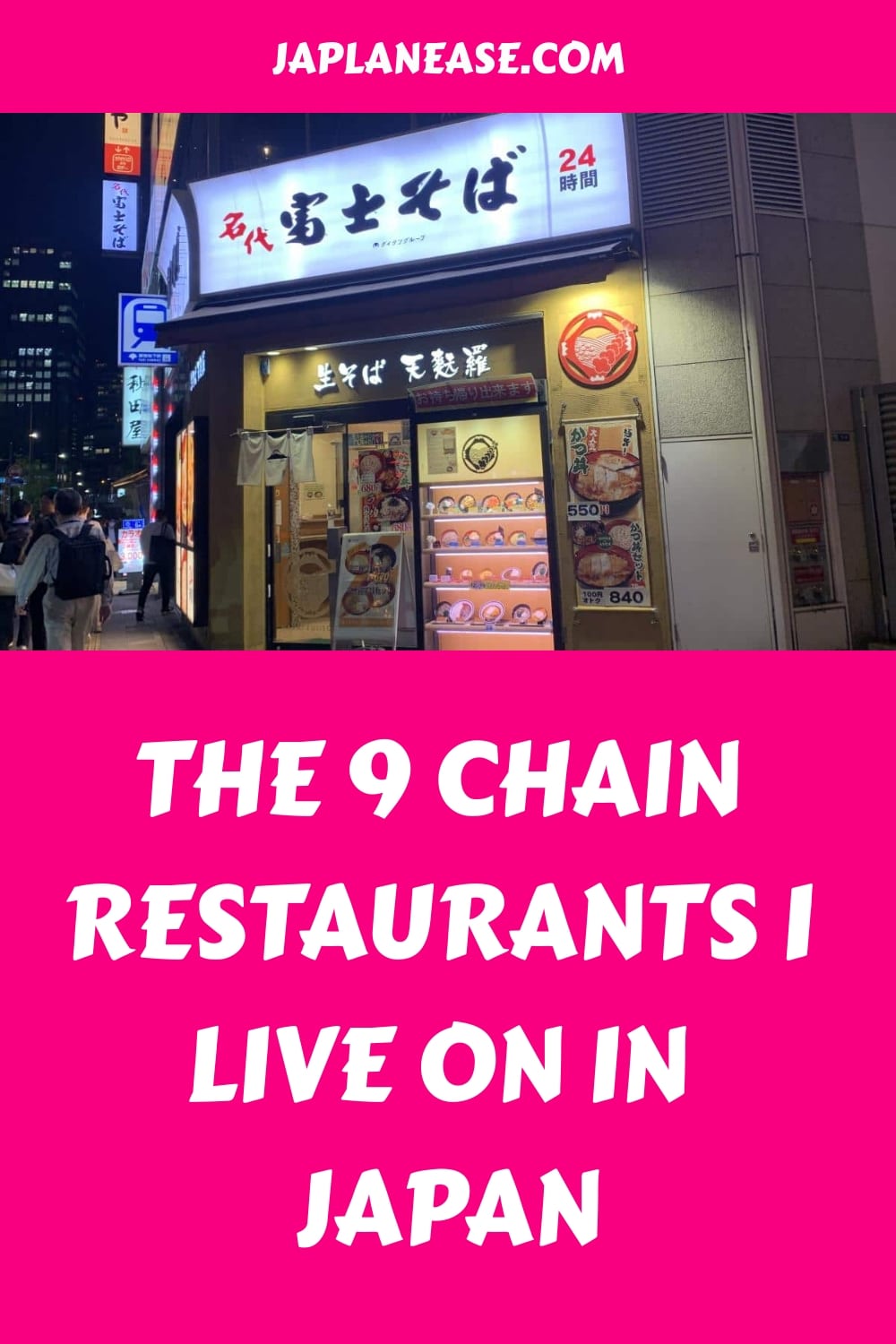
The one I went to in Daimon (that’s the exterior of it in the first picture above) didn’t have English options on the machines, but you can check the website before you go and translate it so you know what’s on offer and match that to the pictures.
If you forget, they also have plastic food outside, allowing you to match the meals outside with the characters on the machine. The Niku Soba above, though, is one of their most popular dishes. Normally, I’m not a fan of soft-boiled eggs, but the yolk added a nice creaminess to the soba.
Fuji Soba has branches all over Tokyo and the surrounding areas, and they are open late.
Machikidoya
This is where I eat when I’m tired and very hungry in Kyoto. There is a branch about five minutes’ walk from my usual hotel. If you look on the map, it’s right by Gojo Station but Machikidoya has multiple branches in Kyoto, Osaka, Himeji, and other areas of Japan.
They sell set meals, including fried chicken, stir-fried pork and ginger (one of my favourites), tonkatsu pork, grilled salmon, etc, all served with rice, soup and usually at least one side dish. They also have noodle soups and other dishes, so it’s great for a family where everyone wants something different.

Not only is the quality always good, I like that their meals often contain a few different side dishes – so, the one above I ordered for the chicken katsu, but getting some sashimi with it was a big selling point.
In terms of price, you’re looking at around 700-1000 yen for a meal, sometimes less for smaller dishes or mini serving sizes. Their lunch specials can be extremely cheap. In most branches, you can also refill the rice for free – although I’ve never managed to finish one bowl yet, let alone two, as the portions are generous (and I’m a big eater).
Their website is only in Japanese (although the machines you order from are in English); you’ll find a store list and menu pictures here.
Yayoi Ken
Yayoi Ken is another chain set-meal restaurant (these are known as Teishoku restaurants). I now look for this word when I’m really hungry in Japan as I know it’ll always be filling!
My go-to order in Yayoi is the fried cutlets. They’re huge, served with rice and soup – with a side of cabbage and a really yummy dressing. I also like that they have pickles on the table, which I mix into my rice (probably not the done thing, but try it when no one is looking).

They also do fried chicken, which is a favorite of Mr Japlanease’s, or try the grilled salmon, mackerel, or even steak for a healthier option.
Again, the prices are reasonable – around 800-1000 for most meals. Expect to pay more if you opt for steak.
You can find the menu at Yayoi here. There’s also a list of stores. You might also recognise the name as they are also branching out internationally.
Gogo Curry
While I generally like all Japanese food, the one thing it lacks is spice. When that craving calls, I reach for Japanese curry, and GoGo Curry is my chain of choice—mostly because I like their gorilla logo!
Hailing from Kanazawa, this is another place to go when hungry. Not only are the portions generally large, you can also order extra portions of toppings like Chicken Katsu to fill you up even further. Mind you, take a look at the pictures of the Grand Slam here and tell me that you’d still be hungry after polishing that lot off.

GoGo Curry has a lot of branches in Tokyo, including popular areas like Shinjuku, Kabukicho and Shibuya. You’ll find a complete list via the link above.
Another Japanese curry chain to seek out is Coco Ichibanya. Their curry is probably more of a traditional recipe than GoGo’s, and they offer many different variations. You can also pick your spice level and how much rice you want. I always feel guilty about leaving rice as the portions are large, so that’s a great option!
They also have a plant-based option and clear allergy labelling in English. See more about the menu, customization, and locations on the Coco Ichibanya website.
If you’re looking for some more independent restaurants to try, check out my post on the most memorable meals I’ve had in Japan for some ideas.
There’s a ramen in there that I’m still thinking about months later!
Matsuya
Matsuya specialises in gyudon, or beef bowls. These include strips of grilled beef in a sweet soy sauce served on top of rice, but what rings the changes are the additional ingredients they come with. You can go plain and just have the sweet soy sauce version, or try bowls topped with green onions, kimchi, grated radish, citrus sauce, and even cheese.
My top choice is the kimchi and cheese – comfort food in a bowl!

Reading this list, I find it amazing that I always lose weight in Japan – my diet sounds terrible! I think all the sushi I’m not mentioning here and the 30,000 steps a day must make up for it all.
Matsuya also has set meals with dishes like stir-fried beef, ginger, pork ribs, and Japanese curry.
Prices are incredibly reasonable—often under 700 yen a bowl. The menu and a list of store locations are on the Matsuya website.
Other beef bowl chain restaurants you might want to try include Yoshinoya, Nakau and Sukiya.
Royal Host
Royal Host is described as a family restaurant, not only because they welcome groups of all ages, but because the menu is so varied, you can eat there as a family and find something to suit everyone.
Food errs towards the western – they have steak, roast chicken, pork loin, hamburger steak dishes and salads. But you’ll also find Japanese comfort foods like omurice (a stuffed omelet) and curry rice.
They also have a special children’s menu, so if you’re traveling with kids who can’t finish an adult portion, this could be an excellent place to stop.
Dishes are around 1000 yen and you’ll find branches all over Japan.
Some family restaurants don’t serve alcohol. Royal Host is not one of them, so you can accompany your meal with a glass of beer or wine – you are on holiday, after all.
Other family restaurants include Gusto, Dennys and Jonathans.
Need Extra Planning Help?
Our Japan trip planners can help. You might like our First-Timers Japan Planner, which will help you plan your trip to Tokyo, Kyoto and Osaka step-by-step, including tips on everything from picking hotels to sightseeing and dining. Or our super-duper Tokyo Disney Planner makes arranging your park trip MUCH easier. Find them in our Planners store – printable and digital versions are available.
Mos Burger
At some point in every trip, I feel the need to go into a Mos Burger and have a Spicy Mos Burger. It’s a reasonably priced lunch with burgers at about 500 yen and meal sets at about twice that.
If you want something a bit more ‘Japanese,’ you could choose their famous rice burger, which uses a rice-based ‘bun’, or the shrimp cutlet patty.

They also have plant-based options and lettuce-wrapped burgers. If you want to check the menu before you go in, then you’ll find it here. Mos Burger stores are everywhere, so check Google Maps for the closest to where you are.
Other Japanese burger chains include Freshness Burger and First Kitchen. You’ll also find McDonald’s, Carl’s Jnr, Wendy’s, and Burger King, each with its own Japanese spin.
Ichiran
There’s one chain that everyone mentions in Japan, and that is Ichiran.
Originally from Fukuoka, this ramen chain specialises in milky-brothed, pork-based Tonkatsu ramen and is famous for allowing you to completely customise your meal, serving it with 15 seconds of it being made ensuring the noodles are cooked to perfection – and the fact that you don’t need to see a human when you order.
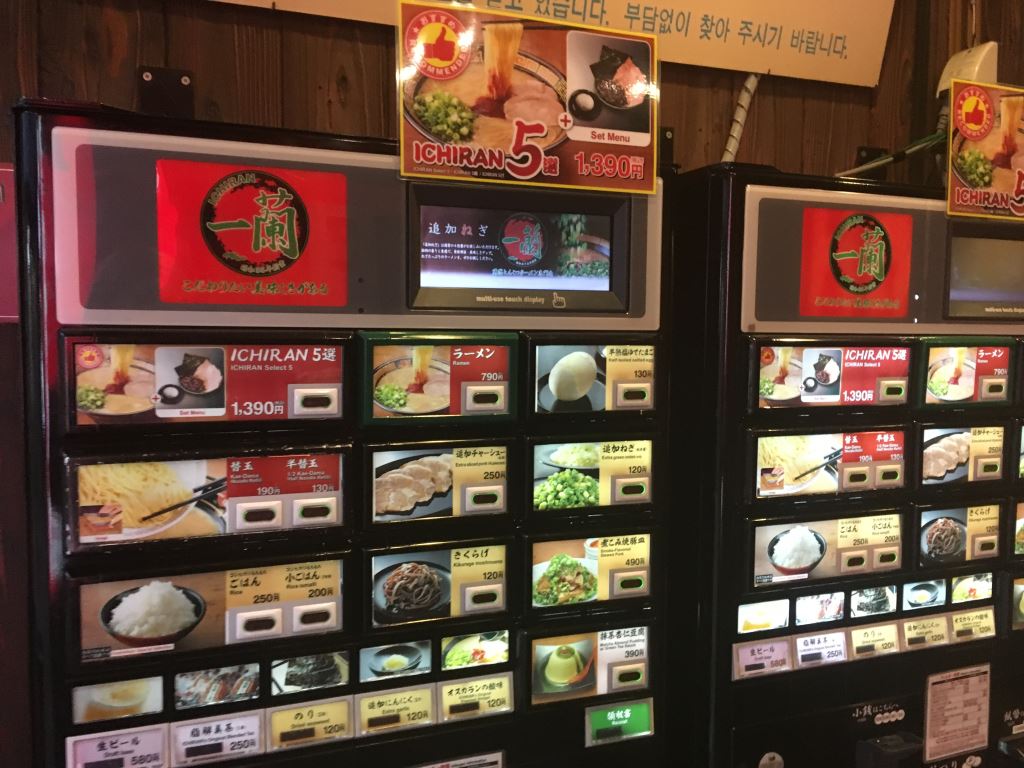
Check the last section of my piece on ordering from a ticket machine for a guide on how to order at Ichiran as it can be a bit confusing, but often the hardest thing about going to Ichiran, is getting a table in the first place. There can be long queues.
However, as we mention in our guide to things to do in Tokyo in the morning, some Ichiran branches are open 24 hours, meaning you can go late at night or have a soup-based breakfast (much better than it sounds) and jump the queues.
There is only one dish served at Ichiran (just with the ability to customize it in numerous different ways), so this is one chain where everyone will have to be on board with eating the same thing.
They do have a pork-free version of their broth, although right now it seems its only available in the Namba branch in Osaka, but, it’s not vegetarian, it’s made from chicken. The fish-based stock dashi is also used in Ichiran ramen.
You can find a full list of Ichiran locations here, but it’s also easy to find them on Google Maps in English.
Kura Sushi
This fun sushi chain’s branch in Tokyo Skytree is home to the world’s largest sushi train, but you’ll find their branches everywhere. It also offers the chance to play a fun game where plates can win prizes.
The menu is varied enough for sushi novices and even has choices for those who don’t want to eat raw fish – or any fish at all (and if that’s you, check out our guide to fish-free Japanese food choices).
One thing that might be slightly different from the sushi trains you are used to is that Kura also allows you to order the dishes you specifically want from a tablet rather than just picking from the food going around the train. These are then delivered via a conveyor belt direct to your table.

You pay by plate, and each portion costs a couple hundred yen—the exact price varies by item. You can eat a fair bit at Kura and not spend more than 1500 yen per person.
Other good, inexpensive sushi chains in Japan include Sushiro and Uoebi. In some branches, the latter delivers its sushi on the back of a tiny Shinkansen train.
If you would prefer to avoid a sushi-train set-up, Sushi Zanmai is another chain that offers a more traditional restaurant-style experience. It is a bit more expensive than the other chains, though.
So, there you have it, the nine Japanese chain restaurants that sustain me when blog research leaves me too tired to move (which happens a lot)! They aren’t Michelin-starred, high-end gourmet experiences and they usually don’t photograph well for the ‘gram, but that’s not their job. Plus, the fact that they are so cheap is one reason why I can afford to keep going back to Japan – it’s a win-win!
Who Writes This Blog?
My name is Helen Foster, and I’m a journalist and author. My travel articles have appeared in publications including The Australian, Escape, RAC Horizons, Jetstar Magazine, Sainsbury’s Magazine, and more.
I’ve traveled to Japan eight times before – solo and with my partner and visited over 25 towns and cities. My last visit was November 2024 so, everything here is pretty up to date.