
- How to Use Buses in Nara - 11 March 2026
- 8 Tips for Travelling in Japan as a Larger Family or Group - 10 March 2026
- Top 10 Things to do in Nara - 6 March 2026
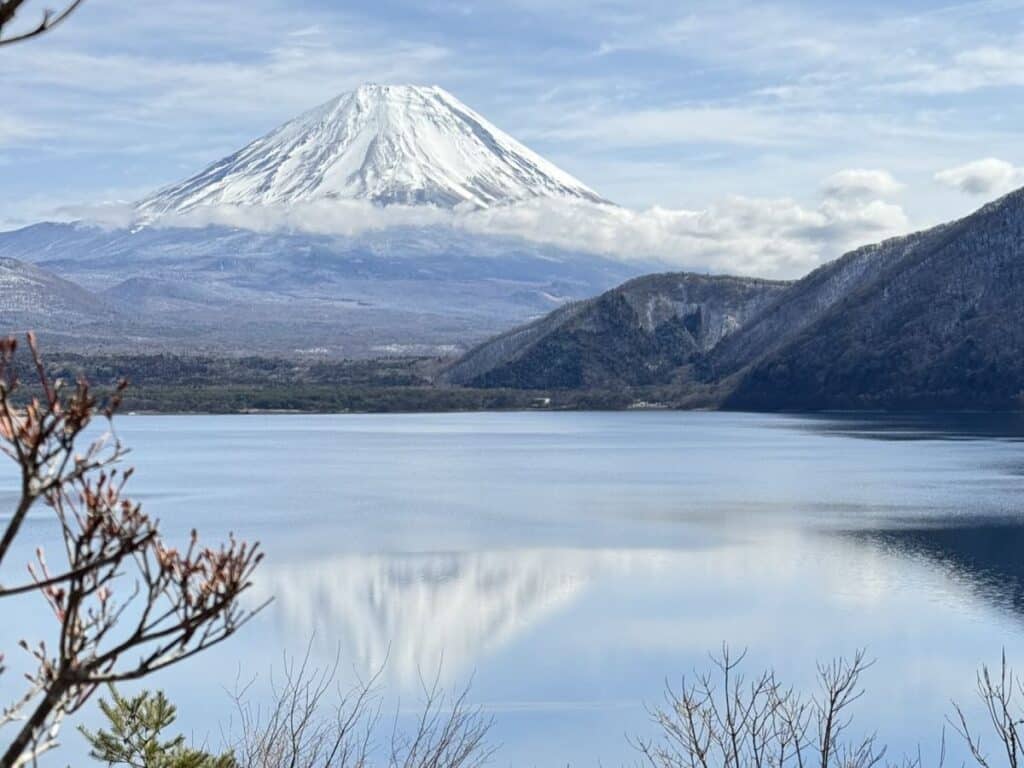
Mount Fuji may be an extremely large mountain, but it’s also a rather shy one. So, if you want to ensure you see it on your trip, it can be a good idea to time your visit for a day when good visibility is predicted. But, how do you find this out?
The quick answer is that some websites offer those predictions, but they can be a bit confusing to decipher at first. So here’s what you need to know.
Article by Helen Foster. Disclosure: Some links in this post are affiliate links. See our Affiliate Disclosure.
What Affects Mount Fuji’s Visibility
Air clarity is the short answer, but several factors determine how clear the air will be on any given day.
A good Mount Fuji day will have cooler temperatures and dry air – cold, dry air holds less moisture, which reduces haze and makes distant objects easier to see. This is why winter is often the best time to see Mount Fuji.
Windy days can also be good, as the breeze clears moisture and pollution.
Conversely, humidity will negatively affect viewing – Japan’s hot, humid summers offer the lowest chance of seeing the mountain. Rain will also stuff things up.
Anecdotally, it’s said visibility might also be better after a public holiday as factories close, reducing pollution. The day I got a fantastic view of the mountain from Tokyo was just after Golden Week, Japan’s biggest holiday, so there might be some truth in this.
Cloud formation around the summit also matters. Fuji is tall enough to create its own weather, and clouds often form around the upper slopes even when the surrounding areas are clear. A cloud-free forecast for Tokyo does not guarantee that Fuji will be visible.
Admittedly, some of those clouds are quite cute, like the one below.
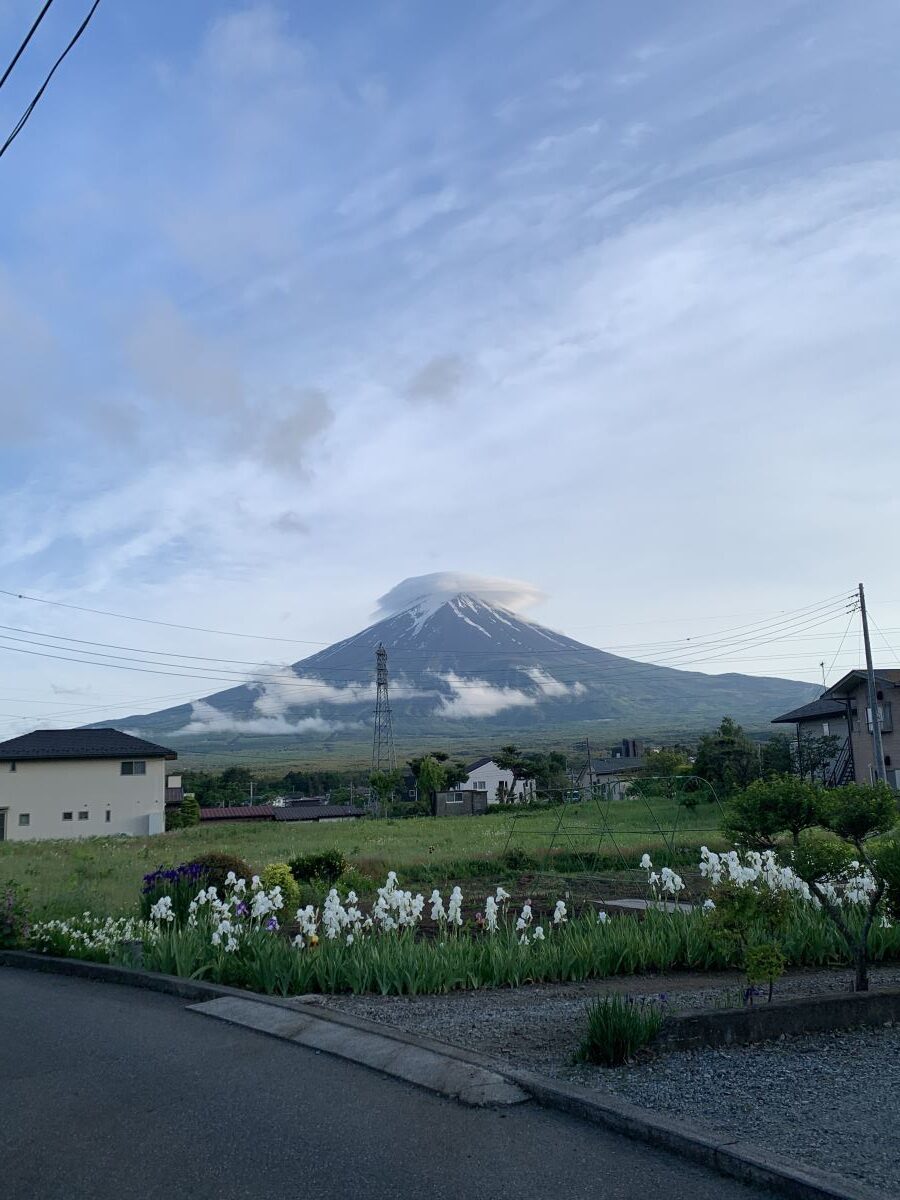
Early morning is usually the best time to see Mount Fuji, as cooler nighttime temperatures reduce humidity. However, just to prove that nature will do what nature wants, the day I was there, the mountain was invisible all day until 6 pm, when everything cleared, and I took the picture above.
Because atmosphere, not weather, is key to visibility, using a weather forecasting app won’t show you how visible Fuji might be. For this, you need to use one of the visibility calendars that add in the atmospheric conditions instead.
Best Months for Seeing Mount Fuji
Mount Fuji is only clearly visible for 70-100 days a year; so, to maximise your chance of seeing the mountain, you need to travel at a time when visibility is good. Here’s how the months stack up
January – February – Best.
March – May – Good
Jun – July – Poor
August – October – Fair
November – December – Best
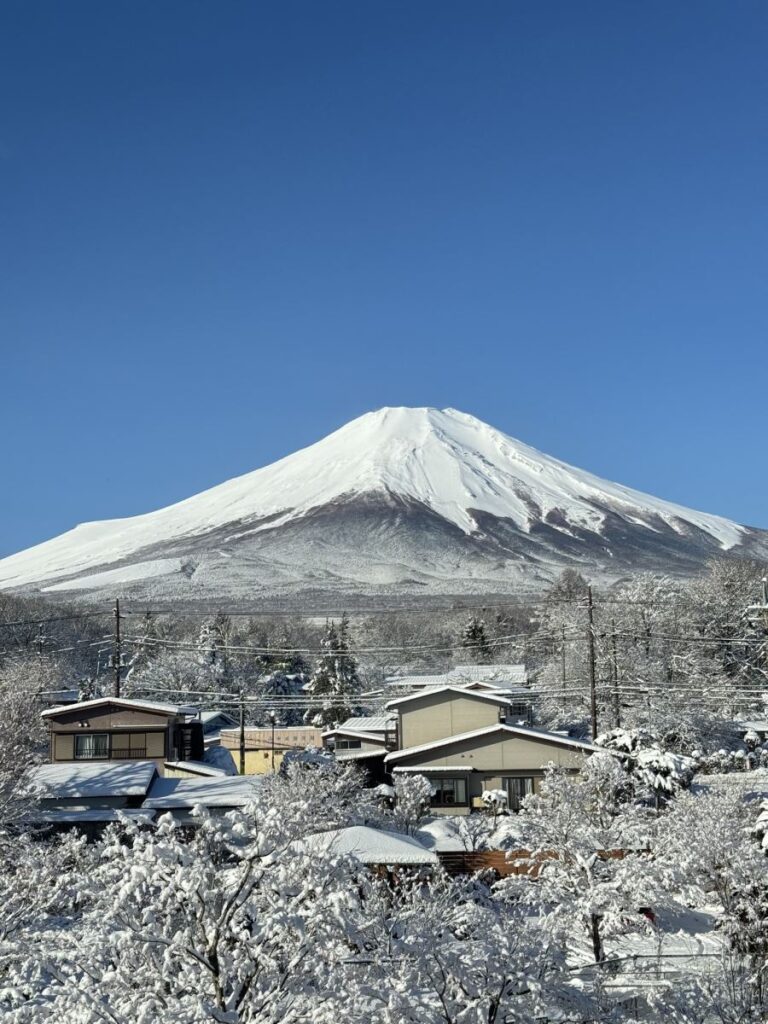
Most of the pictures in this article were taken by my friends Paula and Charlie, who visited in February. I went in late May and got a handful of snaps, but mostly couldn’t see a thing, especially from Hakone. There is also far less snow on top of the mountain as summer approaches, so you won’t get the truly iconic snow-capped peak shots in summer.
How to Check the Visibility Forecasts
The two main Mount Fuji visibility calendars I suggest are Is Fuji Visible and See Mt Fuji
These display their information in slightly different ways – the first just gives ‘visible’, ‘partially visible’ or ‘barely visible’ gradings, the latter gives marks out of 10.
If you compare the two, they tend to come to the same conclusions on the same days, so I wouldn’t say one is more accurate than the other – it just depends which approach you prefer.
How Far in Advance Can You Plan?
Both planners only show results for the week ahead – you’re unlikely to get an accurate prediction further out than this.
However, the annoying thing is that the early sightseeing trains, day trips and hotels around Mount Fuji often sell out before the one-week deadline – so, trying to time your visit and arrange the logistics can be a bit fraught.
- If you’re booking a tour in advance, aim for one with a good cancellation policy in case the day you plan has terrible visibility, and you decide not to go.
- If you decide to go last minute, check the sightseeing trains, but if they are all full, you can always use local trains, or try for a Highway Bus.
- If you’re staying overnight and won’t want to go if visibility is bad, make sure you have a cancellable hotel – and a cancellable back-up hotel so you’re not scrambling around for accommodation at the last minute.
North or South?
The visibility calendars allow you to choose between north and south views of Mount Fuji. This refers to which side of the mountain you are viewing from, and the difference is important as visibility can vary dramatically depending on which side you are.
A day with poor south-side visibility may still offer excellent views from the north.
However, if you’re not up on your Japanese geography, you might not know which viewing point you’re going to be looking from – where’s Hakone, where’s Kawaguchiko, what about Mishima?
North Views
Locations north of Mount Fuji include viewpoints around the Fuji Five Lakes area, like those in the towns of Kawaguchiko and Fujiyoshida.
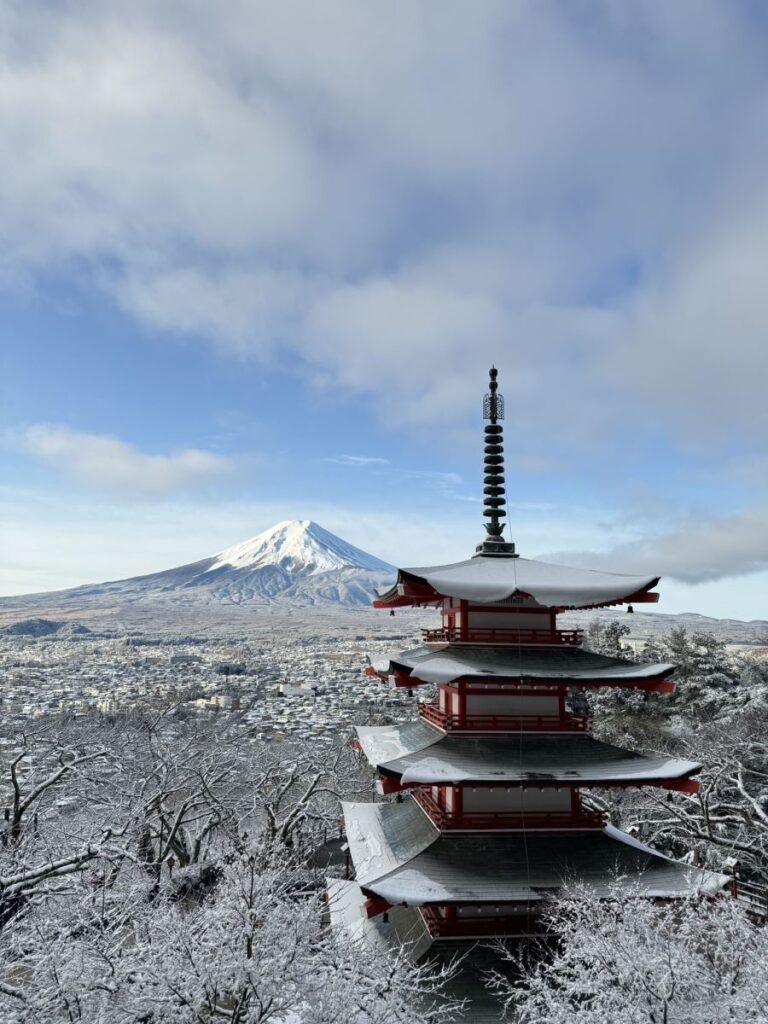
If you want to see the mountain with the famous Churieto Pagoda in the foreground, that’s a northern view, so are the popular tour stops of Oishi Park and Oshino Hakkai.
Less well-known views on the northern side include Lake Yamanaka, Hirano Beach and Lake Motosu
South Views
South views are from locations south of Mount Fuji, mainly in Shizuoka Prefecture. If you want to see the mountain from the Mishima Skywalk, this is south – so is the famous black sandy beach, Miho no Matsubara. Views from the beaches around Kamakura are also southerly views.
These areas offer less crowded Fuji-spotting than those around Kawaguchiko, but because they are closer to the coast and more affected by moist air coming off the Pacific Ocean, humidity can be higher, and visibility is likely to be reduced, especially in warmer months.
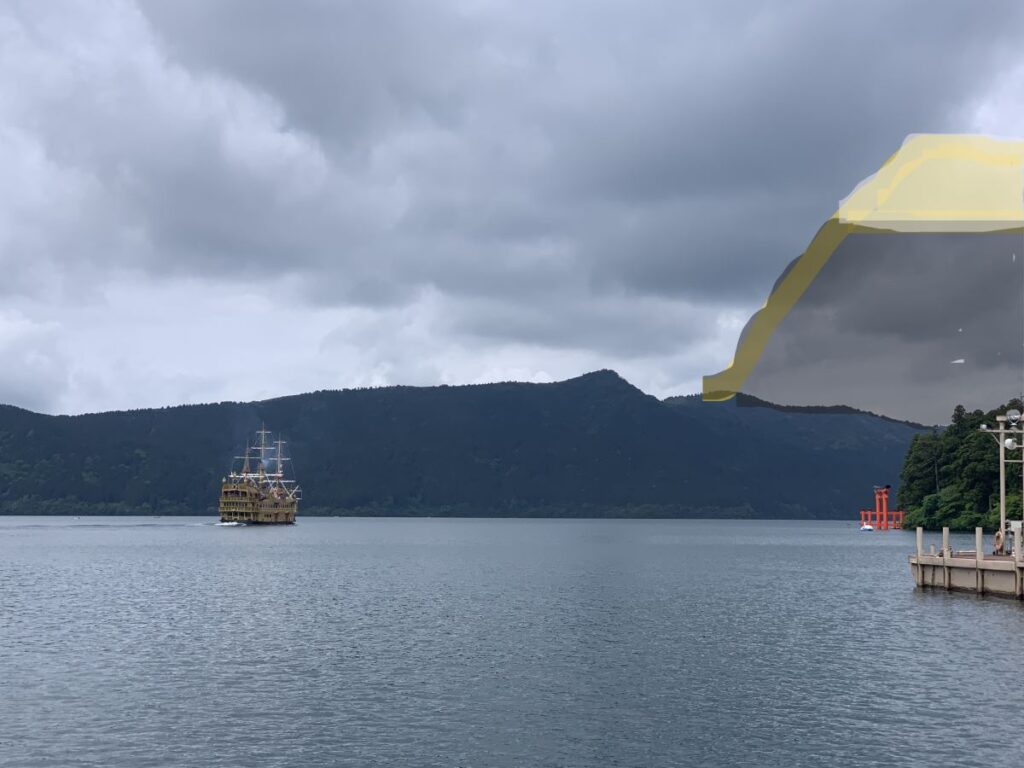
Hakone is also classed as a south view – it’s southeast of the mountain. As you can see, I had to resort to drawing in my own mountain as I was there in late May and there was zero visibility!
If you’re hoping to catch a glimpse from the Shinkansen between Tokyo and Osaka/Kyoto, this is also classed as a southerly view.
Step-By-Step To Using the Calendars
- Start by deciding where you want to see Mount Fuji from. Choose your base location first, then use the corresponding north or south forecast.
- If you are planning far ahead, use historical visibility data to choose the best season. Winter offers the clearest conditions, while summer has the lowest success rates.
- In the week leading up to your trip, begin checking short-term visibility forecasts daily. Look for days with consistently high scores rather than focusing on a single promising date.
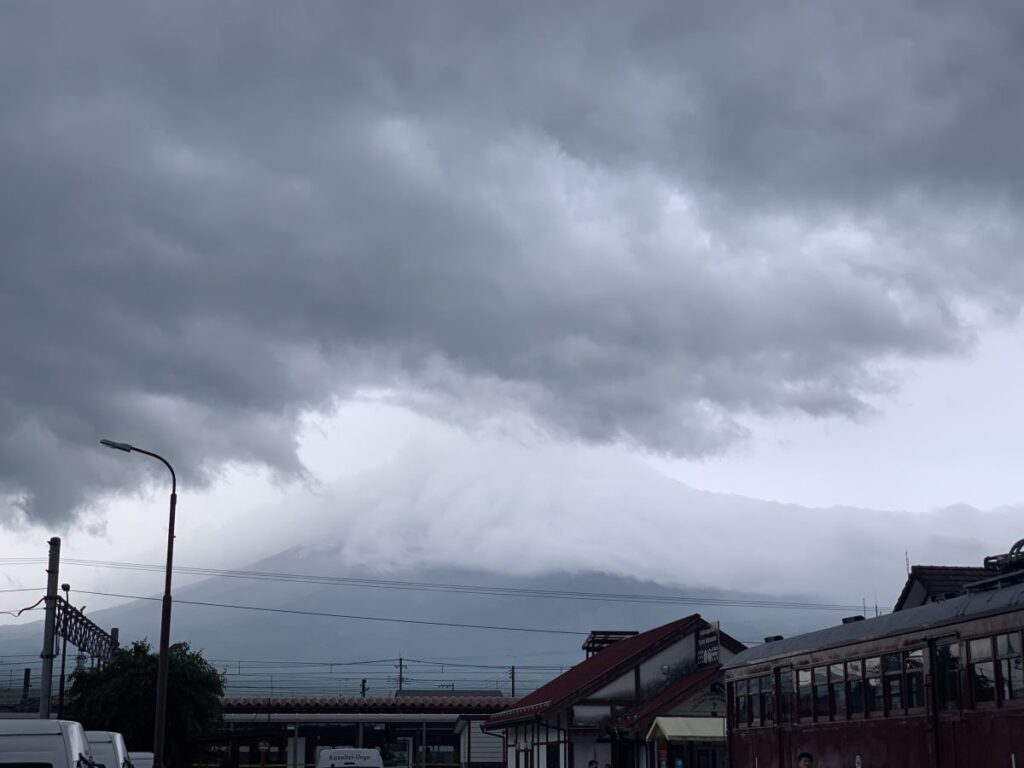
- Arrive early morning whenever possible. But don’t give up – you never know when visiblity might clear.
- If possible, stay overnight. The longer you are there, the more chance that the sky will clear. If I hadn’t stayed overnight at Fuji, the best view I would have got all day was the one above. As it was the skies cleared around 5 pm, and by 6 pm I had a lovely view.
- Remember this one essential thing – visibility calendars improve your chances, but do not guarantee success. Treat them as tools to stack the odds in your favour rather than promises of clear views.
Save Money with Klook & Japlanease
If you plan on buying tickets or tours from Klook for when you’re in Japan, you could save up to 10 per cent by using the code JAPLANEASEKLOOK at the checkout. Click here to see what’s on offer.
T&Cs apply. Some items, including Tokyo Disney and USJ tickets, are not available for discounts.
Can You See Mount Fuji From Tokyo?
If you’re lucky.
Ironically, one of the best views of Mount Fuji I have seen was on the train leaving Tokyo Disney. And that was in May, when it’s quite rare for this to happen, so I was extra fortunate -as I mentioned above, this was just after Golden Week, so that may have helped.
The most likely months to get a view from Tokyo are December and January
All of the Observation Decks, like the Tokyo Metropolitan Building, Shibuya Sky, Tokyo Skytree or Tokyo Tower, can offer good views of the mountain.
Some hotels also offer Mount Fuji view rooms – if you’re lucky. Hotel Metropolitan Ikebukuro and Keio Plaza Hotel in Shinjuku are two popular hotels where, if your room faces the right way and the atmospheric conditions are right, you might wake up to a stunning surprise.

Who Writes This Blog?
My name is Helen Foster, and I’m a journalist and author. My travel articles have appeared in publications including The Australian, Escape, RAC Horizons, Jetstar Magazine, Sainsbury’s Magazine, and more.
I’ve traveled to Japan eight times before – solo and with my partner and visited over 25 towns and cities. My last visit was November 2024 so, everything here is pretty up to date.

