
- Chopstick Making in Asakusa - 10 September 2026
- 8 Things to See in Osu, Nagoya - 5 September 2026
- 11 Day Trips from Kyoto - 3 September 2026
Normally, the biggest problem when travelling on holiday as a large family or group of friends is keeping everyone happy, but Japan can present a few extra challenges to larger groups. Here are a few problems you might come up against – and their solutions.
Japan is a fantastic place to travel as a solo traveller. It’s also great for couples, but the larger your group, the trickier things become.
Japan is a country where space is limited, and families are small. It’s one of the few countries in the world where the birth rate is falling, so many buildings and systems are designed for smaller groups; which can come as a surprise if you’re a family of four or more.
Article by Helen Foster. Disclosure: Some links in this post are affiliate links. See our Affiliate Disclosure.
But, forewarned is forearmed, as they say. If you’re ready for the issues that might arise, you can plan for them – and then they won’t be problems anymore.
1. Small Taxis
One of the first challenges large families face in Japan comes when trying to get from the airport to their hotel. Both Narita and Haneda airports have good public transport systems (including the very convenient Airport Limousine Bus), but they don’t run 24 hours; and even if you do arrive when they are running, they might just feel too hard to master after a long flight and while carrying luggage.
At this point, you might decide to get a taxi or private car. Airport taxis in Japan are reliable but typically seat only three or four passengers comfortably, and luggage space is limited.

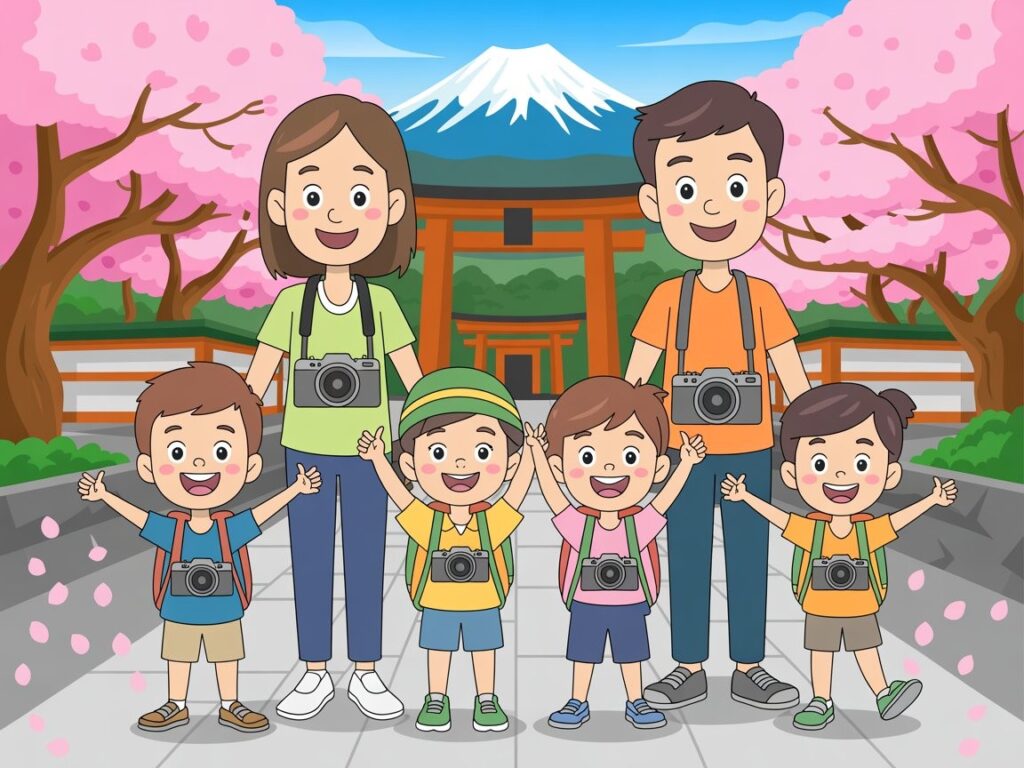
The cartoon images in this post are created with AI.
You could split your group across several taxis, but it will be cheaper to book a private shuttle service in advance. This allows everyone to travel together and eliminates the confusion of coordinating multiple vehicles. Most shuttle companies offer vans that can accommodate 6-10 passengers with luggage.
The easiest place to book these is via companies like Klook or Booking.com, and while these work well, for transparency, I do have to mention that these can sometimes use drivers who aren’t technically licensed in Japan, and they may not use car seats.
To find a licensed driver, look for companies that say they have ‘green plates’ and licensed drivers – and even better, that list their license number. Three Japanese companies that fit the bill and that have car and van options for larger families include…
2. Small Hotel Rooms
Hotel rooms in Japan tend to be on the small size, and fitting multiple family members – plus suitcases – into a single room can be difficult. There are a few solutions to this problem, though.
Apartment Chains
A good solution is to choose accommodation designed specifically for families, like the serviced apartment brand Mimaru. They have a range of properties with rooms designed to sleep four to six people comfortably. Also, look at the Minn chain, which has branches in popular areas like Ueno.
Find some other options in our guide to hotel rooms in Tokyo that sleep four or more.

Connecting Rooms
However, because they have facilities like kitchens and washing machines, the apartments can sometimes be expensive; another strategy is to book connecting or adjoining rooms, which allow families to spread out while staying close together. Some hotels that offer connecting rooms include…

Image @yotel. Used with permission.
Tokyo
- Keio Plaza Hotel Tokyo – located in West Shinjuku
- Yotel – located in Ginza (that’s one of their normal rooms above)
- Tokyu Stay Shinjuku Eastside – located near Kabukicho
- Sotetsu Fresa Inn Daimon – this is where I stay in Tokyo
- karaksa hotel Premier Ginza – located in Ginza
- karaksa hotel Tokyo Station – handy for the station
Kyoto
- Kyoto Tokyu Hotel – near Gojo Station
- Intergate Kyoto Shijo – near Karasuma Station
Booking early is important, as family-friendly rooms are limited and connected or adjoining rooms are more limited still. You can also search for hotels with connecting rooms listed on booking.com by adding it to their AI assistant box on the left-hand side, where you filter searches.
Japanese Style Rooms
These can be a great option for families as the rooms don’t have western-style beds taking up space; instead, you’ll sleep on futons on the floor, and these can be rolled up and put into a cupboard the rest of the time.

This can allow four or five people to stay in a smaller room and each to have their own space to sleep. Guesthouses like this can also be kinder on the wallet, especially if you’re happy to share a bathroom.
3. Restaurants With a Few Seats
Many restaurants in Japan are small and intimate, sometimes seating only 6 -12 people at a time along a bar-like counter. This is wonderful for atmosphere, but it can make it difficult for large groups to dine together.

You will find bigger restaurants as you wander around – so make sure you make notes if you see somewhere you fancy, but, if you don’t want to wander around with hungry children, a helpful tool for finding suitable restaurants is byFood, which lists restaurants and food experiences.
You can search for options that can accommodate groups and book directly, in English, via the website.
Chain restaurants also tend to have more tables and be used to families – find a list of the chains I use in Japan here. And, as the name suggests, family restaurants cater to families and often have larger tables and booths. These are both great options to look for on your first night in Japan, when you’re still trying to work out what is going on.
Need Extra Planning Help?
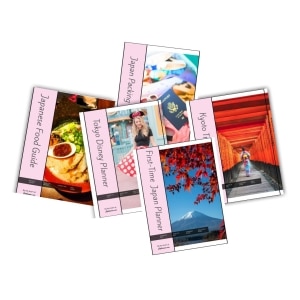
Our Japan trip planners can help. You might like our First-Timers Japan Planner, which will help you plan your trip to Tokyo, Kyoto and Osaka step-by-step, including tips on everything from picking hotels to sightseeing and dining. Or our super-duper Tokyo Disney Planner makes arranging your park trip MUCH easier. Find them in our Planners store – printable and digital versions are available.
4. Catering For Everyone
Another dining challenge in Japan is that many restaurants specialise in just one type of food. You might find a ramen shop, a tempura restaurant, or a sushi train – but rarely a menu that covers everything from sushi to pizza, to steak.
This can be tricky for large groups where everyone wants something different to eat.

One easy solution is to visit Japanese “family restaurants.” Chains like Saizeriya, Gusto, and Jonathan’s offer large menus with a variety of dishes, including pasta, rice plates, grilled meat, salads, and desserts. They are designed for groups and families, with larger tables and flexible seating.
Our guide to Japan’s family restaurants explains the main names to look out for and the types of food you’ll find on the menu.
5. Navigating Crowds
Crowds can be big in Japan’s cities and around tourist sights – and Japan’s train stations particularly can be extremely busy, especially in cities like Tokyo and Osaka. When navigating crowded platforms, ticket gates, or busy trains, it’s surprisingly easy for members of a group to become separated.
Before travelling, agree on a simple plan for what to do if this happens. For example, you might decide that if you get separated on the subway, the first group exits at the next station and waits there until group two arrive.

It’s also helpful to designate meeting points inside large stations, such as near the ticket gates or outside a specific exit. Screenshots of maps can be useful because stations sometimes have dozens of exits.
Making sure children have your contact details with them is a good idea. If they do get lost, it means someone can call you.
6. Sitting Together on the Shinkansen
Japan’s famous bullet trains – collectively known as the Shinkansen – are one of the highlights of travelling in Japan. However, if you’re travelling with a group and want to sit together, I’d strongly suggest reserving seats in advance as finding multiple seats together can be difficult, especially during peak travel times or holiday periods.
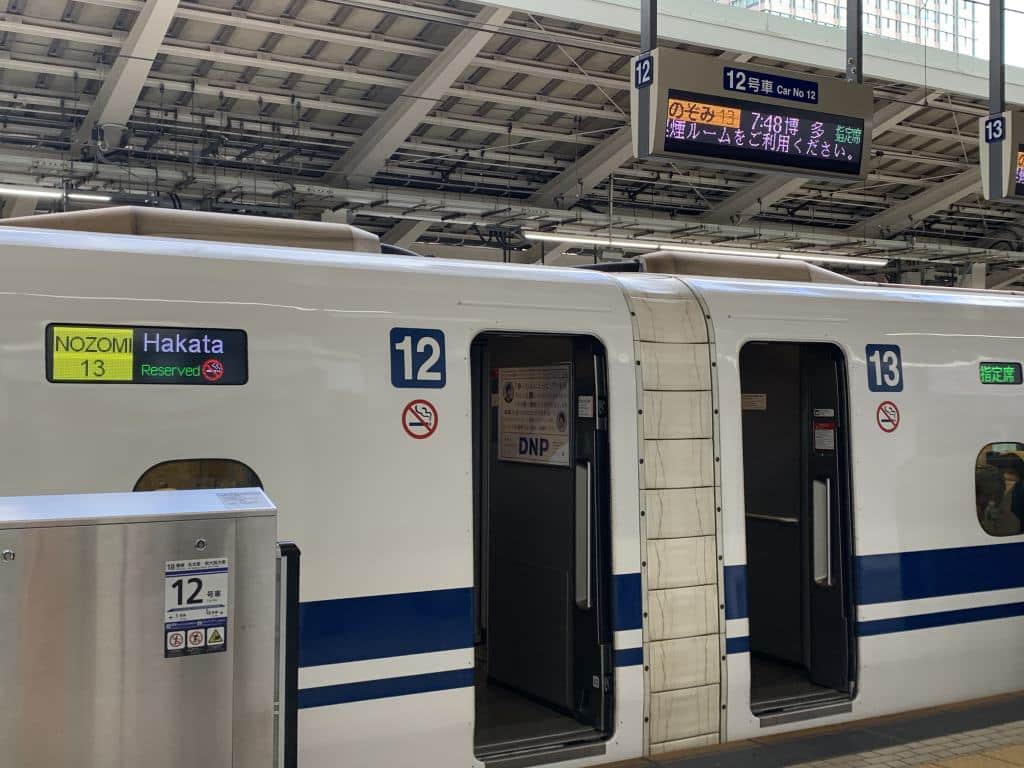
The normal car of the Shinkansen is laid out as rows of three and rows of two, so decide how to divide your group before you book.
Booking through a ticket office or on a ticket machine in Japan a few days before your trip, or booking via the Smartex app, allows you to select your exact seats. To make sure things go more smoothly, book within 30 days of your journey – before this, specific seats can’t be assigned.
Check our guide to booking Shinkansen tickets in advance for more details
Save Money with Klook & Japlanease
If you plan on buying tickets or tours from Klook for when you’re in Japan, you could save up to 10 per cent by using the code JAPLANEASEKLOOK at the checkout. Click here to see what’s on offer.
T&Cs apply. Some items, including Tokyo Disney and USJ tickets, are not available for discounts.
7. Managing Luggage
Luggage can quickly become a challenge when travelling with multiple people. Train stations often involve stairs, crowded platforms, and busy passageways, and manoeuvring several suitcases through these spaces can slow everyone down – especially if kids can’t carry their own cases up and down stairs or escalators.
Luggage spaces on trains can also be limited if you can’t lift your bags above your head.
A useful option in Japan is luggage forwarding, which allows you to send suitcases directly from one hotel to another. Services such as Yamato Transport can deliver bags overnight between most cities.

This means you can travel between destinations with only a small overnight bag – or even one suitcase for all of you, while the rest of your luggage is delivered to your next hotel.
Our guide to using luggage shipping explains how it works.
8. Ticket Limits
Many of Japan’s most popular attractions require advance reservations, but trying to secure enough tickets for a bigger family somewhere like the Pokémon Cafe or Ghibli Museum that sells out in minutes is tricky.
One famous attraction even limits how many tickets you can buy.
If there are five or six of you visiting Universal Studios, for example, do not try to buy Express Passes via the official website, as they will only sell four at a time – using Klook is a better option.

Also note that at teamLab, there must be one adult for every five children under 18.
Double-check any limits or supervision rules for other attractions if you are travelling in a large group.
To avoid disappointment, plan major attractions well in advance and book tickets as soon as reservations open. This is particularly important for popular spots like USJ, Poke Park, the Pokémon Cafes in Tokyo and Osaka.
Related Read: What to Book in Advance in Tokyo and what you need to book in advance in Kyoto and Osaka
As you can see, it does take a little more planning to travel around Japan in a larger group, but a bit of planning can help it all go smoothly.
Who Writes This Blog?
My name is Helen Foster, and I’m a journalist and author. My travel articles have appeared in publications including The Australian, Escape, RAC Horizons, Jetstar Magazine, Sainsbury’s Magazine, and more.
I’ve travelled to Japan nine times before – solo and with my partner and visited over 50 towns and cities. My last visit was in April 2026, so everything here is pretty up to date.

