- How to Spend One Day in Nara - 29 September 2026
- 12 Things That Seem Easy – Until You Try Them in Japan - 23 September 2026
- Is it Worth Paying Extra at Tofuku-Ji? - 16 September 2026
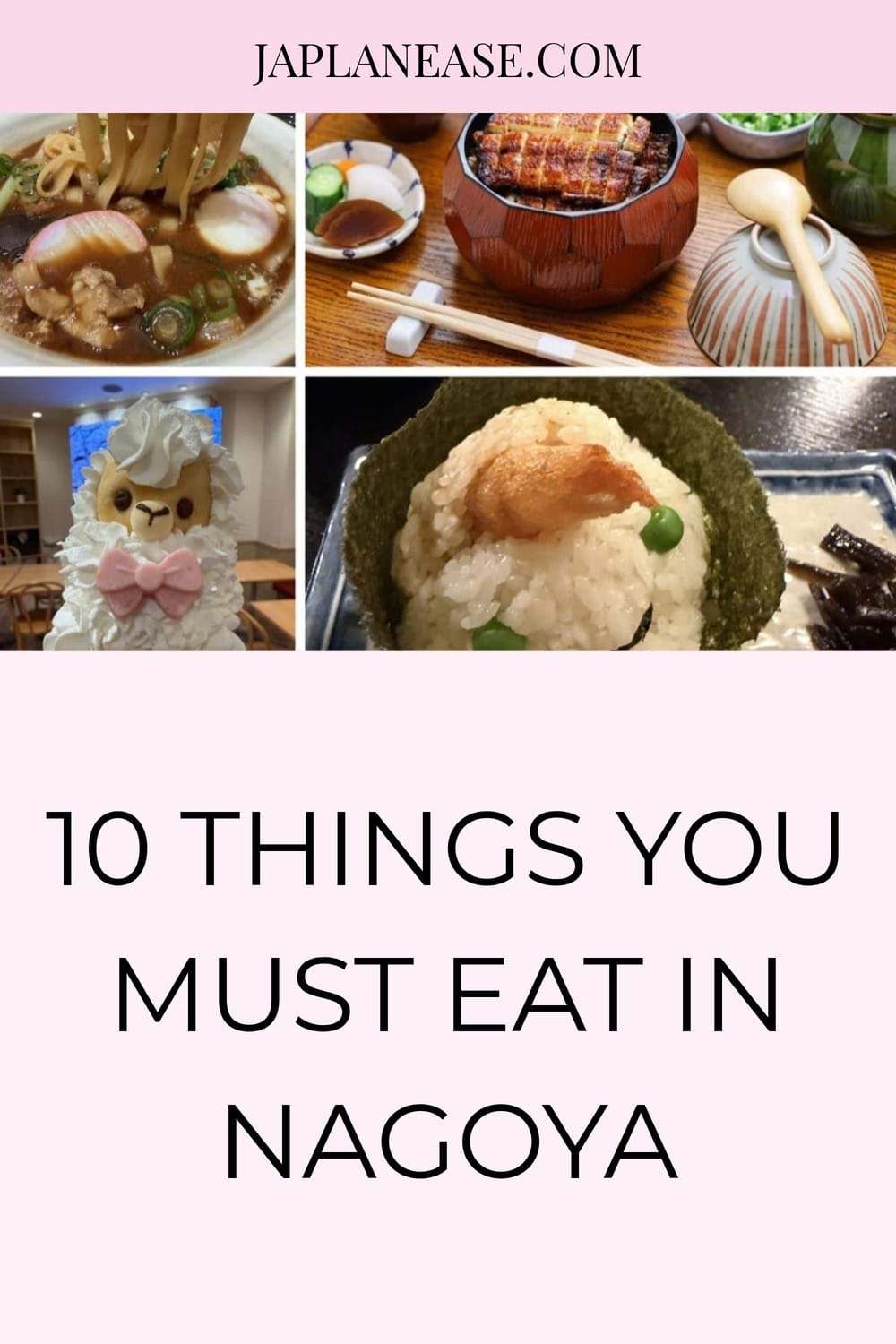
Not sure what to eat in Nagoya? Go beyond the obvious – from miso katsu on a skewer to alpaca crepes and cream-filled frog puffs, here are 10 must-try dishes, with exactly where to find them.
Nagoya gets ignored in many people’s itineraries – but it’s a fantastic place to visit, especially if you’re a foodie, as Nagoya is the home of some unique traditional dishes, known under the umbrella term ‘Nagoya Meshi’.
Nagoya Meshi literally means ‘Nagoya food’ and refers to a set of dishes that evolved in the region, using local ingredients such as hatcho miso and Cochin chicken. There are over 20 dishes listed under the title, and if you’re visiting Nagoya for a few days, you’re going to want to try some of them. But these traditional dishes aren’t the only unique must-eats in Nagoya.
Here we list 10 of the best dishes to try in Nagoya, ranging from some Nagoya Meshi classics to a couple of other unique dishes you won’t find on other Nagoya food lists.

Article by Helen Foster. Disclosure: Some links in this post are affiliate links. See our Affiliate Disclosure.
1. Miso Katsu
Miso Katsu is Nagoya’s take on the classic Japanese pork cutlet.
Instead of the usual tonkatsu sauce, the crispy, breaded pork is topped with a thick red miso sauce made with hatcho miso, a regional specialty. This is much richer than normal miso, salty and slightly sweet.
I’ve heard people say it can be a bit much if you’re not used to it, but I thought it was delicious.

The chain Yabaton, known for its giant pig mascot, is the restaurant most visitors associate with miso katsu, and it has branches around Nagoya.
However, one problem I found here was that the portions can be enormous, which, if you are worried that the taste might be too rich, could be a gamble.
The secret trick to trying it is therefore to head into the Otsu shopping district, where you’ll find Onimaru Osu, a stall on the corner of Otsu-dori and Banshoji-dori. Here you can buy single skewers topped with miso katsu. It’s delicious and the perfect way to give the dish a try – before you commit to a giant plate of it!
We also found skewers of miso katsu at Gomitori Honten, where we tried another of the dishes on this list. You’ll also find these in other izakayas around town.
Got a Taste for Red Miso?
Then you’ll be happy to hear that Miso Katsu isn’t the only dish you’ll find using it in Nagoya. Also look out for…
Miso nikomi udon: Thick udon noodles simmered in a bubbling clay pot filled with rich red miso broth, often alongside chicken, mushrooms, green onion and a raw egg.
Doteni: This is a stew made from beef tendon and offal in hatcho miso sauce.
Cabbage and Miso Paste: This is served as an otoshi in some Nagoya bars.
2. Hitsumabushi
Hitsumabushi is eel grilled over charcoal and basted with a rich soy-based sauce. This is then served on a bed of rice – but, then, there’s a twist.
Unlike in other regions where you simply enjoy the eel and rice together, in Nagoya Hitsumabushi, you eat it a few different ways.

- First, you try it alone, spooning about a quarter of the portion of eel and rice into the empty bowl that’s served with the dish.
- Once you’ve finished that, spoon another quarter into the bowl, but now it’s time to shake things up by adding some of the condiments served alongside, like spring onion, seaweed or wasabi.
- Finally, scoop out another quarter of the eel and rice and pour the broth that’s been served to you on top.
- For the last quarter, go back to the one you liked the most of the three options and enjoy it again.
This is a must-try for eel lovers – but while I love the taste of eel, I can’t handle the small bones inside, so it’s one thing on this list I can’t give a personal suggestion of a restaurant for, but I do know that one of the city’s most famous eel restaurants is Hitsumabushi Bincho. They have a few branches in Nagoya – and, if you get a taste for the dish, also have shops in Tokyo.
3. Tebasaki
Nagoya-style chicken wings, known as tebasaki, are famous across Japan.
Unlike many Western chicken wings, they are not usually coated in batter. Instead, the wings are fried until crisp, then coated in a sticky glaze made from soy sauce, mirin and spices. Another difference is that these have a super crispy skin.

We tried these at the branch of Sekai no Yamachan behind Yanagibashi Central Market. We had no idea at the time that this was one of the best places in Nagoya to try tebasaki! We picked it because it was just around the corner from our hotel and had an English menu! But it turns out they are renowned for them.
You can order huge platefuls of tebasaki here, 25 wings will cost you around 3000 yen – and they can make them super spicy. So go hungry – or just order the small portion of wings so you can try other dishes as well. The menu is full of interesting dishes (like gyoza with a chicken skin wrapper) – we ordered a lot!
Sekai no Yamachan have branches all over the city, so you’ll likely be able to find one that fits into your Nagoya itinerary. If you don’t have one yet, check out our guide on how to spend two days in Nagoya.
4. Kishimen
Kishimen is a noodle dish that stands out because of the shape of its noodles – they’re wide and flat.
The dish is usually served in a light soy-based soup topped with ingredients like fish cake, spring onion and fried tofu, although the version I ordered also had miso and meat in the broth.
You can also find cold versions of the dish during the summer.

One benefit if you’re not too good with chopsticks is that the noodles feel a bit easier to pick up than round ones – as you can see by me practising my noodle pull in the pictures!
I tried this at Ekikama Kishimen in Nagoya Station, as I happened to be walking past and spotted it on the menu. It was good – and very filling. However, apparently, THE place to try it is Miya Kishimen near Atsuta Shrine, a little way out of town. You can combine this with a trip to the shrine, as they are open for lunch.
5. Tenmusu
Did I order these just because they have tiny little faces on? Yes, yes, I did.
Tenmusu combines tempura prawns with rice balls. A small piece of shrimp tempura is wrapped inside a compact onigiri and often partially covered with seaweed.
At Gomitori Honten, where we ordered ours, they also make them into tiny little characters, which I couldn’t resist!

People eat them as snacks, but we had them as part of a larger meal, which, as you can see, included more skewers of Miso Katsu. Gomitori Honten have a wide menu of Nagoya meshi – and a fun potato salad that you can mix yourself at the table.
One thing to watch out for – we arrived about 8 pm, and I’m not sure if all the other areas were full, but we ended up in a large room on the third floor with tatami-mat seating. If you can’t sit on the floor, ask for another area.
Apparently, the inventor of tenmusu was a restaurant called Ganso Tenmusu Senju, which has a branch in Osu, so that would also be a great place to try it. It’s simply called Senju Osu on Google Maps. It’s closed on Tuesday and Wednesday – and keeps daytime hours (8.30 am to 6 pm), so don’t head here for dinner.
6. Ogura Toast
If you’re looking for a traditional breakfast in Nagoya, this is what to get.
Thick slices of toasted bread are topped with butter and sweet red bean paste, creating a combination of salty and sweet flavours.

One of the easiest places to try this is at Komeda Coffee. This chain started in Nagoya, but can now be found all over Japan, and one of the unique things about them is that if you go there in the morning and order a drink, you can get a breakfast set, containing toast with jam, butter or soy milk, and a side of boiled egg or red bean paste to make ogura toast – absolutely free!
The deal runs from opening until 11 am if you want to try it, but you’ll also find Ogura Toast in other cafes around the city.
Read This Next: Like your breakfasts more familiar? Here’s where to find Western-style breakfasts in Japan.
7. Ebi Fry
Fried prawns might not sound like a unique dish – but in Nagoya, it’s not so much the recipe for them that’s different, it’s the size!

Head to Ebidote Shokudo in one of the alleyways around Nagoya Station, and you will find the enormous 35 cm ebi fry. It does cost about 3800 yen, though!
Rather than indulge in giant prawns that might have finished us off, we just added our own serving of ebi fry to our collection of dishes at Gomitori Honten. It was about a quarter of the size, but still served three of us!
8. Piyorin
Time to switch to something sweet – and these cult chick-shaped cakes that you find in Nagoya Station.
These adorable treats are so popular that they have to be delivered three times a day to keep up with demand. When I went at about 4.15 pm, they had almost sold out of the 3 pm delivery already.

The cakes are a soft sponge filled with custard made from eggs laid by Nagoya’s Cochin chickens. These are sometimes described as the ‘Wagyu of Chickens’ as their meat is of exceptional quality with a more intense flavour than other birds.
The custard in the Piyorin uses their eggs, which have rich, yellow, creamy yolks.
You can buy three flavours – custard, chocolate and strawberry. Expect to queue and either eat them quickly or get them into a fridge so the custard doesn’t spoil.
If you want to maximise your chance of picking up a cake, arriving close to delivery time, which is usually 9 am, noon, 3 pm and 6 pm. They close at 8 pm.
If you eat yakatori in Nagoya, you might see some dishes using Cochin chicken meat. Give it a try and see how different it is in taste and texture from the chicken you are used to.
9. Alpaca Crepes
Do not panic – these do not contain actual alpaca. Instead, they are far, far cuter.
These pancakes, made by the store Crepes de Anne, are a whirl of whipped cream designed to look like an alpaca. They were one of the main reasons I wanted to go back to Nagoya on my last visit – and I don’t even like crepes!

They aren’t a light snack – there is a lot of cream in these things, but they are worth every calorie.
They also do a hedgehog version.
Crepes de Anne is about a ten-minute walk west of Nagoya Station. They are closed on Mondays, but also only open 11- 7 pm, so plan on your crepe as an afternoon treat, not an after-dinner one.
10. Frog Manju
Okay, yes, every sweet treat I tried in Nagoya was eaten because it was cute – but, Aoyagisohonke Osu Honten, who make these cream-filled frog puffs, have been serving people in Nagoya since 1896, and who am I to argue with tradition.
The frog shape reflects the jumping frog in the shop’s logo.

I was surprised by how thick the creamy filling was in these. I had the rum and raisin one, and it’s like a butter cream. They also sell a lemon flavour. If you eat in the store, it comes served with a green or barley tea that cuts through the richness – plus, there’s a pretty outlook into a garden at the back of the shop.
Aoyagisohonke Osu Honten is located in the Osu shopping district close to the Osu Kannon temple. This means it keeps shop hours, so head there between 10 am and 6.30 pm – they are closed on Wednesday.
To Try on My Next Trip
There are a few other traditional dishes in Nagoya that I haven’t managed to try personally, as I ran out of meal times (check out our guide on how long to spend in Nagoya, so you don’t do the same), but here are two more really popular dishes that you might want to add to your ‘must-eat list’.
Taiwan Ramen: Despite the name, this was actually invented in Nagoya, not Taiwan. It features a spicy soy-based broth topped with minced pork, garlic, chives and chilli peppers – and sounds amazing, but I did not have enough meals in Nagoya itself to fit it in this trip – next time though.
Misen, the restaurant that invented it, has a branch in Nagoya Station if you want to try it.
Ankake Spaghetti: Japan serves some interesting pasta dishes – spaghetti and ketchup is not uncommon, and Nagoya’s spin is spaghetti topped with a peppery sauce, thickened with starch that makes it somewhere between gravy and curry in texture. Oh, and that spaghetti isn’t just boiled, it’s boiled and then fried in lard. The whole thing is then topped with sausage, vegetables, bacon or ebi fry.
It was invented at a restaurant called Spaghetti House So Le, which still exists in Nagoya’s Sakae District (open for lunch and dinner, but closed Sundays). Or, visit Spaghetti House Yokoi Sumiyoshi, the restaurant the dish’s creator started when he left So Le. This also opens for lunch and dinner, but is closed on a Monday.
See, I told you Nagoya was a foodie paradise!
If you want more ideas of what to eat and where to eat, the Nagoya Meshi Promotion Council have produced an English map with some top spots. Download it here.

Who Writes This Blog?
My name is Helen Foster, and I’m a journalist and author. My travel articles have appeared in publications including The Australian, Escape, RAC Horizons, Jetstar Magazine, Sainsbury’s Magazine, and more.
I’ve travelled to Japan nine times before – solo and with my partner and visited over 50 towns and cities. My last visit was in April 2026, so everything here is pretty up to date.