
- How to Visit Gotokuji – the Waving Cat Temple - 13 August 2026
- 15 Day Trips From Osaka - 13 August 2026
- What is Hoppy? Japan’s Unique Beer-Style Drink Explained - 11 August 2026
If you’re looking at the types of hotels in Japan, you’ve probably looked at things like normal hotels, capsule hotels, ryokans – and maybe even love hotels – but, have you considered a Hot Springs Hotel? Less formal (and usually less expensive) than a ryokan, it could be the perfect mix of tradiition and relaxation you’re looking for on your trip.
I have a confession to make. There’s something about Japan that scares me… It’s something thousands of tourists do in the country every week, for some it’s potentially the highlight of their trip – yet, the very idea of it brings me out in a stress rash.
I’m talking about staying in a ryokan – one of the traditional Japanese inns that dot some of the most beautiful spots in the country.

Article by Helen Foster. Disclosure: Some links in this post are affiliate links. See our Affiliate Disclosure.
I was hosted on this trip by the Japan National Tourism Organisation who arranged my stay at the hotel .
These sleeping spots with their traditional tatami mat-lined rooms, gracious hostesses wearing kimonos and delicious homemade dinners served to you in your room are like catnip for many travellers to Japan, but the etiquette and lack of anonymity involved in staying in one make the introvert in me very nervous.
On one trip though, I found a brilliant alternative that combines the tradition of a ryokan with the anonymity of a big hotel.
If you’re an introvert traveller like me, or just a bit worried about putting a foot wrong in a traditional ryokan, you’ll love it. It’s also potentially better for solo travellers and families than a ryokan.
I’m talking about the hot springs hotel – also known as a Ryokan hotel, a hot springs resort, or an onsen hotel.
What is a Hot Springs Hotel in Japan?
It’s basically where the Japanese go on holiday if they just want to get away from it all.
A Japanese hot springs hotel is designed to be pretty self-sufficient, it has bars, restaurants, usually some form of evening entertainment, and as the name suggests, there’s the all-important on-site onsen to soak in.
While you might find some in bigger cities, many hot springs hotels are found in towns known for their springs of naturally warm water, often infused with minerals with suspected benefits – also known as onsen towns.
These are often small towns or villages that have grown up around the onsen – and in most of them, the hot springs hotel(s), are the main attraction.
You might find a few small bars and restaurants around, but the idea of staying in the bigger and more equipped onsen hotels is that you enjoy all it has to offer.

Like a ryokan, in many hot springs hotels, the rooms are traditionally Japanese in style in that you sleep on a futon on tatami mats, but they are bigger than a traditional ryokan, often with over 100 rooms – which is why it’s often called a ryokan hotel, an onsen resort or hot springs resort.
However, unlike a ryokan, there’s a check-in desk rather than a hostess to greet you, and once you’re in the hotel, you don’t need to deal with anyone else if you don’t want to.
This is very different from a traditional ryokan, particularly a high-end one, where you might see your host or someone else working on the property several times during your stay as they serve you tea, dinner, and breakfast and make up your room at night.
Think of a hot spring resort in Japan as like a British health spa – or, as one of the other journalists I was travelling with on this trip put it ‘Japanese Centre Parcs’ although trust me, there are no slides in the middle of the pools here!
6 Groups of People Who’ll Love a Hot Springs Hotel
- Introvert travellers: You don’t need to deal with anyone if you don’t want to.
- Explorers: It’s not really worth booking a ryokan if you’re heading out all day or coming back late. A hot springs hotel gives you the chance to experience sleeping in a traditional Japanese hotel room with more freedom.
- Independent Folk: Because you don’t have to book a meal you can go and explore local restaurants – assuming there are some (do check before you book).
- Solo Travellers: Ryokans don’t always accept solo travellers as they charge by person.
- Families With Younger Kids: While you’ll still need to respect the rules and quiet atmosphere of the hotel it might be more suitable than a small, silent onsen.
- Those Watching the Pennies: They aren’t a budget option, but they can work out cheaper than a traditional ryokan if you aren’t into the multi-course meal experience.
Is a Hot Springs Hotel as Authentic as a Ryokan?
Yes, but in a different way.
As I said, a ryokan hotel is where the average Japanese person goes on holiday, whereas some traditional ryokans might be populated mostly by high-end travellers or foreign tourists.
A hot springs hotel might not be as steeped in history as a small 200-year-old inn, but it’s just as steeped in tradition.
For example, shoes. As is often the case in Japanese society, they’re coming off if you stay at a Ryokan hotel.

While the main areas of the hotel are carpeted or tiled (always a good sign that it’s okay to keep shoes on), enter your room, and you’ll stand on a small tiled area with a cubby hole next door. This is your cue for shoes off, and house slippers on.
If you forget, the yellow glow and faint woody smell of the t
What this means is that these hotels can offer the perfect combination of old and new.
You can sleep on a futon with the smell of tatami mat lulling you to sleep.
You can sit soaking in the hot, silky water, under a thick canopy of dark green trees as the sun sets around you or the stars sparkle in the sky.
You might find yourself being offered an amazing seven-course Kaiseiki dinner full of intricately presented dishes (mine included the infamous potentially poisonous fugu).
But all without the true formality that comes with staying in a traditional ryokan.
What’s Your Room Like in a Ryokan Hotel?
While hot springs hotels can have Western rooms, many also offer traditional-style Japanese rooms – and these don’t differ from the design you’ll find in a smaller ryokan.
A ryokan has a very set layout.
You have the vestibule into which you first enter, there’s the main room which doubles up as your sleeping/dining area then you’ll usually find a second sitting area, often surrounded by glass or patio doors.
Screens are often used to separate these two areas.

My room at the Yumoto Kanko Hotel Saikyo (located in the onsen town of Nagato in the north of Honshu, the main island of Japan) also had all of these things, and once I was inside my room, I wouldn’t know I wasn’t in a traditional ryokan.
You’ll also sleep on a futon which is put up in your room while you’re out at night.
A Big Difference Between a Ryokan and a Rokyan Hotel
One
In a traditional ryokan, dinner is usually served in your room or a small dining room at a set time.
It’s seen as rude to skip, change, or delay, so you have to be prepared to fit around this.
At a hot springs hotel, though, there is often a large restaurant where you can book a set time and dine with others—or skip the meal entirely if you so wish.
Some do also offer in-room dining if you prefer that private experience.

Another difference between the two properties – freedom.
A ryokan is more like staying in someone’s home. You’re not really expected to come and go as you please. You should arrive before 5 p.m., and staying out late wouldn’t go down too well.
For many people that’s a welcome relief, the whole point of staying in the ryokan is to immerse yourself in its world, not actually to want to visit what’s outside, but for other travelers, it may feel a bit too restrictive to be relaxing.
What to Wear at a Hot Springs Hotel
Because the hotel’s point is to enjoy the relaxing waters, you don’t need to wear normal clothes outside your room if you don’t want to.
In the wardrobe in your room, you’ll find a robe called a yukata and an overjacket. T
Whereas kimono is beautiful but rigid, yukata is the perfect mix of comfort and glamour, so I’d recommend donning yours as soon as possible!
Note, there’s a right way to wear it.
Make sure you wrap it so the left side lies over the right side (the other way is used to dress the dead), and tie the sash (aka the obi) around your waist.
Keep your undies on, and if you want to wear a t-shirt or thin layer underneath too, that’s fine.

If it’s cold, or you just want to look more formal, wear the outer jacket on top as well. It’s super stylish and will make you feel far more dressed up when you go in for your evening meal.
What Facilities Are There at a Japanese Hot Springs Resort?
While the onsen is usually the big draw, many of the larger onsen hotel resorts aim to be a destination in their own right.
The hot springs hotel I stayed in, for example, had two restaurants, a coffee shop and a bar to cover your dining choices – and then we got onto the rest of the entertainment…
Let’s start with the bowling alley…
Trust me, you haven’t tested your bowling skills until you’ve tried to lob a size 9 ball down an alley in an ankle-length yukata (you will swap your inside slippers for bowling shoes).

While there was a bar, vending machines on each floor supplied us with the beer we needed for our next Japanese ryokan hotel experience – karaoke.
There are four karaoke rooms at the Yumoto Kanko Hotel Saikyo, and the night we were there they were doing a rapid business in Japanese love songs for the five old ladies in the room next to ours – lord alone knows what they thought when we started on Avril
Another very local touch is the kabuki theatre on the property.
They also have games, including Mahjong and Shogi (described as Japanese chess), table tennis and an amusement arcade.
However, the main reason you won’t want to leave any Japanese hot springs resort is the onsen.
Every hot springs resort will have a different set-up for its onsen, mixing different types of hot springs, indoor and outdoor pools, and whole-body pools vs. foot-soaking pools.
Some of these might even change during your stay to allow both men and women to try the different pools (because you bathe nude at a hot springs hotel, the springs are often separated by gender).

How Much Does it Cost to Stay in a Ryokan Hotel ?
This is the last difference I’ll discuss between a ryokan hotel and a traditional ryokan – and it’s a big one.
Traditional ryokans charge differently from most normal hotels – they don’t charge by the room, they charge by the person.
The price depends on the quality of the ryokan, but a moderate ryokan will cost from $20,000 per person (US$155, £120, or $AU210) for your room, dinner, and breakfast.
A room at the Yumoto Kanko Hotel Saikyo also costs around the US$155 mark, but for two people – including breakfast. You can also book a rate with dinner for two for around US$70 extra.
You’ll also need to add the charges for extra entertainment, such as bowling or karaoke, but it can still be a lot cheaper than a ryokan.
The last benefit of a ryokan hotel over a traditional ryokan might be for single travellers.
Because they charge by the person, some ryokan won’t accept single travellers – but you can book solo at most ryokan hotels.
Can You Stay in a Hot Springs Hotel in Japan With Tattoos ?
Tattoos in Japan are often associated with gangs, and therefore, you will often find that many onsen and onsen hotels won’t allow people to soak in their baths if they have tattoos.
This is particularly likely to be the case with a hot springs hotel as the baths are communal – so, while you might be able to stay in the hotel with tattoos, you might not be able to bathe. The hotel website should tell you their exact rules on this, so check if you have a tattoo that is not small enough to be covered with a small plaster.
If you have tattoos and want to soak in an onsen, a traditional ryokan, or a hot springs hotel, with a private onsen for each room is likely to be a better option.
You can find a list of tattoo-friendly onsen here.
How to Find a Ryokan Hotel
One of the easiest-to-use resources is the website of Japanese Guesthouses.
They let you search by the area you’re visiting and then list different types of ryokan in that area.
You can check how many rooms they have and how many Western versus Japanese-style rooms they have.
You can also check how many baths each ryokan has and whether they are private, gender-segregated or public bathing.
They also show you how much English is spoken and whether single travelers are welcome.
It’s a great resource to pinpoint exactly what style of Ryokan you might be booking. However, I do find that some of their pictures and information aren’t quite the same as the bigger booking sites, so, you might want to double-check things against the hotel’s own listing, or listings on Agoda or Booking.com just to check that they haven’t refurbished or changed anything.
Hot Springs Hotels Near Tokyo
Tenseien, Hakone
Hakone is the closest hot springs area to Tokyo and an incredibly popular place to visit during most people’s first visit to Japan.
Tenseien is a popular hot springs hotel in the area.
It has 105 rooms offering Japanese-style rooms, Western rooms and hybrid rooms where you can sit and relax in a tatami room, but sleep in a full bed.
It has four onsen baths – two indoor, and two outdoor baths which are segregated by gender.
They also have sky baths on the roof of the hotel. These are shared gender.

You can also book private onsens and some rooms have their own private outdoor baths.
Dinner is buffet style with over 60 dishes to choose from.
Children have a games room to enjoy – adults have a bar with a karaoke room where you pay by song!
Aura Tachibana, Hakone
Conveniently located near Hakone Yumoto station, you’ll still enjoy beautiful mountain views from Aura Tachibana.
Choose from totally Western-style rooms, rooms with a tatami area but Western-style beds, or fully Japanese-style rooms.

Some of the rooms have private baths, but there are also two public onsens on the premises. Male and female bathing areas are separate.
There are two restaurants serving kaiseki-style meals on the premises but do note, dinner is still a little bit more formal at Aura Tachibana and has a set start time which you can’t miss.
Children can stay at the property, but not at any of the rooms with a private outdoor bath so do check before you book if you’re travelling with children.
Fujikawaguchiko Onsen Konanso, Mount Fuji
This hot springs hotel really does have everything – beautiful warm water in which to soak your cares away, delicious Japanese cuisine, comfy Japanese-style rooms – and it does it all of it with the backdrop of the majestic Mount Fuji in the background.
Yukata are provided to wear inside the hotel and, should the urge take you, there’s an on-site karaoke room to test your pipes out.
You can choose a room just with breakfast, or, a rate with breakfast and a kaiseiki style dinner.

If you’re celebrating a special occasion or just want the ultimate Japanese experience on your trip, book one of the rooms with the direct view of Mount Fuji.
Getting to the hotel is easy from Tokyo, you just take the train to Kawaguchiko Station (which takes about an hour and 45 minutes from Shinjuku) and the hotel offers a free pick-up service to take you to the door.
Hot Springs Hotels in Kyoto
Hotel Shuokaku
Fairly small for an onsen hotel with just 31 traditional style rooms, this is located in central Kyoto, a short walk, or train ride from almost all of the ‘must-sees in Kyoto‘
There are two public onsen on the property or you can book your own private onsen to enjoy after a hard day’s sightseeing!

You choose to book just with breakfast or, breakfast and dinner which is a kaiseki meal.
Hatoya Zuihokaku in Kyoto
Just a short walk from Kyoto station, this Ryokan hotel has 51 rooms – including some Japanese-style rooms and some rooms with a tatami area.
They aren’t exactly the same as those in a traditional ryokan, so, do look at the pictures before you book and choose your room type carefully.

The shared indoor bath is on the top floor and each gender has their own bath.
Where I Stayed
My hot springs hotel was called the Yumoto Kanko Hotel Saikyo. It was located in the Yamaguchi prefecture, in the northwest of Honshu island—Nagato would be the nearest large town to spot on a map.
The hot spring that runs through this town is one of the region’s oldest and people have been soaking here for over 600 years – with even the feudal lords who ruled over Japan way back when coming here to take a dip.

新幹線 [CC BY-SA 4.0 (https://creativecommons.org/licenses/by-sa/4.0)]
To add to the mystique, the spring itself was supposed to have been discovered by a Buddhist monk, and its source is actually contained inside the town’s small temple.
The water itself is best known for its ability to soothe aches and pains. Because it’s highly alkaline, it’s also famous for leaving skin very smooth.
The Onsen at Yumoto Kanko Hotel Saikyo
YKHS has four pools containing water from the local spring for you to enjoy. Two indoors, two outside, where you can soak under the trees.
As is normal, they are separated by gender, but each day, the pools swap so you can see a different outlook as you soak.
Fast forward to the changing room of said onsen, where I’m being hugged by a tiny Japanese lady repeating the word ‘Australia’ in a happy, high-pitched voice to her friends.
For a normally reserved society, hugging a random stranger isn’t normal for the Japanese but when that random stranger has just mimed getting undressed in front of you – and you’re replying with the words ‘all nuddo’ a few barriers come down.
See, while I’m up enough on my onsen etiquette to know I need to bathe naked, I’m never sure EXACTLY when I need to get my kit off (I had the same issue when I visited Spa World in Osaka).
There’s a sliding door leading from the changing room which I think leads to the pool, but I’m not 100% certain so, getting ‘
Hence my trying to ask the other ladies in the changing room, in the manner of mime.
After working out what I wanted to know, we found
Another thing I really liked about this hotel – was the little towel they give you to wipe your face/preserve your modesty a bit was big enough to cover things pretty well – sometimes they can be more like a flannel!

If the whole ‘sitting naked with strangers’ thing freaks you out, then there is a foot soak in the hotel, which you can
There’s also an outdoor hot
How to Get to Yumoto Kanko Hotel Saikyo
Yumoto Kanko Hotel Saikyo is located on Honshu, the main island of Japan, where Tokyo, Osaka, and Kyoto are also located.
It’s on the Northern tip of the island.
The closest main cities to the hotel are Fukuoka and Hiroshima.
To get there, you take the Shinkansen to a station called Asa.
You can reach Asa from Hakata in Fukuoka in just under 40 minutes, from Hiroshima a direct train will take just under 70 minutes.
If you’re travelling from some of the other big cities, the travel time is a bit longer. It will take about 2 and a half hours from Osaka. Travel from Kyoto is three hours – but, it is a direct train. If you’re coming from Tokyo, it’s a 5-6 hour journey, so it may not be the best use of your vacation time.
From Asa, you take the local JR Mine name to Nagato Yumoto. This part of the journey takes an hour.
All of these journeys are available via Japan Rail Pass.
Booking the Hotel
If you’re interested in trying Yumoto Kanko Hotel Saikyo you can check prices and book it here.
They do have some Western rooms, so make sure you pick a traditional room.
So Did I Enjoy Staying at my Ryokan Hotel in Japan?
Yes, Absolutely. In fact, it was one of the highlights of my last trip.
It really made me feel like I was doing something that Japanese folk actually do on their holidays and there was something supremely cool about that – even if that robe did seriously mess up my bowling skills!
Find our guide to the other types of hotel in Japan here.
Who Writes This Blog?
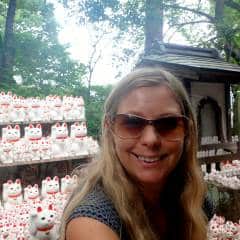
My name is Helen Foster, and I’m a journalist and author. My travel articles have appeared in publications including The Australian, Escape, RAC Horizons, Jetstar Magazine, Sainsbury’s Magazine, and more.
I’ve travelled to Japan nine times before – solo and with my partner and visited over 50 towns and cities. My last visit was in April 2026, so everything here is pretty up to date.

