
- What to Do in Kawaguchiko – When You Can’t See Mount Fuji - 21 October 2026
- Kennin-ji: Kyoto’s Temple for Art Lovers - 19 October 2026
- How to Watch the Oiran Parade at Edo Wonderland, Nikko - 15 October 2026
‘What’s the weather going to be when I visit?’ is one of the most common questions I get asked in my Japan Planning Facebook group. Now, if I knew the exact answer to that, I’d be rich, particularly as the weather seems to be changing in Japan, so even past averages might not be relevant today – but I can at least give you a rough idea of what to expect in Kyoto each month…

Article by Helen Foster. Disclosure: Some links in this post are affiliate links. See our Affiliate Disclosure.
January
Generally, the further south you go in Japan, the warmer it is – but January in Kyoto is considerably colder than Tokyo! The reason is that Kyoto is surrounded on three sides by mountains that trap the chilly air.
You can expect an average high of 8 °C, but an average low of zero at night. However, remember averages are the middle ground, so always take them with a pinch of salt, especially if travelling early or late in the month, when things will vary more. According to Accuweather, which is the service I check before my trip, last January, the temperatures at night dropped to minus two for one night, but the top temperature was 15 °C toward the end of the month.
If you’re hoping to see snow, you might get lucky – it does snow in Kyoto and can settle. However, rather tellingly, the picture above of Kinkaku-ji in the snow is a stock photo, and all the images of this idyllic scene are from one day in 2017!
If you really want to see snow, head to the mountains outside Kyoto, where it lasts for longer. There are even ski resorts within about an hour of Kyoto if you really want some powder. The Biwako Valley Ski Resort is one of the nearest.
If you’re wondering what to pack, you’ll need a proper coat – more so than you might in Tokyo – since many of the sights in Kyoto are outside, and it’s not as easy to get trains to the door as it is in Tokyo. But, remember, inside, the heating will be on, and if you’re too bundled up, you’ll overheat as soon as you head inside! So, wear thinner layers under your coat.
Need Extra Planning Help?
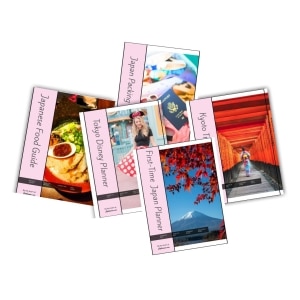
Our Japan trip planners can help. You might like our First-Timers Japan Planner, which will help you plan your trip to Tokyo, Kyoto and Osaka step-by-step, including tips on everything from picking hotels to sightseeing and dining. Or our super-duper Tokyo Disney Planner makes arranging your park trip MUCH easier. Find them in our Planners store – printable and digital versions are available.
February
February temperatures can vary a lot – the average should be a high of 9°C and a low of zero, but in 2025 there were a number of sub-zero nights – yet in 2024 one day hit 20°C!
Again, snow is possible in February, so make sure you have shoes that will work if it does settle. You need a good tread and a waterproof outer layer. And bring extra socks!
If you do get caught out, stores like Daiso or Hands will sell warming packs for your hands. For extra clothing, visit Uniqlo to purchase their special heat tech range, which helps warm you up when needed without causing you to overheat. There are six branches of Uniqlo around central Kyoto, so you should be able to find one not too far from your hotel.
March
March sees more spring-like weather in Kyoto.
The average temperature rises to around 13 °C during the day and 3 °C at night, but it is very variable across the month – early March will be chilly, but by the end of the month, you could see daytime highs of 23 °C and higher.
Both rain and snow can fall in Kyoto in March, so don’t forget to bring shoes that can handle damp weather. On average, about nine days in March see some rain; however, Spring is not Kyoto’s heaviest season for rainfall – that comes in a few months’ time.
If you’re planning around the weather, spend early March in Tokyo, which is warmer and move to Kyoto as late as you can.

April
April is one of Tokyo’s loveliest months. Historically, the average high has been 19 °C, with lows around 8°C, but the last two years have seen some days reaching the mid twenties or even the low thirties. So, don’t go overboard with the cold-weather gear if you’re travelling now.
Unlike many countries where April showers inspire songs, rainfall in Kyoto is moderate, with only about 11 days seeing some rain.
When Do The Cherry Blossoms Bloom in Kyoto?
A good guide for the bloom dates in Kyoto is late March and early April for peak bloom – often starting a few days later than Tokyo. But the exact date depends on the weather. If the weather is mild beforehand, they bloom earlier; if it’s cold, they bloom a bit later.
The Japan Meteorological Office will start making predictions in January for when they think things might happen (you’ll find them here), but even they won’t know for sure until the first flowers start.
Sadly, the tree in the picture above has fallen down, so you won’t be able to get that exact picture any more.
May
This is when I normally go to Japan, as the weather is warm, the days are long enough for a decent amount of sightseeing, and the crowds lured in by the cherry blossoms have disappeared. The average high in Kyoto in May is 24 °C, while the evening low is around 14 °C.
I hate rain and never carry an umbrella if I can help it, but I’ve generally been fairly lucky during my May trips (apart from one famous day in Nara where the rain was biblical), and it’s never stopped any plans. But, according to the official weather apps, it’s normal for it to rain in Kyoto for about 11 days in May.
So, how should you pack? Well, my usual outfit for the Kyoto daytimes in May is a dress, a scarf, and a cardigan that ends up around my waist by mid-morning. I also pack tights in case I encounter cooler days and evenings at the beginning of the month. So, again, layer! Have something light as your base layer for when it gets cool, and bring a cover-up for mornings and evenings. Pick up an umbrella when you arrive – or your hotel might lend you one – for those rainy days.
May also sees the start of Japan’s typhoon season – but we’ll talk about that a bit more in later months, as early typhoons aren’t as common as late ones.

June
June marks the beginning of tsuyu, the rainy (and humid) season. I’ve noticed a definite difference if I hang around into June in terms of the number of days I’ve wandered around swearing in either prolonged drizzle or heavy rain. Apparently, 14 days of rain are average for June in Kyoto, with about 7.5 inches falling across the month.
It also gets noticeably warmer and muggier, with average highs of 27 °C and lows of 15 °C – although last year saw a few days hit over 35 °C. The same basin that traps cold air during winter also makes Kyoto noticeably hotter in summer. While it takes until July for days to start feeling sticky and oppressive in Tokyo, but in Kyoto, 35 per cent of June is classed as ‘uncomfortable.’
Think light, flowing, baggy clothing if that suits your style. Shorts are fine for both genders, as are sundresses (but you might want to pop some shorts under them to prevent chafing).
Generally, the Japanese don’t show much cleavage or shoulders, so they won’t be wearing strappy tops without a cover-up, but they are also used to the heat, and so, wear what you feel comfortable in – and stay hydrated. You’ll find products in Daiso and Hands that aim to cool you down, like misting sprays or even wearable fans!
However, if you are wearing shorter clothing or bearing shoulders or cleavage, bring something to cover your shoulders or knees when visiting Kyoto’s many shrines. You won’t get denied entry to most places without it, as you would in Southeast Asia, but it’s just more respectful to cover these areas when visiting a religious property in any country of the world.
Many Japanese women will carry UV protective umbrellas at this time of year to keep the heat – and sun’s rays – off their skin. It’s not a bad idea to follow suit.
How Does Osaka’s Weather Compare?
Osaka and Kyoto are only about 40 minutes away from each other by local train, so you might be wondering if the weather differs. The answer is slightly.
Osaka generally runs a few degrees warmer. So far, for example, the average high in January is 9 °C during the day and 3 °C at night. In April, you’d be looking at a high of 20°C and a low of 11°C. In August, Osaka’s average is 33°C during the day and 26°C at night, earning it a (tied) place as one of the top 3 hottest places in Japan – Kyoto and Tokyo don’t make the list. It is, however, slightly less humid than Kyoto, though.
The other patterns for rain, snow, etc, will be similar to Kyoto, but Osaka gets slightly more rain and is less likely to see snow.
July
Phrases like ‘never again’ have been used in my Facebook group about visiting Kyoto in summer – it’s vicious.
The average daily temperature is 30 °C during the day with a 23 °C low at night, but July 2024 and 2025 saw pretty much all of July hovering around 36°C during the day. And it’s humid with it.
But to add to the fun, July is also Kyoto’s rainiest month. This makes packing a bit of a logistical nightmare because rainproof clothing is rarely good in hot temperatures. I’d focus on getting a good umbrella rather than worrying about cover-ups.
Also, I’d definitely have two pairs of sightseeing shoes so you can alternate between wet and dry. Also, carry extra socks in case you do get caught in a downpour. Wet feet are a recipe for blisters.
Lastly, get a protective cover for your passport. It’s the law to carry this at all times in Japan, and if you get caught in a really heavy downpour, it might get through your bag and damage it. I either use my passport case, or if I want to cut down on weight, a sealable, clear plastic bag.
The general consensus is to avoid Kyoto like the plague at this time of year. However, I understand that if you have kids or work in an industry like education, it might be one of the only times you can take enough time off to come, so at least pack for the heat – and read the tips for August too, as there are a few additional strategies there.
Need Extra Planning Help?
Our Japan trip planners can help. You might like our First-Timers Japan Planner, which will help you plan your trip to Tokyo, Kyoto and Osaka step-by-step, including tips on everything from picking hotels to sightseeing and dining. Or our super-duper Tokyo Disney Planner makes arranging your park trip MUCH easier. Find them in our Planners store – printable and digital versions are available.
August
July and August are similar in terms of temperature, with an average August high of 32 °C and a low of 24 °C – although the last two years have been far hotter.
Do not underestimate this, even if you’re from warm countries like Australia or states like Florida. The temperatures are combined with high humidity, and there’s no sea breeze to move the air. You’re also likely to be outside and walking more than you usually do at home as you take in Kyoto’s many shrines and pretty districts.
In addition to packing for the heat, try to schedule your days with plenty of indoor breaks, especially in the middle of the day. Experiences like Tea Ceremonies or lunch with a maiko (apprentice geisha) would be good to book as they are inside, or visit one of Kyoto’s many museums. Or, take the Sagano Romantic train from Arashiyama to Kameoka and take the boat ride back.
Start early when temperatures are a bit lower and avoid long stretches in direct sunlight. Add some of Japan’s many electrolyte drinks to your daily liquid consumption – Pocari Sweat might not have an appealing name, but it’s going to be better at hydrating you than plain water in these temperatures. Aquarius is another brand to look for. You’ll find them both stocked in vending machines during the summer months.
Take Japan’s summer temperatures seriously; heat stroke is a common issue even for people living here during the peak of summer, and they’re not trying to sightsee all day.
August is also a peak typhoon month, but since this section is already quite long, I’ll cover advice for those next…
Save Money with Klook & Japlanease
If you plan on buying tickets or tours from Klook for when you’re in Japan, you could save up to 10 per cent by using the code JAPLANEASEKLOOK at the checkout. Click here to see what’s on offer.
T&Cs apply. Some items, including Tokyo Disney and USJ tickets, are not available for discounts.
September
And relax – well, kind of. September starts to see the temperatures start to ‘cool’ in Kyoto – the average high is usually around 28 °C with a low of 20 °C at night, and the rain also drops off at this point.
However, typhoon season runs between May and October in Japan, and August and September are the most likely months for them. Generally, Kyoto is sheltered from direct hits by typhoons, but if one approaches while you’re in town, you’ll need rainwear. You can pick this up in Japan rather than buying it. Convenience stores will have rainwear out front as soon as a downpour is predicted, but do pack two pairs of shoes – or one good waterproof pair and plenty of socks.
As typhoons approach, trains and other transport can be disrupted, so always allow a bit of wiggle room with your plans if you’re travelling in typhoon season.
Plan some rainy-day activities in case you do have days with a few downpours. The covered shopping area of Shinyogoku would be good, as it’s mostly covered and has interesting shrines off the side roads that you won’t get too wet visiting.
Also, look at some of Kyoto’s museums like the Railway Museum, the new teamLab BioVortex (if you can get tickets at short notice) or the Samurai Ninja Museum and Experience.

October
October has traditionally been one of Kyoto’s most comfortable months. Average daytime highs fall to around 21–22°C, and nighttime lows are around 14–15°C.
However, I was in Kyoto last October and was surprised at how warm it was. I had packed thinking I’d be cold but ended up wearing summer dresses with no cardigans – I even got sunburned on the day I arrived as I got off the plane from Sydney, went straight to Kyoto and had to wander around until 2 pm when I could check in – and because I had no idea how warm it was going to be, I had no sunscreen on!
Looking back at the historical temperatures for that day, it was actually 30 degrees (the picture above was taken that day) – so now all that makes sense!
Don’t assume that October in Kyoto is going to feel like the start of Winter, like it does in many other Northern Hemisphere countries.
November
Another one of the best months to travel in Kyoto. The average daytime temperature is around 16 °C, and it falls to 8°C at night. Rainfall is also relatively low, with fewer than four rainy days on average.
Because the rain stopped the trains from running the way I was supposed to go from Tottori, I ended up back in Kyoto in early November last year. It was still short-sleeved weather during the day, which really confused me, as I associate November in the UK with the start of proper cold! Looking back at the weather, it seems it was actually 25 degrees that day. However, the weather turned much colder after the first week, so be sure to pack for warmer weather if you arrive later in November.
In November, there is a possibility of some autumn colours around Kyoto – they were just starting to turn when I left on November 7th (the picture below is from then). However, in 2025, a warmer-than-normal autumn is likely to cause the full colours to appear later than usual, with the 7th of December predicted for the maple to change in Kyoto on the day I write this. While warm temperatures cause the cherry blossoms to bloom early, they delay the changes of the autumn leaves.
The Meteorological Department release predictions on their news page for the best times to see the leaves around Japan. The first predictions come out in early October, and they update them until the leaves actually turn.
Related Read: 15 Things to Book in Advance in Kyoto and Osaka

December
December sees a fall in the temperatures to an average of 11°C during the day and falls to 3°C at night, but rain is rare. There is a tiny chance of snow in the city, and the ski season starts in the resorts nearby – although the best snow is in January and February.
If the autumn leaves do turn later, crowds in early December will be higher, so just allow for that if you are visiting sights famous for the leaves, like the Sagano Romantic Train. While in summer you might be able to book this on the day, you will have to book this the day seats go on sale in the height of autumn leaf season.
Bring a coat and those all-important layers and enjoy blue skies and smaller crowds for most of the month.
And there it is – one year of the weather in Kyoto. As I said at the beginning of this piece, though, this can only ever be a rough guide. The weather is always variable, and it seems that patterns are changing dramatically right now compared to historic averages. So, do check guides like Accuweather before your trip to get specific predictions for temperatures, rainfall and other weather-related issues.

