
- Famous Mount Fuji Photo Spots – And a Few New Ones To Try - 27 October 2026
- What to Do in Kawaguchiko – When You Can’t See Mount Fuji - 21 October 2026
- Kennin-ji: Kyoto’s Temple for Art Lovers - 19 October 2026
Kyoto is one of the most popular places to visit in Japan, and as such, it can get very crowded; however, most of the crowds tend to congregate around the same few sights. If you know where to look, you can find the peaceful Kyoto you crave.
So, where might you want to go if you want to escape the crowds? Well, with over 2000 shrines and temples in the city, it’s actually a lot easier than you think, but not every small shrine or temple is worth stopping into – so here are 22 ideas where you’ll miss out on the crush but not the wow-factor.

Article by Helen Foster. Disclosure: Some links in this post are affiliate links. See our Affiliate Disclosure.
I’ve visited every place on this list and been impressed with what I saw, or the sense of peace I achieved when I was there – and I know this list will increase over time. Kyoto is huge, and there are amazing, quiet spots everywhere!
A Note on Geography
I’ve grouped the sights in five rough areas, although the labels may not match official city lines; to clarify, I have split the city into east and west with the Kamo River as the dividing line. North Kyoto is anything above Marutamachi Dori; South Kyoto covers the sights below Kyoto Station. Arasahiyama is listed separately.
Near Arashiyama
I’ll start here as it’s likely this is on your must-visit list. You can have two contrasting experiences during a visit to Arashiyama – you can shuffle behind hundreds of other people on the main street or in the bamboo grove – or you can take a detour and sit in a peaceful moss garden or delight at thousands of tiny stone statues with few other people in sight.
1. Saiho-ji
Also known as the ‘moss temple’ because of the beautiful moss-filled garden attached to it, this Buddhist temple helps control numbers by only allowing in people who have made a reservation. It also costs 4000 yen to get in, which is considerably higher than most other temples in Kyoto.
As I mentioned in my longer Saiho-ji review, there were more people here than expected, considering these two points, but it was still incredibly peaceful.

Saiho-ji is usually open five days a week (the exact days may vary) with the first booking slot at 9.30 am. It usually closes between noon and 1 pm. You must book in advance. Bookings open two months before the date of your visit and close at 11.59 pm the night before.
Related Read: 15 things you must book in advance in Kyoto and Osaka
2. Jizo-in- The Bamboo Temple
This temple, located in Southern Arashiyama, is lined with a pretty bamboo grove that sees just a handful of people every day, a stark contrast to the thousands visiting the more famous Arashiyama Bamboo Forest, just 30-minute bus ride away in Northern Arashiyama.
If you are hoping to see tall bamboo, to listen to it clacking, and enjoy a tranquil atmosphere, you might want to divert here instead.

The temple is open from 9 am to 4 pm – but not every day, so check the opening hours carefully as they vary throughout the year. It costs 1000 yen to get in for those non-resident in Japan.
You can take buses to Jizo-in, but these can be crowded – and it’s only a short walk from the station, so I’d maybe advise that instead. The closest station is Kamikatsura Station on the Hankyu line, and the temple is just a 12-minute walk away. It’s also known as Take-no-Tera.
3. Otagi Nenbutsu Ji
This temple, high in the Arashiyama hills, is getting more famous, but it’s still pretty quiet – and, in my opinion, it’s the best thing to do in Kyoto.
The temple grounds are filled with hundreds of carved stone figures – every one of them different. And these aren’t your normal religious icons – they are some very quirky touches to spot, like the one holding a teddy bear or a tennis racket.

To add to their appeal, the little stone people are covered in moss – and they even look cute when it snows.
Otagi Nenbutsu-ji is open five days a week (closed Saturdays and Wednesdays) between 9 am and 4.15 pm. Entrance from January 2026 is 500 yen.
You can walk here, but I’d advise getting the 94 bus up the hill and then walking back down toward Arashiyama on the Saga Toriimoto Preserved Street instead. This is a quiet, mostly residential area with a few shops and restaurants. Walking this way will also bring you to our next quiet spot.
4. Adashino Nenbutsu Ji
A little way down the hill from Otagi Nenbutsu Ji, you’ll find this shrine that contains a graveyard dedicated to the souls of those who died alone. It’s a very moving place to visit – but that’s not why it’s on this list.
Tucked away at the back of the shrine is a bamboo forest. In fact, it’s the bamboo forest used on posters to promote Kyoto – that’s right, they don’t use the other one that everyone crowds into!

This used to be a big secret, but word is getting out; however, if you do visit, please remember that this is still a shrine and a pretty sombre one at that, so be respectful when taking photos of the bamboo forest – and also take note of other areas of the shrine where photos are not allowed and respect this rule.
The temple is open seven days a week from 9 am – it closes at 3.30 pm in December, January and February. This is extended until 4.30 pm for the rest of the year. It costs 500 yen to get in.
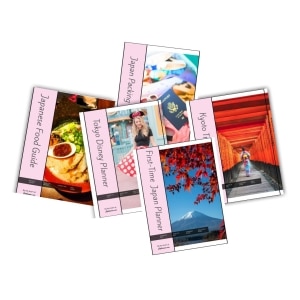
Need Extra Planning Help?
Our Japan trip planners can help. You might like our First-Timers Japan Planner, which will help you plan your trip to Tokyo, Kyoto and Osaka step-by-step, including tips on everything from picking hotels to sightseeing and dining. Or our super-duper Tokyo Disney Planner makes arranging your park trip MUCH easier. Find them in our Planners store – printable and digital versions are available.
5. Go-ji Temple
If you love moss gardens but don’t want to go to the trouble or expense of booking Saiho-ji, this is your answer. It’s also tucked up in north Arashiyama close to Adashino Nenbutsu-ji, but, gets relatively few crowds.
It’s open from 9 am to 4.30 pm, seven days a week and costs 500 yen to enter.
Sadly, Go-ji now ask that pictures are not taken in the grounds, or published, without permission, so I have not used one to illustrate this section (I visited long before this ban) – although, looking on the bright side, this means it will be a surprise when you get there.
To get here, catch the train to Saga Arashiyama or Arashiyama stations. It’s a 25-minute walk from each. It’s also easily combined with Adashino Nenbutsu-ji, from which its a 9-minute walk.
Southern Kyoto
Fushimi Inari Taisha shrine is the main draw in this area, and it can get uncomfortably crowded at the peak of the day, but there’s a whole heap of places nearby where you’ll be lucky to see another Western tourist – or sometimes another tourist at all.
6. Fushimi Sake District
This is known to Japanese tourists, but not so much to Westerners.
Around 40 sake breweries are based here, and many offer tastings. You can also visit the sake museum (bookings advised), visit a sake shrine and take a boat trip.
The favourite thing I did here, though, was try a ramen made of leftovers from the sake-brewing process at the Fushimi Sake Village complex.

If you’re interested in Japanese folklore/yokai, there’s also a fun museum dedicated to kappa monsters at the Kappa Sake Brewery. I also finally got to try a sparkling sake here.
To get here, catch the train south to Fushimi-Momoyama. The breweries all have different opening hours so if there is somewhere you particularly want to visit, check if they are closed on specific days. Otherwise, just turn up after around 11 am, and you’ll find somewhere offering tasting sets.
7. Komyo-in
Fushimi Inari Taisha and Tofuku-ji are the two big sights in this area, but there are also a host of smaller shrines and temples in the area – and you can have many of them to yourself.
Komyo-in is the perfect example of this. It’s a small temple, but it houses a beautiful Zen garden.
The morning I arrived, even the person manning the front desk wasn’t visible. I had the whole place completely to myself to just sit and relax in silence.

You might also find an art exhibit dotted around the rooms.
Komyo-in is open 7 am to 5 pm seven days a week. It costs 500 to get in – if you arrive early, there may not be anyone at the window to take the entry fee, so have the correct cash ready to drop in the honour box.
The closest station to Komyo-in is Tabakaido.
8. Takio Shrine
When you arrive at this tiny shrine, you might wonder what the fuss is about as the exterior is very modest, but step inside the wooden gazebo-like structure and look up, and you’ll understand.
Winding around the roof is the most beautiful 8-metre-long carved wooden dragon.

At one point, it’s said that the people living around this shrine feared that the dragon was so realistic, it would leave the shrine at night, so a mesh was put over it to keep it in.
The shrine is also a famous place to pray for prosperity in business and success in your career.
While entry to the main part of the shrine is free, if you want to enter to look at the dragon, you will need to pay 500 yen.
During the Gion Matsuri in Kyoto, they can sometimes remove the head of the dragon and display it elsewhere in Kyoto, so check the website if you’re visiting around this time
Also, if you are collecting goushuin, do not miss the one here – it has an unusual dragon design with cutouts.
To get here, take the train to Tofukuji Station, and the shrine is a two-minute walk away. It’s easily combined with a visit to Tofukuji, one of Kyoto’s major temples. This is less busy than many of the other headline spots in the city – but not quite quiet enough to warrant a mention on this list.
9. Shorin-ji – the Flower Temple
One of the sub-temples for Tofukuji, this is famous for having pretty displays of flowers around its grounds, and for its ornate goushuin that change with the seasons.

It’s also home to a famous Buddhist statue, a 1.74 metre representation of Bishamonten, but this can only be viewed during special viewing periods. You cannot take pictures inside the temple, only of the grounds, but with pretty flower displays and a mossy green carpet, this isn’t a huge problem.
It costs 800 yen to visit Shorin-ji, and it’s open from 10 am to 4 pm, seven days a week.
To get here, take the train to Tofukuji Station, which is located a 10-minute walk away.
10.Sanjusangen-do
The main feature here isn’t going to be the least crowded place on this list, but if you time your visit correctly you can avoid the majority of the crowds.
Sanjasagen-do is famous for the 1001 golden statues within its main hall – each one slightly different. It’s a fantastic sight, made even more special by the fact that no photos are allowed inside, so if you avoid Googling it, you can walk in not knowing what to expect.
Not surprisingly, this gets busy, but the shrine is also surrounded by large grounds, and it’s easy to find a spot outside here with no people.

Sanjasagen-do is a stop on many guided tours, so the tour buses do crowd this place out at certain times of the day. If a bus unloads as you arrive, wait for them to file through the statues, then head in afterwards. Or come here as it opens, which can beat the buses.
Sanjasagen-do is open seven days a week from 9 am to 4 pm. It costs 600 yen to get in.
Save Money with Klook & Japlanease
If you plan on buying tickets or tours from Klook for when you’re in Japan, you could save up to 10 per cent by using the code JAPLANEASEKLOOK at the checkout. Click here to see what’s on offer.
T&Cs apply. Some items, including Tokyo Disney and USJ tickets, are not available for discounts.
East Kyoto
The areas of Higashiyama and Gion in Kyoto are probably its busiest. At first glance, it might seem impossible to find a quiet space here, but you’d be surprised – even just walking down a parallel street to the main shopping streets will cut the crowds significantly. But here are a few places to find peace…
11. Ryozen Kannon
The afternoon I found Ryozen Kannon, I was already done with Kyoto – three hours after I got here.
I had arrived at lunchtime and gone to Kiyomizu-dera, which was a mistake as it was a zoo – it seemed as if everywhere was full of people, my leg hurt, and I’d already had enough. I was ready to get back on the train to Tokyo.
And then I came here – and it was just peaceful. Hardly anyone was here, I sat looking at the giant white statue towering above me and recharged – and I suggest you do the same if it’s all getting too much.

Ryozen Kannon is also right next to Kodaji, which, while not the quietest temple in Kyoto, is still far less busy than most of the big sights – and has a bamboo garden hidden away inside.
12. The Lucky Statue Walk Temples
This walk sees you visiting seven small shrines in Kyoto’s Higashiyama district to find lucky statues.
The majority of these shrines will have few, if any, other guests – despite being just a few minutes’ walk from one of the busiest areas in Kyoto.
Our full guide to the Seven Lucky Statues walk can be found here.

Northern Kyoto City
This area is already a little bit off the main tourist path as none of the big headline sights are near here – but, don’t dismiss it for that reason. The first entry alone will take you two or three hours to explore properly.
13. Shimogamo Shrine
This huge complex is located a very short bus ride from Kyoto city, but make your way here and it will not disappoint.
You’ll find one of the most beautiful main halls I’ve seen in Kyoto, a river that tells your fortune, a sub-shrine dedicated to rugby, a peaceful forest – and even a sub-shrine dedicated to looking beautiful, where you can colour in prayer plaques with make-up and drink a beauty-boosting juice.

Despite all these interesting spots, the sheer size of Shimogamo, plus its slightly out-of-the-way location, means it’s generally fairly quiet.
Shimogamo Shrine is open from 6 am to 5 pm seven days a week; however, if you want to try the beauty drink or the water fortune, you will need to arrive when the shrine shops are open after 9 am.
To get here, use the Kawaii Shrine as your marker (that’s the beauty shrine) and take the No. 4 or No. 205 buses that run through the city and alight at Shin Aoibashi. Or take the No. 7 and get off at Kawaramachi Imadegawa.
14. Garden of Fine Arts
This is one of the more unusual things to do in Kyoto. Replica paintings of great masterpieces like Leonardo da Vinci’s The Last Supper have been recreated at a giant scale in a modernist concrete structure.
It’s slightly bizarre but also fantastic at the same time – and there won’t be too many people around.

It’s open seven days a week, 9 am to 5 pm. It costs 200 yen to get in. The entrance is a bit difficult to find – we actually went into the Botanic Gardens at first. Turn right as you exit the station; the entrance is on the busy main street, not off the side of the Botanic Gardens as it looks on the map.
To get here, take the Karasuma line train to Kitayama Station.
15. Kyoto Botanical Gardens
It’s not the most exciting botanical garden I’ve ever been in, but if you’re looking to escape people and find some green space, it’s a good place to come.
If you’re here at the weekend, you’ll also experience a little slice of local Kyoto life as people set up easels or stroll around with their families.

The gardens do offer a light-up display called Light Cycles Kyoto, which sees larger crowds. Crowds will also increase when the garden’s 450 cherry blossom trees bloom or during the autumn leaves season.
The gardens are open from 9 am to 5 pm seven days a week. They do close for four or five days over the New Year Holiday, so check timings carefully if you’re visiting around this time.
16. Konkai Komyo-ji
I went here to see the unusual Buddha statue in its grounds – the Gokoshiyui Amidabutsu statue has what looks like an afro hairstyle, which is said to be because Buddha spent so long in meditation that his hair grew abundantly.

But the statue is located close to a large, peaceful temple complex, which includes a pretty fish pond and a bridge that you can sit by in peace. I did have to laugh when a tour guide arrived here, guiding a couple, saying, ‘you won’t see any other Western tourists here’- and then I popped my head up. But you certainly won’t see many other people.
Konkai Komyo-ji is a short walk from Okazaki Shrine, home to some cute bunny statues. This is getting busier now that social media has found it, but it’s by no means super crowded.
West Kyoto
The two big-name sights in this part of Kyoto are Kinkaku-ji, aka the Golden Pavilion and Ryoan-ji with its famous Zen Garden. They are close together, but while you’re over this side of town, there are a couple of other, less busy sights you might want to take in.
17. Daitoku-ji
Another huge complex containing a main hall, over 20 sub-temples – a handful of which are open for visitors, zen gardens and even a small bamboo forest (not open to visitors but viewable from outside).
This is less quirky than Shimogamo, but again, its sheer size and number of different precincts within it mean that even on a busy day, the crowds are dispersed.

You can also enhance your sense of peace by taking part in meditation or a tea ceremony in the grounds.
Ideally, enter via the Main Gate, where you can pick up a map showing you what is open on any given day. Daitoku-ji has an interesting ticketing system in that entering the grounds and viewing the exterior of the main hall is free, but you then pay for other temples/gardens separately – each costs around 300-400 yen. Unfortunately, for me, this meant I could see costs stacking up as I went round, which meant I didn’t go in as many as I should have.
The complex is open seven days a week, and the shrines you pay for are open from 9 am. Closing times vary, but expect them to start closing from 4 pm.

While you are here, also visit nearby Imamiya Shrine and Kazariya and Ichiwa, two competing shops selling aburi mochi – although don’t expect these to be quiet. They regularly attract long queues!
Daitoku-ji is a little way out of the city. The extremely popular 205 and 206 buses, and the No. 9 bus all come here, but if you’re going to catch them, get on at, or close to, Kyoto Station as they do get full. I tried to get on around Kyoto Kawaramachi, and it was impossible to board. If this is where you’re staying, you might want to take the Karasuma line train to Kitaoji Bus Terminal and either walk 20 minutes to the shrine or catch one of the buses from the station, which will be less crowded. This was how I got there in the end, and it was a much more pleasant journey.
18. Hoshun-in Bonsai Garden
This was the main reason I came to Daitoku-ji – discovering the rest of that complex was a bonus. Hoshun-in Bonsai Garden houses over 30 bonsai trees, the oldest of which are over 500 years old. You’ll know this because the trees have their ages noted on information plaques.

It’s incredibly peaceful here. Even though I was here on a public holiday (that was so busy I couldn’t get on buses), I had this whole place to myself for at least 30 minutes.
It’s part of the Daitoku-ji complex but gets a separate mention as it’s something to do in Kyoto if you’re not into shrines and temples (or just need a break from them).
The Hoshun-in Bonsai Garden is open seven days a week from 10 am to 5 pm. It costs 1000 yen to get in.
Follow the directions above to Daitoku-ji to get here.
19. Horinji Temple
You may have seen the famous Katsuoji Temple outside of Osaka that is filled with thousands of red and white Daruma Statues; this is its little Kyoto cousin.
Walk inside, and you’ll find a small garden, a prayer hall – and then an outbuilding filled with Daruma of all sizes. This is another goshuin that’s definitely worth collecting.

Horinji is also known as the Blind Daruma shrine. If you’re coming here, either type Horinji Temple as your destination or, if you can’t remember that make sure you type in Blind Daruma shrine, not just the Daruma Shrine, or you will end up in the wrong place – been there, done that!
You can take the Sanin Line train to the Blind Daruma Shrine. Get off at Emmachi Station, and the shrine is a seven-minute walk away.
It’s open from 9 am to 4.30 pm, seven days a week. Entry is free.
3 Quiet Day Trips From Kyoto
The funny thing about many of the pictures above was that they were taken in the busiest weekend I have ever been in Kyoto. Rain meant I couldn’t continue my journey the way I was supposed to from Tottori, and so I had to come back to Kyoto – on a public holiday.
It was awful.
Even though I was going to quiet sights, the logistics of getting to them required getting on hideously busy buses, and after two days of attempting it, I’d had enough – I got out of town, and found one of the most beautiful and peaceful sights I’ve ever seen.

Ukimido Shrine has a floating prayer hall in the middle of Lake Biwa, and it’s absolutely stunning. Find the full details of how to visit it in my guide to visiting Ukimido Shrine – you won’t be disappointed.
From Ukimido Shrine, I also visited Omihachiman – this was busier (it was a public holiday), but I think if you came on another day, you could enjoy peaceful wandering around the canals, a ride on the ropeway and peaceful backstreets.
I also managed to beat the crowds when visiting Uji, another popular day trip from Kyoto, simply by visiting sights away from the main draw, Byodo-in. The Daishoin temple complex here was amazing. See more in my Uji day trip guide.
Who Writes This Blog?
My name is Helen Foster, and I’m a journalist and author. My travel articles have appeared in publications including The Australian, Escape, RAC Horizons, Jetstar Magazine, Sainsbury’s Magazine, and more.
I’ve travelled to Japan nine times before – solo and with my partner and visited over 50 towns and cities. My last visit was in April 2026, so everything here is pretty up to date.

