- Hakone’s Venetian Glass Museum – The Biggest Surprise in Town - 19 March 2026
- How to Fill in Your Visit Japan Web Arrival Documents for Japan - 18 March 2026
- The Beginners Guide to Getting on the Shinkansen - 16 March 2026
Confused regarding advice about clothing in Japan? Here are the answers to the most common questions people have about what it’s okay to wear and when.
If you’ve been reading forums or social media threads while planning a trip to Japan, you’ve probably seen lots of conflicting advice about what you can and can’t wear. Some people say Japan is very strict about clothing etiquette, while others insist you can wear whatever you like.
The truth sits somewhere in the middle. Japan doesn’t have many hard rules about clothing, but there are strong cultural preferences around modesty, cleanliness, and situational appropriateness.

This is an AI-generated image
Article by Helen Foster. Disclosure: Some links in this post are affiliate links. See our Affiliate Disclosure.
However, people also understand that we are tourists and that you aren’t going to run around in a neat little pencil skirt and pumps or a salaryman-style suit and shoes when you’re walking 20,000 steps a day, so we do get a bit of leeway.
The key point is, no one expects you to buy a completely different wardrobe just for your Japan trip, but understanding the rules and following them as far as possible may help you feel more socially comfortable and avoid accidentally standing out for the wrong reasons.
Which means what? Here are some of the most common questions.
Q1: Is There a Dress Code in Japan?
Not officially. You won’t be refused entry to shops, restaurants, shrines, temples or public transport because of your clothes in everyday situations.
However, Japanese culture places a high value on neatness and appropriateness. Locals tend to dress conservatively and thoughtfully, especially in cities. Clothes don’t need to be expensive, but they are usually clean, well-fitted and not ripped.

There are obviously exceptions; Tokyo and Kyoto are a bit more conservative than Osaka, and I saw a noticeable increase in Japanese people with tattoos in Nagoya. If you’re in the backstreets of Harajuku, or a cool-vintage shopping area like Shimokitozawa (above) you’ll be far more likely to see someone wearing fashionably distressed jeans or a sweater than you will in an upmarket restaurant in Kyoto.
If you want a better idea of exactly what people are wearing, have a look at walking videos on YouTube for the area you’re visiting.
Q2: Can I Wear Leggings in Japan?
Yes, you can wear leggings, but if you want to blend in, how you wear them matters.
Leggings worn as trousers with a very short top are uncommon in Japan. Leggings worn under a longer top, tunic, dress, or skirt won’t see anyone bat an eyelid.
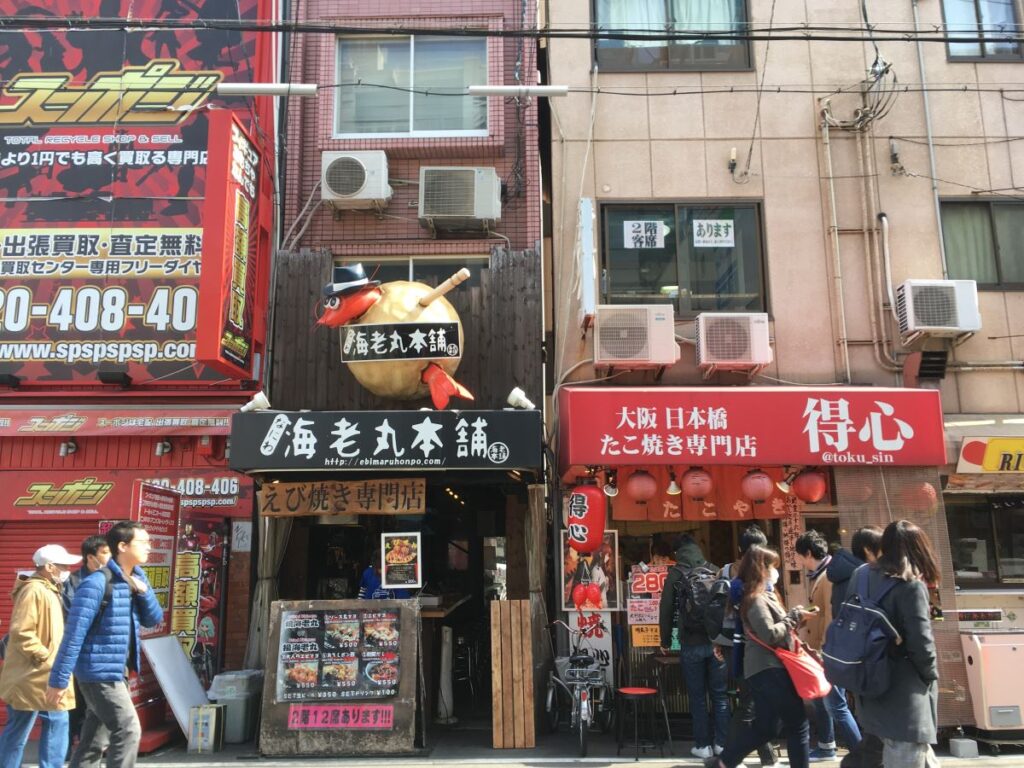
For gyms or running, leggings are also completely normal – but wearing athleisure outside the gym isn’t a big trend.
Q3: Do My Shoulders Need to be Covered in Japan?
There isn’t official guidance about it as there might be in, say, the Middle East, but that said, very strappy tops, low-cut tops, or crop tops are not common streetwear in Japan, even in summer. Many Japanese women choose loose tops with sleeves, lightweight shirts, or layers for sun protection and modesty.

If you’re visiting temples, shrines, or traditional settings, it’s generally respectful to avoid tops that are very revealing around the shoulders or chest – but that goes for most religious sites around the world.
Q4: Is it Okay to Wear Shorts or Short Skirts?
Yes.
One comment that is always made when people ask about leggings is that you’ll regularly see Japanese girls and younger women in eye-wateringly short skirts, so how can leggings be more offensive – it’s just the way things are! Also, often those very short skirts do have extremely thick skin-coloured tights underneath them.
One thing to note if you’re going to teamLabs, though, they do advise you not to wear short skirts there, as there is one place where the floor is mirrored – it’s actually the main reason I haven’t gone yet! So, if, like me, you wear mostly dresses, you might want to pack something to go under your dress at teamLabs.
Very short shorts, hot pants, or extremely tight clothing may stand out more, but they are not forbidden.
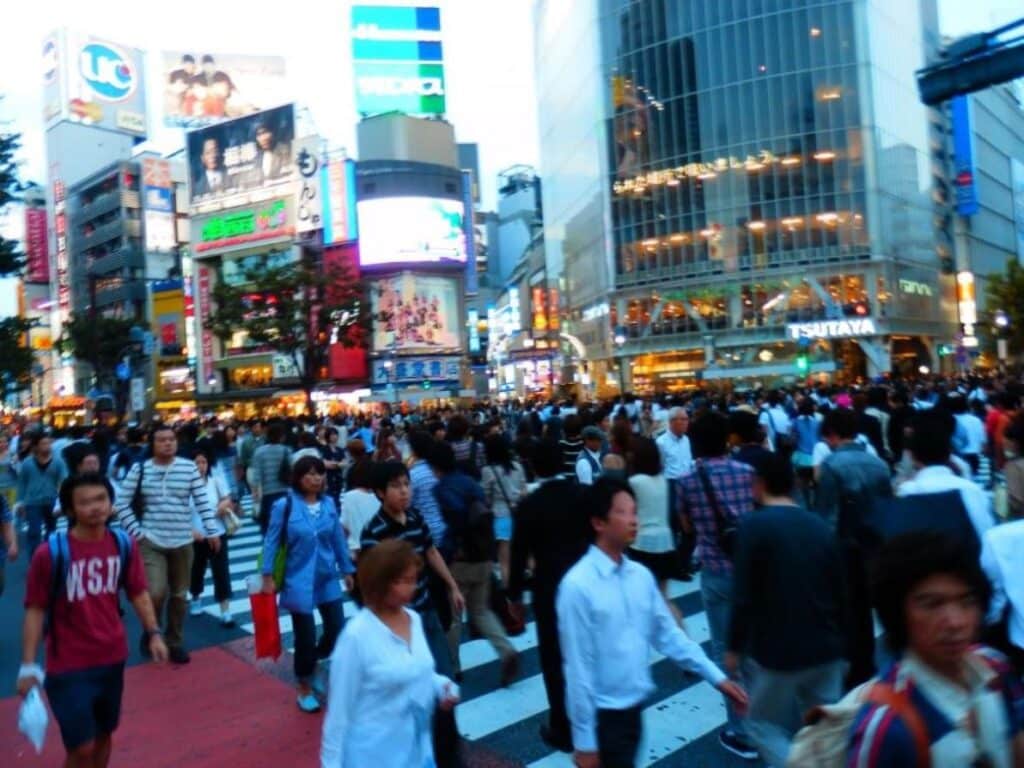
For men, again, you won’t see lots of Japanese men wearing shorts – especially cargo style ones, but we’re tourists – no one is expecting you to wander around in Japan’s boiling hot summer in jeans!
The one time I did encounter a ‘no shorts’ rule for men was at the fun Samurai Restaurant in Kabukicho. The dress code specifies ‘no shorts,’ but it was kind of well hidden in the rules, so some visitors got caught out and they had fisherman’s pants and jackets for those in shorts to don; most people decided this was just part of the fun, and many extra photos were taken.
Save Money with Klook & Japlanease
If you plan on buying tickets or tours from Klook for when you’re in Japan, you could save up to 10 per cent by using the code JAPLANEASEKLOOK at the checkout. Click here to see what’s on offer.
T&Cs apply. Some items, including Tokyo Disney and USJ tickets, are not available for discounts.
Q5: Can You Wear Swimsuits in an Onsen?
No. Onsens are used naked. This might freak you out, it did me when I first went to Japan, it took me a couple of trips to visit an onsen because of it, but after your first visit, you realise the only person in that room who cares about how you look naked is you!
The no swimwear rule also technically applies to private onsen in hotels.

One of the few onsen that allow swimwear is Yunessun in Hakone. It’s not a traditional onsen; it refers to itself as a onsen theme park, and it has pools, river rides and baths full of things like coffee and wine alongside the soaking area; the more relaxing part of Yunsessen, Mori no yu, does not allow swimwear.
Related Read: How to Use an Onsen Like a Local
Q6: When Do I Need to Remove My Shoes?
I have been on entire trips to Japan where my shoes have stayed in place, but the more shrines and temples or traditional restaurants I visit, the more often they come off.
Expect to remove your shoes in the following places:
- Inside private homes
- Traditional ryokan
- When entering some rooms in temples
- Some historic buildings
- On tatami mat flooring
- In some restaurants, clinics, and fitting rooms
There will usually be a clear sign, a step up at the entrance, shoe lockers, or a big row of slippers, indicating that it’s time for shoes to come off.
Because of this, wear shoes that are easy to take on and off.
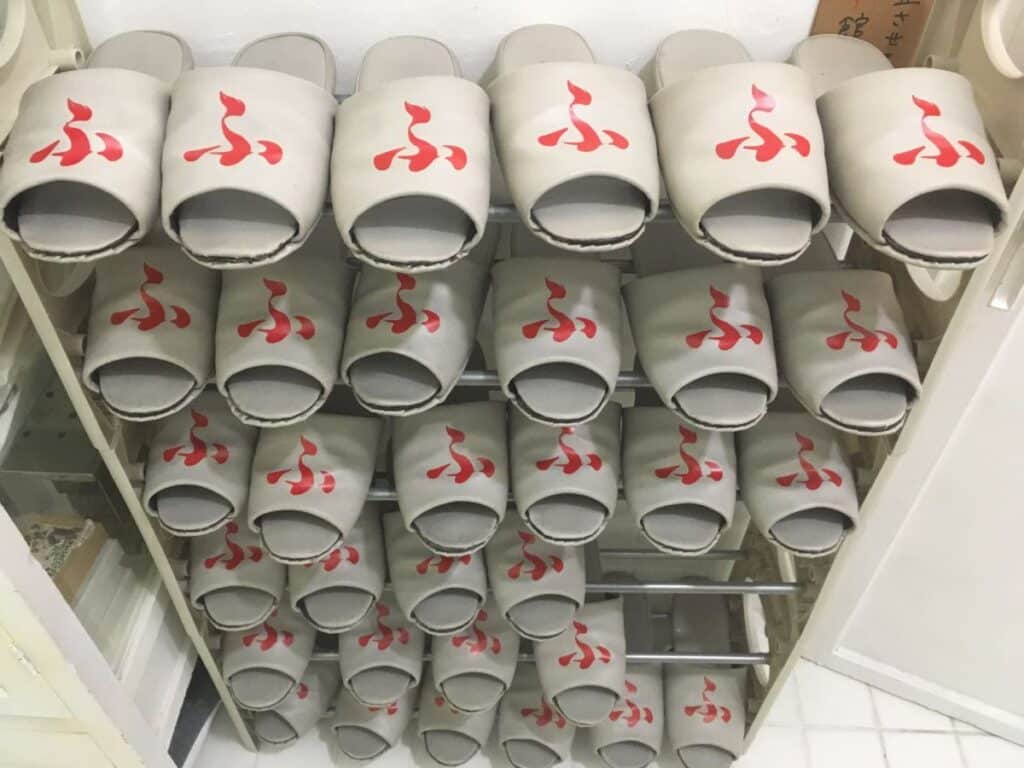
The most surprising place I’ve ever had to remove them was in one of the art exhibits on Naoshima Island. This was unexpected – and, at the time, I was wearing my oldest, stinkiest trainers as I had gotten terrible blisters a week before. It was mortifying! So, while it’s important to wear very comfy shoes and socks in Japan, make sure they are clean!
Oh, and if you go to a bathroom somewhere and see slippers outside the door, these are special bathroom slippers – you should remove your shoes (if you still have them on) or the slippers you’re currently wearing and swap to these to use the bathroom.
Q7: What Should I Wear to Temples and Shrines?
Unlike in, say, Thailand or Cambodia, there is no strict dress code for most temples and shrines in Japan. You won’t be asked to don a sarong if you are showing your knees or shoulders.
Still, you should avoid showing too much skin out of respect, so skip very low-cut tops, spaghetti-strap tops or cropped tops (or at least bring a cover-up).

Also, don’t wear anything with offensive slogans (generally, also good advice everywhere).
One exception to this is Nanzoin Temple in Fukuoka. This will not allow you in if you are showing shoulders, cleavage, stomach or wearing clothing above the knee. Eihei-ji in Fukui also ask people to dress modestly. Bas
Q8: Are There Any Colours Not to Wear in Japan?
There is no colour generally considered unlucky to wear as everyday clothing.
White is traditionally associated with funerals, but it is also extremely common in everyday fashion. Black is also worn daily despite its association with mourning.
I’ve seen people saying you shouldn’t wear red in Japan, but that’s not true – in fact, if you go to Sugamo, a fantastic old traditional area, you’ll see shops full of red underwear which seniors buy for good luck! It’s said that wearing red next to the skin increases vitality.

You don’t need to avoid any colours as a tourist. Neutral tones like black, beige, grey, navy, and white are more common colours for Japanese people to wear each day, but bright colours are also perfectly acceptable.
Q9: Do I Need to Wear Long Sleeves if I Have Tattoos?
Tattoos still have a bit of a stigma in Japan as, traditionally, they have been associated with organised crime. This is changing, and you will now see more young Japanese with tattoos, but there are still a few places where you may not be welcomed with tattoos on show.
- Onsen (hot springs)
- Some pools and gyms
- Traditional ryokan
If you have tattoos, check the policies of any of these you’re hoping to visit. The upmarket Kai chain of onsen does now allow them, and I’ve also seen some hotels in the Matsui Garden chain allowing tattoos now. Others will be fine if they can be covered with a plaster or patch. But, there are some places where all tattoos are forbidden.
Nanzoin Temple is the one religious place I know of that officially asks for them to be covered with sleeves.
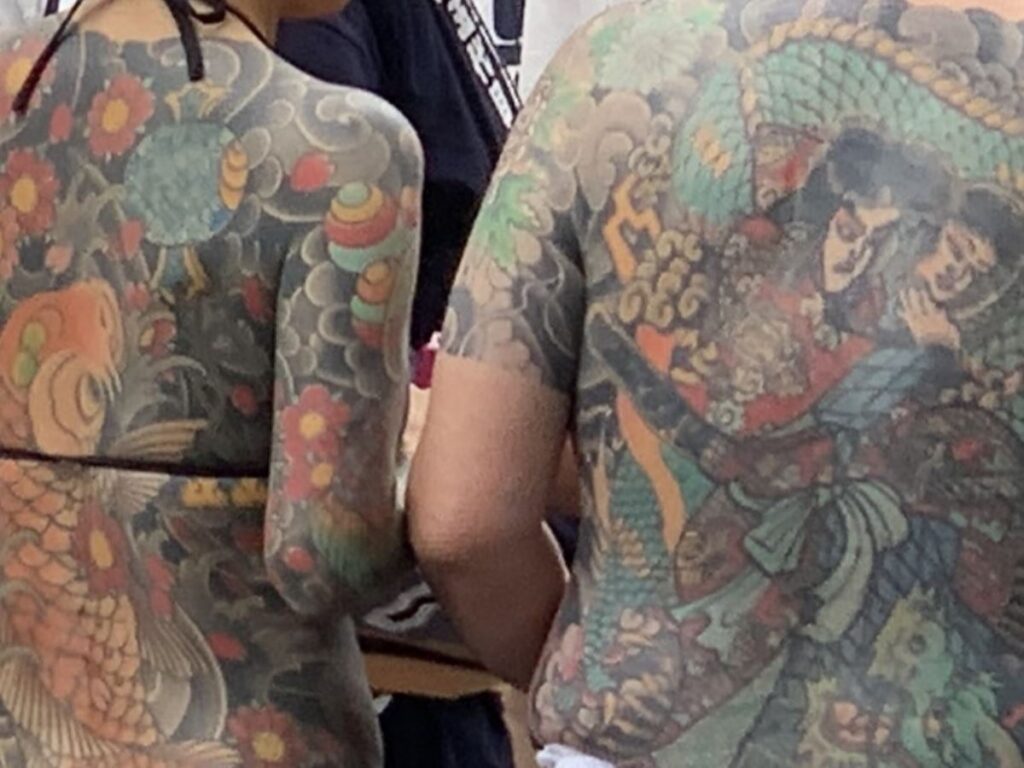
Generally, restaurants, bars and nightclubs will be okay with most tattoos. Yakuza tattoos (above) are very distinctive, and your Mickey Mouse on a surfboard is not going to be confused for them, but if you have face or neck tattoos, I have heard of people being turned away in some areas.
Q10: What Should I Wear to a Tea Ceremony
Traditionally, a tea ceremony is quite a formal event – but, again, we’re tourists, and most tea ceremonies for tourists expect us to turn up in sightseeing clothes; however, you still might want to think a bit about your outfit that day.
Most ceremonies will ask you to sit on the floor (chairs are usually available if bad knees, backs, or hips make this difficult), and short skirts may not be the best choice in this case.
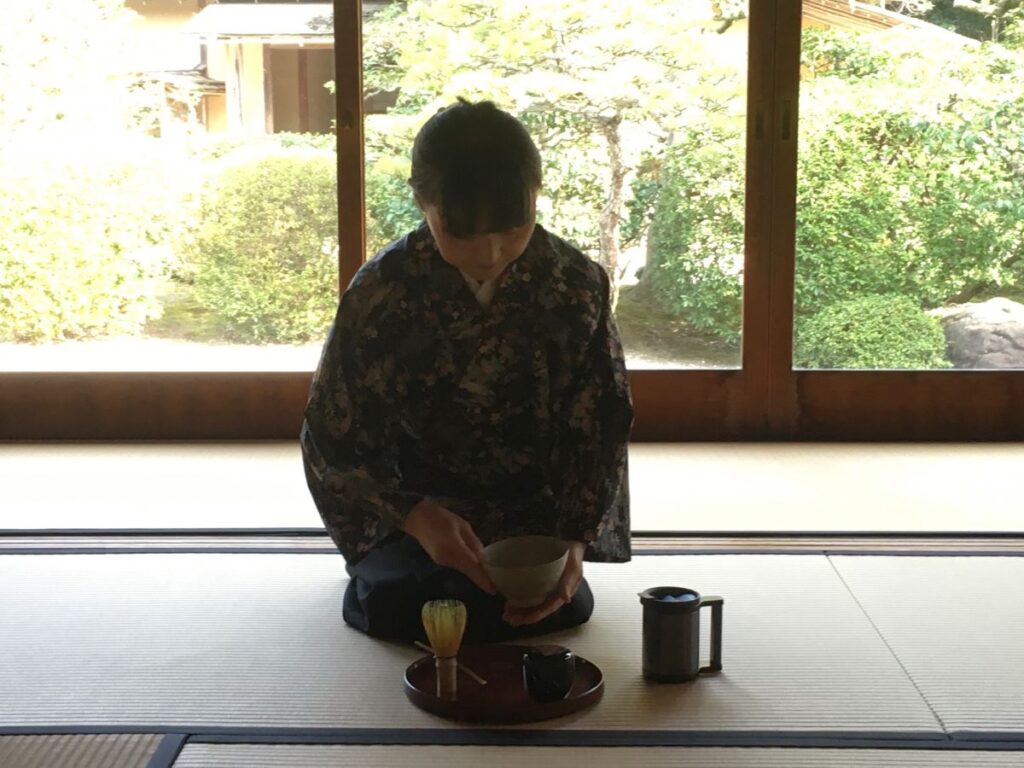
Also, if you want to try the traditional pose of sitting with your feet behind you, tight jeans are going to make this uncomfortable – again, most tea ceremonies aimed at tourists won’t mind if you sit in another position.
Q11: Can You Wear Sunglasses?
You can – although you may not see many older Japanese wearing them.
When I did my walking tour in Osaka, the guide said that one reason for this is that, like tattoos, sunglasses have a negative reputation in Japan as they are associated with gangsters and bad guys, particularly in Japanese movies.

It is a bit of a stereotype, but I admit that one way I knew that the yakuza float had arrived at the Sanja Matsuri in Asakusa (one of the few occasions yakuza noticeably put themselves on show) was the natty-looking guy in sunglasses and a pork pie hat on the front of the float!
No sunglasses inside is also another rule for the Samurai Restaurant in Kabukicho.
However, again, most people are not going to be upset by a tourist wearing sunglasses. Especially not if they are covered in bunnies!
Q12: How Should I Dress for the Theme Parks?
Comfortably! The theme parks are very used to tourists; no one there cares what you are wearing, so long as it’s not going to offend anyone with offensive slogans or excessive amounts of skin on show – and that you won’t be mistaken for a character (unless it’s on one of the dress-up days around Halloween, in which case all bets are off in the costuming department).
Most Japanese look quite smart when going to the parks, matching outfits are common, and I’m always amazed at the shoes, but don’t stress about it, wear what’s comfy for you. I normally cover at least 10km when walking around the parks.
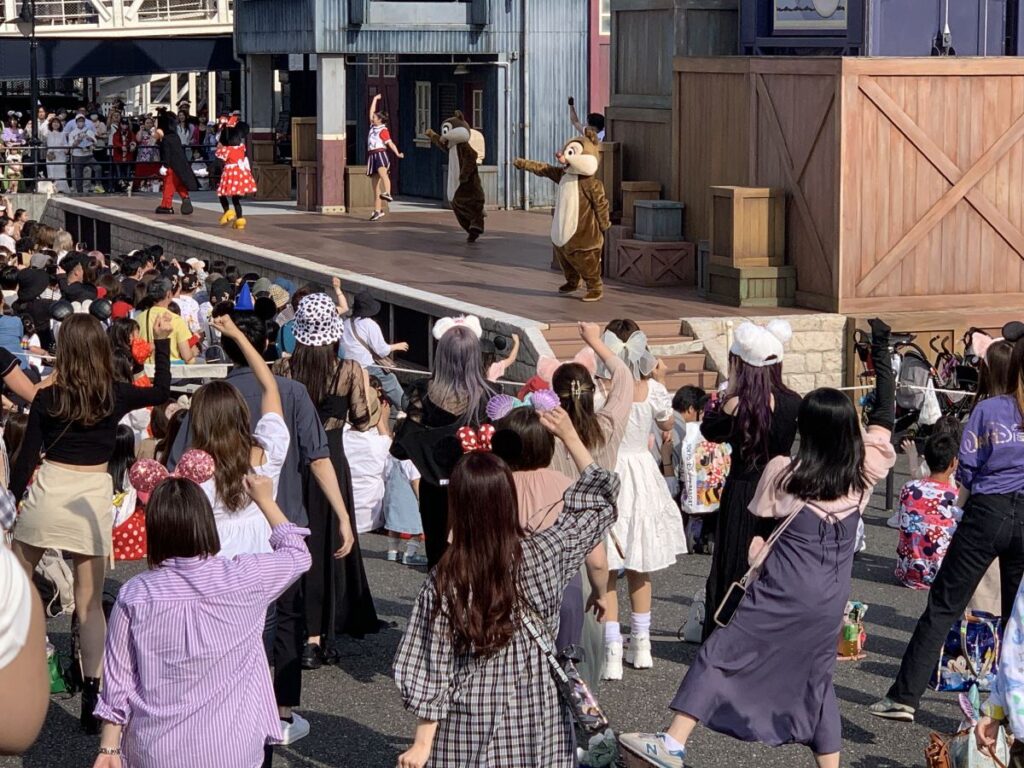
One thing I did learn, though, is to avoid shorter skirts – some of the rides, particularly at USJ, require some big steps to get in and out, and I’m pretty sure I flashed the park at least once in one of my dresses!
Also note, the parades at Disney are viewed while sitting on the ground. Again, short skirts or something like a tight denim skirt don’t always allow you do to this comfortably.
Disney bounding is totally fine – we even have a post on bounding ideas.
Related Read: What to Wear – and Pack – For Tokyo Disney
Q13: How Many Puffer Jackets Do You Need?
My apologies to you if you have ever asked this exact question in one of my Japan groups, as it really makes me laugh. Not because I think it’s a silly question, no one wants to be cold, but because I’m amazed that people have multiple puffer options!
Travelling to Japan in Winter does require a bit of outfit planning, especially if you’re trying to pack light, but the exact answer to this varies a lot; where in Japan are you going, where do you live, and how cold is it there, and how much do you feel cold? So, when deciding on which warm clothes to pack, consider those.

But, also consider this – while Japan can be cold outside, when it is, they can crank the heating up inside. So, if you’re really bundled up while sightseeing in Tokyo, you might find yourself slowly starting to melt every time you get on a train.
My advice, therefore, is to focus on layers that are easy to get on and off and that you can carry, tie around your waist or stash in your bag if you need to remove them.
The above was my outfit for a February visit – I had a long-sleeved t-shirt on under a dress, a cardigan, a scarf, tights, socks (and gloves handy in case I needed them) and my only winter coat – I live in Sydney, I don’t own proper winter clothes!!
Related Read: Month-by-Month Guide to Tokyo Weather
Q14: Is It Okay for Tourists to Wear Kimono
People worry that the Japanese might be offended by people dressing up in this beautiful outfit, but, as I found out when I asked them, the exact opposite is true.
Mrs Noriko Kasuya, Managing Director of the Kyoto Ookini Zaidan – the Kyoto Foundation for the Promotion of Traditional Performing Arts, told me ‘Kimono is not just something to look at but something to wear. It’s good to have people experience it. It shows that they enjoy Japanese culture.’
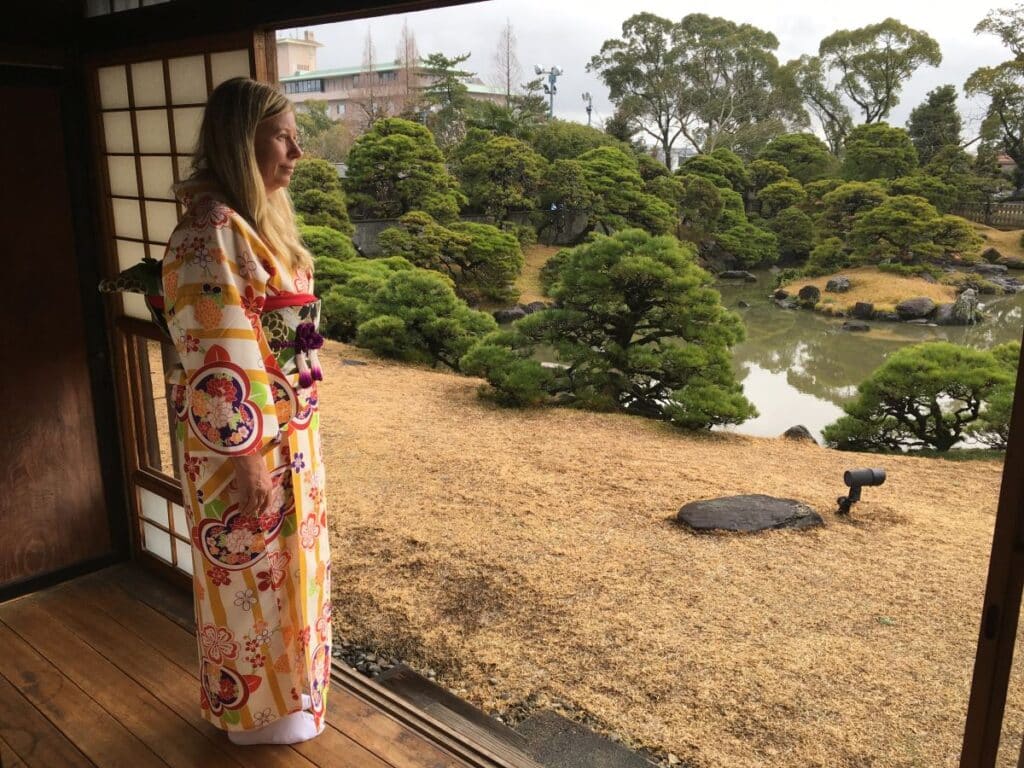
However, there are a few rules to follow when wearing a kimono on your trip if you want to make the locals happy – find them in our guide to wearing a kimono in Japan.
Q15: What’s the Biggest Clothing Mistake Tourists Make in Japan?
The most common mistake isn’t wearing the “wrong” thing, but wearing clothes that are impractical.
Japan involves a lot of walking, stairs, and standing. Uncomfortable shoes, heavy bags, or clothes that don’t breathe well in summer can make your trip much harder than it needs to be.
Prioritise comfort, neatness, and versatility. If your outfit is clean, practical, and not overly revealing, it will almost always be acceptable in Japan.

Who Writes This Blog?
My name is Helen Foster, and I’m a journalist and author. My travel articles have appeared in publications including The Australian, Escape, RAC Horizons, Jetstar Magazine, Sainsbury’s Magazine, and more.
I’ve traveled to Japan eight times before – solo and with my partner and visited over 25 towns and cities. My last visit was November 2024 so, everything here is pretty up to date.