- How to Watch the Oiran Parade at Edo Wonderland, Nikko - 15 October 2026
- 8 Mistakes Not to Make in Autumn Leaf Season in Japan - 10 October 2026
- How to Spend One Day in Nara - 29 September 2026
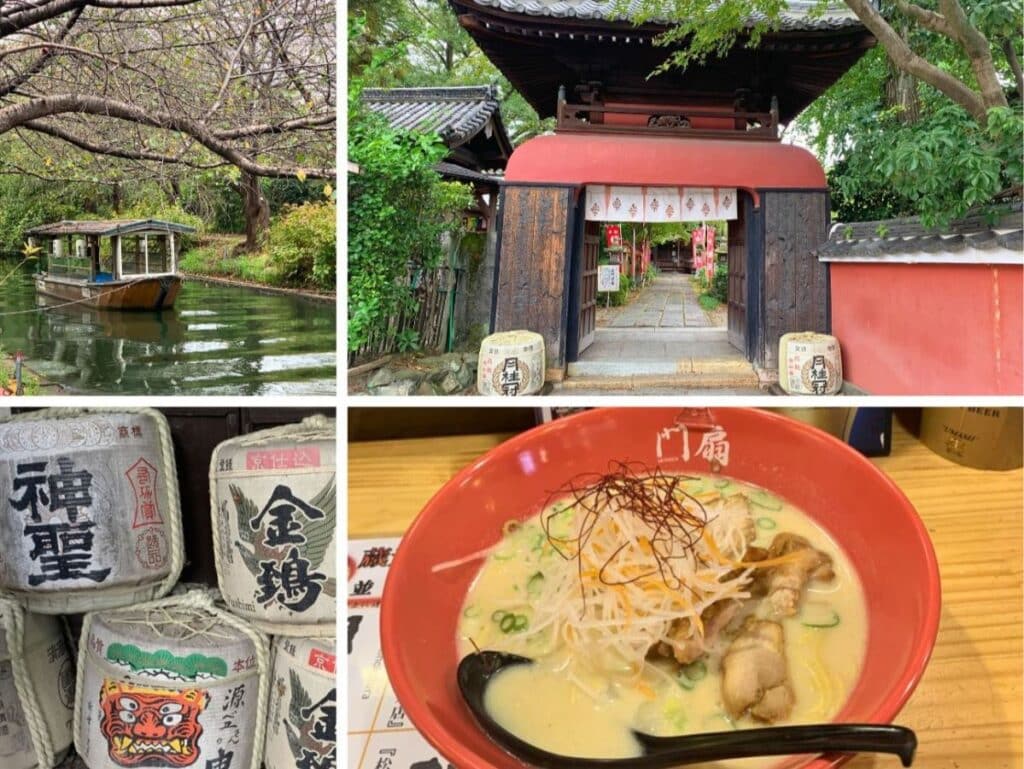
Relatively undiscovered by many Western tourists, the town of Fushimi, just outside Kyoto, is a great place to spend a few hours – especially if you like sake, samurai, engineering or Japanese monsters. Here’s our guide on what to do when you arrive…
Article by Helen Foster. Disclosure: Some links in this post are affiliate links. See our Affiliate Disclosure.
Where is Fushimi Sake District?
It’s a little bit south of Kyoto, kind of on the way to Uji.
One thing not to be confused about: despite the name, the Fushimi district is not where you find the famous Fushimi Inari shrine – that’s a little bit further north. You can easily combine seeing this with a visit to the sake district, though, as there are trains between the two. I actually started my day early at Fushimi Inari, left as soon as the crowds arrived and got to the Fushimi Sake area just before 10 am.
There are a couple of routes to reach the area, but for this one-day tour, I’d suggest taking the Keihan Main Line to Chushojima Station, as that will bring you closest to our starting point. The journey is only about 20 minutes from Kyoto Station.
1. Start at Chonken-ji
A short 3-minute walk north of the station will bring you to the Buddhist temple Chonken-ji.
Built in 1699, this temple is dedicated to the goddess Benziaten. Known as a goddess of the arts, she is also associated with anything that ‘flows’ – and with the water of this area being so important to the sake process, it’s no wonder the people here want to celebrate her.
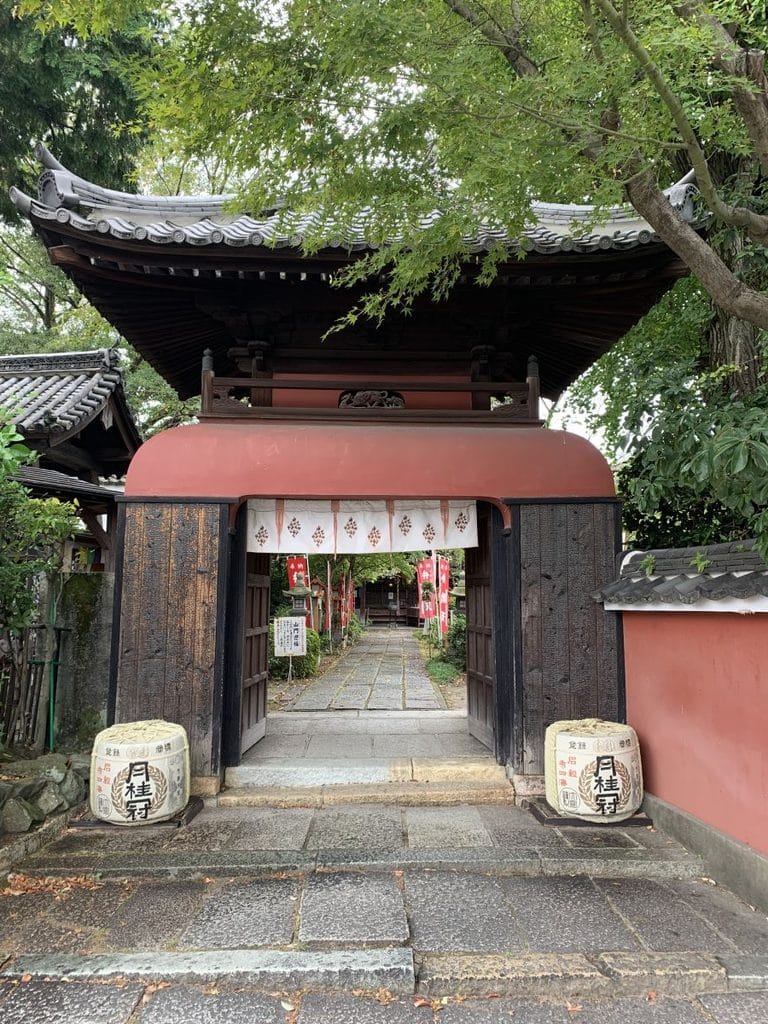
I have read that the area around the shrine also used to be an entertainment district, so many geisha and other performers would pray here, so it made sense to celebrate the arts.
Keep an eye out in the grounds. One of the lanterns has a picture of the Virgin Mary at the base. At one point, practising Christianity in Japan was punishable by death, so this is quite unusual to see on an old lantern.
2. Take a Canal Trip
Taking a trip down the waterways that run through Fushimi is a very popular way to spend an hour.
You can see the boarding place for the Fushimi boat trips on the riverbank opposite as you leave Choken-ji; the bridge you need to use to cross the river is slightly to the east/right.
Now, when I decided to visit Fushimi for the day, I was mostly here to do the thing that’s going to be your last stop. Because I was visiting Fushimi Inari Shrine first and then had a 2 pm booking at the Nintendo Museum, I didn’t think I would be able to do the boat tour as well. This meant I hadn’t really looked into the finer details as to what the trips involved.
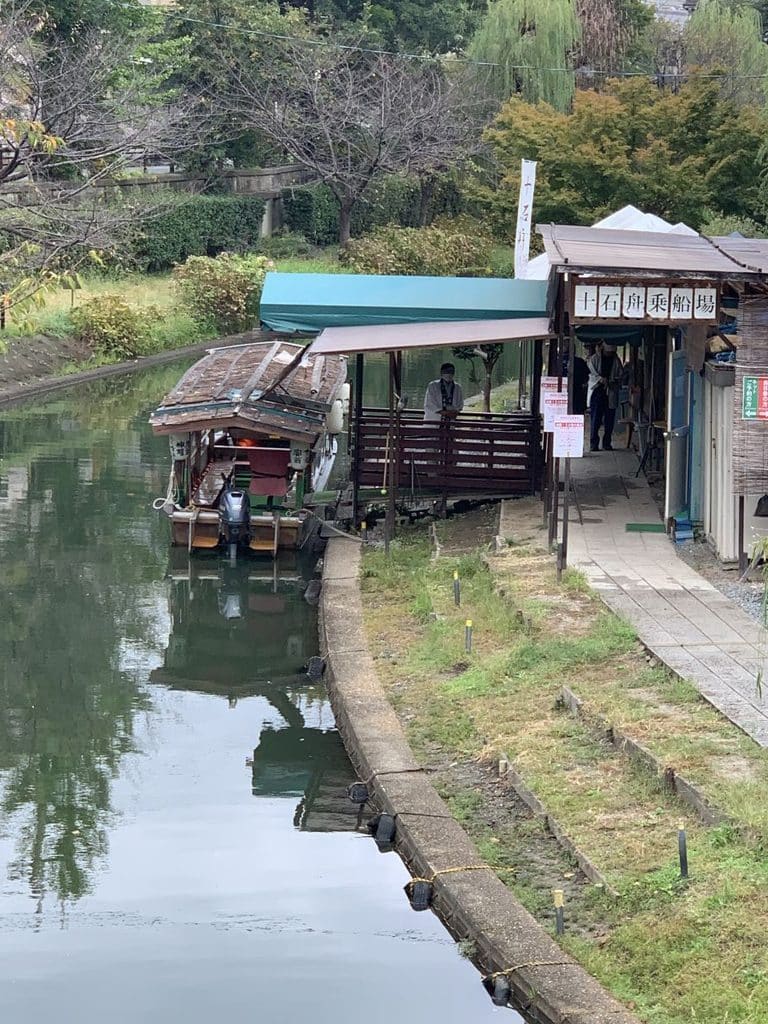
As it turned out, I left Fushimi Inari about an hour earlier than I planned, and the boat trip takes about 45 minutes; I decided to jump on – still not really knowing what to expect.
I was the only tourist on the boat, alongside a group of about 20 older Japanese ladies on a day trip. I didn’t understand a word of the commentary, but it was relaxing floating down the river looking at the buildings.
Then we arrived at this amazing lock gate in the water. At this point, the boat stopped, and all the ladies got out! I was very confused… but I followed them all, and it turns out the boat stops here so you can see the gate and the museum associated with it.
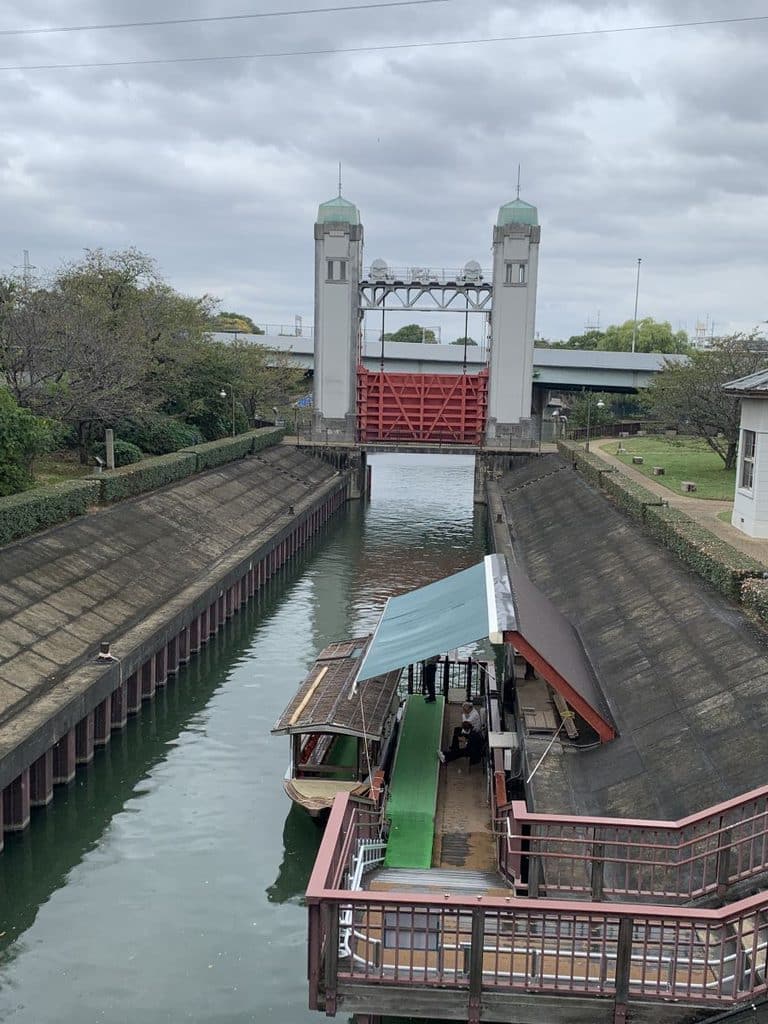
It was fascinating. Even though the speech was in Japanese, the working models and using Google Translate on the information panels helped explain what I was seeing.
After about 20 minutes at the museum and a walk to see the lock gate up close, you get back on the boat, which takes you back to the dock in Fushimi.
The boat trips run regularly between 10 am and 4 pm, six days a week (closed on Monday).
A Quick Explanation of the Misu Komon Locks
In case you also end up at the museum, here’s a very brief outline of what you’re being told.
The gate is called Miso Komon, and it was built in the 1920s to balance water levels between the Ujigawa and Horikawa Rivers after drainage works created a large height difference.
A boat would enter from one river, and the lock gate behind it would close; the other gate would then slowly open, and water would flow in, or out, of the sealed area, balancing the water level so the boat could continue its journey. The moving models in the display show clearly how different the levels were and why this was so needed.
At the time, the rivers were very important for deliveries between Kyoto and Osaka, but as the rail network took over cargo transport, the lock became redundant. It closed in 1962.
3. Sake Time
From here it’s time to walk into town – and discover what this area is most famous for.
Sake. There are around 40 breweries here, and many of them offer ‘sake tasting parties’ which allow you to try as many different sakes as you like in 30 minutes for around 2000 yen.
As it was about 11 am at this point, and I hadn’t yet had breakfast, that sounded like a recipe for disaster, so I moved on, but if you are here at a more suitable hour to try multiple glasses of booze, look for the sake party signs outside the different breweries.
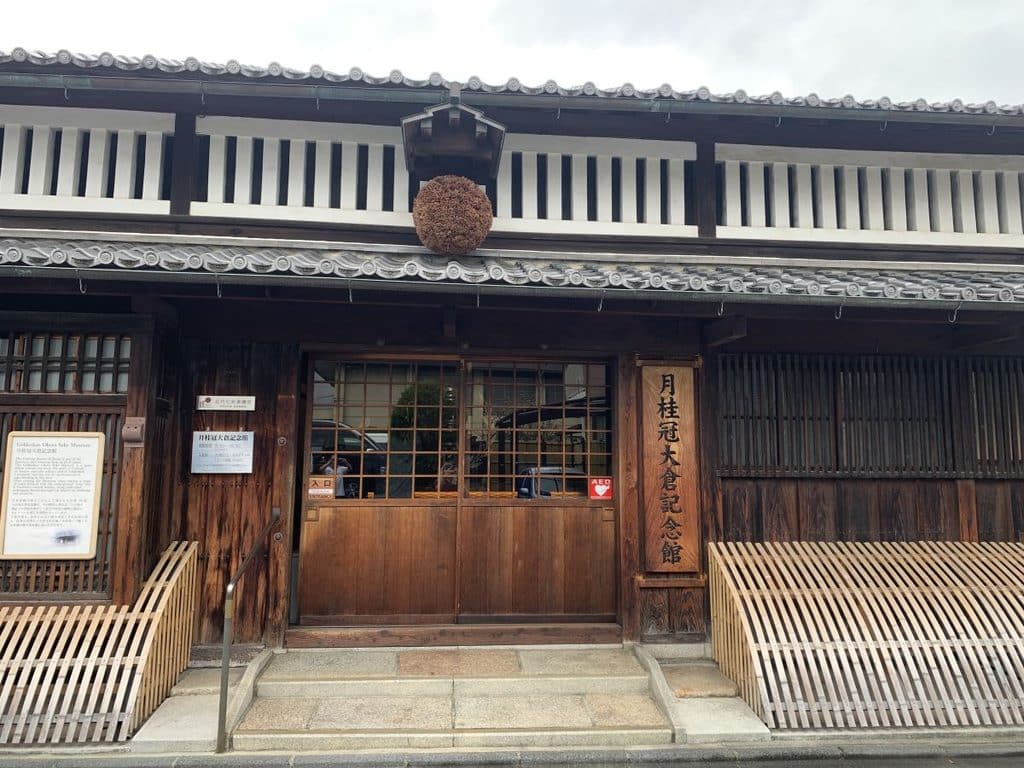
The high street is also home to the Gekkeikan Okura Sake Museum. Gekkeikan is one of the best-known sake makers from Fushimi, and the museum explains how the industry grew up in the town – well, I think it does, because what I didn’t realise when I decided to come here was that the museum works on a booking system.
Those without bookings can only enter on the hour and at half past – and I arrived at 11.08 – which meant I had quite the wait. I still had four places to visit in the town and wasn’t sure I’d make all of them before I had to leave for my 2 pm Nintendo visit if I hung around, and so I had to skip the museum.
My advice is therefore to either book a slot or make sure you arrive close to the entry time for general visitors so you aren’t hanging around.
Related Read: 15 Things You Need to Book in Advance in Kyoto and Osaka
4. The Teradaya Inn
This ryokan is famous in Japanese history as the site of two failed assassination attempts on important samurai of the time. The first, in 1862, left the intended victim alive, but nine other people dead; the second saw the intended victim, Sakamoto Ryoma, a samurai trying to overthrow the shogunate, saved by his wife-to-be, Oryo. She was in the bath and saw the assassins approaching, and ran naked to tell him!
One of the things that makes this story even more unusual is that Ryoma used a Smith and Weston gun to fight them off!
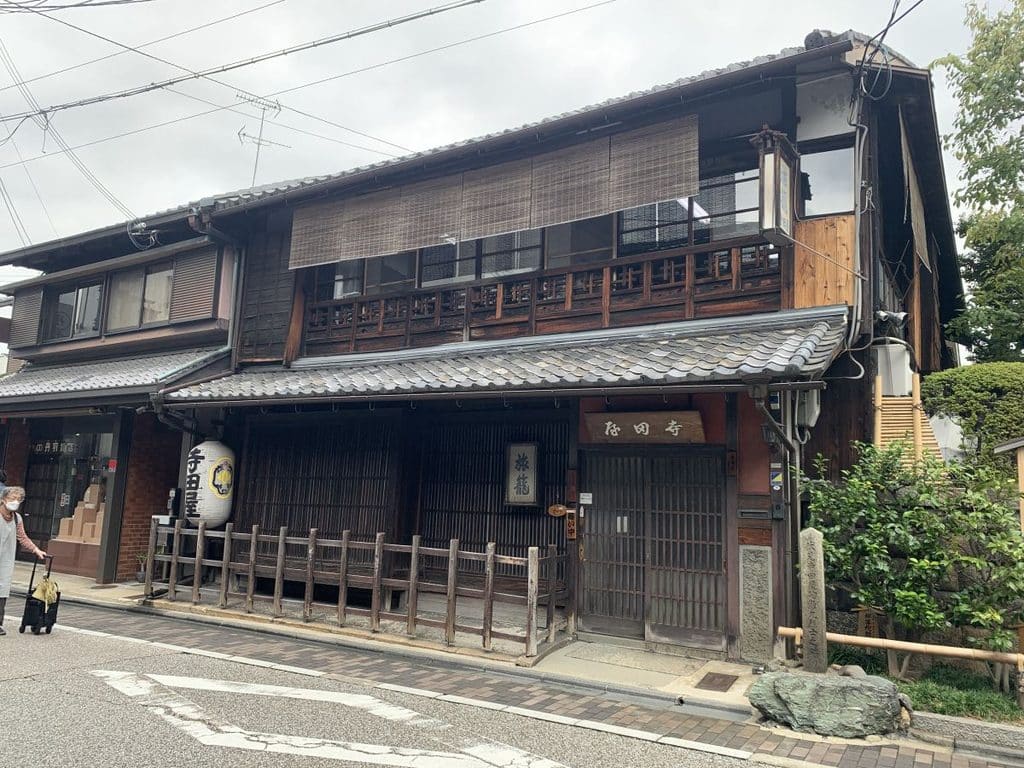
Today’s building is not original – that burned down in 1868 – but it has been recreated to look as close to the original as possible, complete with sword (and bullet) marks on the wall that show how intense the fighting was in a small area.
The inn, which you can stay in, now has an on-site museum about the incidents, and if you have any interest in samurai history, you’ll want to head inside. The museum is open from 10 am to 4 pm, seven days a week.
5. Ryoma Shopping Street
Named after the aforementioned Sakamoto, who is now credited with helping create the idea of a modern Government in Japan.
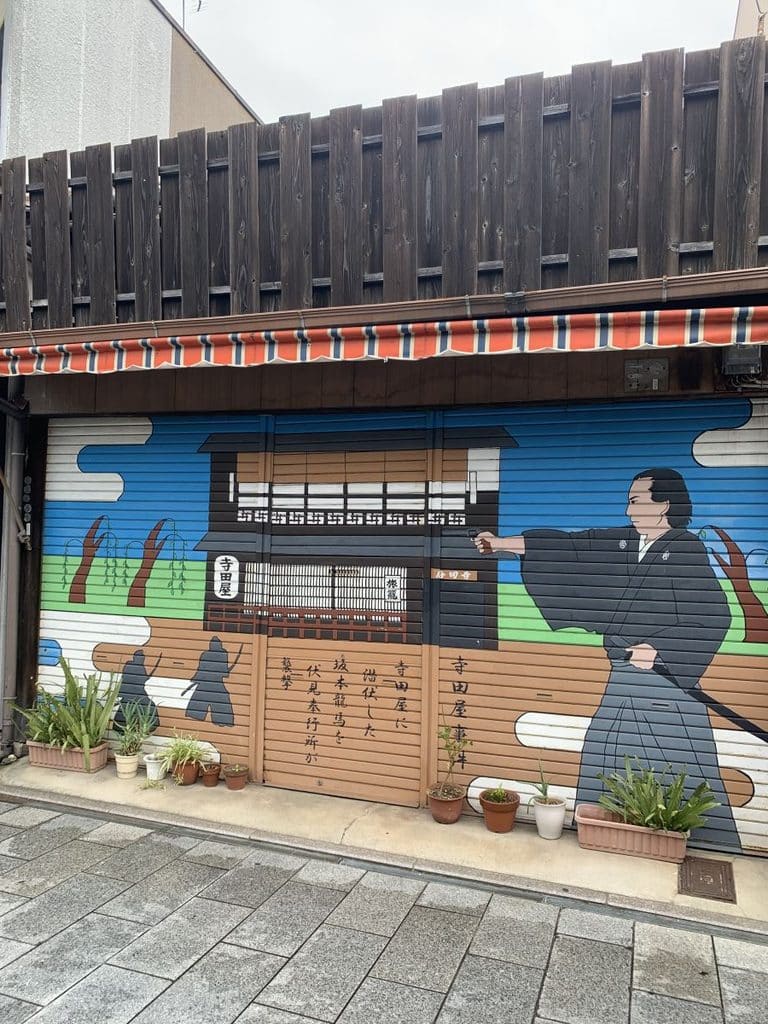
Walk up here when it’s open, and you’ll find a row of bars and restaurants. Come before these open, and you’ll find cool murals on the shutters reflecting life in the town.
Either way, it’s a win-win.
6. The Kappa Museum
Another reason I turned down the sake parties I saw earlier in the day was that I had already decided that I most wanted to try sake at the Kizakura Kappa Company.
For those not up on their Japanese folklore, Kappa are part of the group of Japanese yokai – monsters – with fantastic legends behind them. Specifically, they are water monsters that live in lakes, ponds and rivers, sometimes enticing people into them and to their doom.
They are also said to remove an organ called the shirikodama from people’s butts! Don’t ask a doctor where yours is; it’s not actually a thing!
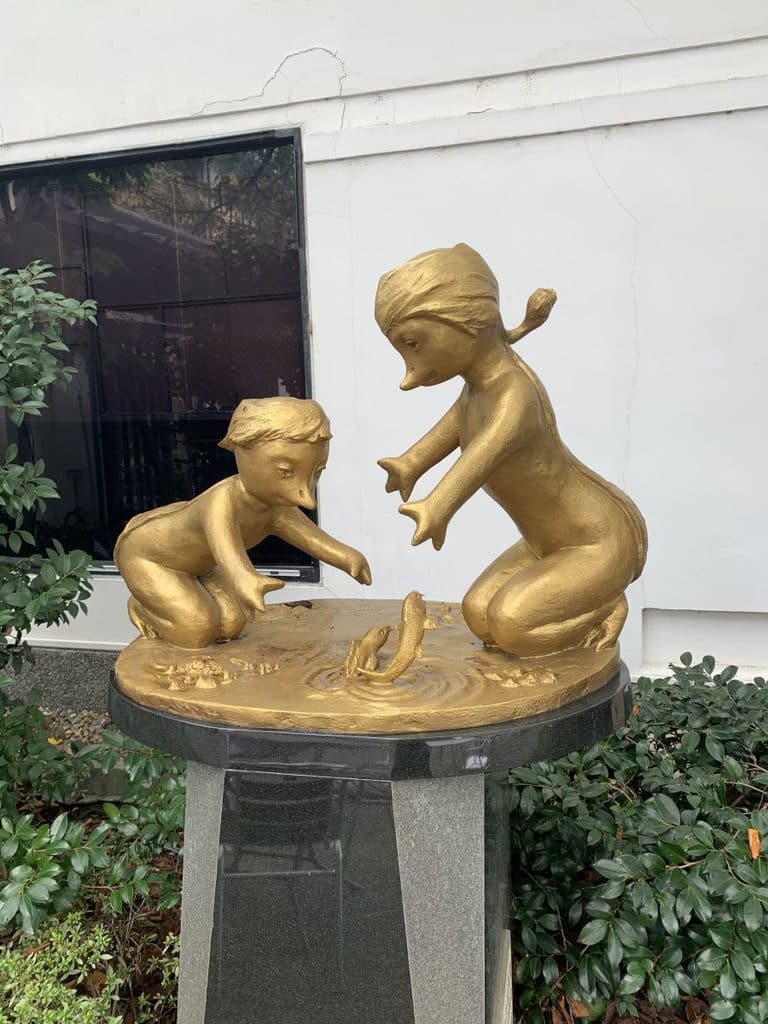
The Kizakura brewery also has a Kappa Museum, and while you can’t take pictures inside, it’s a fantastic stop for anyone interested in kappa. It’s open from 10 am to 4 pm, closed on Tuesdays
There’s a small shop/cafe on the premises, and while I was tempted by their beers, which had fun names like Devil Beer, I decided to try something I had wanted to have for ages – sparkling sake. I sat in their quiet courtyard, drank my glass of fizz and enjoyed every minute of the peace.
7. Grab a Snap at Fake Fushimi Inari
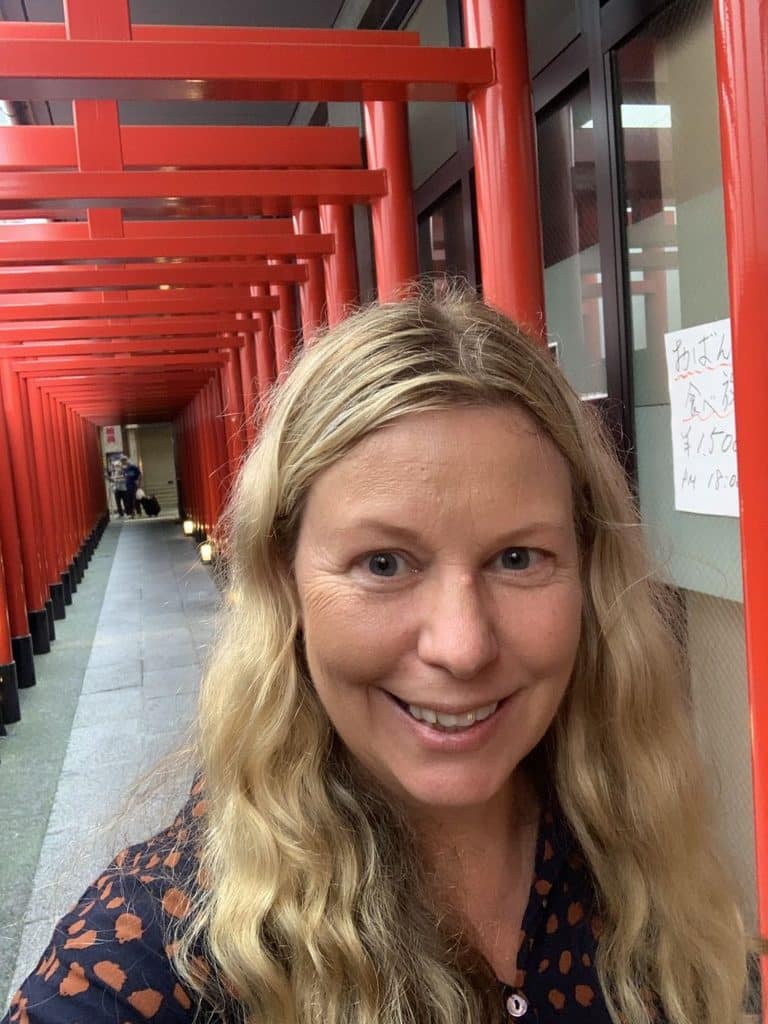
As I walked between Kizakura Kappa Country and my final stop in Fushimi, I came across this replica of the famous gates at nearby Fushimi Inari Tasha – but look, no crowds! If you didn’t manage to get a snap at the original without other people in it, here’s your chance!
8. Eat Sake Ramen
This was the reason I had actually come to Fushimi – the rest was just icing on the cake.
In a complex called Fushimi Sake Village, you can not only drink more sake, but the ramen restaurant there, Ramen Monsen Fushimi Sakagura-ten, makes a unique ramen using sake lees to help make the broth.
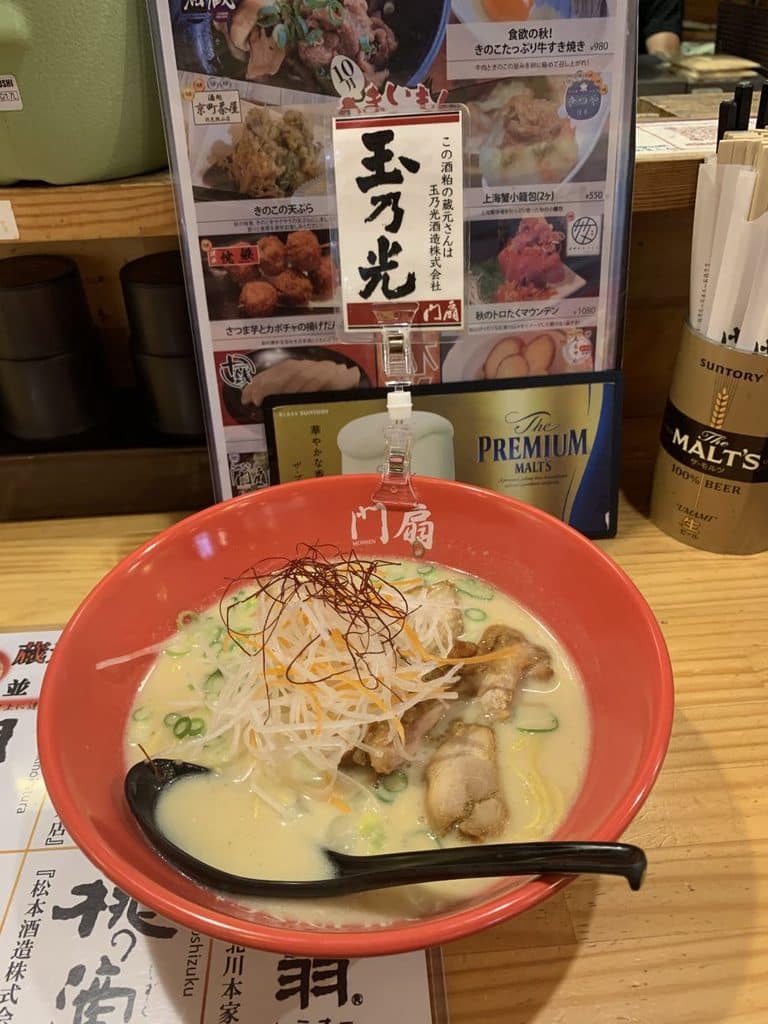
Sake lees are the paste created when the rice mash used to make sake is pressed. Here they add it to the ramen, which gives it a very distinct, slightly alcoholic taste, but what I didn’t realise until I sat down was that you can actually choose which brewery your lees came from, and each one would slightly alter how the ramen tasted.
It was delicious – creamy and with a definite sake tinge.
At this point, despite being very full of noodles and slightly tipsy from drinking sparkling sake on an empty stomach, it was time for me to head off to the nearby Momoyamagoryo station, where my Kintetsu Line train to the Nintendo Museum awaited. If you go north instead of south, this station will also take you back to Kyoto.
You can also use the nearby Fushimi Momoyama station on the Keihan Line. This also goes to stops close to Fushimi Inari Taisha and Tofuku-ji if you have time left to explore.
Who Writes This Blog?
My name is Helen Foster, and I’m a journalist and author. My travel articles have appeared in publications including The Australian, Escape, RAC Horizons, Jetstar Magazine, Sainsbury’s Magazine, and more.
I’ve travelled to Japan nine times before – solo and with my partner and visited over 50 towns and cities. My last visit was in April 2026, so everything here is pretty up to date.