
- How to Watch the Oiran Parade at Edo Wonderland, Nikko - 15 October 2026
- 8 Mistakes Not to Make in Autumn Leaf Season in Japan - 10 October 2026
- How to Spend One Day in Nara - 29 September 2026
You might have seen videos online of a beautiful, white-faced Japanese woman walking down the street wearing a pair of very high thick soled shoes, twisting her ankle to the side as she walks. Many of these videos show the oiran walk – oiran dōchū – at Edo Wonderland – and here’s how you see it for yourself.
What is an Oiran?
When most people see the high black hair and white face of the woman in these pictures (and those social media videos), they think she is a geisha – but no, she’s an oiran.
Oiran were the highest ranked courtesans in the legal pleasure districts of the Edo era like Yoshiwara in Tokyo.
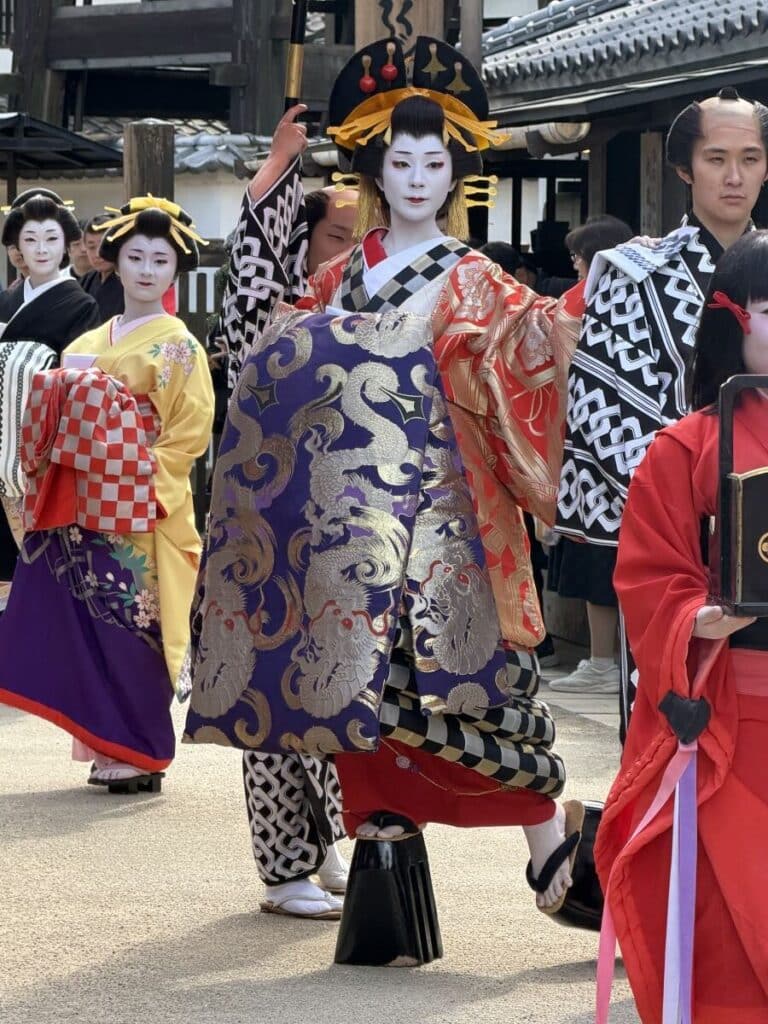
Depsite the fact that they did, erm, ‘look after’ gentlemen, the oiran were respected members of society – far higher than geisha (who were art-based entertainers with no added extras) or, the more common working girls on the street.
The reason for this was that not everyone could visit an oiran. You had to be extremely rich and, ideally powerful, and the walk they are doing here was to show to patrons to think they were worth the money they were going to cost.
An oiran chose her customers, not the other way around ((although sometimes with persuasion of the house in which she worked). If someone wanted to visit her, they had to request it and meet with her socially a few times before anything more adult took place.
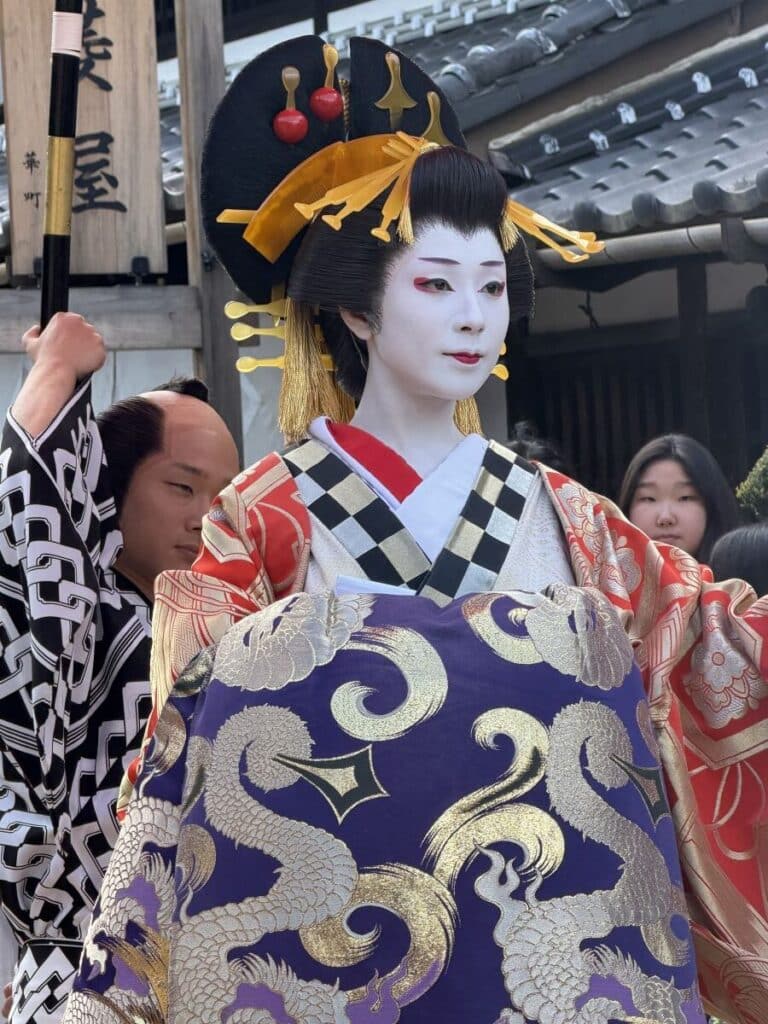
Oirans had to be beautiful – but, also well educated and trained in the performing arts. They could play numerous musical instruments, and must be able to keep up in conversation with the rich powerful men they entertained, and their guests. As such, they were classed as women to look up to.
6 Facts About the Oiran Dochu
The walk of the oiran would occur when meeting a patron. And, it wasn’t a hidden performance. The whole district would come out to watch – and, there was a lot going on. This isn’t explained when you see it at Edo Wonderland, so, here’s a few things to look out for…
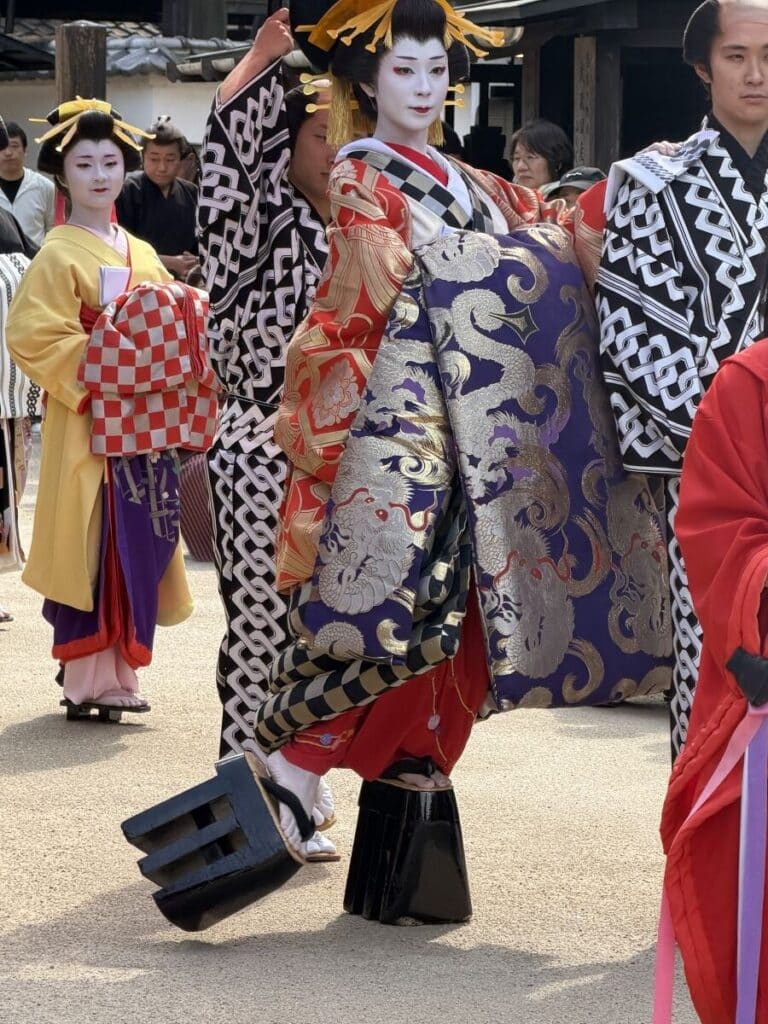
- The oiran walks in a very distinctive way. She’s actually moving her foot in the shape of a figure 8 – and the movement is known as soto hachimonji.That little twist of the leg was to show their feet (oiran don’t wear socks so flesh was exposed) and drive the men watching to part with their cash.
- While many Japanese women wear wooden soled shoes called geta, the soles of an orian’s shoes are huge – normally 15-20 cm high which allowed her to be seen by all around. Learning to walk elegantly in them, especially in the hachimonji style could take years to master.
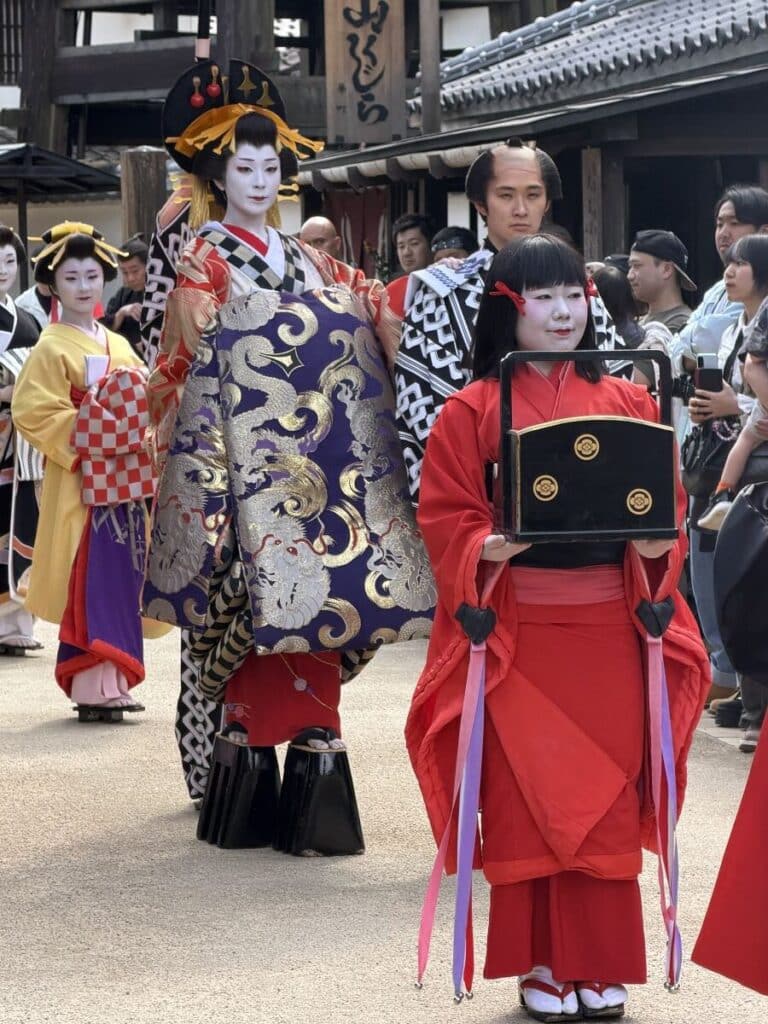
- The young girls woth white faces who accompany the oiran on her walk are kamuro – oiran in training. She is surrounded by bell ringers who publicise the parade around the pleasure quarter so everyone can watch – in a true oiran dochu there would also be musicians. She also has a servant upon which she balances and at least one person carrying an umbrella above her to protect her hair, make-up and expensive kimono from the elements.
- Talking of kimono – oiran were fashion superstars. Their wore the most elaborate kimono, in the brightest colours and many beautiful jewelled hair ornaments. Geisha also wore kimono and dressed their hair, but their kimono were more muted and the sparkly ornaments fewer in number.
- Another difference was that the oiran wore her obi belt in front of her not tied behind as is normal. It’s said that one reason for the array of embellishments was to show off gifts from patrons – maybe to encourage more of them.

Do remember though that oiran were courtesans, so, while it all the dressing up and parading sounds lovely and elegant, the reality behind the glitz, glamour and giant geta was very different.
Watch the Video Here
Want to see all of the above in actual motion – no problem, here’s the video I filmed at the park.
The Book to Read Before You Go
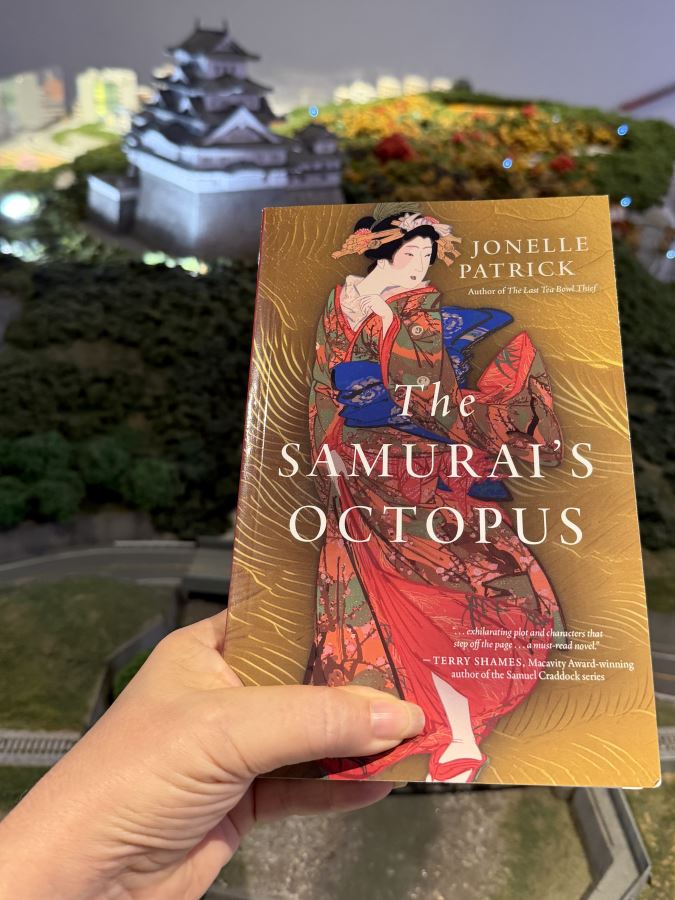
One of the best books I have read on understanding oirans and the pleasure quarter culture of the day is The Samurai’s Octopus by Jonelle Patrick, It really brings to life the time and explains the complicated heirachy of the system in Yoshiwara.
I read it before my trip to Edo Wonderland and it did help me understand and enjoy it more so if you are visiting, and love historical fiction, I’d suggest checking that out.
You can see also see oiran dochu at a number of festivals in Japan. The Edo Yoshiwara Ichiyo Sakura Matsuri that traditionally takes place on the second Saturday in April in Asakusa, Tokyo, is one of the most popular, although note that last year’s event did not include the walk.
Viewing The Oiran Walk at Edo Wonderland
As I said, the walk in these pictures, and many social media videos, takes place at a theme park called Edo Wonderland near Nikko. This can be visited as part of a stay in Nikko, or as a day trip from Tokyo.
The walk normally takes place in the park once a day – currently starting at 2 pm, but, this can vary so double check the timings before you visit. It is included in your day ticket for Edo Wonderland.
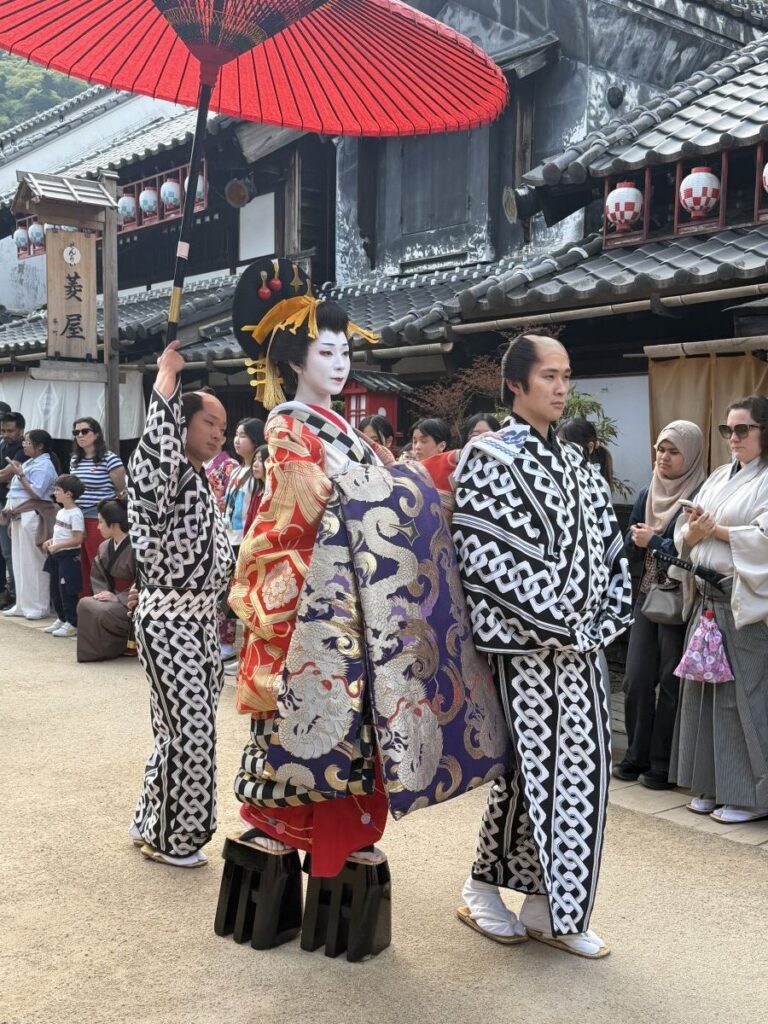
The oiran comes out of the building closest to the Nihon Bridge. Most people line the main street to see the parade, but if you want to watch right at the start of the walk, stand by this bridge.
She walks past the bridge, then walks down the back of the buildings. She finishes the walk by coming north up the main street of the park and back toward where she started.
She does not walk quickly! Even though the parade route is only a few hundred metres, it takes her 20 minutes to cover it so bear this in mind when planning your day and deciding where to stand.
What Else is There to do in Edo Wonderland?
Lots. The park aims to recreate life in a Japanese town during the Edo period (which took place in Japan between 1603 and 1868).
The streets are lined with buildings representative of what you would have seen there at that time and inside them you will find a mix of exhibits, shops and hands-on experiences you can take part in like making your own rice cracker or creating a wood block print.
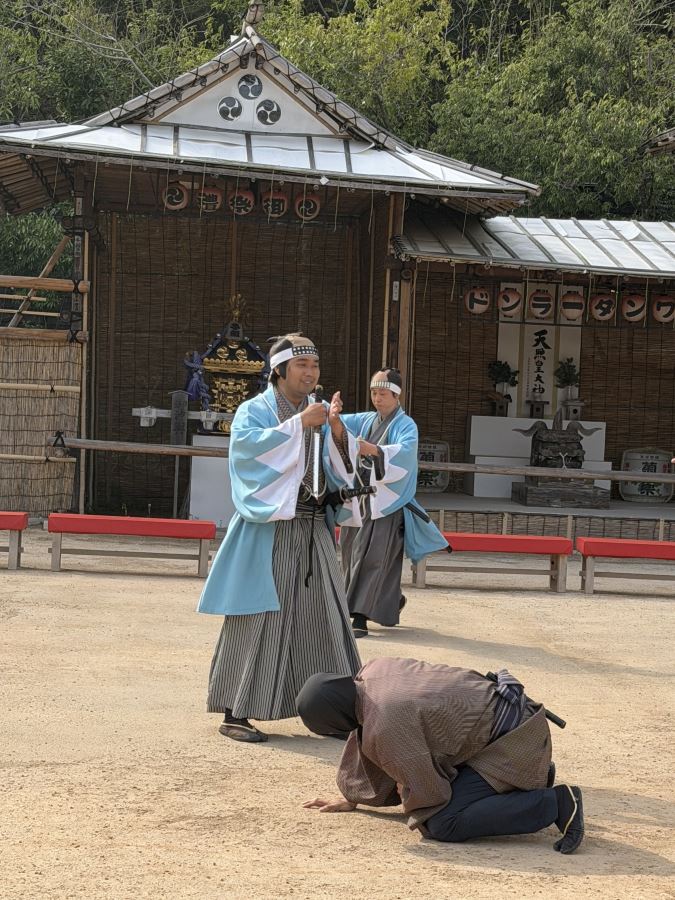
There are also larger theatre type areas which have shows throughout the day. These include a ninja show, a water performance, a comedy show by the local magistrate that is more focused toward Japanese guests – and a twice daily oiran dance performance.
There are also other street performances – there always seems to be something going on.
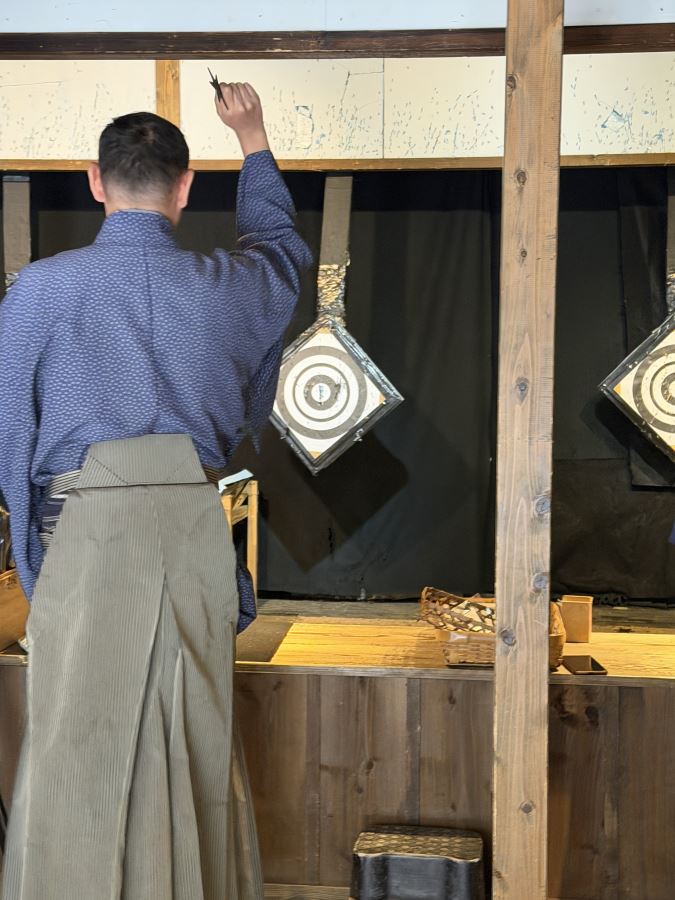
On top of this are various interactive experiences and attractions – you can practise your balancing skills in the Ninja House, attempt to find your way out of the Ninja Maze (seriously hard, I had to use one of the escape doors or I was going to miss my bus back to Nikko), you can throw Ninja Stars, practise archery – and much, much more.
I also loved the exhibition on how the skills learned in Edo Japan are still relevant to modern day Japan, and the rest of the world.
Most things are included as part of your entry ticket, but, hands-on activities like cracker making, star throwing and archery do have an extra charge.
I wasn’t sure I was going to like it, but I actually loved every minute of it and wish I’d had more time there. A lot of things are in Japanese, but you can still work out what is going on. It’s also a great place to pick up souvenirs – I got the cutest shibu inu hand towel in one of the shops.
What’s the Deal With the Outfits?
When I put the video of the oiran parade on the Japlanease Facebook page, one of the most common comments was why there is a white guy in full samurai garb – and sunglasses – in the background.
The answer is that Edo Wonderland also has a costume service so you can dress up as one of the townsfolk for the day.
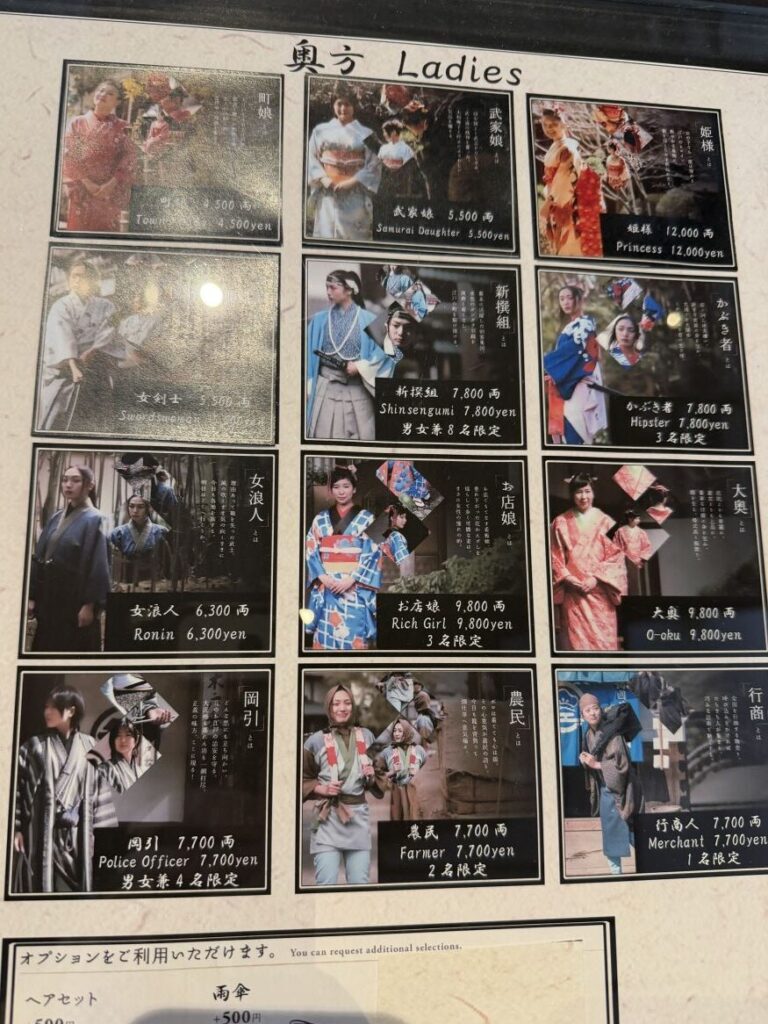
Costumes include everything from shopkeepers to rich ladies, samurai – and yes, oiran – although that is the most expensive, and eleborate costume in the park.
It costs 50,000 yen and must be booked at least a week in advance.
See a full list of the different options here. I was travelling on my own, and also had a limited amount of time in the park, so I didn’t get dressed up but if I was there with friends, and had the whole day at my disposal, I definitely would do this – it really adds to the experience.
How to Get to Edo Wonderland?
The park is located a little outside of Nikko.
The easiest way to get there is to take either the Tobo Nikko line to Tobu Nikko Station, or the JR Line to Nikko Station and then catch the free shuttle bus to and from Edo Wonderland from JR Nikko Station.
If you are staying in Nikko, this also picks up at Nikko Toshogu Shrine Omotesano at certain times of day.
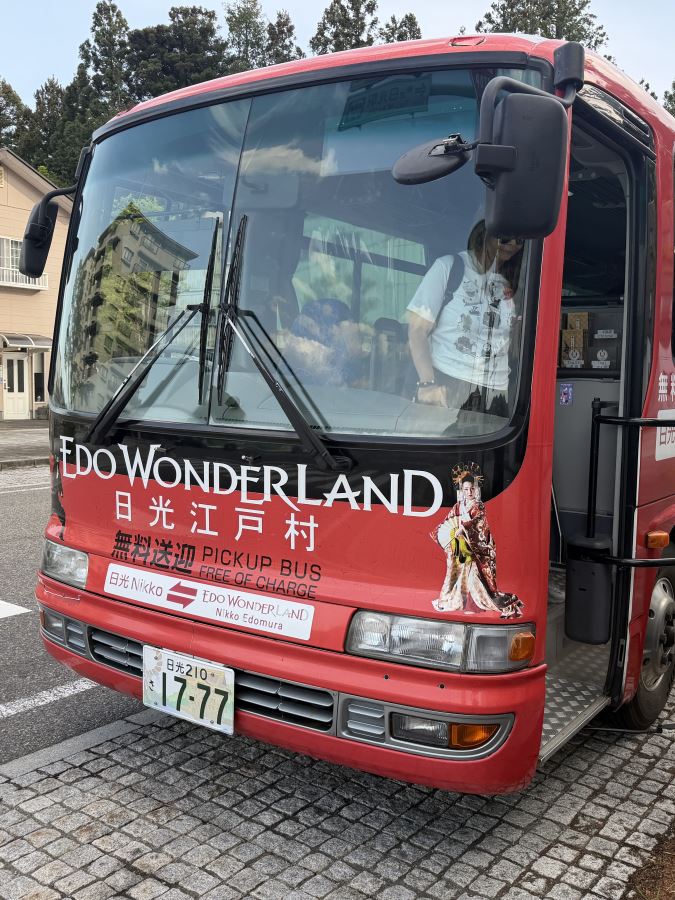
This runs up to four times a day and it takes about 30 minutes to get to the park. Check the current schedule at the Access section of the Edo Wonderland website.
The bus does only seat 39 passengers and one of the reasons I didn’t have enough time at Edo Wonderland was that I was a bit worried that this would be full and so I left to get the second to last bus but, there were only a handful of people on it the day I travelled so I think you would be okay to catch the last bus – just get to the stop in plenty of time.
If you would prefer to make your own way to the park, the nearest station is Kosagoe on the Tobu-Kinugawa Line. It’s not that close to the entrance, you’ll need to walk 25 minutes each way.
There are taxi ranks outside the park if you need to catch a cab back to the station.
Can You Get There From Tokyo?
Yes. It does take nearly three hours each way but it is doable as a long day trip. Google Maps will tell you to go to Kosagoe and walk to the park, but you can also take the train to Nikko and catch the shuttle bus as per the above instructions.
When is the Park Open?
From March 20th to November 30th it opens from 9 am to 5pm. From December 1st to March 19th the hours reduce to 9.30 to 4pm.
Also note that the park is closed much of January and February, most Wednesdays and other sporadic days throughout the week. Check the opening hours carefully to make sure you don’t turn up on a closed day.
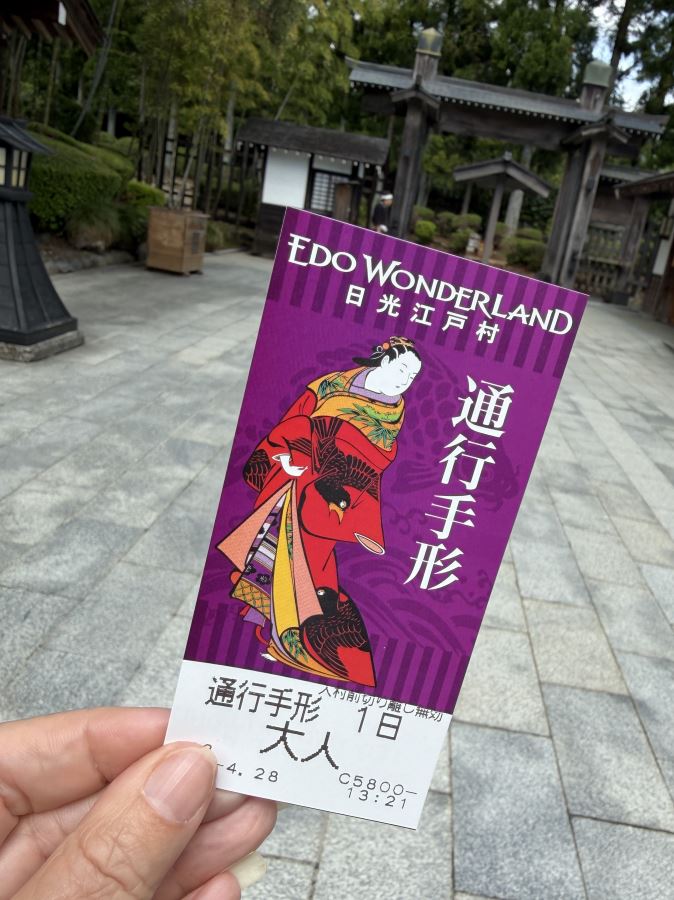
I would give it a wide berth on Japanese public holidays as it will be extremely busy. I was lucky as I went the day before Golden Week started and crowds were low.
You don’t need to book in advance, but if you want to (or to be sure of a spot at weekends), you can book tickets via Klook here.

Who Writes This Blog?
My name is Helen Foster, and I’m a journalist and author. My travel articles have appeared in publications including The Australian, Escape, RAC Horizons, Jetstar Magazine, Sainsbury’s Magazine, and more.
I’ve travelled to Japan nine times before – solo and with my partner and visited over 50 towns and cities. My last visit was in April 2026, so everything here is pretty up to date.