
- How to Spend One Day in Nara - 29 September 2026
- 12 Things That Seem Easy – Until You Try Them in Japan - 23 September 2026
- Is it Worth Paying Extra at Tofuku-Ji? - 16 September 2026
It’s one of the most popular seasons for travel to Japan, but is it really all it’s cracked up to be? Here’s what I thought after my recent visit – and how to decide if it’s the best season to visit for you.
I normally travel to Japan in May or October/November – to me, they are the perfect mix of lower crowds and good weather; however, this year, I wanted to attend a festival in Tokyo taking place on April 5th – Easter weekend. Not wanting to pay exorbitant school holiday flight prices meant I pushed my arrival to March 26 – just as the full bloom of the cherry blossoms was predicted in Tokyo.

Article by Helen Foster. Disclosure: Some links in this post are affiliate links. See our Affiliate Disclosure.
It was stunning. While the ‘official’ cherry blossoms that the bloom announcements are based upon are the very pale pink Somei-yoshino flowers, there are actually 300 different varieties of cherry blossom in Japan, and multiple types and shades are in bloom during the season.
This meant I saw dark pink clusters of blooms alongside snowstorms of delicate pale pink petals flurrying along footpaths. I took all the selfies! There were parks full of people enjoying hanami picnics, lakes full of people paddling swan boats and lantern-lit riverfront walkways glowing beautifully after dark.
It was everything I’d seen in photos.

I even managed to get pictures of Mount Fuji with pretty pink flowers in front of it – my floral identification skills are less than zero, so I’m not specifically naming these ones in case they are plum blossoms or something!
And, talking of Mount Fuji, the clearer skies at this time of year also meant I saw this very shy mountain more times than ever before – from the Shinkansen, from my room at Toy Story Hotel near Disney, from Enoshima, from Mishima and from the base of the mountain itself.
However, despite how beautiful the flowers and the mountain looked, I wouldn’t travel to Japan at this time again.
Here’s why and the seven things I think you might want to take into account if you do decide to travel in cherry blossom season.
1. Prices Increase
Cherry Blossom season is one of the most popular times to visit Japan – especially if it coincides with Easter in other parts of the world. This means that flights and hotel rooms can both be more expensive than normal.
I usually pay about AU$1000 for my flight, but when I booked it for March it cost AU$1395 – and I booked it early. My hotels weren’t too bad because I, again, I booked them six months in advance; they go up a lot more once more people start booking.

If you do decide to go during cherry blossom season, book early.
The sweet spot for booking hotels in Japan is about six months in advance. Before this, you might find a bargain, but you might also find your choices are limited, as a lot of hotels don’t open their dates until six months beforehand. Some smaller hotels won’t start until three months ahead.
If there’s somewhere specific you want to stay, know when they open bookings, and try to grab a room as soon as you see a price you like.
2. It Can Coincide With Spring Break
While the Japanese don’t celebrate Easter per se, their schools do take a break at the end of March, and at this time, the theme parks can get extremely busy. Those videos you see on social media of terrible queues at the Tokyo Disney parks – a lot of those are taken during Spring Break.

If you are planning on combining the theme parks and cherry blossom season, really try to avoid the actual Spring Break dates in the parks.
The exact date varies by year, but you can check it online. In 2026, it was finished by April 6th, so we timed our Disney visit for April 7th, and the queues were back to normal.
3. Crowds Go Up
And not just the international ones – the Japanese love to see cherry blossoms as well.
On my last trip, I was looking forward to exploring the quiet area of Jindai-ji – except when I arrived, it wasn’t so quiet! The botanical gardens here have lovely cherry blossom trees, so a lot of local people had come to see them, and everywhere was busy.

It didn’t spoil my day, but it was a bit unexpected as I’d been hoping to highlight this as a tranquil part of Tokyo where you can escape the crowds!
The most popular cherry blossom spots in Tokyo like Ueno Park, Nakameguro Bridge, Chidorigafuchi (below) or Shinjuku Gyoen Garden are always going to be crowded, but there are some quieter ones if you want to explore. Find a list here. Cherry Blossom Spots in Tokyo With Smaller Crowds – or, just keep your eyes open. Most of the pictures in this post were not taken in the popular spots.
4. Variable Weather
This is the number one reason why I would not travel during cherry blossom season again.
Normally, when I travel to Japan in May, it’s warm and mostly dry – the weather during late March – early April was variable to say the least.

One day, there was a gorgeous blue sky, and I’m in short sleeves, cursing the fact that I put on tights as it said it was only going to be 18 degrees on my weather app; the next, I’m wearing long sleeves under my dress, a leather jacket and a scarf and cursing the icy wind in DisneySea.
And it rained – a lot. Which, quite literally, puts a damper on things. The day I went shrine hopping in Kamakura, I had to give up at 2 pm as I was actually squelching as I walked and was hating everything. However, by mid-April the weather was glorious.
If you’re traveling during peak cherry blossom time, make sure you bring layers – lots of layers.
5. It’s Harder to Pack Light
I have packing for Japan down to a fine art, but because I was expecting colder, wetter weather, I couldn’t go as light as normal on this trip.
My luggage is normally 7kg – it was 10kg on this trip due to thick jackets, scarves, tights, etc.
And that 3kg makes a big difference when moving around hotels.
I do ship my luggage when possible, but I covered a lot of short distances on this trip, so it doesn’t feel worth it for a half-an-hour train journey – until the trip between the platform and the hotel involves six flights of stairs.
If you’re traveling with heavier bags, and going longer distances than I was, shipping luggage can make your journeys much more pleasant. This guide to luggage shipping explains what you need to know.
Need Extra Planning Help?
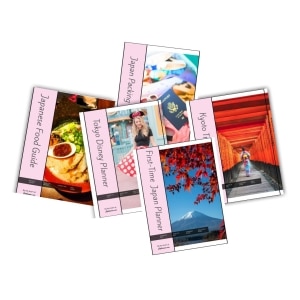
Our Japan trip planners can help. You might like our First-Timers Japan Planner, which will help you plan your trip to Tokyo, Kyoto and Osaka step-by-step, including tips on everything from picking hotels to sightseeing and dining. Or our super-duper Tokyo Disney Planner makes arranging your park trip MUCH easier. Find them in our Planners store – printable and digital versions are available.
6. Shorter Days and Early Closing
In late March, sunset is about 30 minutes earlier than when I normally arrive in Japan.
This did mean I took more night-time shrine photos and atmospheric bar area shots, but it’s also the time of year when some places have slightly shorter opening hours.

Toshogu Shrine in Nikko, for example, closes at 4 pm between November 1st and March 31st, but 5 pm the rest of the year. Kotoku-in, home to the Great Buddha in Kamakura, closes 30 minutes earlier from October to March than it does from April to September.
That might not sound like a big issue, but if you only have one day to visit somewhere, trying to fit it all in when the last entry to a shrine might be at 3.30 isn’t necessarily that easy. The extra time you get when the days are longer does make a difference.
The good news is, even in March it gets light early in the morning, so chances are you’ll be awake early. Shrines with entrance fees may still not open until 9 am, but you can visit some other places early and extend your day that way instead. Our guide to things to do in Tokyo in the morning might help here.
7. It’s Unpredictable
This wasn’t an issue for me as I wasn’t that concerned about seeing the bloom, but it’s a huge one if you are booking your trip around seeing the ‘official’ sakura – and all the festivities that come with it.
You have to remember that the flowering does not happen on a set date – in Tokyo, it’s usually around late March to early April, but the exact date changes a lot from the first predictions.

So you might book yourself a flight only to discover that the bloom starts earlier or later than you expected – or you miss it entirely, as you’ve moved on to Kyoto when it starts in Tokyo.
Keep an eye on the bloom forecast, and if not seeing the blossoms is going to ruin your trip, you might need to be a bit flexible with your plans – even at the last minute. There are a few places that publish the forecast, but I find this one easiest to decipher (you will need to translate it). They start adding cherry blossom news once the forecasts are announced, but remember they can change.
And even once the bloom officially starts, not every tree opens at the same time. We walked past one famous spot near Tokyo Tower on March 28th, and there were no flowers to be seen.
The good news is, when they do bloom, the flowers last around a week – assuming there’s no heavy rainfall – so you do have a few days’ grace for planning things. Also, even if you miss the Somei-yoshino, you might find other cherry blossoms around – and some of them are even prettier, in my opinion.
The pictures in this post were taken in Tokyo, Kawasaki, Gujo Hachiman and Kawaguchiko between March 26 and April 21st, which is quite a big span of time.
In Summary
Even though the things above may seem like small niggles, for me, the negatives of cherry blossom season, compared to my normal experience in Japan, outweighed the positives of being able to see the flowers.
However, I also know that for many people, seeing the sakura in bloom – and all that goes with it is a bucket-list experience, in which case don’t let this article put you off; instead, see it as a way to plan ahead for the slight downsides that can be associated with this extraordinary season in Japan, so you have an even better time when you do visit.
Oh, and one final note before someone complains (because this is the internet and everyone complains) – no flowers were touched during the selfies in this piece. Where my face is close to the flowers, they were single trees on the sides of roads. There was plenty of room to duck under or come in from the side of the trees without touching them, pulling them or moving them in any way. Number one rule of cherry blossom season: do not touch the flowers.
Who Writes This Blog?
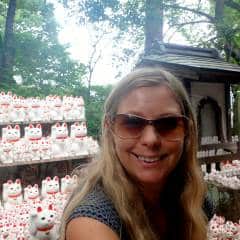
My name is Helen Foster, and I’m a journalist and author. My travel articles have appeared in publications including The Australian, Escape, RAC Horizons, Jetstar Magazine, Sainsbury’s Magazine, and more.
I’ve travelled to Japan nine times before – solo and with my partner and visited over 50 towns and cities. My last visit was in April 2026, so everything here is pretty up to date.

