- How to Watch the Oiran Parade at Edo Wonderland, Nikko - 15 October 2026
- 8 Mistakes Not to Make in Autumn Leaf Season in Japan - 10 October 2026
- How to Spend One Day in Nara - 29 September 2026
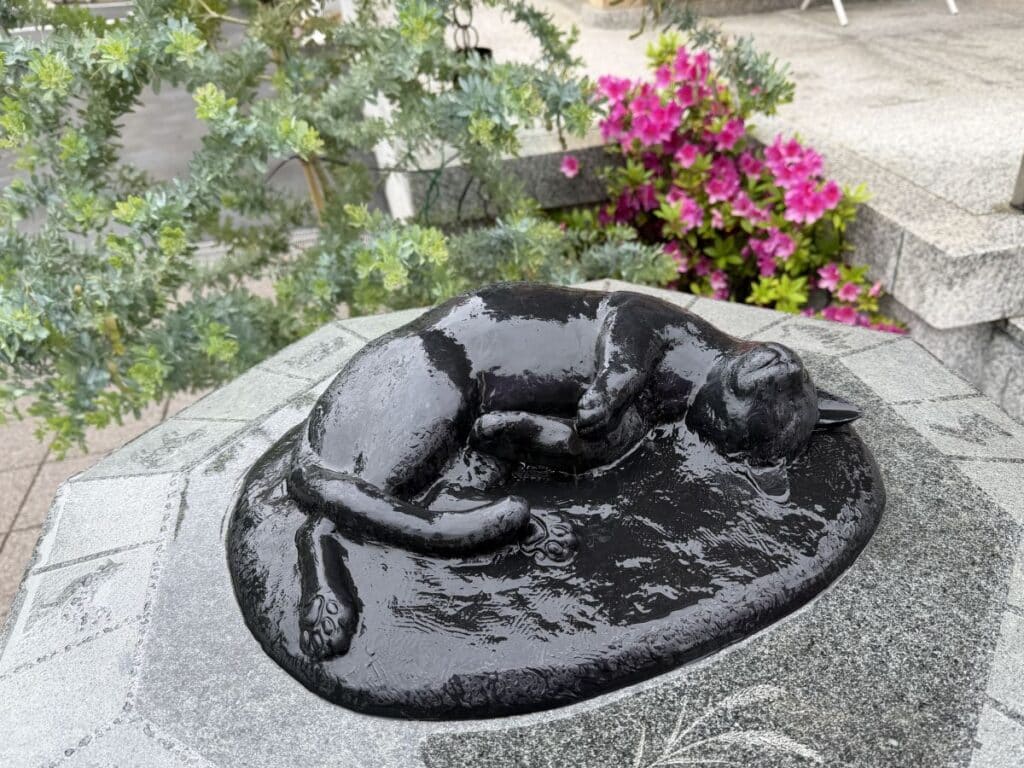
The white cats of Gotoku-ji get all the headlines, but tucked away in a small suburb of Tokyo is a shrine dedicated to black cats. You’ll find cute statues, beautiful goushuin and maybe even a visit from an actual kitty.
Tucked away on a quiet hill just a few minutes from Komagome Station, Komagome Myogi Shrine is one of Tokyo’s cutest, hidden shrines.
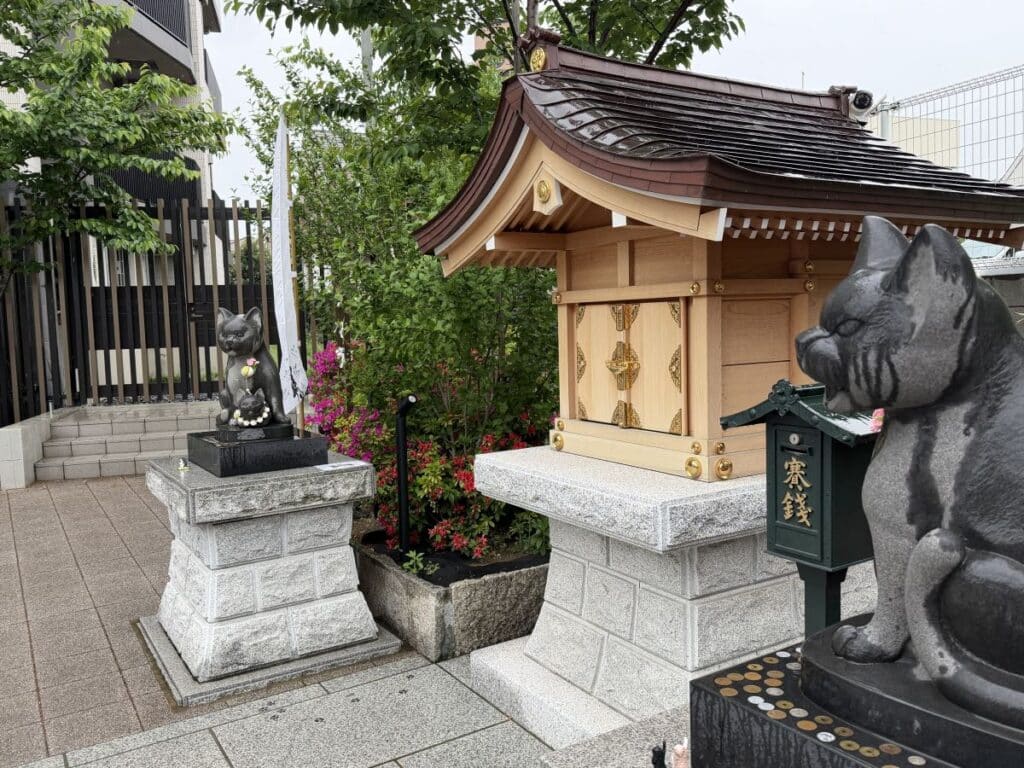
It combines more than 1,300 years of history with a fascinating black cat legend, making it a must-visit for anyone interested in cats, Japanese folklore or unique goshuin.
Why Are There Cats?
The shrine’s feline connection comes from a famous legend involving a samurai named Ota Dokan, who worshipped there.
According to the story, early in his career, Ota Dokan was defeated in battle and forced to flee.
While escaping, he encountered a mysterious black cat. Rather than running away, the cat appeared to guide him to safety. Dokan followed it, successfully escaped his enemies and later rebuilt his strength before winning future battles.
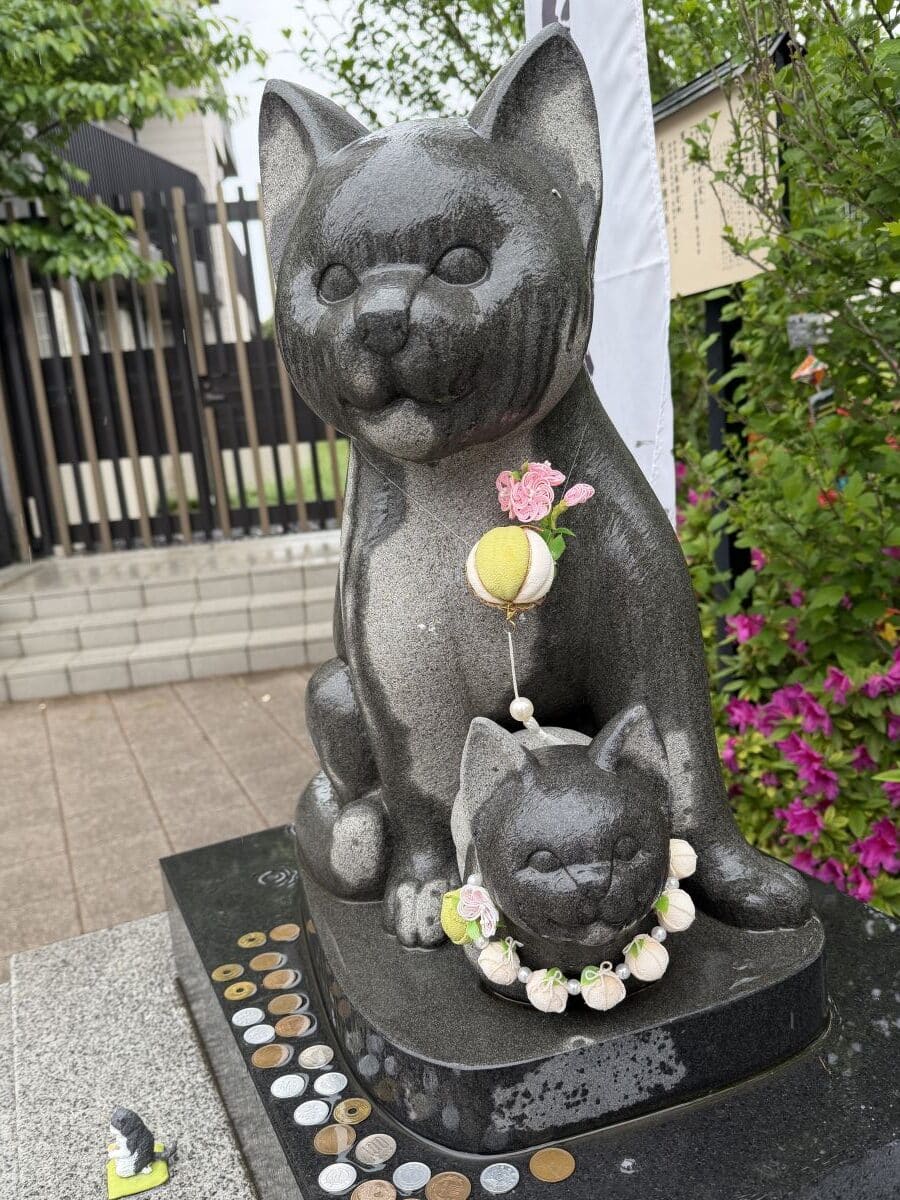
Today, the shrine celebrates this legend with numerous cat statues, cat-themed lucky charms – and some very cool goshuin.
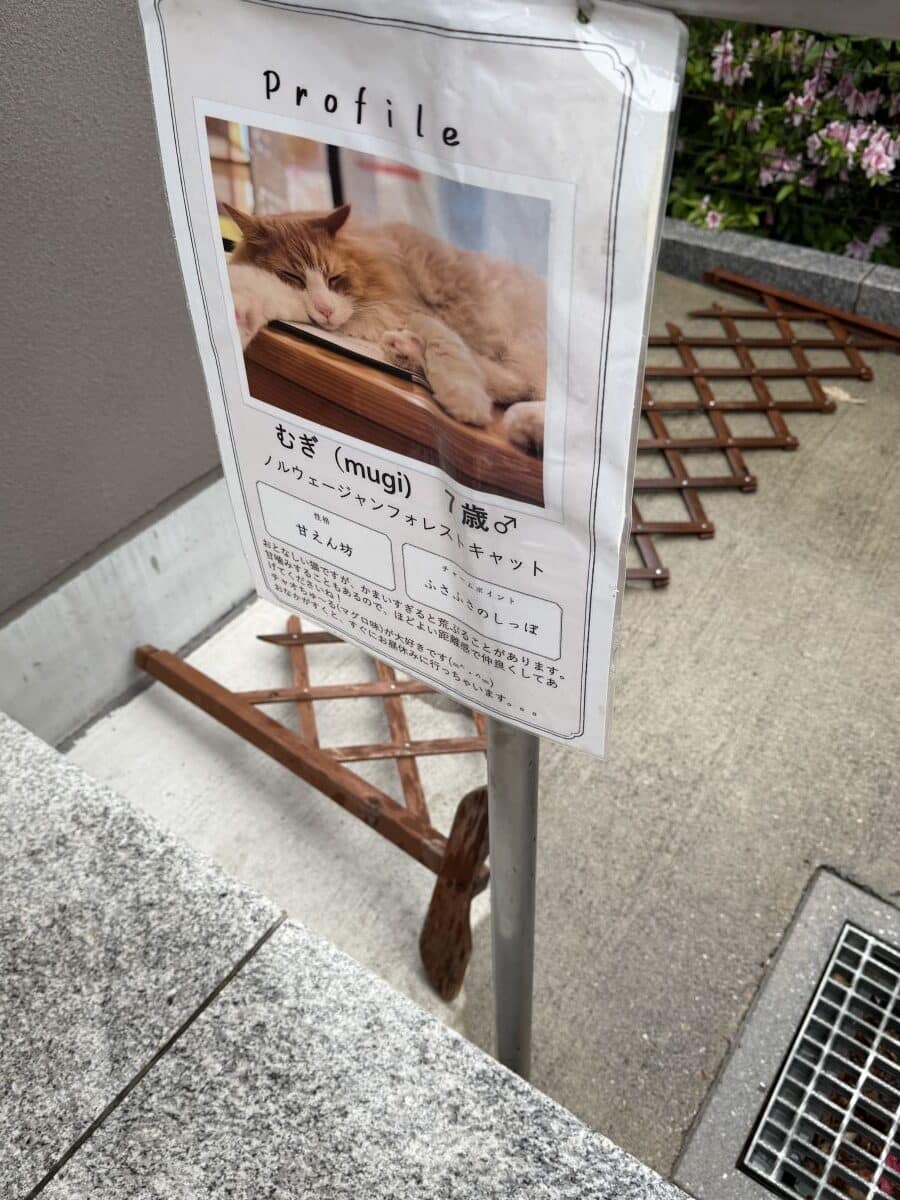
Some real cats also live at the shrine – and I loved that there was a little name and personality board for them. Apparently Muji is 7 years old and very spoiled! He might bite if he gets over-fussed! He likes tuna.
NB: You will also find a statue of Ota Dokan’s famous black cat in the Shinjuku Sumitomo building. And, it’s said that the cat itself is buried at Jishoin Shrine in Shinjuku (this is marked as Muryoji on Google Maps).
The Famous Cat Goshuin
Goshuin are drawn or printed stamps that you can collect at temples around Japan. Many shrines design these to be associated with something unique about the shrine, so not surprisingly, the ones at Komagome Myoji are cat-themed.
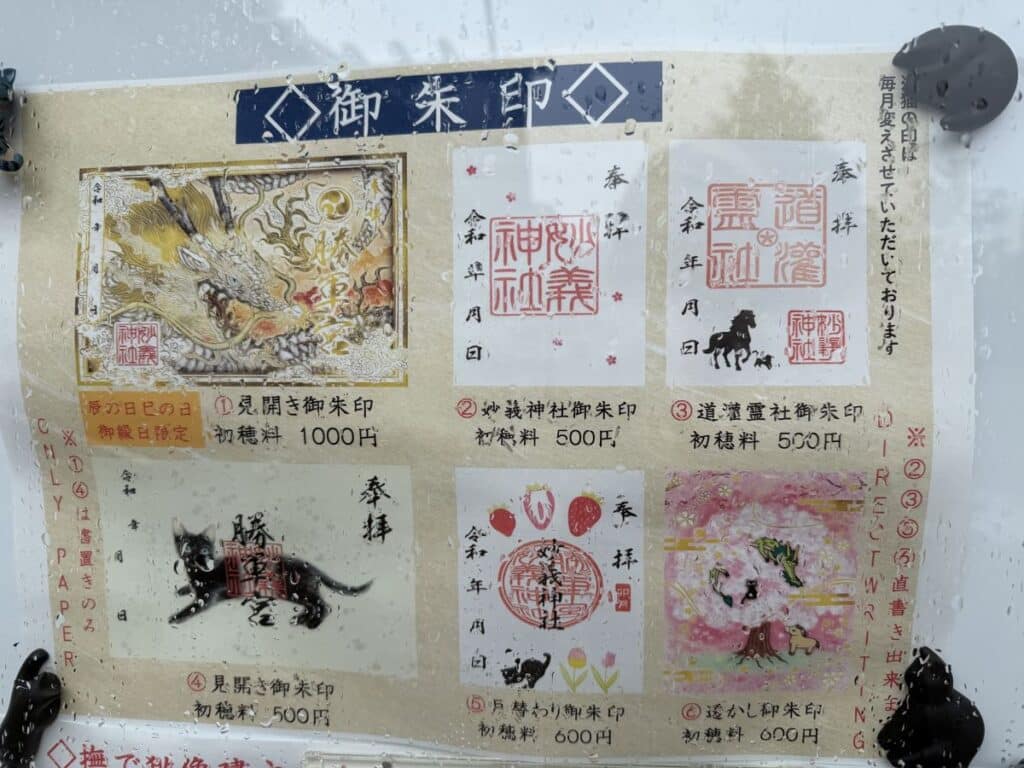
The designs change throughout the year, with seasonal versions celebrating cherry blossom season, hydrangeas, autumn leaves, Christmas, New Year and other festivals. Some are limited editions available only for a few weeks, and there might be a queue when new ones are released as collectors snap them up.
Here are the ones that were available when I visited (on a very rainy day) in April. I bought the double-sized black cat one.
The goshuin books here are also gorgeous. I nearly bought another one! Like the seasonal goshuin, new versions of these can sell out.
Related Read: The guide to collecting goshuin
Even if you don’t collect goshuin, the shrine also sells matching cat-themed omamori (protective charms) and some very pretty ‘stained glass’ amulets.
More Than Just Cats
While the cats are what attract many visitors today, Komagome Myogi Shrine has a much longer history.
Founded around 1,300 years ago, it is considered the oldest shrine in Tokyo’s Toshima Ward and was founded after a Japanese hero camped here before an important battle.
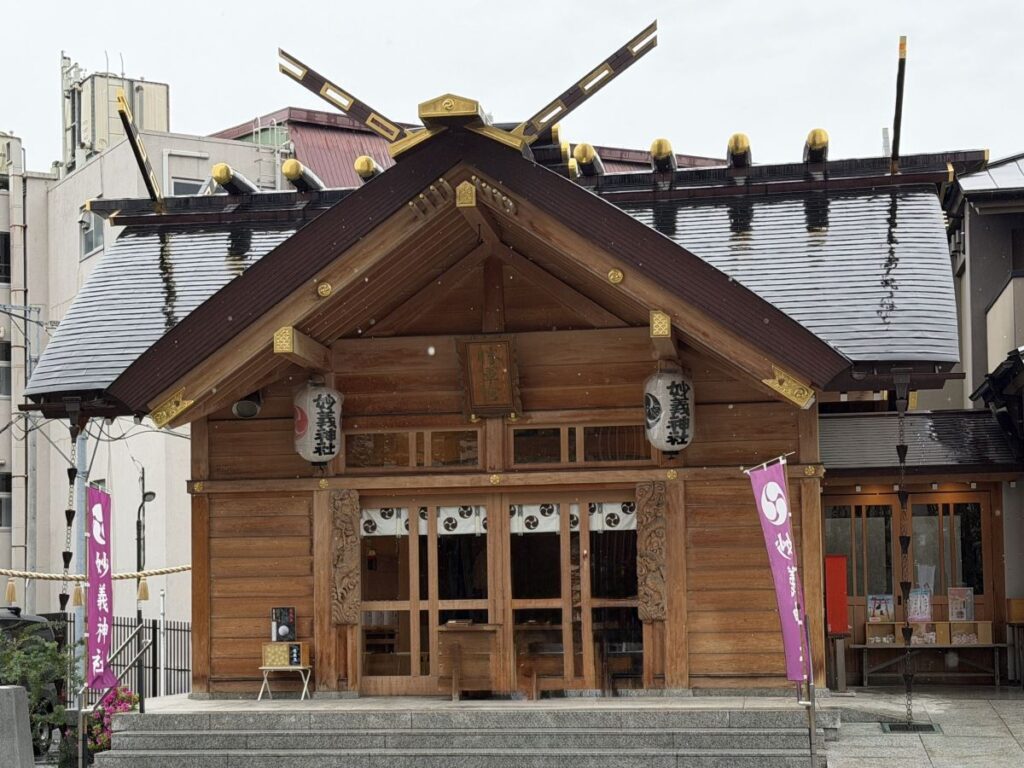
This led to it being visited by other samurai seeking protection before battle, and even now it’s a place people come to pray for victory, success, and overcoming obstacles.
Sadly, much of the shrine has been damaged over the years – some was hit in the Great Kanto Earthquake, others succumbed during air raids in the Second World War, or just to the weather of time, so the buildings were rebuilt to the original designs and reopened in 2020.
The main prayer hall actually looks like a samurai’s helmet. It’s also famous for the dragon carvings on either side of the door.
Because of these carvings, it’s believed to be especially auspicious to pray at the shrine on a ‘day of the dragon’ or a ‘day of the snake’ – they have a list of these on their website.
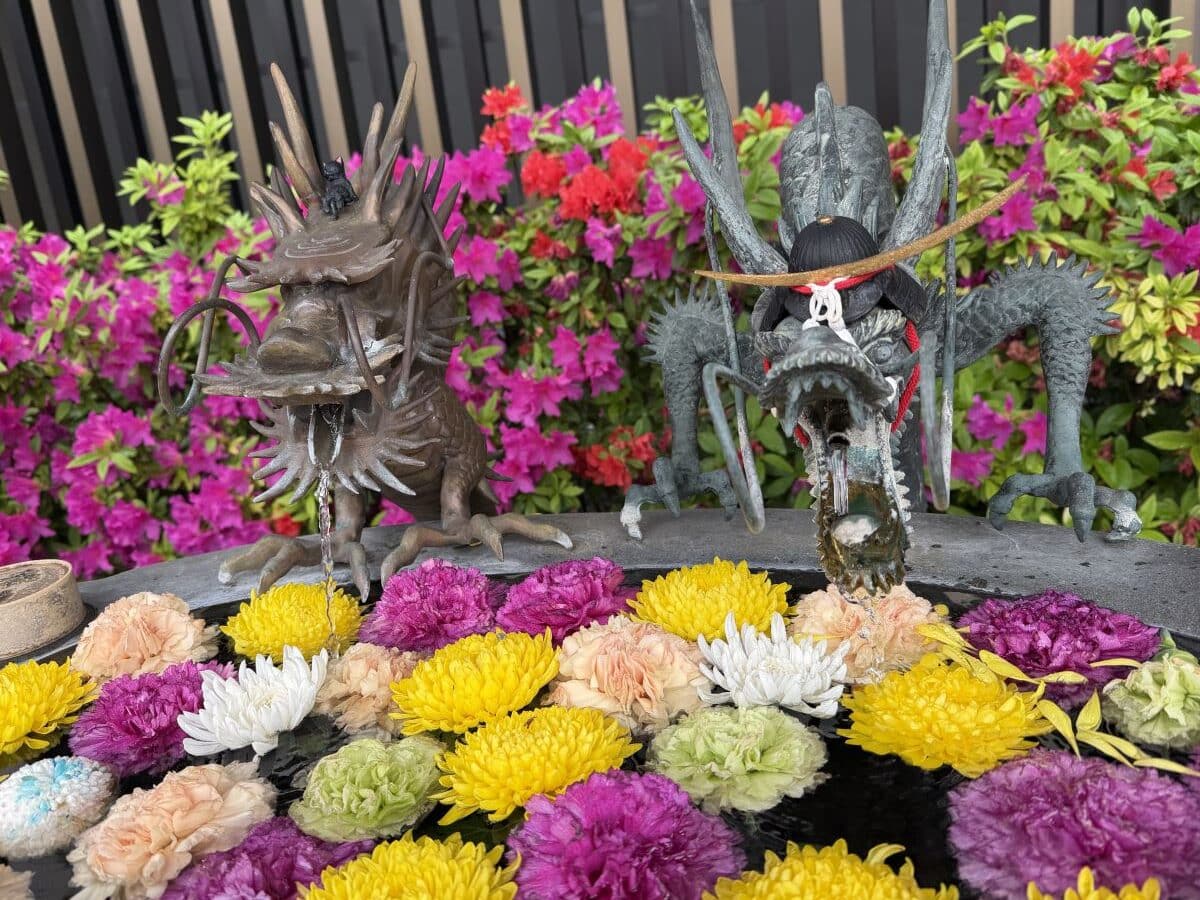
Also, look carefully at the dragons on the water purification fountain – one of them wears a samurai helmet! I think I loved this nearly as much as I loved the cat things. I also only noticed while writing this that the other one has a tiny cat on his head!
You can also buy samurai-themed amulets here.
What’s the Rock?
There’s one final thing to look for when you visit Komagome shrine – this rock topped with a rope.
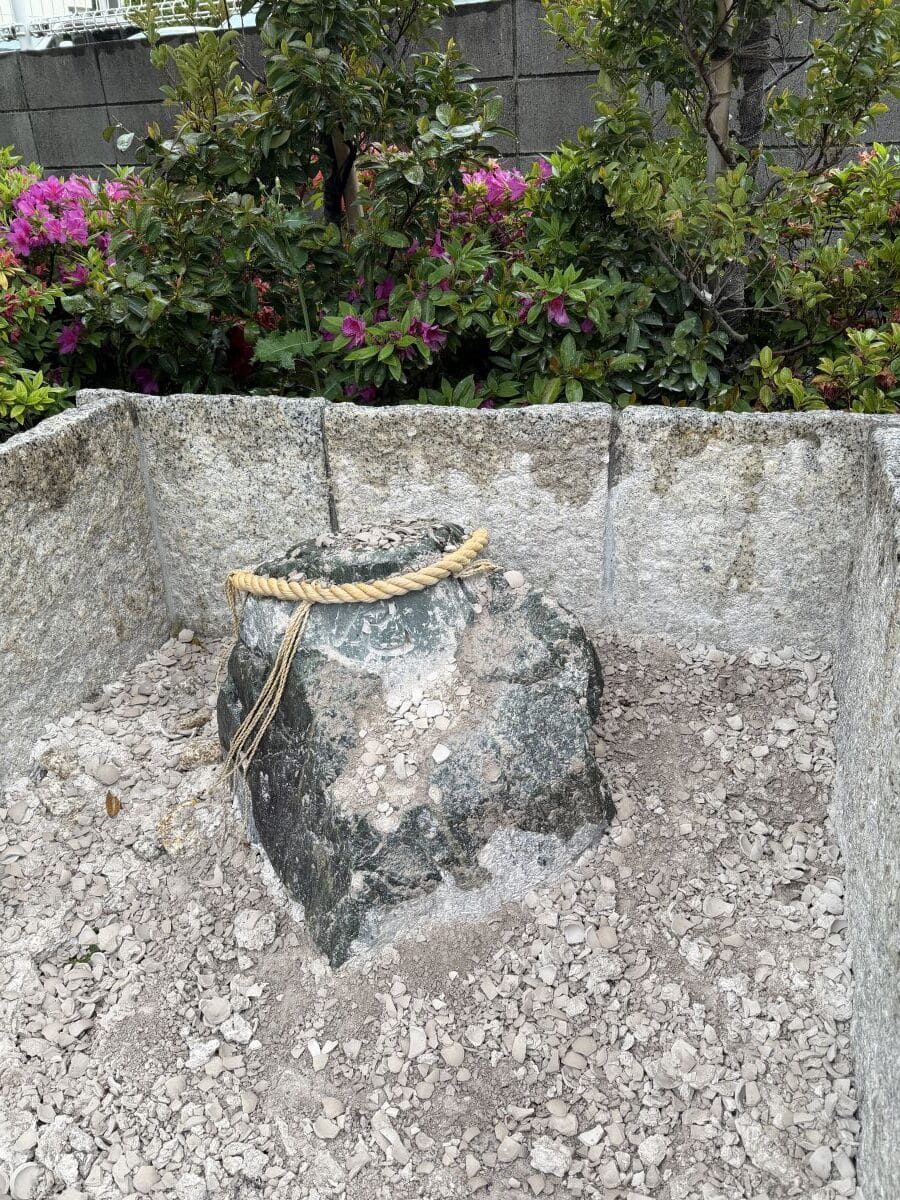
According to a translation of the sign next to it, this is a yakutatsu stone – and, you get to throw things at it to ward off bad luck. Here’s what to do
- At the shrine shop, you can buy clay balls.
- Stand in front of the stone and bow. Now, transfer all the bad energy you want to divest yourself of into the ball by blowing on it.
- Throw the ball at the stone.
- Bow once more.
- Done.
How to Get To Komagome Myogi
The closest station is Komagome Station, which is on the JR Yamanote Line or the Tokyo Metro Namboku Line.
These are the exits you need
- JR Yamanote Line – Komagome Station (North Exit), approximately 5 minutes on foot.
- Tokyo Metro Namboku Line – Komagome Station (Exits 4 or 5), approximately 5 minutes on foot.
Note: If you have mobility issues, the shrine sits on a small hill just off the main road, so the final approach includes a short uphill walk and a flight of stone steps. They do have railings, though.
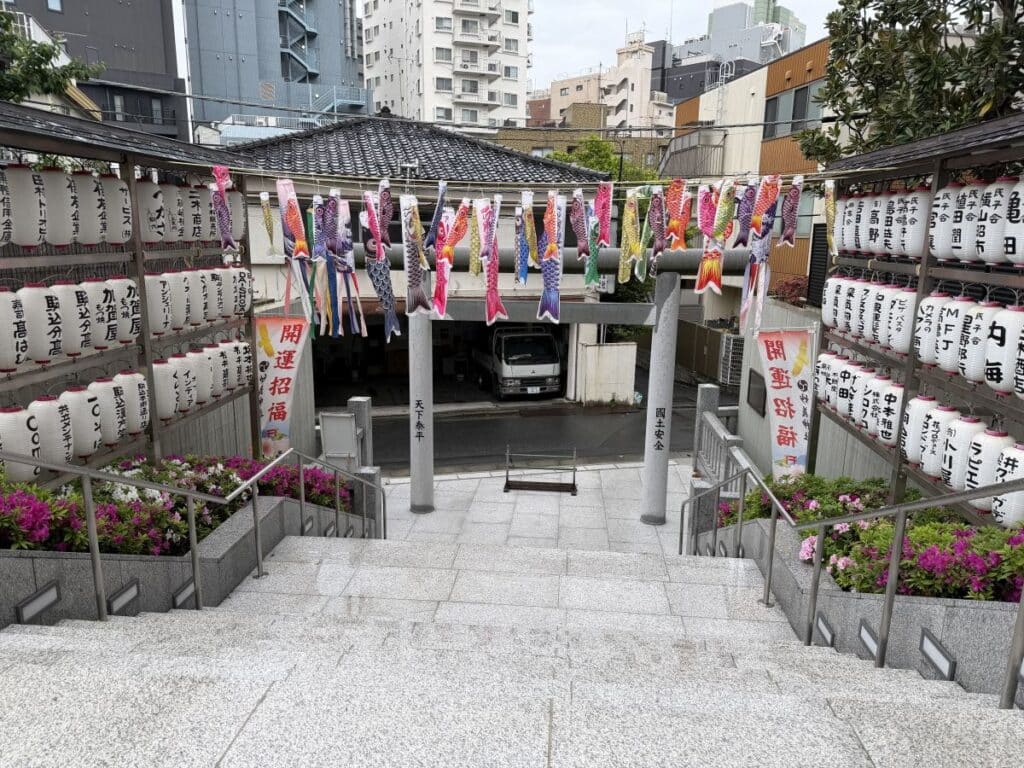
The grounds are open 24 hours a day, but if you want to get a goshuin or one of the other cat-themed charms, you have to visit when the office is open.
It’s open 9 am to 4 pm with a lunch break between 12 pm and 1 pm five days a week. They are closed on Tuesday and Wednesday.
The shrine is small enough to explore in around 20 to 40 minutes.
Is it Worth Visiting?
For cat fans and goushin collectors, absolutely.
Also, when I was here, I got a call saying Mr Japlanease had finally been given a date for his Australian citizenship ceremony, which had definitely been a journey full of obstacles. Coincidence, or catintervention? You decide!
I came here after spending a couple of hours wandering the cute old area of Sugamo, which is also worth a visit.
It’s also fairly near Yanaka Ginza, which is also famous for cat-themed snacks and souvenirs.

Who Writes This Blog?
My name is Helen Foster, and I’m a journalist and author. My travel articles have appeared in publications including The Australian, Escape, RAC Horizons, Jetstar Magazine, Sainsbury’s Magazine, and more.
I’ve travelled to Japan nine times before – solo and with my partner and visited over 50 towns and cities. My last visit was in April 2026, so everything here is pretty up to date.