
- Is Saiko Iyashi-no-Sato Nenba Worth It? - 21 November 2026
- How to Get Around Lake Kawaguchiko - 19 November 2026
- 15 Perfect Gifts for Japan Travellers or Japan Lovers - 12 November 2026
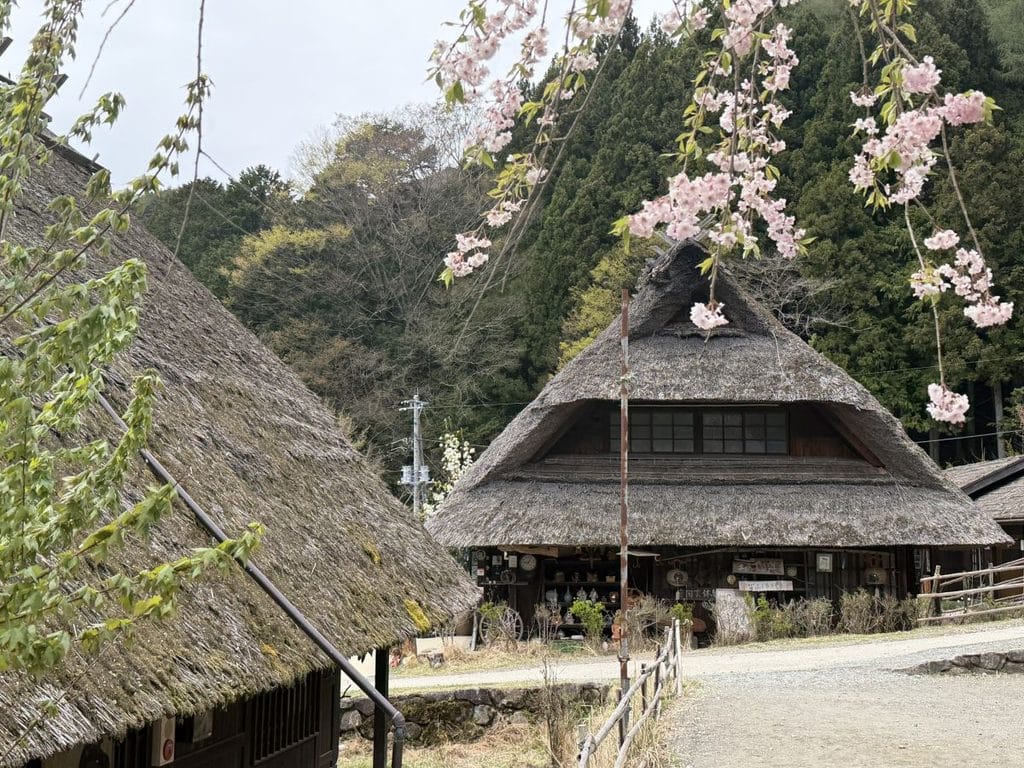
It’s not on every tourist’s itinerary when they visit Kawaguchiko, but, the thatched roof village of Saiko Iyashi-no-Sato Nenba near Mount Fuji, also known as the ‘Healing Village’ is a delight. It’s got picture perfect views when Mount Fuji is visible – and heaps to do when it’s not. Here’s what you need to know…
Article by Helen Foster. Disclosure: Some links in this post are affiliate links. See our Affiliate Disclosure.
What is Saiko Iyashi-no-Sato Nenba?
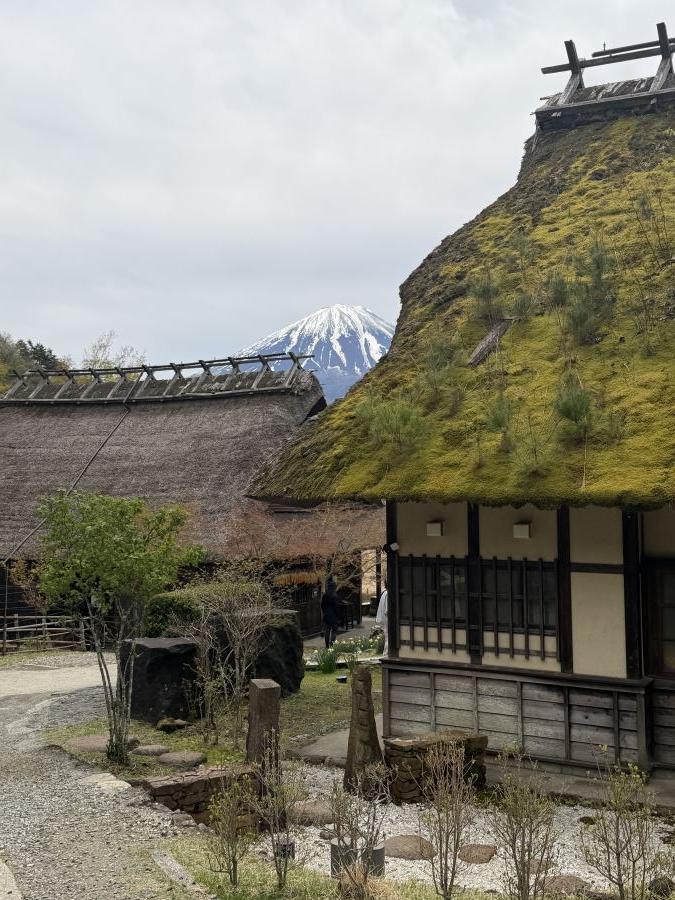
At first glance you might assume this an old traditional village of thatched roof houses tucked away at the base of Mount Fuji, and you’d kind of be right – that’s what it used to be.
In fact, this cluster of pointy topped homes was hailed as one of the prettiest villages in Japan, until on September 25th 1966, after days of heavy typhoon rain, a mudslide hit the village wiping it out.
Almost all of the village’s 41 traditional houses were destroyed and 94 people were killed or went missing.
Decades later it was decided that the village should be rebuilt as it was – but not as somewhere to live, instead as a place to show visitors what it was like to live here, and to showcase the old crafts and explain the history of the settlement that used to be here.
Today, this reconstructed village is made up of around 20 traditional thatched houses made to traditional old designs and using old timber. Inside them you’ll find small museums, craft workshops, shops and places to eat.
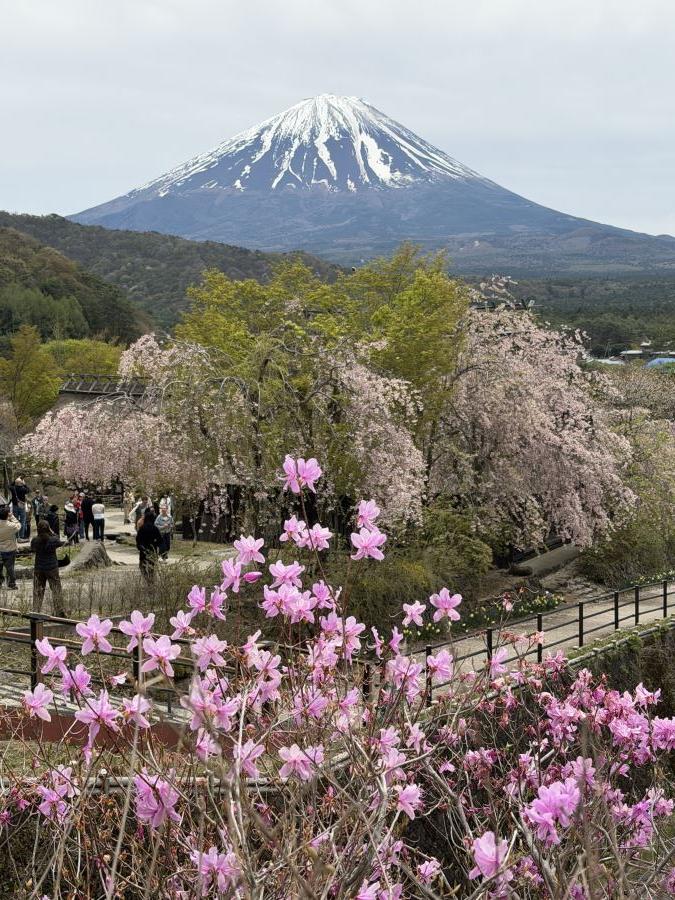
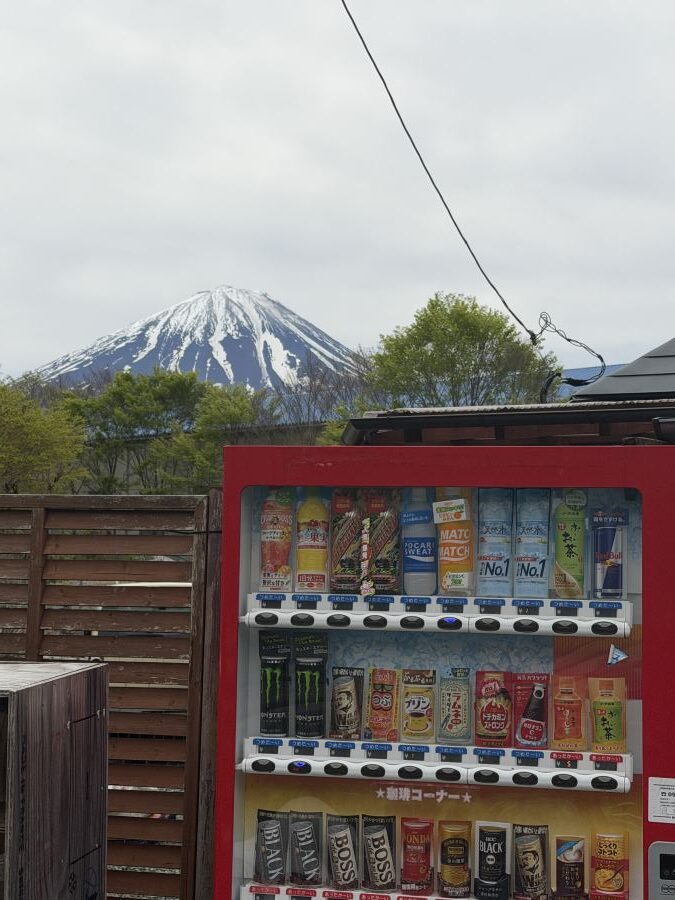
And if you’re lucky and the mountain is visible, you’ll get to do all this with jaw-dropping views of Mount Fuji in the distance. Like this one taken from inside the village.
What is Inside Saiko Iyashi-no-Sato Nenba?
The village is a mix of museum – and shoppers paradise!
Each of the pretty houses is different inside – you’ll find shops, restaurants, craft studios plus one home houses a museum explaining exactly what happened on that fateful day in 1966 and how the village has overcome it – and been made safe today.
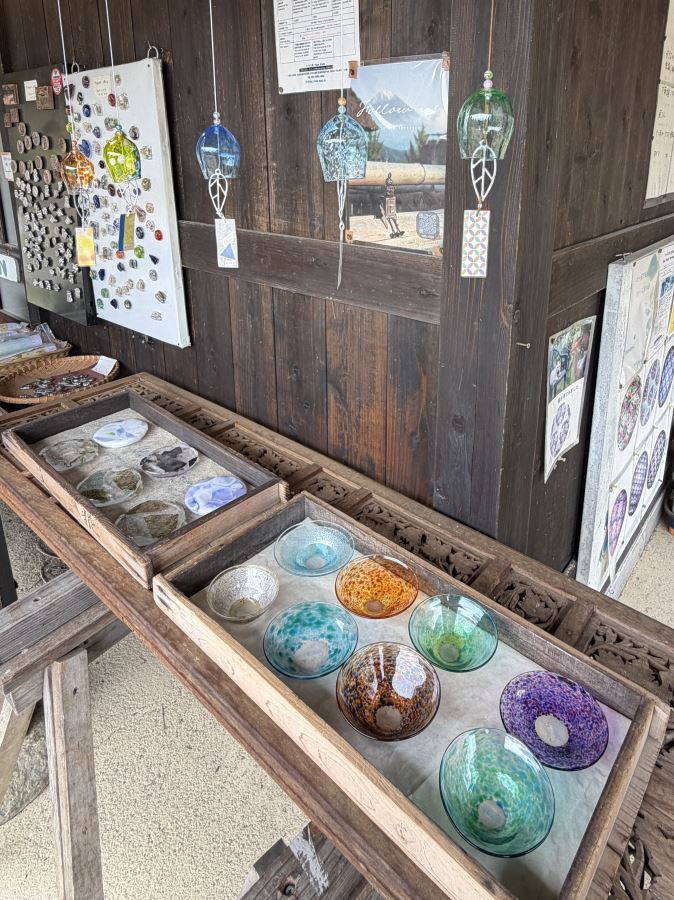
Several of the houses have been converted into craft studios where you can make your own versions of some traditionally Japanese crafts. The list of things you can create is long, but includes incense, kaladeiscopes, handpainted silk bags, pottery, furoshiki wrapping and much more. Find a full list here.
If that’s not your thing, or time is tight though, don’t worry – you can also buy crafts at each of the stores. There are so many unique designs here – I loved these demon portraits.
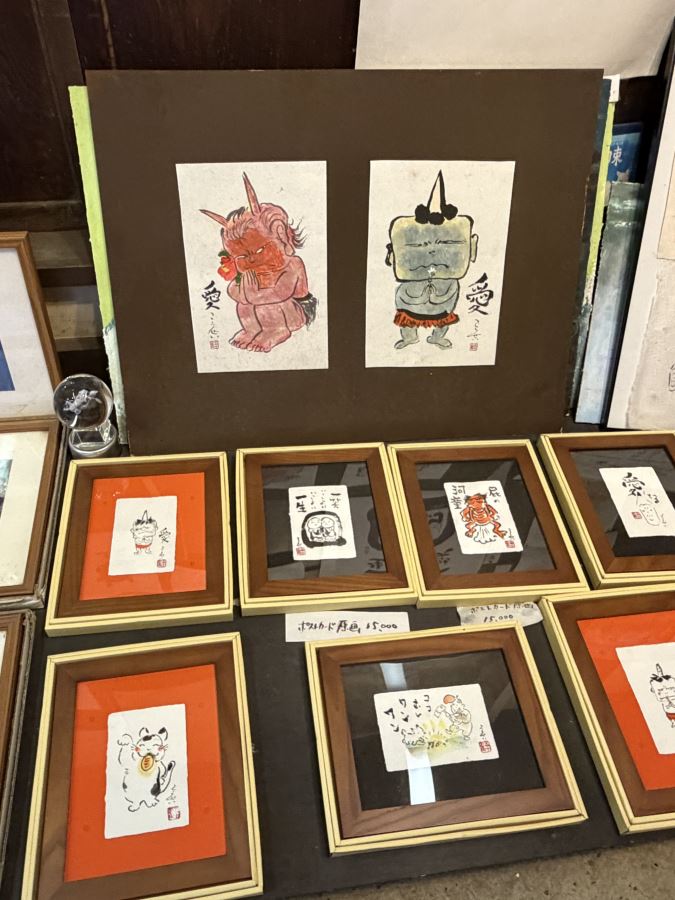
I’ve been to a lot of pretty shopping streets in Japan where every shop is selling the same three things, but that is definitely not the case at Saiko Iyashi-no-Sato Nenba.
And the really lovely thing about it is you don’t really know what you are going to find inside the building until you open the door.
Lastly, you aren’t going to go hungry here either. There are two restaurants on site, one selling soba and one noodle dishes like Hotou, the local Fuji speciality. There is also a tea room. You’ll also find restaurants and snack stalls around the parking and bus stop area.
Renting Kimono and Samurai Armour
It’s kind of fitting that it’s said that the rooftops of the houses in the village were designed to look like a samurai helmets, as dressing up as a samurai or in a kimono is one of the most popular things to do at Saiko Iyashi-no-Sato Nenba.
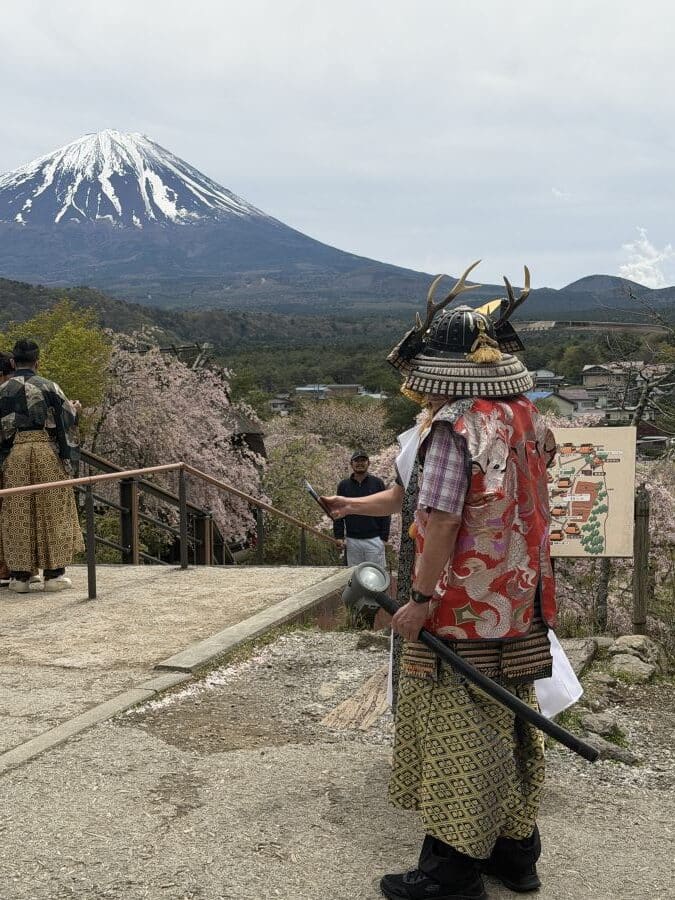
It costs ¥2000 to hire and outfit (they don’t do hair styling or make up) and once you’ve donned your outfit of choice you can wander around the village with the perfect backdrop of atmospheric old houses – and, Mount Fuji presiding over the proceedings.
You do need to book your outfit in advance, so make sure you check the weather, and a Fuji visiblity calendar to try and get the best backdrop for your photos.
Don’t Miss This Detour
Lake Kawaguchiko may be the most famous lake for most tourists around here, but the region is actually known as Fuji Five Lakes because there are, erm five lakes – and Saiko Iyashi-no-Sato Nenba is a short walk away from another one of them – Lake Saiko, which can have a beautiful view of Mount Fuji.
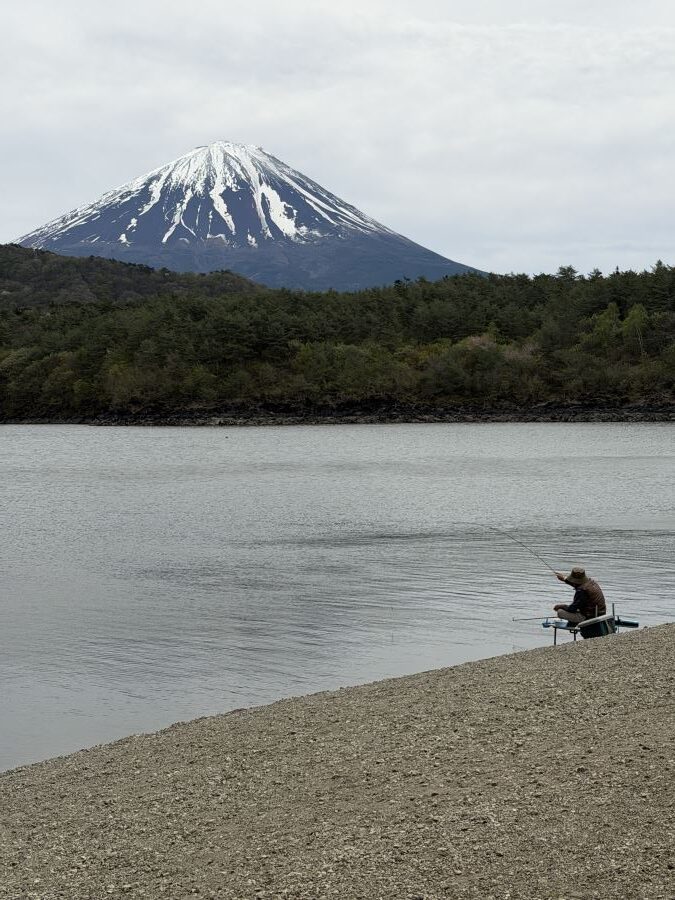
The day I went the shores were lined only by locals having a day out fishing and it was absolutely gorgeous.
To get here follow the road to the east from the park. The lake is about an eight minute walk.
Related Read: This view of Lake Saiko is in my guide to where to take the prettiest pictures of Mount Fuji.
Is Saiko Iyashi-no-Sato Nemba Worth Visiting?
It was one of the highlights of this trip to Kawaguchiko for me.
I admit, I don’t really like visiting a lot of Kawaguchiko. It’s very, very crowded and it’s one of the only places in Japan I have ever felt unwanted as a tourist. But, up here is like another world. And the views of Mount Fuji are gorgeous.
I loved wandering around the houses and seeing what beautiful things people had made and the guys in the samurai armour having the time of their life made my day.
The museum about the mudslide was also fascinating.
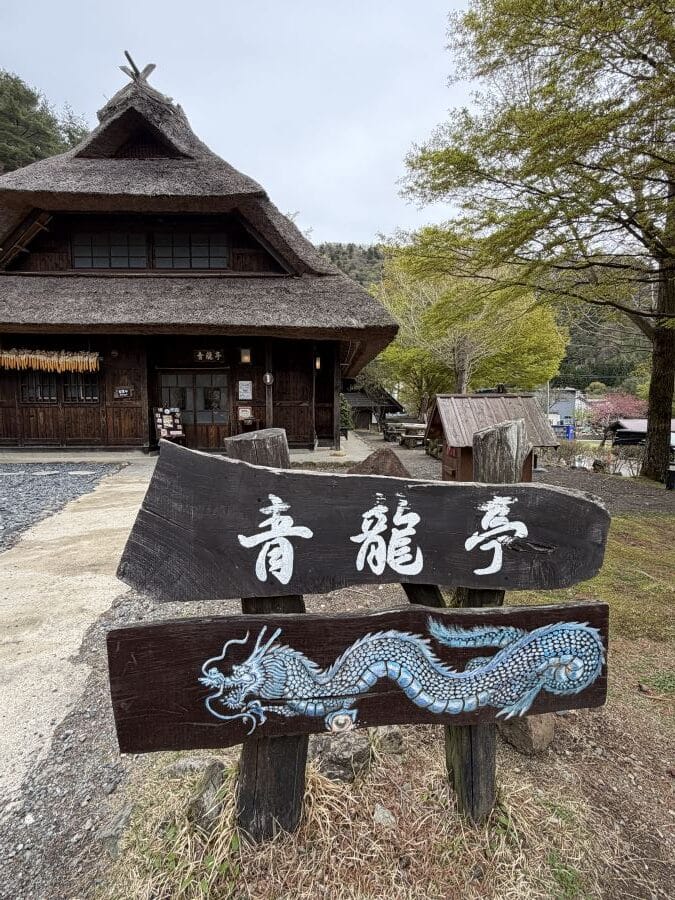
The walk to Saiko Lake and seeing that beautiful image was the icing on the cake.
If you’re looking for an activity away from the really crowded Mount Fuji sights, I’d definitely say to come here. It’s also a great half day trip if you’re staying in the region for a couple of days. Even the bus journey is pretty.
Entry Details
There is a fee to visit Saiko Iyashi-no-Sato Nenba, but it’s pretty cheap. Adults (and children high school age and above) pay ¥500, younger children (elementary and junior high school students) pay ¥250, toddlers and babies visit free.
Opening hours depend on the time of year –
March to November: 9 am to 5 pm.
December to February: 9.30 am to 4.30 pm.
Last admission is 30 minutes before closing, but you need longer than that to really make the most of it. I’d say you need to spend at least two hours here – more if you are a big shopper or want to try the dress up service or craft classes.
You do not need to book admission tickets in advance, just buy them at the entry booth when you arrive, but remember that the samurai/kimono experience and, ideally, the craft workshops should be booked in advance.
How to get to Saiko Iyashi-no-Sato Nenba from Kawaguchiko Station
While the village is around 12km away from Kawaguchiko Station, it’s very easy to get here. The Saiko Sightseeing Bus, also known as the Green Line, will bring you straight here from Kawaguchiko Station.
The bus runs every 30 minutes and it costs ¥810 each way to get to the Saiko Iyashi-no-Sato Nenba stop.
If you are coming out here, you might want to pick up the Mount Fuji North Area Pass at Kawaguchiko Station. This costs 1500 yen for one day (or 2000 yen for two) – so, you’ll cover your costs easily with this round trip alone.
The journey takes approximately 40 minutes, depending on traffic. The bus stop is just a short walk from the village entrance. you get the bus back at the same spot. If you are driving, there is free parking at the village.
Related Read: How to Get Around Lake Kawaguchiko.
Is This the Same As Saiko Iyashi-no-Sato Nemba?
Yes, the village is known by quite a few names on maps and colloquially – you might also see it called “Iyashi no Sato” and “Iyashi no Sato Kawaguchiko” (the short forms most travellers use) or even the “Healing Village Mt Fuji.” They are all the same cool place.
I admit that when I first saw the name Healing Village, I assumed it was something to do with herbs, but it’s not. Iyashi no Sato simply translates to healing village in Japanese. I can’t find a reason why it’s called this, but I like to think it’s to do with how the rebuilt village has helped the village recover after the destruction of 1966.
Should You Visit Saiko Iyashi-no-Sato Nemba or Shirakawa-go?
Apparently, lots of people ask which of these two they should visit. I’m not sure it’s a fair comparison as Shirakawago (bottom picture below) is still a living, working village, as well as a tourist attraction so I think they offer different experiences.
Having been to both, I would say Shirakawago is something you visit to explore Japanese life, while Saiko Iyashi-no-Sato Nemba (upper picture below) is somewhere you go to see Japanese crafts and culture.
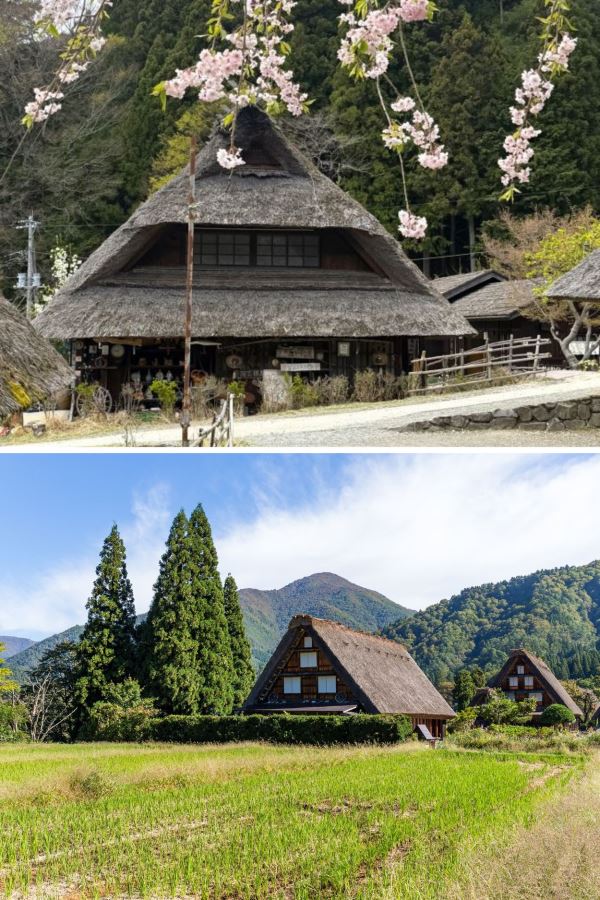
Of the two, Saiko Iyashi-no-Sato Nemba is less crowded – it’s still a little bit off the tourist radar while Shirakawago is very much on it with bus loads of tourists arriving every day.
The other huge difference between them is location – Shirakawa-go is nestled deep in the Japanese alps between Kanawaza and Takayama, while Saiko Iyashi-no-Sato Nemba is an easy day trip from Tokyo and easily built into a visit to see Mount Fuji.
If I had to choose between the two, I would choose Shirakawa-go for the authenticity – but getting there early before the hoards arrive. I did make some mistakes on my trip that spoiled my day a bit, so make sure you read my guide to what I wish I’d known before visiting Shirakawago so you don’t do the same.
I did love my day at Saiko Iyashi-no-Sato Nemba though.
Saiko Iyashi-no-Sato Nemba vs Hida No Sato
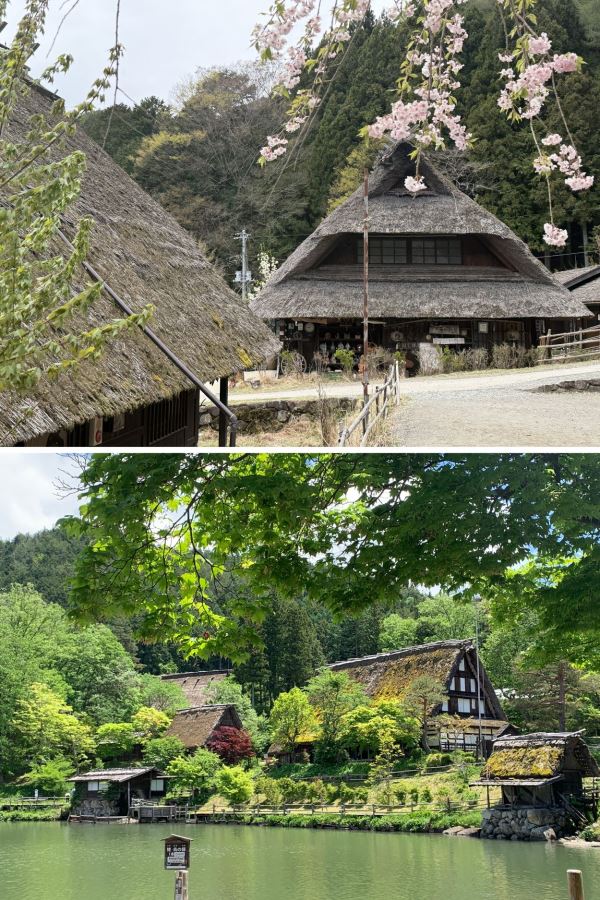
Hida no Sato (the lower of the two images) is a reconstructed village close to Takayama so you might be wondering whether you should visit both – or which one to pick if you don’t have time to do both.
I think this is a much more valid comparison than against Shirakawa-go as both Saiko Iyashi-no-Sato Nemba and Hida no Sato are reconstructed villages close to major tourist attractions. Again, I have been to both and while they might look similar in pictures, there are some clear differences between them.
Hida No Sato consists of 30 old buildings moved onto the site from locations around the Hida region. The aim of the village is to preserve the architecture of the region and visiting here is very much about seeing and learning about the buildings themselves, rather than what’s inside them.
There’s a great variety of buildings at Hida no Sato – everything from pointy gassho style houses to an old farmhouse that survived an earthquake because of it’s unique design.
You can do some craft classes at Hida no Sato (like making one of the sarubobo dolls that are the mascot of Takayama), but there aren’t as many offerings at at the Healing Village. There’s also not a lot to buy at Hido no Sato. If you are here for the crafts, do to Saiko Iyashi-no-Sato Nenba
I think Hida No Sato is better for children – there are some traditional Japanese games to play near the entrance and also it’s far more suited to running around the space – the village at Saiko Iyashi-no-Sato Nemba feels more compact, and a lot of the things inside the houses are breakable!
Again, their locations are very different – Hida no Sato is just outside Takayama, while Saiko Iyashi-no-Sato Nemba is closer to Tokyo.
And I think that’s everything you need to know about visiting Saiko Iyashi-no-Sato Nenba, the healing village near Mount Fuji. If you have time to visit, I would definitely recommend it.
Who Writes This Blog?
My name is Helen Foster, and I’m a journalist and author. My travel articles have appeared in publications including The Australian, Escape, RAC Horizons, Jetstar Magazine, Sainsbury’s Magazine, and more.
I’ve travelled to Japan nine times before – solo and with my partner and visited over 50 towns and cities. My last visit was in April 2026, so everything here is pretty up to date.