
- How Long Should You Spend in Nara? - 12 February 2026
- Where to Stay in Hiroshima - 10 February 2026
- What to Wear in Japan: 15 Common Questions Answered - 9 February 2026
The fish may have swum off to pastures new, but, does this mean you’ll still want to visit Tsukiji Market? The answer, as far as we’re concerned anyway, is a big fat yes. There are still a lot of cool sights to see at the Tsukiji Outer Market.
On October the 6th 2018, a huge change occurred in Tokyo – the famous Tsukiji Fish Market closed forever.
The market was best known for its famous morning tuna auction that had become one of the must-see-attractions in Tokyo but there was more to the site than just the fishy bit – and if you have any interest in Japanese food (fish-based or otherwise), love to take photographs or just want to see a historic part of local life then you’re going to want to add what’s known as the Tsukiji Outer Market to your list of must-see Tokyo sights (it’s already on our top 10 here).

- What is Tsukiji Outer Market?
- What Will You Find There?
- Is It Worth Taking a Tour of Tsukiji Market?
- Are There Any Fish at Tsukiji Outer Market?
- Don’t Miss The Shrines
- Remember The Rules
- Where to Eat at Tsukiji Market
- Tsukiji Outer Market Opening Hours
- Closest Stations
- The New Tsukiji – Toyosu Fish Market
- Are There Tuna Auctions at Toyosu Fish Market?
- Can I Book a Guided Tour of Toyosu Fish Market?
- Eating at Toyosu
What is Tsukiji Outer Market?
It might surprise you to find out that Tsukiji Market even had more than one part. After all, the part selling all things scaly, flippered, and tentacled, got all the attention,
However, the fish part of Tsukiji was officially known as the Inner Market, and surrounding it was the Outer Market, a fantastic rabbit warren of streets packed with shops, stalls, and restaurants selling all manner of epicurean excitement.
Four times I’ve been to Tokyo, three times I’ve spent hours getting lost in the market (and the other time I only didn’t go as I had one day after a cruise and it was closed by the time I got off the ship) and every time visiting Tsukiji Outer Market has been one of the highlights of my trip.
And not only is that area still most definitely open for business, but it now also includes two new(ish) shiny three-storey buildings selling fresh fish to chefs and shoppers alike.
Tsukiji is therefore still an absolutely must-stop in Tokyo.
What Will You Find There?
There are over 100 different stalls, shops, and restaurants at the Tsukiji Outer Market and it caters to both the restaurant trade, hungry tourists, and locals doing their shopping.
The Tsukiji website says there are three ways to enjoy the market – shop, eat, and experience and, that sums it up pretty nicely.
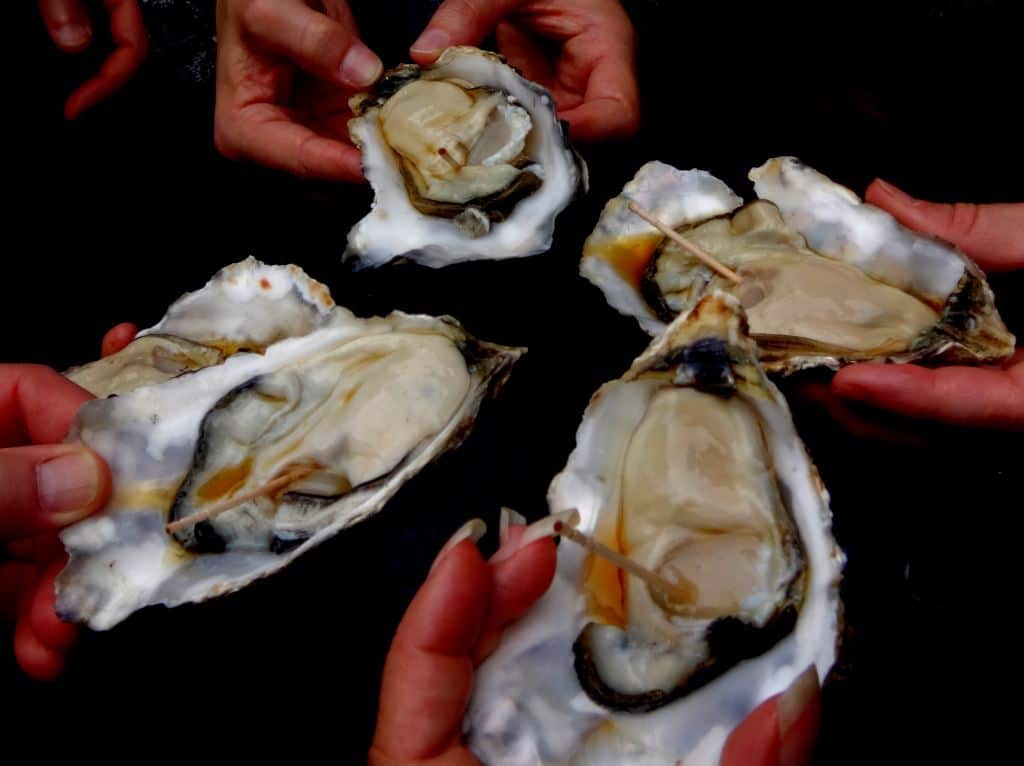
From the stall selling dried fish that decorates its interior with giant taxidermied animals (why? What’s a massive bear got to do with fish, except they eat them too?), to oysters as big as your palm that cost just 700 yen, you’ll wander around Tsukiji Outer Market alternating between having your mouth open in awe and filling it full of amazing food.
You want to see tuna, they have it – in giant slabs, in tiny pieces, or just heads – giant, shiny, silver heads (I particularly liked the stall with a big sign above one of these saying ‘this is recommended as a gift’ – because nothing says ‘I love you’ like a giant fish head).
I’ve breakfasted on the freshest sashimi here (there’s a pic of that below) and yes, while there’s a lot of fish, both raw, grilled, and freshly blowtorched, that’s not all you’ll find to try.
I’ve also eaten the most enormous snail I’ve ever seen here – the first bite was the stuff of legend. Earthy, meaty yet with a creamy taste I’ve never been able to replicate anywhere else – admittedly the last mouthful tasted more like dirt, but oh my goodness that first bite.

A small salty drink placed into my hand turned out to be the most incredible dashi which explains why miso tastes so bad when you make it at home, yet so utterly moreish when you have it in Japan.
I’ve watched guys make omelette, after omelette, after omelette to keep up with the never-ending queue of people in front of their stall.
And I’ve met people working behind those stalls who are absolutely passionate about what they sell and why you should try it – unlike the old Fish Market where, by the time it closed, the stallholders had (understandably) grown tired of the hoards of visitors getting in the way of business.
Here you get smiled at, not scowled at!
The new Tsukiji is aiming to embrace visitors. The new website lists all the stalls in English so you know what type of thing you might find and if you’re not sure what that might be, they also have a handy introductory guide to the type of things on sale.
And lastly, you’ll find a list of the restaurants that you might find there and what they specialize in.
Is It Worth Taking a Tour of Tsukiji Market?
Absolutely.
I’d been through the market a few times solo. The first time was all about eating possibly the world’s freshest sushi for breakfast and taking 400 photographs of fish.
The second time I got braver and tried things like that giant snail, but on my third trip I wanted to understand more about the things I was seeing as well as taste them, so I booked this Tsujiki Fish Market Tour
It was a great introduction to the market and the best it has to offer – particularly some of the areas that had been added since the last time I was here.
Not only do you understand more about what’s being sold, but you’ll hear the stories of the stalls in the market that you visit – many of which are family-owned and serving the market customers for years.
For a couple of hours, we wandered the market learning about the items for sale and the stalls – we tasted the omelet below (after having a sneak peek backstage) and I learned that while you might think that each omelet sold in the market might look the same, every stall has a secret recipe that makes theirs special and that some even add sugar or sake to the mix.

Delicious fish cakes were delivered fresh off the griddle and some huge oysters (that you’ll also see below) were shucked for us and then knocked back in seconds.
Samples kept coming delivering the realisation that Fried Pond Smelt is not something I ever need to eat again – but that Fish Spines in toffee are quite the delicious snack.
Lastly, I learned that ninjas used to eat dry soybeans to keep their energy up – sadly, I’d be a rubbish Ninja as they make me cough (which is a shame as I got a bit of a taste for them).
While it’s possible to enjoy Tsukiji without taking a tour, if you really want to enjoy the market, I’d absolutely suggest booking in – especially if you think you might get a bit intimidated ordering from the stalls on your own.
You might also want to look at the tours and other Tsukiji experiences at By Food, a specialist foodie and cooking tour operator in Japan. See what they have here (search Tsukiji).
Nibbling your way around the market is one of the best ways to enjoy it and, this way, someone else has done the choosing and the ordering for you – and if there’s anything else you like the look of, they can help you order that too (although of course you’ll have to pay a little bit extra if you go off menu.)
Are There Any Fish at Tsukiji Outer Market?
If you’ve come to Tsukiji to see fish, you also won’t be disappointed as there are still fish stalls in the Tsujiki Outer Market, particularly the new buildings towards the Namiyoke Inari Jinja Shrine.
These buildings house the wholesalers who didn’t want to move to the new market and, while they are still selling to locals and chefs, many stalls offer takeout of some of the freshest fish you’ll find anywhere which you can take up to the dining area on the 3rd floor of the building to consume.
The tuna auction has gone, but you’ll still see the giant fish around and might even spot a tuna carving exhibition.
Some stalls do have ‘no photo’ signs, others say photos are welcome but ask that you please make way for paying customers, but it’s a totally different atmosphere from the old Inner Market.
By the time that closed the stallholders really had had enough of tourists, there were bans on photography, and you couldn’t enter until gone 11 am when all that was really left on the stalls were a few fish heads and some entrails – and frankly, it just wasn’t fun anymore.
The Tsukiji Outer Market is a whole different kettle of fish (pun intended)
And yes, okay so that might make it less authentic to some, but at least you’ll see something other than fish guts!
And you don’t have to dodge the trolleys in here as you did in the old Tsukiji fish market. It’s like another world.
The change means the stallholders here are happy, the inner market stallholders in their new home without gawking onlookers in the way are happy – and you might be happier too. Everyone wins – except the fish, but let’s not go there!
So, don’t skip Tsukiji, just plan to be enchanted by the treasure trove of shops and stalls of the Outer Market instead of the fish-focused delights of the original offering.
Don’t Miss The Shrines
While the food might be the focus of a visit to Tsukiji Outer Market there are two interesting shrines around the market that you should also have a peek at on your visit.
The most fun is Namiyoke Inari Jinja Shrine which was created to say thank you to the sea for playing ball when the market was built.
This whole area was created on reclaimed land and so, the builders wanted to thank the wind and the waves for letting them do their job.
There’s also an area of the shrine dedicated to saying thanks to many of the types of fish sold in the market to say thanks for giving the stallholders a livelihood. (It’s this that gained Namiyoke Inari Jinja Shrine a spot in the list of our Top 10 Temples and Shrines in Tokyo).
The other shrine, Honganji is interesting for its design. The Buddhist temple doesn’t look like any other temple I’ve seen in Japan – in fact, you might think you’ve been transported to India (or Brighton in the UK) when you see it. Definitely worth a look.
Find locations and transport details on the link above.
Remember The Rules
While the new Tsukiji market is much more friendly than the old one ended up being, it’s still a place of business so when you do visit, please follow a few rules so that the stallholders are still happy to have us all visit for many years to come.
Don’t take photos if there are signs asking you not to – and, even if there aren’t it’s polite to ask if it’s okay to take a picture before you do.
A smile and pointing at your camera usually does the trick, but if you want to ask properly then the phrase to use is Shashin o totte mo ii desuka?
If you forget the whole phrase, just try shashin desuka? Shashin is photograph, desuka turns any phrase into a question and so using the two will get the message across – and delivering it with a smile will hopefully see your imperfect grammar forgiven!

If you’re just looking and you can tell someone else wants to buy, please move out of the way. The stallholders welcome you, but they welcome paying customers more!!!
If you buy something to eat, eat it close to the stall (some have special seating areas for if you buy something). The place might be full of food but it’s still not the done thing to eat while wandering around.
Don’t smoke unless you’re in a smoking area.
Don’t touch any of the food until you’ve paid for it.
Wear closed-toed shoes. This isn’t an official rule but it is a good idea While the new market isn’t as slimey and slippery as the old fish market, it’s still a working food market and things do get wet and messy – plus, there’s a lot of people who could tread on your toes!
Arrive after 9am. While the market is open earlier than this, some of the areas are earmarked for trade before 9am and so it’s best to arrive a little bit later.
If jetlag means you do get here earlier, the ‘buyers come first’ rule should definitely be adhered to – try and be unobtrusive so the chefs and wholesalers buying from the stalls can get their day’s work done. And, don’t forget some areas might be off limits.
Or, visit the ‘non-market’ areas first like the two shrines, and have a sushi breakfast at one of the restaurants and stalls in the market before the rest of the crowds arrive – you’ll soak up the atmosphere and get some very fresh fish.
Where to Eat at Tsukiji Market
The two absolute best-known restaurants at Tsukiji – Sushi Dai and Sushi Daiwa (see more on those below) – are no longer here but that doesn’t mean you won’t find a great meal here (and probably one without queuing for half the day).
Have a look at Tsukiji Kagura Sushi Honten, which is known for its interesting sushi rice, or go classic at Tsukiji Koromo Sushi or Sushi Sei Honten.
You’ll also find a few Sushi Zanmai branches in and around Tsukiji. This chain restaurant can be found all over Tokyo and is very famous as its owner is often the person who wins the first tuna auction of the New Year, often paying millions of yen for the privilege.
You can pick from branches with a sushi train, or, a restaurant with servers. They also have a menu in English if you want to know exactly which delicious fishies you’re eating!
Tsukiji Outer Market Opening Hours
The market is open properly five days a week. It’s closed on Sundays and some stalls don’t open on a Wednesday.
Some of the stalls open as early as 5-6am for trade sales and so the market closes by 2pm. The best time to come is from 9-12.
Closest Stations
There are two stations very close to Tsukiji Market.
Tsukiji is on the silver Hibaya Line (take exit 1) or Tsukijishijo is on the bright pink Oedo line (take exit A1).
Higashi-Ganza on the rose-pink Toei Asakusa line is also a very short walk away.

The New Tsukiji – Toyosu Fish Market
So, you might now be wondering where the actual fishy bit of Tsukiji fish market has gone. The answer is that it’s moved 4km away to a new site in Toyosu, an island in a more modern part of Tokyo.
The Toyosu Fish Market opened on October the 11th 2018 and consists of three buildings – two selling fish, one selling fruit and vegetables – it’s almost twice the size of the old market.
One of the reasons tourists were so unwanted in the last market was that it was small and pokey and really not set up for the influx of visitors – but the new space is far bigger and, from what we know so far, they are aiming to go back to the old days of Tsukiji, where, if tourists weren’t exactly welcomed with open arms, they were at least tolerated.
So long as they didn’t touch the fishies!

However, as I discovered on my recent visit, Toyosu Fish Market is nothing like visiting the old market.
However, the downside is that tourists aren’t allowed to wander everywhere – there are designated places you can walk and the view of any fish stalls is VERY limited (to say the least).
You also aren’t able to buy fish yourself. If you want to nibble sushi at Toyosu you’ll need to do it in one of the many restaurants in the market’s restaurant area.
In fact, I would go as far as to say not to bother going to the market area of Toyosu Market at all on your trip.
Are There Tuna Auctions at Toyosu Fish Market?
Yes. The famous tuna auctions still take place. At 5.30am.
Tourists are permitted to view them and unlike before when you had to enter a ballot to get a ticket, if you’re willing to get up early enough you can just attend any auction and watch from a special viewing platform behind glass.
This opens at 5am (making it one of the best things to do in Tokyo in the morning) and, despite that early hour, it can get busy.
If you want to get ‘closer’ to the auction, you can apply to watch from a different area which is more open (but still above the action).
You need to apply for this about a month in advance.
If they have more people apply than there are spots in the area they will run it by lottery. There’s a great post here on how to apply for a space.
Some of the tours of Toyosu (below) also offer spots on the auction deck.
The only tiny downside to this is that the trains don’t run that early so you’ll either have to grab a taxi or book a nearby hotel.
Where to Stay Near Toyosu
The absolute closest is the Hotel JAL City Tokyo Toyosu which is a new modern 3-star hotel – with very large rooms and beds for Tokyo! Click to check rates and availability here.
Or, try the new La Vista Hotel which is the largest hotel in the area. And also has an onsite onsen so you can soak away the day’s sightseeing – with the most fantastic view. Click here to see pictures and check rates and availability

Can I Book a Guided Tour of Toyosu Fish Market?
Yes. Food Tours Japan offers a couple of different guided tours of Toyosu including a private guided tour, one combining the old and new markets, and a visit to the new tuna auctions.
Have a look at the page here to see which one might suit you best.
If you want to be on the private deck, make sure your tour talks about applying for the lottery – and note, these tours can only take you if you book early as they have to apply for tickets too. You’re unlikely to get a spot on the deck at the last minute.
Japan Wonder Travel, the company I took my Tsukiji tour with is also offering a Toyosu and Tsukiji tour. See that here.
One of the benefits of some of the tours that include the tuna auction (like this one) is that they will pick you up from your hotel which saves you trying to work out how the heck you’re going to get across Tokyo in the middle of the night!
You’ll probably also get more out of a trip to Toyosu with someone talking you through it as there’s not a lot to see on your own.
If you’re not going to the auction, then definitely book a combined Toyosu and Tsukiji tour so you can learn about the new market and then sample the atmosphere, and delicious tastes, or the old one.
Eating at Toyosu
You can’t nibble your way around Toyosu the same way you can Tsukiji. If you want to try the sushi you’ll need to go and eat in the restaurant areas.
Many of the famous sushi restaurants from Tsukiji moved over to Toyosu when things relocated including the most famous Sushi Dai and Sushi Daiwa – the queues for these are still horrendous, plan to stand in line for a few hours if you want to visit them.
Or, if you’re up early (again), the building Sushi Dai is in opens at 5am and the restaurant opens at 5.30 – so, you might want to try and go then for the smallest queue. Sushi Daiwa has more seats so the queue here moves faster but again, if you want the shortest queue, go when it opens.
If, like me, you can’t face standing in line for that long for any kind of food, other good restaurants at Toyosu include Iso Sushi, Sushi-dokoro Okame, and Iwasa Sushi.
So there you go, the reason why you should definitely keep Tsukiji Outer Market on your Tokyo itinerary. Have you visited already – if so, let me know what you tried and anything you think others should definitely check out.
Who Writes This Blog?
My name is Helen Foster, and I’m a journalist and author. My travel articles have appeared in publications including The Australian, Escape, RAC Horizons, Jetstar Magazine, Sainsbury’s Magazine, and more.
I’ve traveled to Japan eight times before – solo and with my partner and visited over 25 towns and cities. My last visit was November 2024 so, everything here is pretty up to date.

