
- Kennin-ji: Kyoto’s Temple for Art Lovers - 19 October 2026
- How to Watch the Oiran Parade at Edo Wonderland, Nikko - 15 October 2026
- 8 Mistakes Not to Make in Autumn Leaf Season in Japan - 10 October 2026
The oldest Zen-temple in Kyoto, Kennin-ji isn’t just important spiritually, it’s also full of beautiful artworks including an amazing painted dragon ceiling – yet it’s not always on everyone’s ‘Kyoto sights list’. Here’s why it should be – especially if you’re an art lover.
Many of the shrines and temples in Kyoto impress you with their outside – the scarlet torii gates of Fushimi Inari Tasiha, the golden walls of Kinkaku-ji, the beautiful moss garden at Saiho-ji – but, despite the Kennin-ji complex consisting of over 20 buildings including prayer halls, training quarters for monks, and a very important tea house, when it comes to the real treasures of Kennin-ji, in the lower Gion area of Kyoto, it’s what inside that counts.
Specifically, the amazing examples of Japanese art.
Article by Helen Foster. Disclosure: Some links in this post are affiliate links. See our Affiliate Disclosure.
Kennin-ji is full of creativity.
The day I went not only did I get to see some incredible priceless examples of traditional art potentially going back as far as 1500s. They also had an exhibit of new paintings and sculptures in one of the main halls.
At this point, you might be wondering why? Well, art and religion are aligned in many cultures of the world – look at the Sistine Chapel – and this does not differ in Japan.
The principles of balance, simplicity, minimalism and the importance of the natural world that shapes Zen Buddhism, also shapes a lot of Japanese art. On top of this, art, is seen as way to silence the thoughts with calligraphy and the painting of the sutra common ways to still the mind before medication or prayer. Kennin-ji is one of the founding temples for Zen Buddhism in Japan and trains many monks in their practise, so it makes sense for it to also celebrate art.
So what are some of the highlights to look for?
The Art of Kennin-ji
Here are some of the most important works you’ll find within the temple.
The Gold Screen With Two Gods
Measuring two metres high and two metres long, this gold screen was believed to be painted by Japanese artist Tawaraya Sotatsu at some point during the Edo period (the exact date is unknown and the screen is not signed).
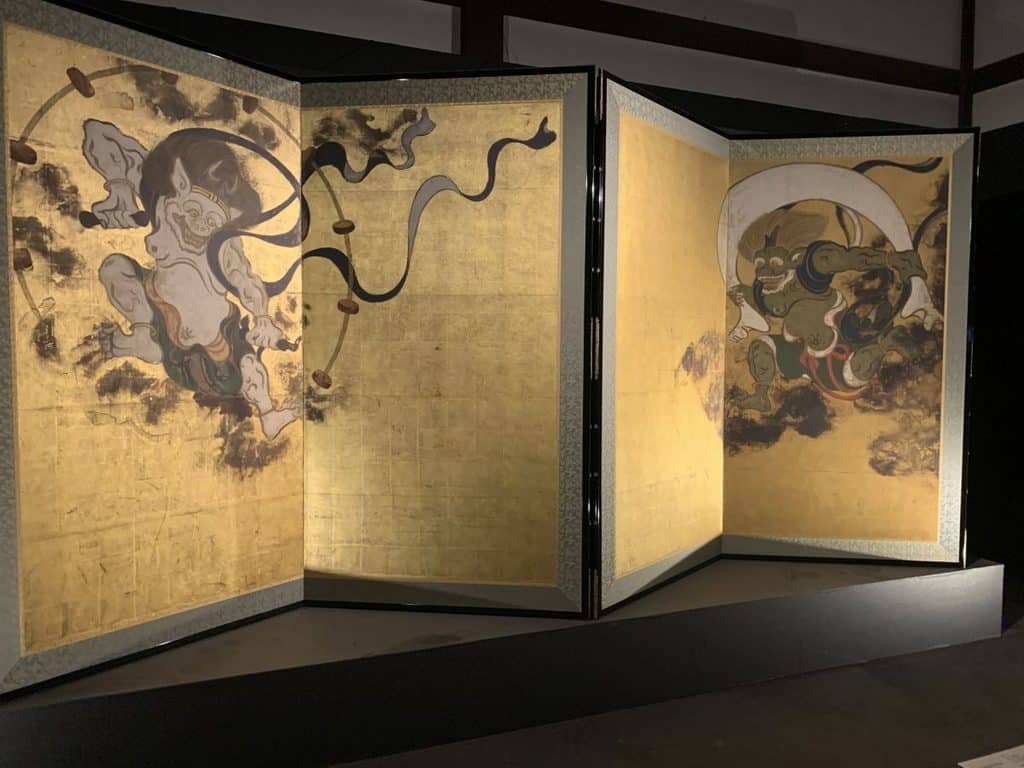
The figures of the front are the God of Wind (on the right hand panel) and the God of Thunder on the left.
Now, depending when you visit, you might see the original work, or, a very good replica, as, as I write this the original is on loan to Kyoto National Museum.
If you do get to see the original, note that the gold of the background is not paint but gold leaf applied meticulously to the screen.
The Cloud Dragon Painting
This work consists of eight different screens making up this immense painting of a dragon.
Originally it was painting on sliding doors of the abbot’s quarters (the Hojo building). Now it has a room to itself.
It’s something you do have to see in person to appreciate its size, and the way the panels flow together. Each of them is almost 2 metres high and they vary in width from 80cm to 2 metres.
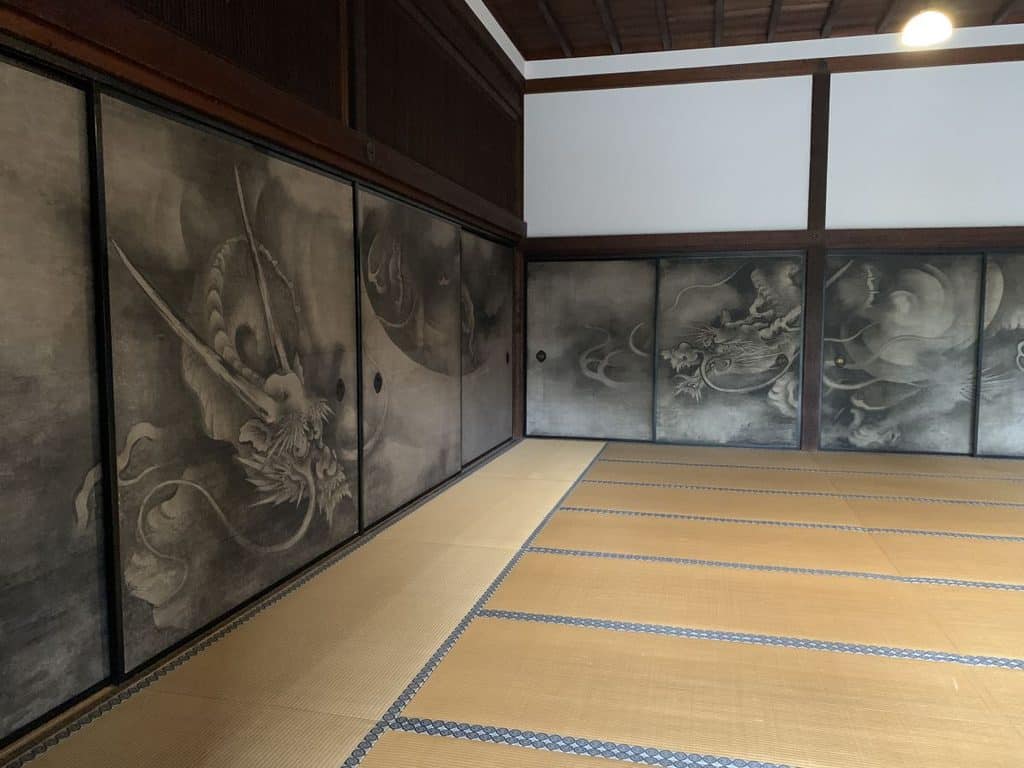
It was drawn by Kaihoku Yusho (Kaihoku Tomomatsu) in ink, in the Momoyama period which took place between 1568-1600 in Japan.
The Seven Wise Figures
This depicts seven wise men who lived in China way back when who would meet to discuss philosophy. They were also known as the Seven Sages.
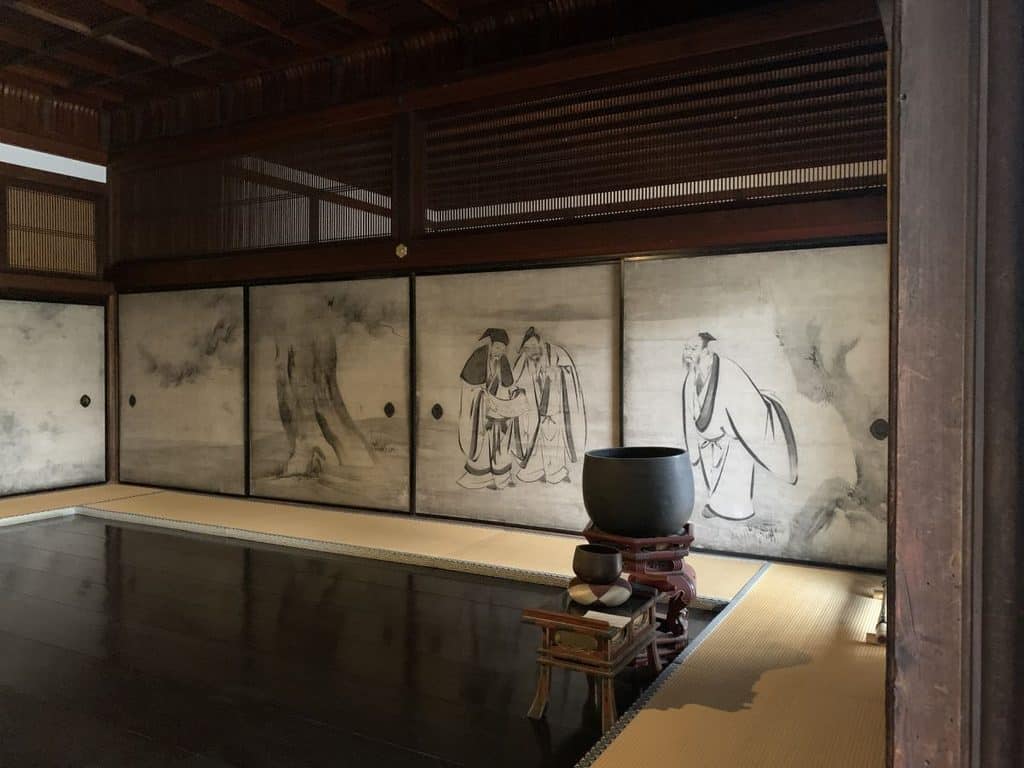
The work is also by Kaihoku Yusho – there are some other paintings by him at Kennin-ji but their gentle brushwork didn’t really lend them to great pictures – so, I’ll leave those as a surprise.
Children at Play
When I looked over my pictures of Kennin-ji I admit, at first, I wasn’t sure if this was one of the older works, or something newly created.
The playful characters didn’t seem to fit into my idea of what should be an ancient work in a Kyoto temple.
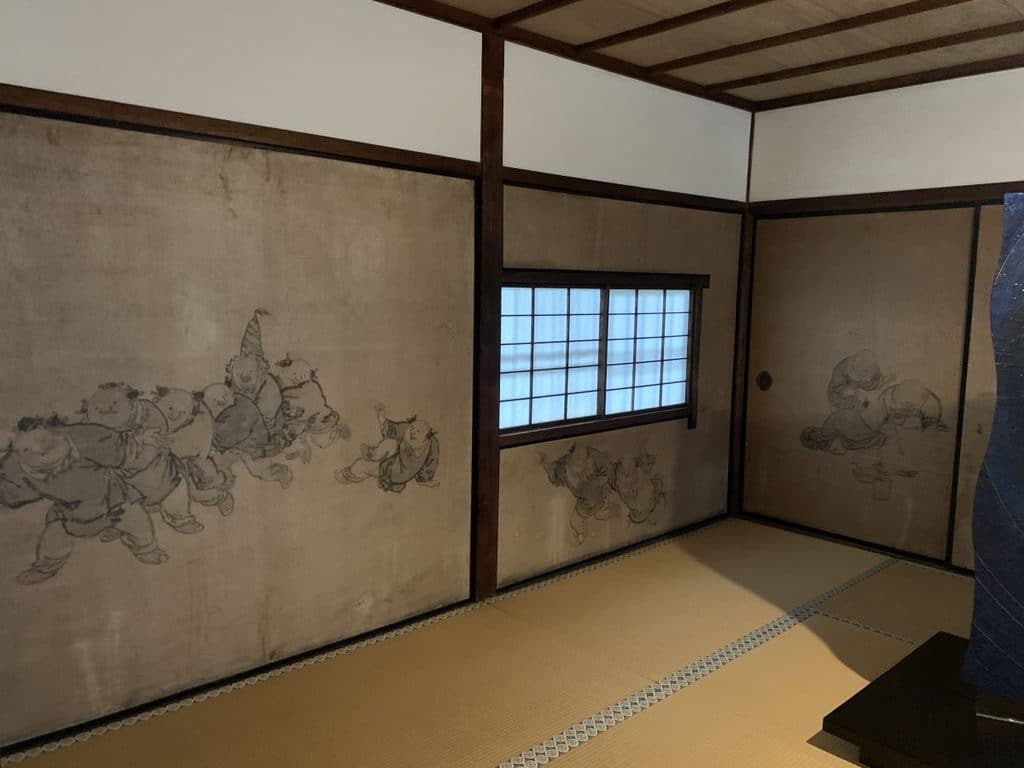
In reality is was completed in 1912 (still older than I thought when I saw it) by the artist Tamara Tsukihiro and it depicts a group of children on a lake in China.
Admittedly, it’s position on the walls of the temple should probably have given me a bit of a clue that it wasn’t super modern.
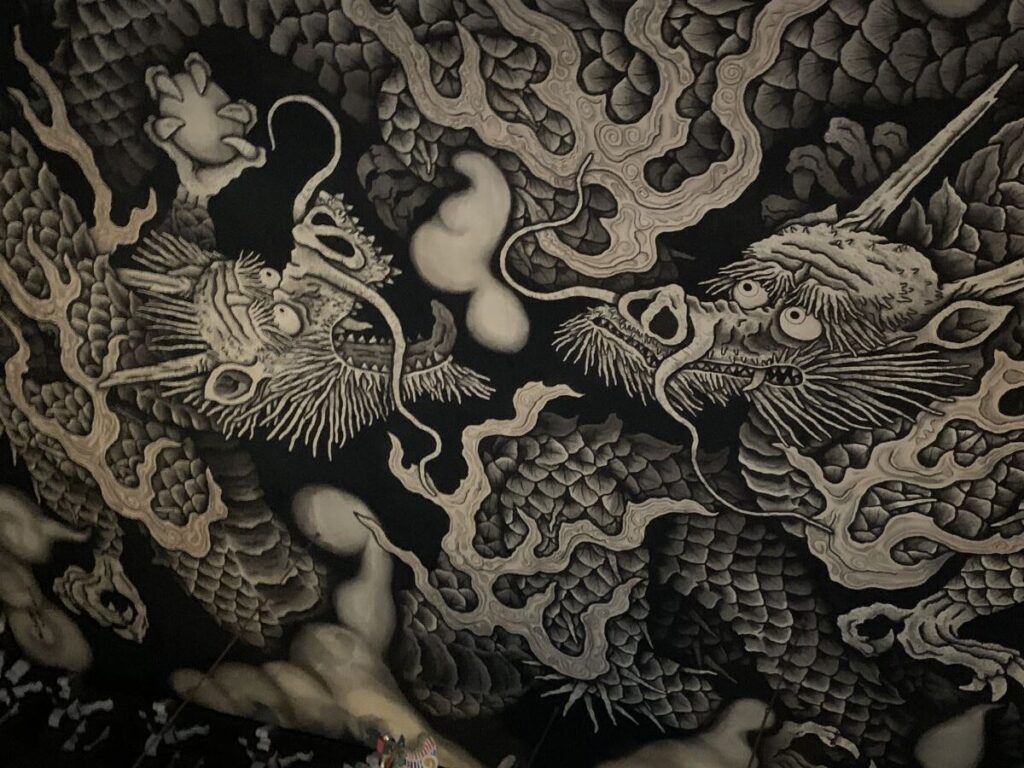
The Dragon Ceiling
This was the highlight of Kennin-ji for me, and is also it’s most recognisible sight.
I’d seen pictures of it, but to see it in person was amazing. The dragons’ eyes are really piercing and they almost follow you around the room.
The painting is located in the Dharma Hall building within the temple and it was created to celebrate the 800th anniversary of the builidng of Kennin-ji – and it’s more modern that you might expect.
It was drawn by the artist Junjiro Koizumi in 2002, and while it looks as if it’s painted directly onto the ceiling of the temple, if’s actually drawn on paper and then stuck onto the ceiling. It took over a year to complete.
To me, this is one of the must-see sights in Kyoto.
These aren’t the only artworks in Kennin-ji. As I said, there are a couple of other works by Kaihoku Yusho – plus, when I was there there was also a modern art exhibition – so, even if you aren’t normally keen on temples, but love art, add it to your Kyoto sightseeing list.
Don’t Miss the Gardens
Kennin ji also has some pretty Zen gardens to visit.
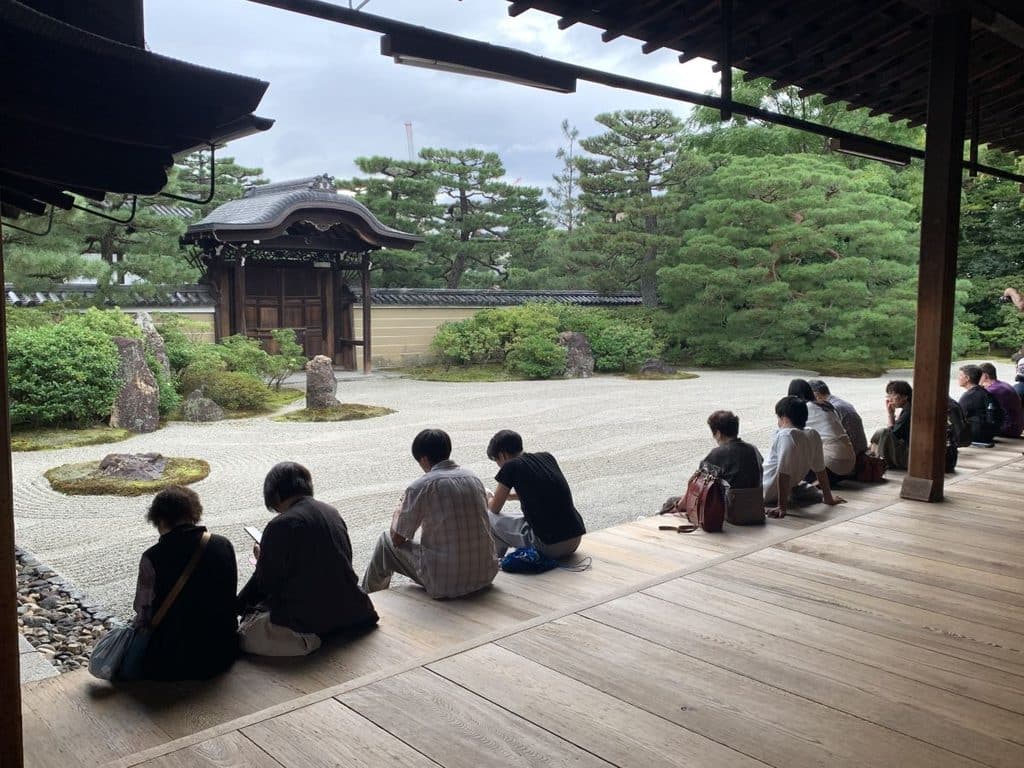
One of these, the Hojo garden located outside the Hoji building (the old Abbot’s quarters) is a beautiful calm zen garden and the deck that fronts onto it is the perfect place to just sit and admire the symmetry, peace and simplicity of the gravel.
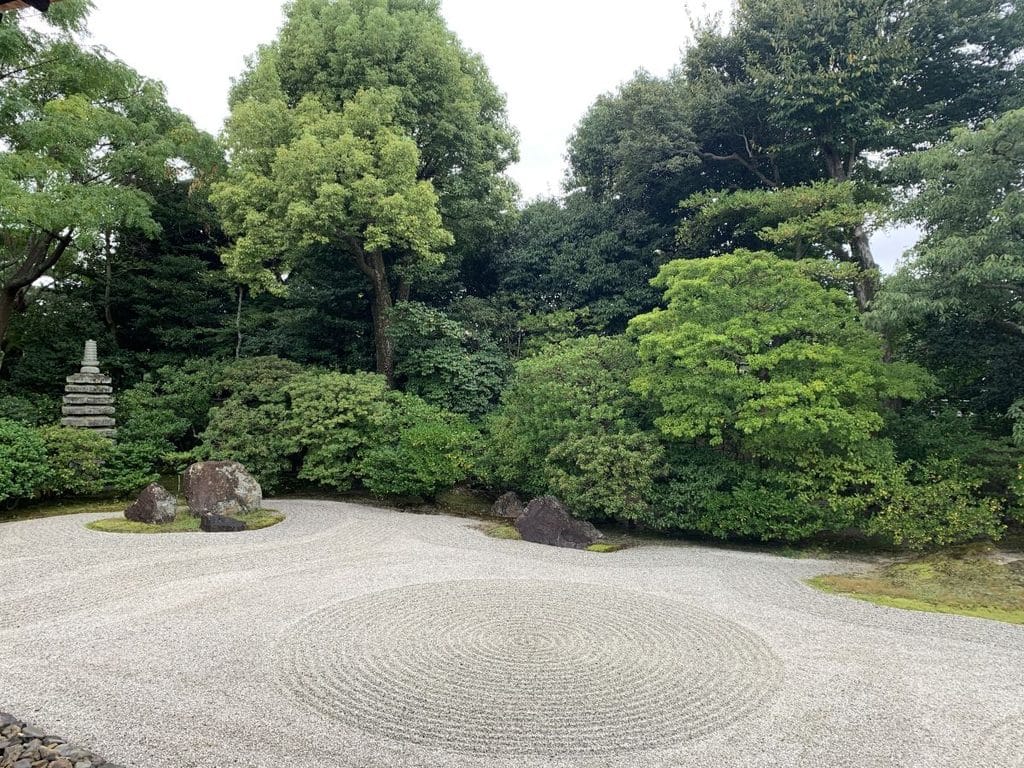
The other garden is located between the two buildings and consists of three Buddhist statues and a meditation stone.
The third garden has three shapes in it – a square, a triangle and a circle. These are said to represent three of the four elements – earth, fire and water, respectively.
Related Read: If you are interested in Zen Gardens, you might want to read our guide to the paid areas of Tofuku-ji after this. The gardens here are also interesting.
The Importance of Tea at Kennin-ji
There was one thing I missed when I visited the temple, which I am kind of sad about.
Located in the grounds, is a monument to tea.
Kennin-ji was founded in 1202 and, the founding abbot of the temple, is said to be one of the people who brought tea into Japan from China.
There is a special tea ceremony at the temple every year on April 20th to mark this. People apply to attend this in advance and the slots are given out via a lottery.
Keep an eye out for the tea stone when you visit.
Entry Details
While the grounds around Kennin-ji is free to enter, the art works above are located in the area which you must pay to visit – but, the dragon ceiling painting alone was worth the price of entrance to me.
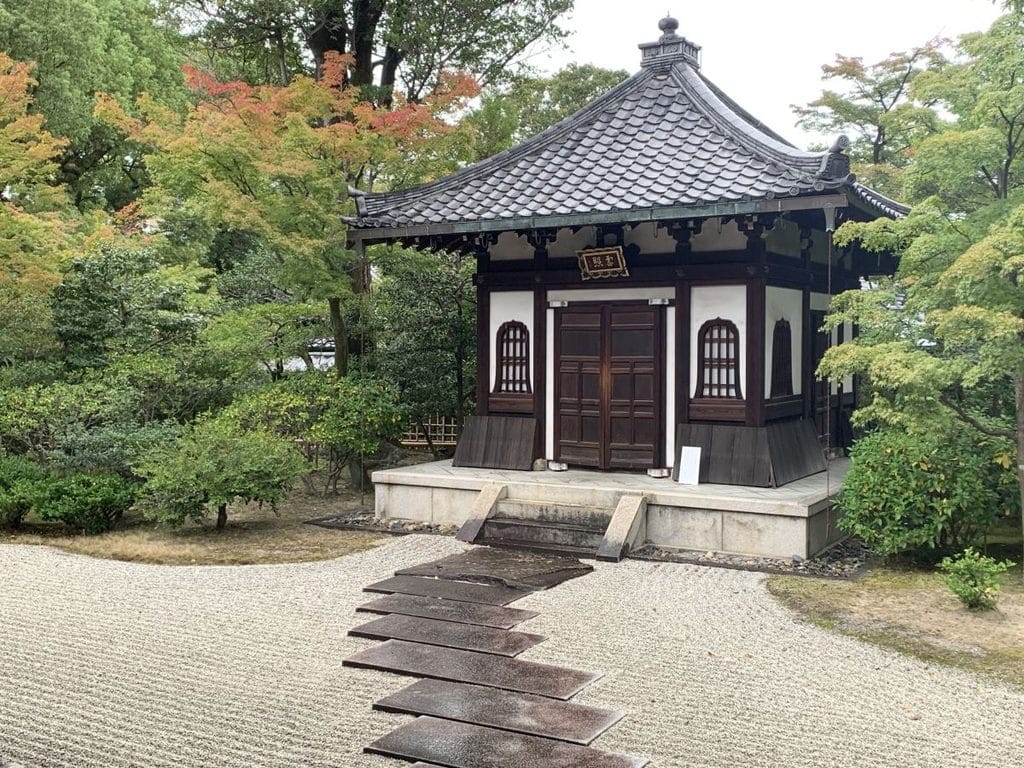
Entrance costs 800 yen for adults, 500 for children, and this area of the temple is open from 10 am to 5 pm – with the last entrance at 4.30pm. That is a bit less time than you need to get everything done though. I would allow at least an hour to walk through the area, admire the paintings and visit the three gardens within this part of the property.

Who Writes This Blog?
My name is Helen Foster, and I’m a journalist and author. My travel articles have appeared in publications including The Australian, Escape, RAC Horizons, Jetstar Magazine, Sainsbury’s Magazine, and more.
I’ve travelled to Japan nine times before – solo and with my partner and visited over 50 towns and cities. My last visit was in April 2026, so everything here is pretty up to date.