
- What to Do in Kawaguchiko – When You Can’t See Mount Fuji - 21 October 2026
- Kennin-ji: Kyoto’s Temple for Art Lovers - 19 October 2026
- How to Watch the Oiran Parade at Edo Wonderland, Nikko - 15 October 2026
Seeing Mount Fuji is one of the main reasons why people visit Kawaguchiko, but it’s a shy mountain, only appearing when conditions are right – so, what can you do in Kawaguchiko if you get there and it’s raining or cloudy and there are no views? Actually, a lot – and some of it is amazing. Here’s our top 10 suggestions …
Mount Fuji only shows itself an estimated 70-100 days a year, but many of the most commonly mentioned things to do in Kawaguchiko are all focused around seeing the mountain – so, what happens on days when you can’t?
Or, what if you’re just looking for alternative things to do that don’t involve seeing Mount Fuji. I mean yes it’s beautiful, but, if you’re here for a few days, you might need a break from just staring at it.
This is the list you need.
Article by Helen Foster. Disclosure: Some links in this post are affiliate links. See our Affiliate Disclosure.
1. Visit The Kimono Museum
The first time I ever went to Mount Fuji, the mountain was nowhere to be seen – I could barely work out where it was even supposed to be the skies were so cloudy.
I was staying overnight and couldn’t check into my hotel so, after having a brief sulk, I decided, I might as well go and explore and jumped on the Red Sightseeing Bus all the way up to Kubota Itchiku Art Museum on the northern side of the lake. I’d seen the Tomb Raider style entrance on Instagram and it intrigued me, but, wasn’t really sure what was inside.
The reason for that is you can’t take photos in there, but, what this means is, when you walk in and actually see what is in here, you could be as blown away as I was.
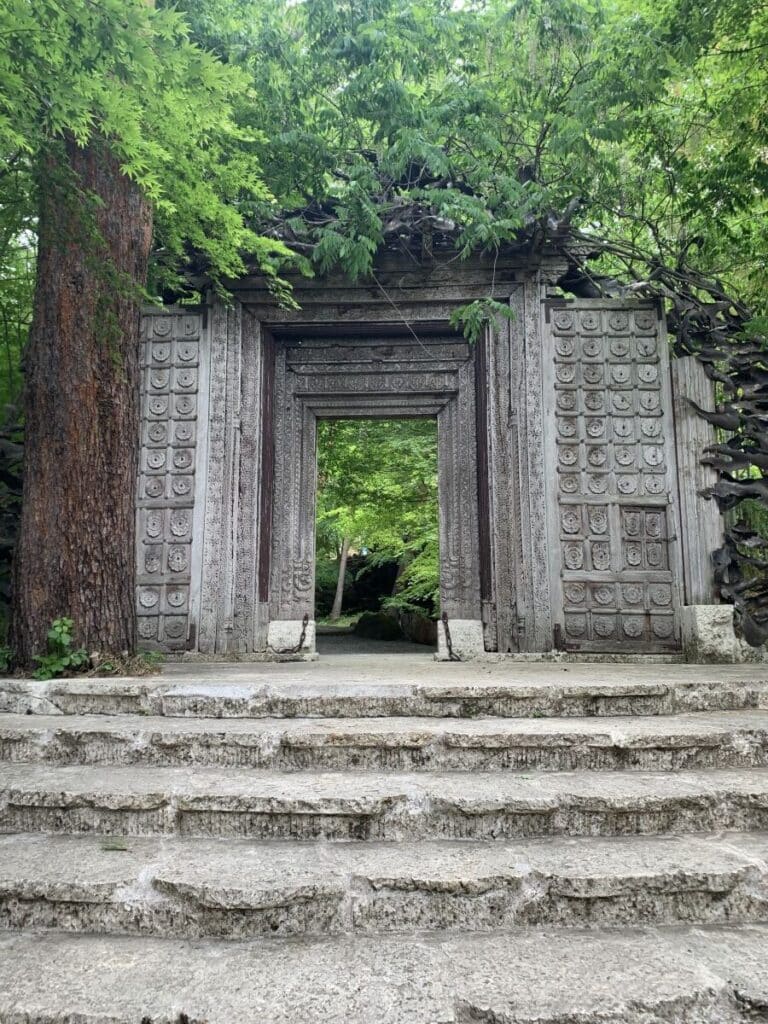
While this is called an Art Museum, inside only displays the work of one artist – Itchibo Kubato, a master of kimono dyeing. He created sets of kimono that, when viewed together showed scenes like the setting of the sun over a specific landscape.
The museum displays a number of these kimono in sequence – and seeing them together is astounding. The creativity, the craftsmanship – and the planning – that must have gone into creating these beautiful pieces of work is astonishing.
Other artworks are dotted around the grounds.
If you have any interest in art or kimono, do not miss this place – even if the mountain is fully visible! The fact that I can’t show you any pictures only makes it better as you’ll be totally surprised when you arrive. Make sure you also watch the video on the process so you see what it involves.
From November to March, the museum is open 10 am to 5 pm six days a week. It is closed on Tuesday and some Wednesdays. Between December and March hours are more erratic and there are lots of closed days. It also closes at 4.30 pm during off season. Check the calendar carefully to make sure it’s open on the day you’re visiting and to check the opening hours. It costs 1500 yen to get in for adults and 900 or 400 for children depending age. Preschool and under go in for free.
2. Exploring Museum Row
South of the kimono museum is a row of other museums that you can take in if you arrive at Kawaguchiko on a cloudy day.
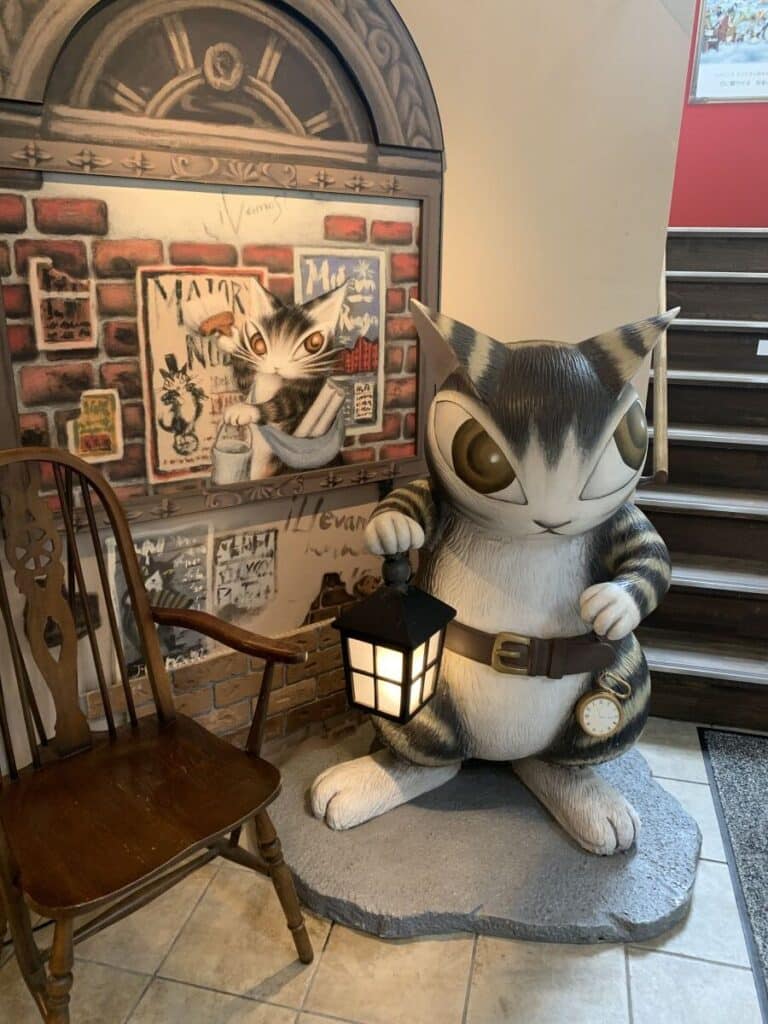
Kawaguchiko Konohana Museum: This is full of drawings of a character called Dayan the cat. He’s the subject of a series of children’s picture books in Japan. The museum is cute and the drawings are beautiful, but if you didn’t grow up in Japan, you can feel a bit like you’re missing something. It costs 500 yen for adults.
Kawaguchiko Music Forest Museum: Displays musical instruments and music boxes. I baulked at the price when I got here (it starts at 1800 yen and I’d already spent a fair bit) but reading more deeply it seems like I’ve missed out. Apparently the musical perfomances, particularly the sand art perfomance, are amazing.
Kawaguchiko Museum of Art: Focuses on artworks of Mount Fuji. Reviews on this one are mixed, especially for the 800 yen entrance fee.
All three of these museums are located an easy walk around the lake from the kimono museum – or from stops on the Red Sightseeing Bus Route. Seeing them all does add up with entrance fees, but you can get a combined ticket for 3300 yen that includes the kimono museum, the Music Forest Museum, and the interesting looking Muse Museum on the south side of the lake.
3. Enjoy Some Old Toys
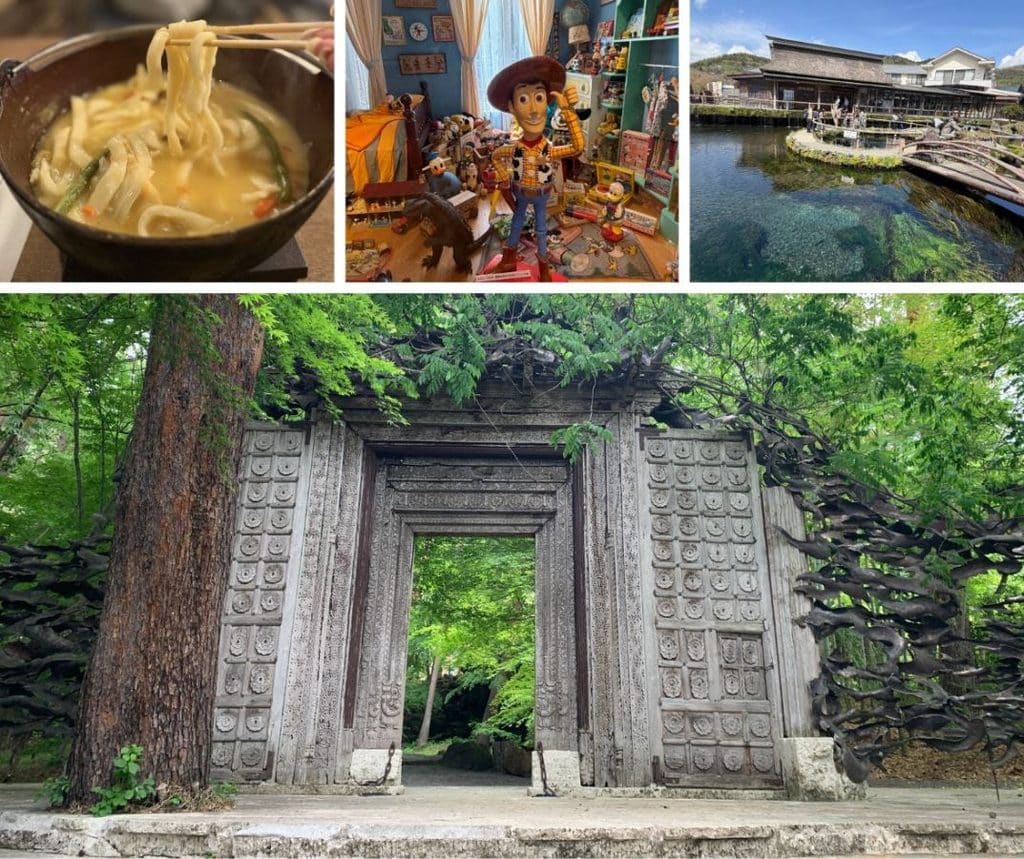
If you need to focus your time around the indoor activties in Kawaguchiko, the Kawaguchiko Kitahara Museum is fantastic – it’s full of perfectly curated and displayed old toys. You’ll find everything from an entire room of Disney merch to figures of old Japanese popstars from the 1960s.
There’s also an interesting display of Beatles Memorabilia – including an invite to lunch with Paul McCartney for the museum’s owner which I thought was very cute.

The day I visited there were only two of us in the museum – but about 20 people queueing outside the Lawson to have their photo taken. At this point I decided the world had gone mad.
This place deserves more visitors.
You’ll find it on the southern side of the lake, it’s on both the Red and the Green Sightseeing bus routes. It’s open 10 am – 4 pm, and usually open seven days a week. It costs 800 yen for adults, and 400 for children.
Now, I admit, the first time I tried to visit here I got confused and couldn’t work out which building it was. Look for the white building with Happy Days written on the front.
4. Eat Hoto
Hoto noodles are the signature dish of the Yamanashi region in which Mount Fuji sits – and, because the servings are huge, it’ll fill up a while of your day trying to eat them! By the time you come out, the mountain even might have appeared.
Hoto is said to have originally been eaten by samurai going into battle, which might account for the huge portions. They are a thick what noodle served in a miso broth with vegetables – the come served in an iron pot, and both this and the soup are scalding!
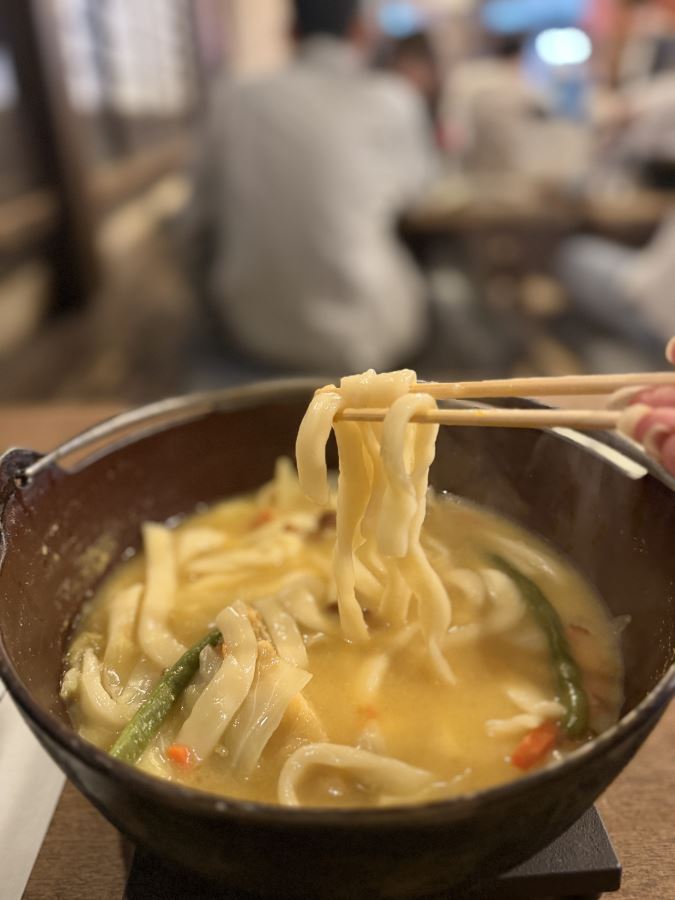
I tried mine at Hotou Fudo which is virtually opposite Kawaguchiko Station. Its reputation and position mean this place is always busy so expect to queue – if you’re happy to sit on tatami mat seating the wait can be a bit shorter.
Hotou Fodo is open from 11 am to 7 pm, seven days a week. A bowl of Hoto costs around 1300 yen – menus are in English.
5. Visit the Clear Pools
Oshino Hakkai is home to eight natural ponds formed from waters that run off of Mount Fuji. The ponds are crystal clear and very pretty.
Oshino Hakkai is famous for it’s views of the mountain, especially when it’s reflected in the pools, but, the ponds themselves are worth seeing even if the mountain is hidden.
You’ll also find numerous souvenir shops and restaurants here.
The Sengen Shrine across the road from the ponds is also worth visiting.
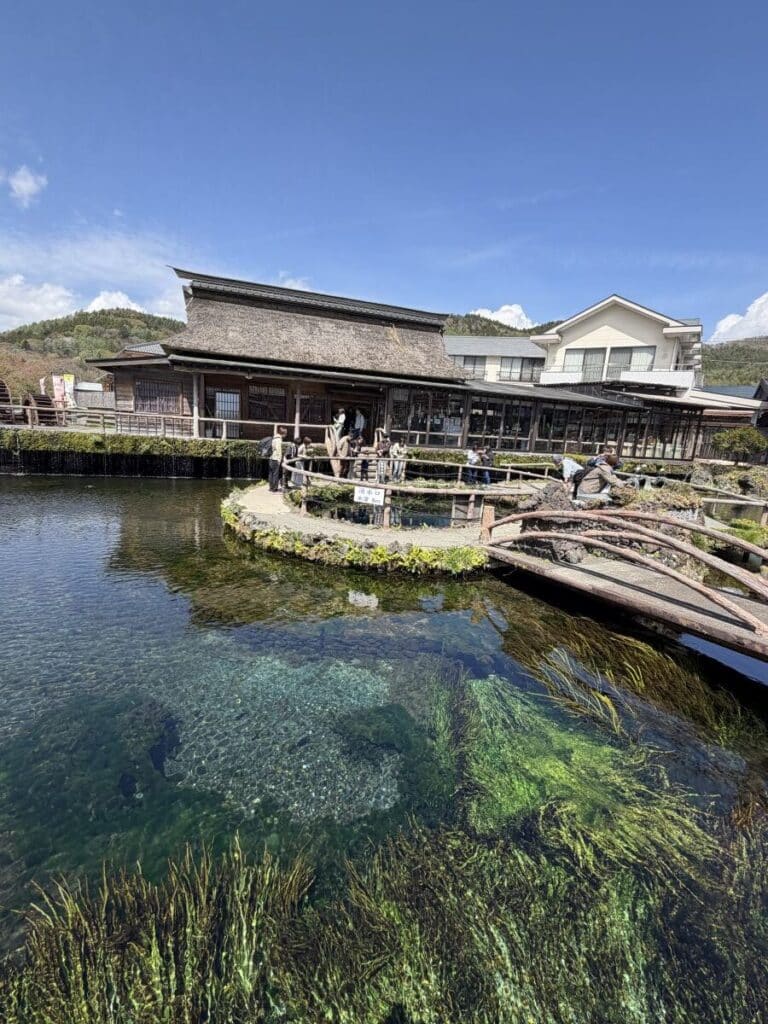
Oshino Hakkai is a very popular tour group stop so do expect crowds. There is a paid area you can visit if the amount of people gets too much, but this is most famous for it’s pretty view of Mount Fuji, especially when the water is still and it’s perfectly reflected in the lake, so might not be worth paying extra if the weather isn’t playing ball.
Surprisingly, Oshino Hakkai is otherwise free to enter (I kept looking for a ticket office) and open 24 hours a day. You can get here by local bus from Kawaguchiko or Fujiyoshida – it is not on the Green or Red Sightseeing routes so check Google Maps for the best route at the time you’re travelling.
6. Explore the Old Village
Saiko Iyashi-no-Sato Henba describes itself as an open air museum. It’s actually a rebuilt replica of a village that sat on this site but was destroyed by a typhoon in 1966. The buildings no longer house families – instead, they contain shops, restaurants, exhibitions, craft classes and much more.
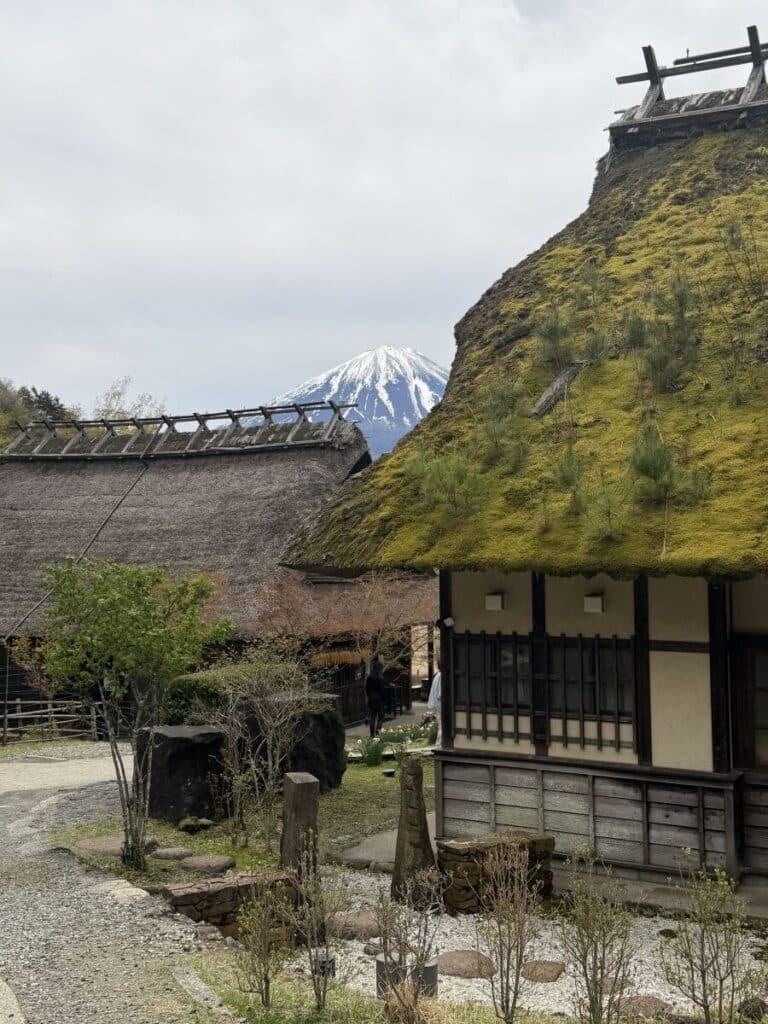
This place isn’t visited by a huge amount of western tourists – although it’s very popular with the Japanese. It’s costume service seems to be particularly popular with middle aged men wandering around in amazing samurai armour with matching hats – on the day I visited there were a group having a fantastic time looking very proud of their giant gold hats.
I really enjoyed it here. Each shop has it’s own speciality and you’ll find a lot of unique souvenirs – also, many of the creators of the works also offer craft lessons during the day. I think after the kimono museum, this would be my top pick from the list of things to do if you can’t see Mount Fuji – and even if you can if you have enough time!.
You can get here via the Green Sightseeing bus route. If Mount Fuji does start to show itself while you are here, make sure you walk down to Saiko Lake before you leave – the view is stunning.
7. Go on a Fuji Food Quest
Here’s a fun thing to do with your day – you might not see the real Mount Fuji, but, you can try biscuits, pudding and even a curry shaped like it with our Fuji Food Quest. Top stops include…
Fujiyama Cookie. Located by the ropeway. The name gives this one away, they sell Mount Fuji shaped cookies. Open 10 am to 5 pm, six days a week – closed on Tuesdays.
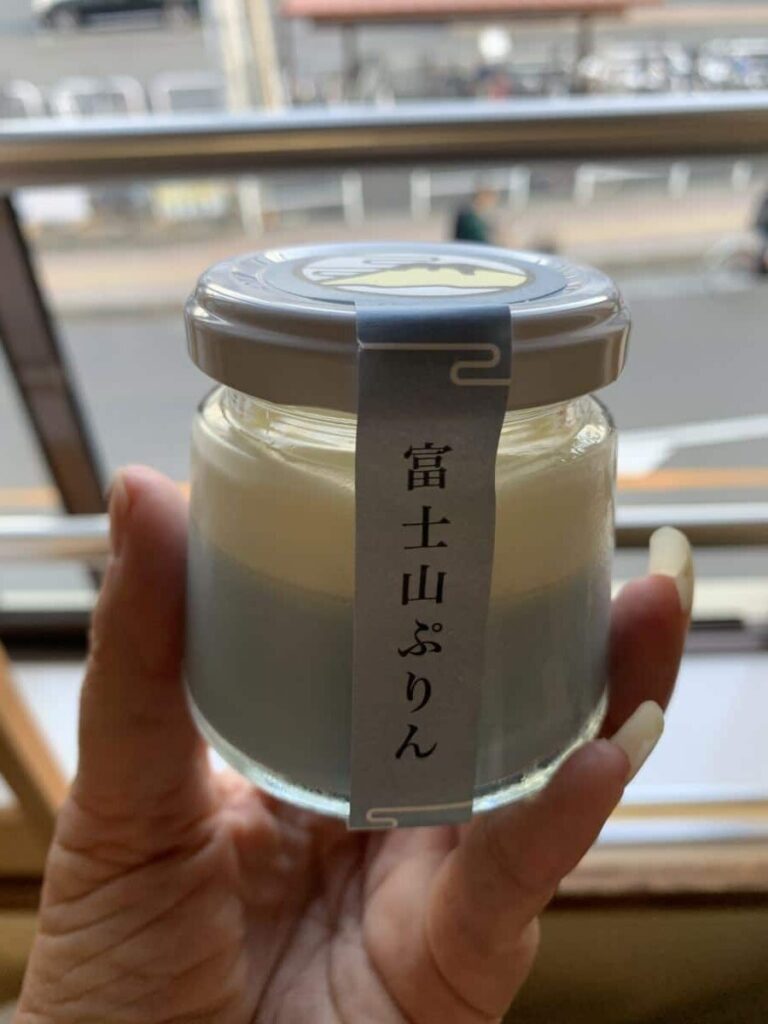
Fujisan Shokupan: Pick from Mount Fuji shaped cakes, or, the amazing blue and white pudding at the shop a short walk from Kawaguchiko Station.
Tourist Base Mount Fuji: Why wouldn’t you want to eat Blue Japanese curry with a Fuji shaped pile of rice in the middle. I’m desperate to try this but I’ve always been elsewhere at lunchtime. A few other places have Fuji curry but this is one of the closest to Kawaguchiko Station. They also have a Mount Fuji jelly and lattes with the mountain on top.
Fujisan Plaza: Another spot for blue curry, and very close to Tourist Base, but they also offer blue curry stuffed bread in the shape of the mountain, blue-peak shaped scones with cream acting as the snow on top and blue beer!
Kawaguchiko Creamery: Located in front of Tourist Base, if you haven’t already gorged on enough Fuji-themed food, you can get a blue and white soft serve ice cream here.
I’ve tried a few of these but not all of them – and now, I need to go back to Fuji to eat the rest! Maybe don’t try and do all of them before the bus or train ride home!
8. See Some Flowers
Another popular spot for tour groups – and again most famous for its views of Mount Fuji, is Oishi Park – but, the pretty thing about this park are the flower displays in the grounds, and you can see them, mountain or no mountain.
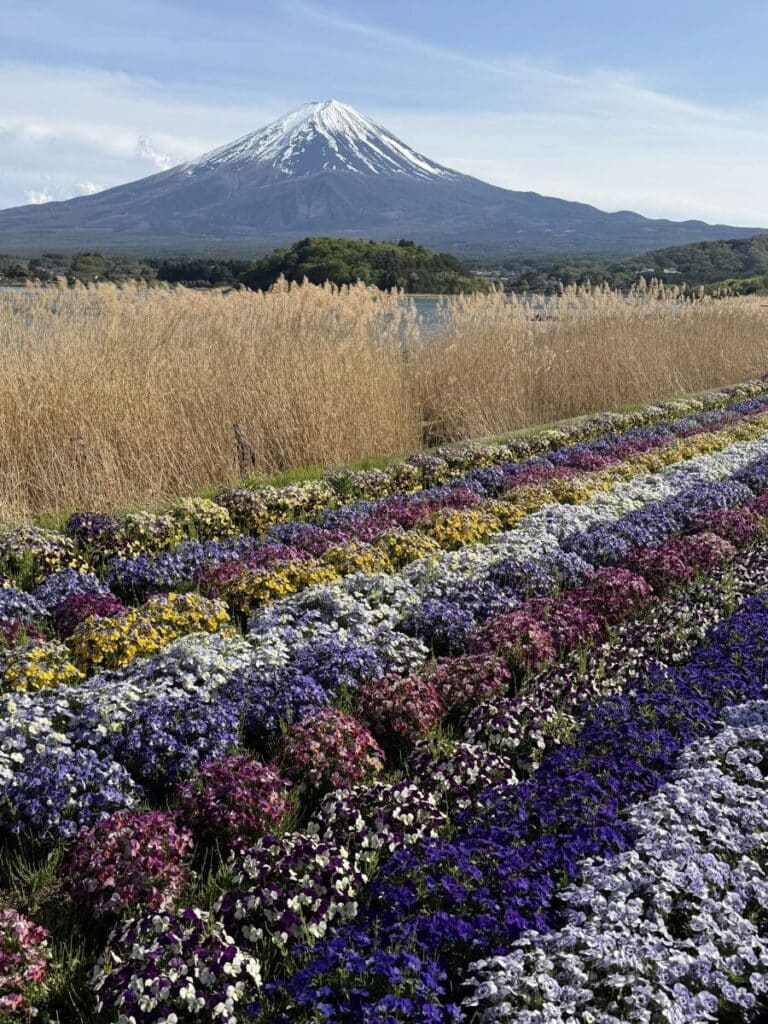
The lavender ice cream here is also social media famous – but the downside of that is that the queues for it are ridiculous.
Entry to the area is free and it’s open 24 hours a day, seven days a week. It’s at the end of the Red Sightseeing Bus route.
9. Relax in an Onsen
If the mountain doesn’t appear, why not just relax, sit in hot water soaking away all your travel-related aches and pains until it does!
If you’re just in Mount Fuji for the day, visit Fuji Yurari, day onsen which has multiple pools, both indoor and outdoor for you to enjoy. They also sell blue Mount Fuji curry and Hoto noodles in the onsite restaurant so you could tick off a few experiences before or after your soak. A day time visit costs from 1400 yen for adults. Prices go up at weekends. It’s reached by local bus from Kawaguchiko Station.
Or, if you’re staying overnight, choosing a hotel where the onsen actually has a view of Mount Fuji means you can soak while you wait without fear of missing anything.
Three to book if that sounds like a good idea to you are…
10. Scream Your Way Around Fuji-Q Highland
If rollercoasters are your thing, jump on the train from Kawaguchiko to the Fujikyu Highland train stop and spend a few hours riding rollercoasters and other fun rides instead.
On a normal weekday, the park doesn’t require booking months ahead or expensive queue skipping passes to beat the crowds so, you can keep this as a last minute decision if the mountain doesn’t play ball.
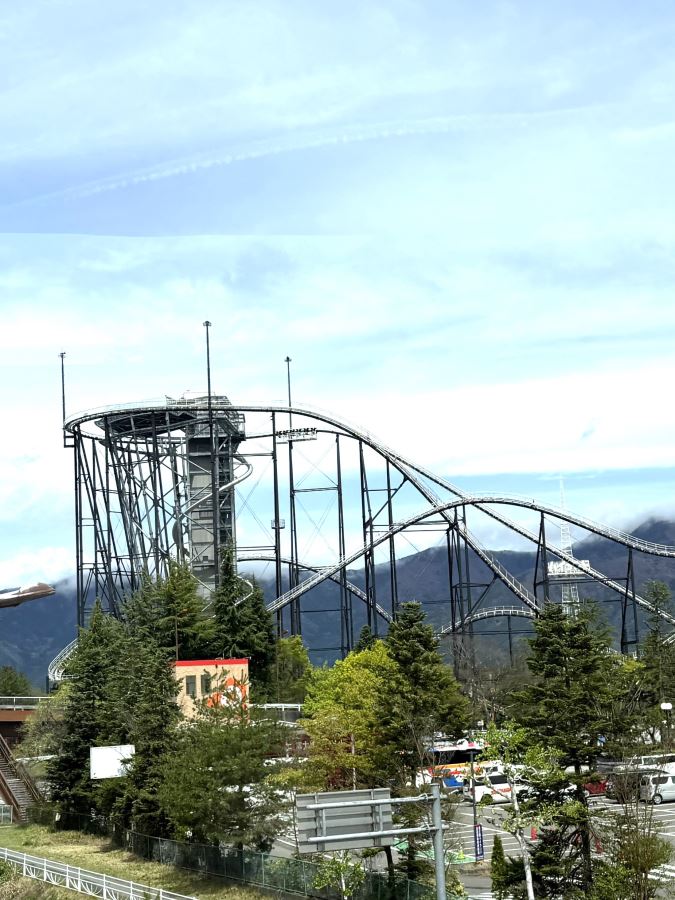
In fact, simply entering the park is free, you only buy tickets or passes to cover the rides you want to go on. Little kids will love Thomasland, older thrillseekers will want to ride the thrill rides like Fujiyama, one of the tallest and longest steel coasters ever built.
A pass that allows you to ride all the main rides starts at 6000 yen for adults, but there are lots of cheaper options if you are more selective about what you want to get on. See options and details here.
The park hours vary by season, but expect it to be open from 9am until at least 7 pm in the summer/autumn season and 10 am to 5 pm during the colder months. Check the website above for the exact opening hours – and any ride closures – for the day you visit.
Three Things Not To Bother With If You Can’t See the Mountain
At this point you might be asking yourself whether it’s worth doing some of the other popular sights around Mount Fuji if you can’t see the mountain. Here’s three I think are best saved for when you do have a perfect view.
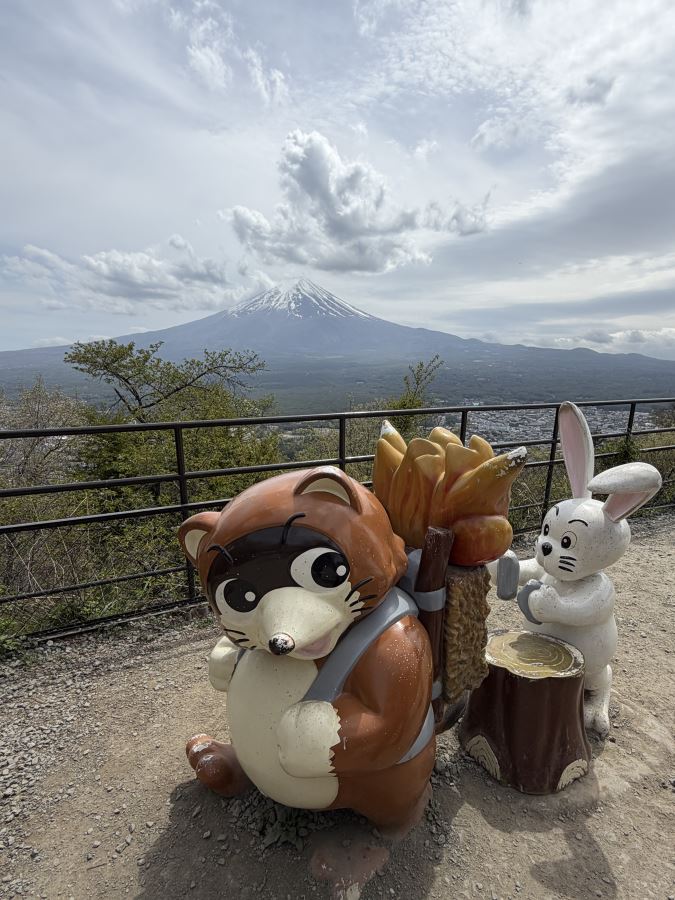
The Panoramic Ropeway
The area at the top is quite small and while there is a cute legend about a rabbit and a tanuki, and a love bell, they aren’t really worth the price of the ropeway if you can’t also see the mountain.
There are walking trails that lead out from the top, but, I didn’t try those.
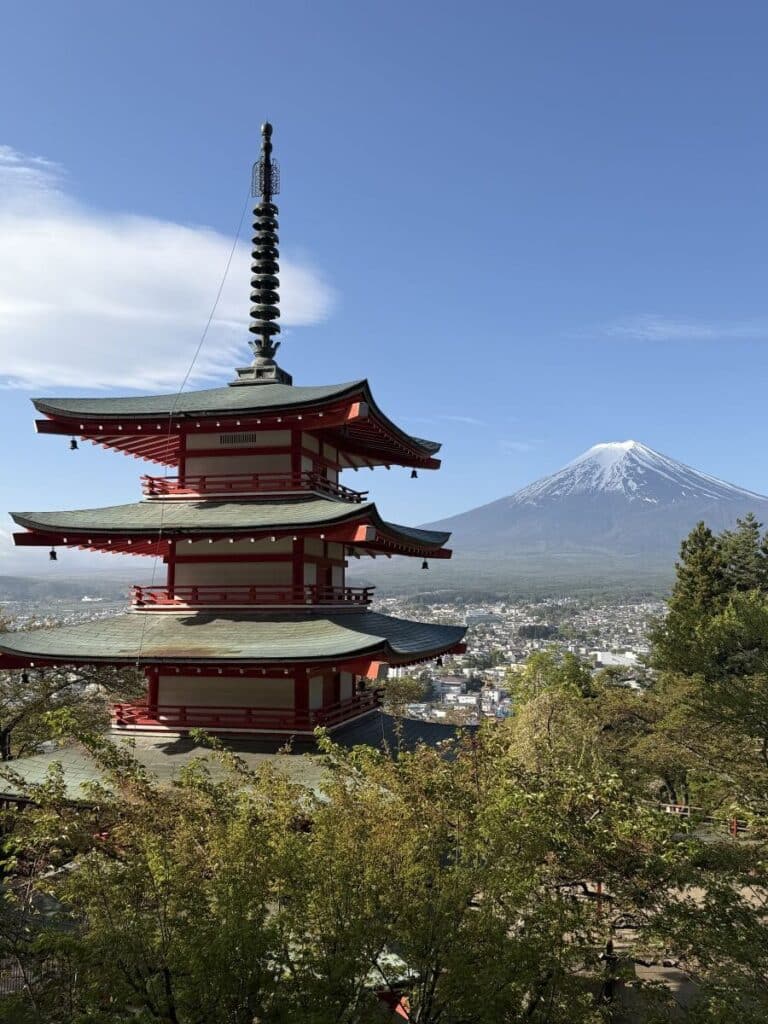
Chureito Pagoda
Yes, the Pagoda is pretty but the reason people stand in a queue to visit it, is to see the juxtaposition of Mount Fuji behind it.
If you can’t see that, then I’m not personally sure it’s worth the climb up the steps.
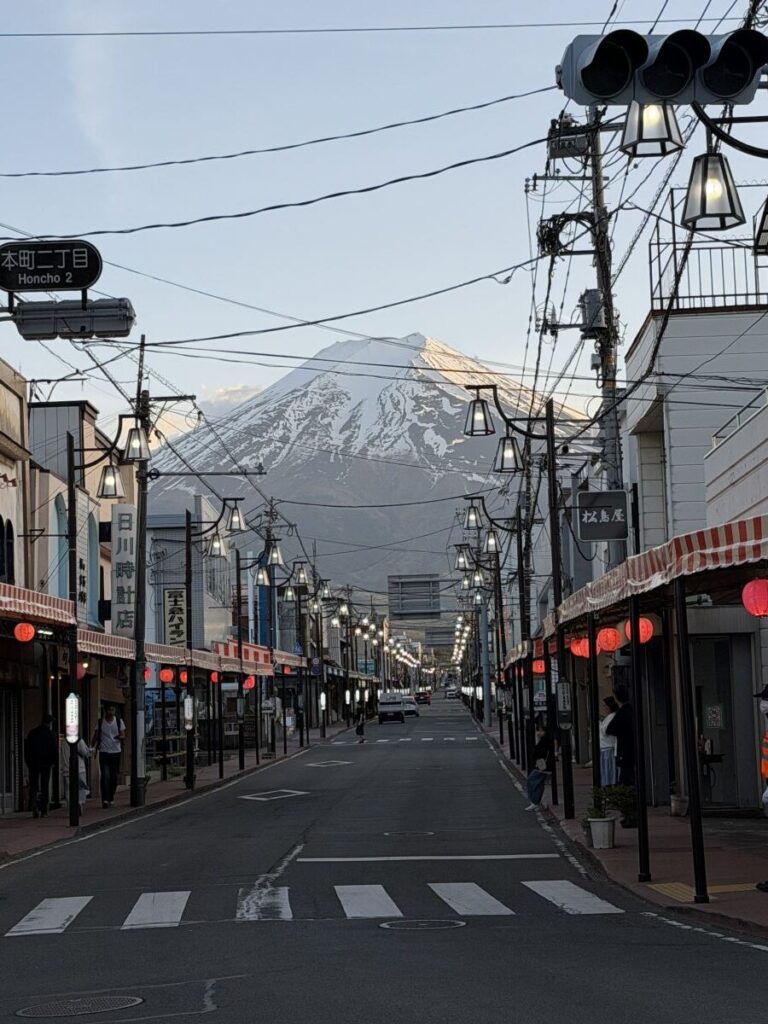
Honcho Street
This is just a road with a pedestrian crossing on it, if you can’t see the imposing sight of Mount Fuji behind it.
Some of the shops are interesting if you are already here, and this is a good area to stay when visiting Mount Fuji, but, I wouldn’t travel to it if you can’t see the mountain.
How to Tell if Mount Fuji Will Be Visible
As you can see by my pictures – while my first trip to Mount Fuji was pretty bad for views, I got lucky on my last trip. I went mid April, a bit earlier in the year than the first time I visited and had good views the whole visit.
I did adjust my arrival a bit though as it was raining the morning I was due to get the bus up from Mishima at 8am, but, when I woke up to rain, I checked the visibility planner which told me views would be bad until after lunch. I decided to have a lie in and arrive later when the planners told me the view would better – and by the time I got to the old village above, the views were glorious and I took one of my favourite Mount Fuji pics ever.
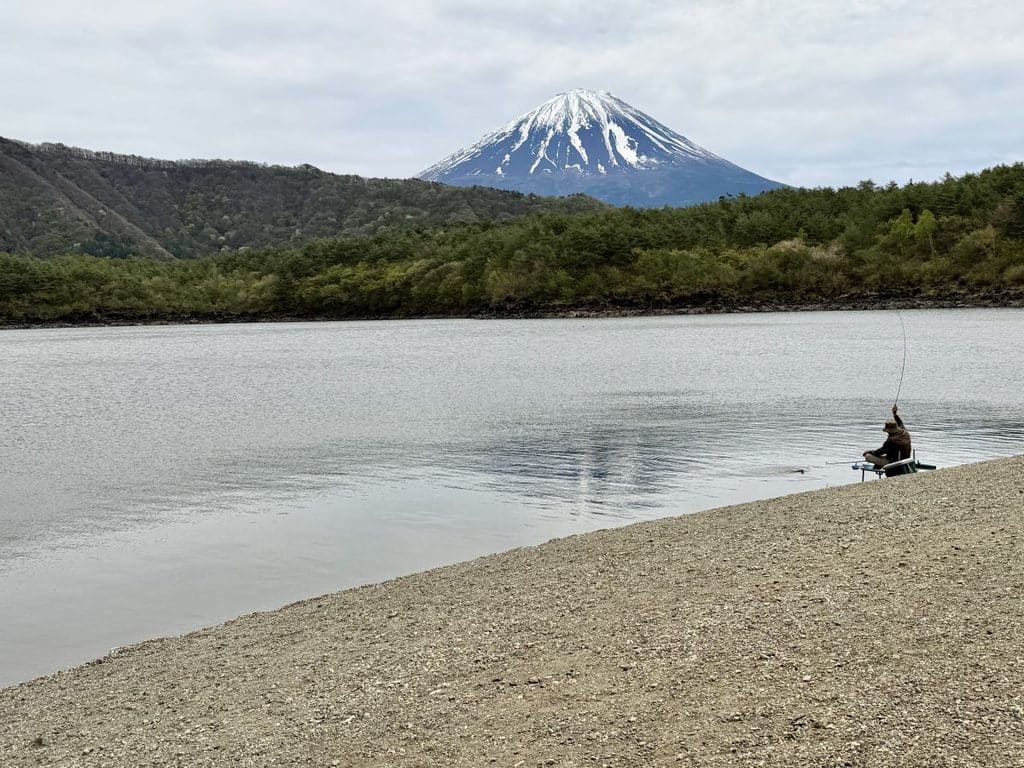
You see the weather forecast isn’t the best way to tell if you’re going to see the mountain, instead you need to check one of the Fuji Visibility calendars out there.
Our guide explains why this are different and explains how to find, and how to read, a Fuji Visibility calendar to try and get a good view on the day you visit – you still might want to make time for one of the two of the above sights though even if it does.
Who Writes This Blog?
My name is Helen Foster, and I’m a journalist and author. My travel articles have appeared in publications including The Australian, Escape, RAC Horizons, Jetstar Magazine, Sainsbury’s Magazine, and more.
I’ve travelled to Japan nine times before – solo and with my partner and visited over 50 towns and cities. My last visit was in April 2026, so everything here is pretty up to date.