
- Should You Visit Oishi Park in Kawaguchiko? - 26 November 2026
- Is Saiko Iyashi-no-Sato Nenba Worth It? - 21 November 2026
- How to Get Around Lake Kawaguchiko - 19 November 2026
This flower-filled park is one of the most popular stops on the tours to Mount Fuji and independent day trips around Lake Kawaguchiko, but is it worth seeing? Our guide explains what you need to know.
Article by Helen Foster. Disclosure: Some links in this post are affiliate links. See our Affiliate Disclosure.
What Is Oishi Park?
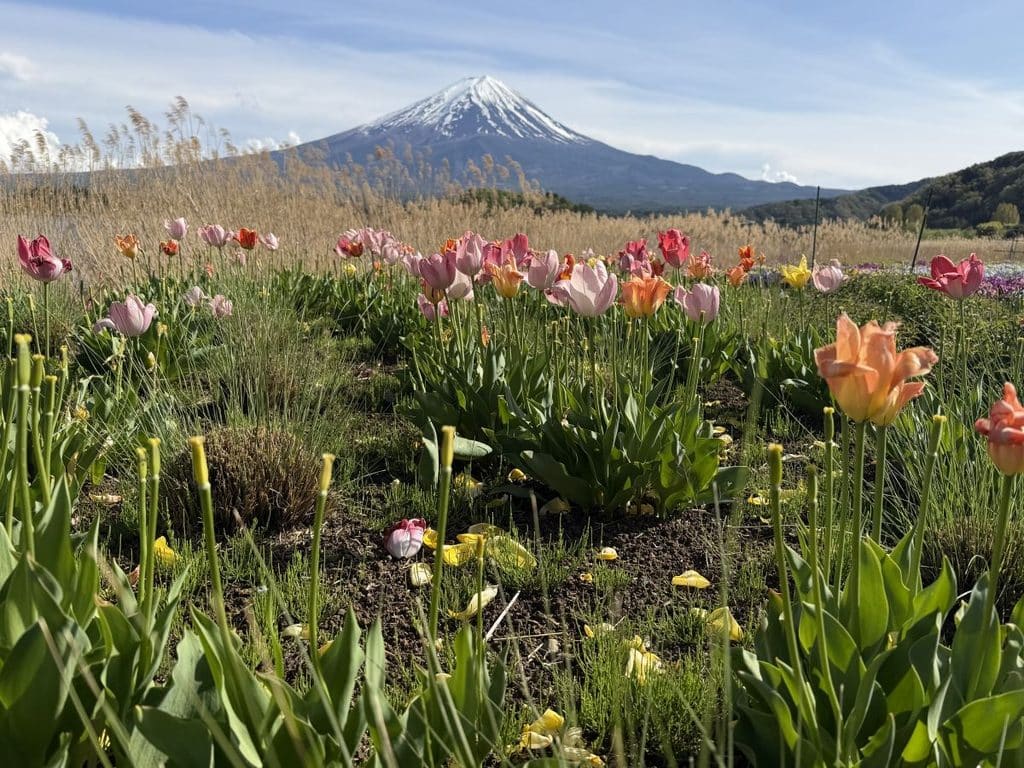
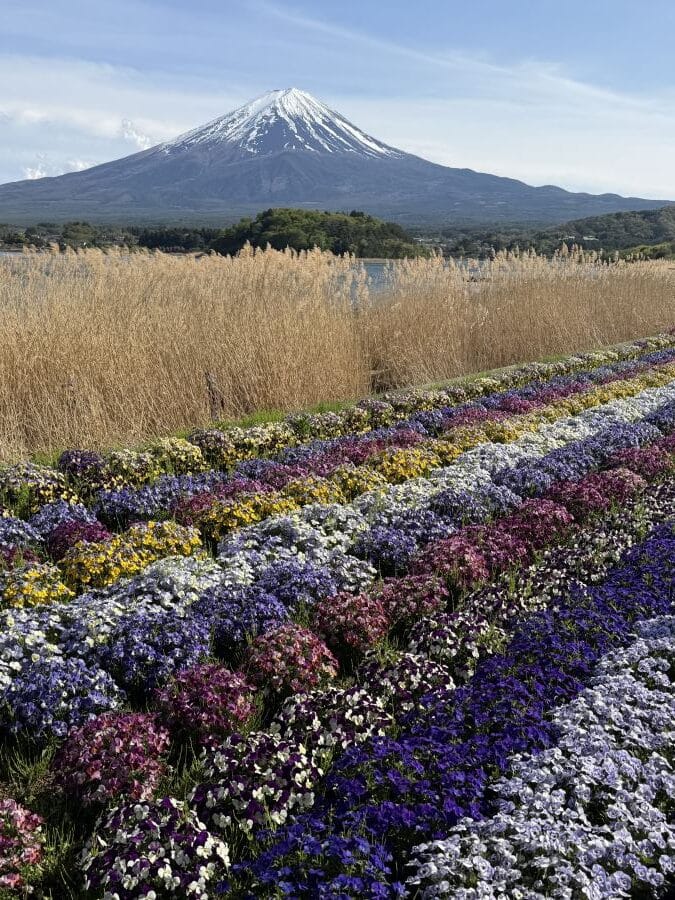
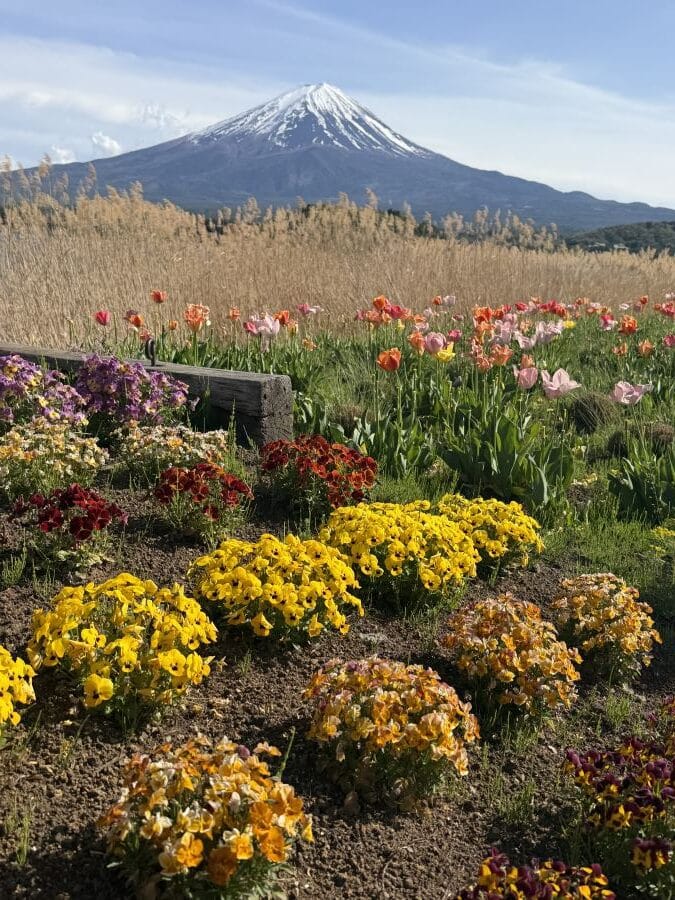
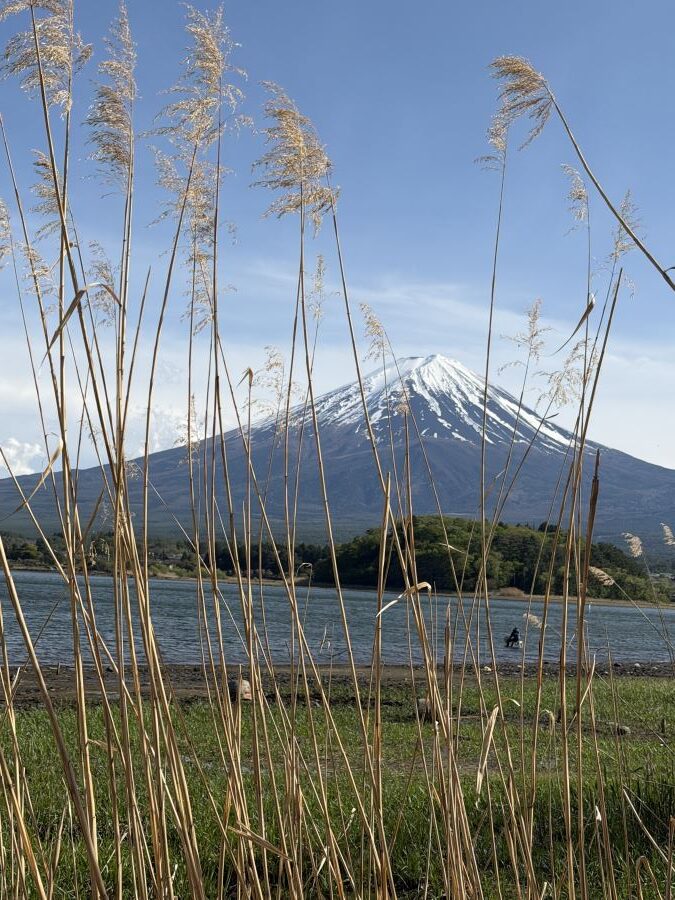
It’s basically a park on the shores of Lake Kawaguchiko – but two things make it stand out: the potentially amazing view it has of Mount Fuji and the rows of seasonal flowers planted in the park that create an stunning foreground for your pictures.
The park is also home to the Kawaguchiko Natural Living Center which sells goods made from local produce like blueberries, cherries and lavender, the Oishi Park Cafe, home to the social-media-famous lavender ice cream and a smaller dining spot on the second floor called Kitchen Fujiyama.
The best thing about all of it – there is no entrance fee. The beautiful views are available for free, 24-7.
Related Read: You’ll need to check Mount Fuji is visible to get pictures like the ones in this post. Read this guide on how to read the Fuji visibility planners to help maximise your chances.
What Flowers Can You See?
The display varies by season. Here’s what to expect when you visit.
- April – May: Nemophila
- May – June: Roses
- June – July: Lavender
- July – Casablanca
- August – October: Green Kochia
- October – Red Kochia
There are no flowers listed between October and April – possibly because the weather is too cold. The exact dates of each season vary, visit the official website for more accurate timings if you have a flower you really want to see.
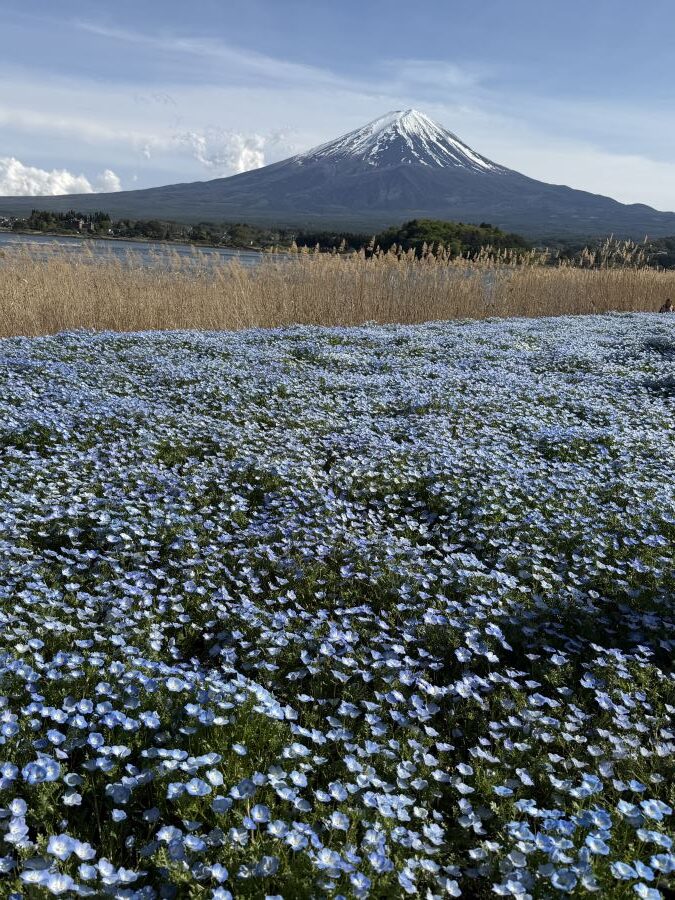
These are also only some of the flowers growing around the park – when I was there in May I saw the Nemophila, but there was also a gorgeous display of pansies and the end of a display of tulips that almost looked like wild flowers until I realised what they actually were.
The Kawaguchiko Lavender Festival
This was an event that took place in Oishi Park, and nearby Yagisaki Park, toward the end of June and beginning of July each year. Also known as the Lavender Herb Festival it happened when the lavender was in full bloom.
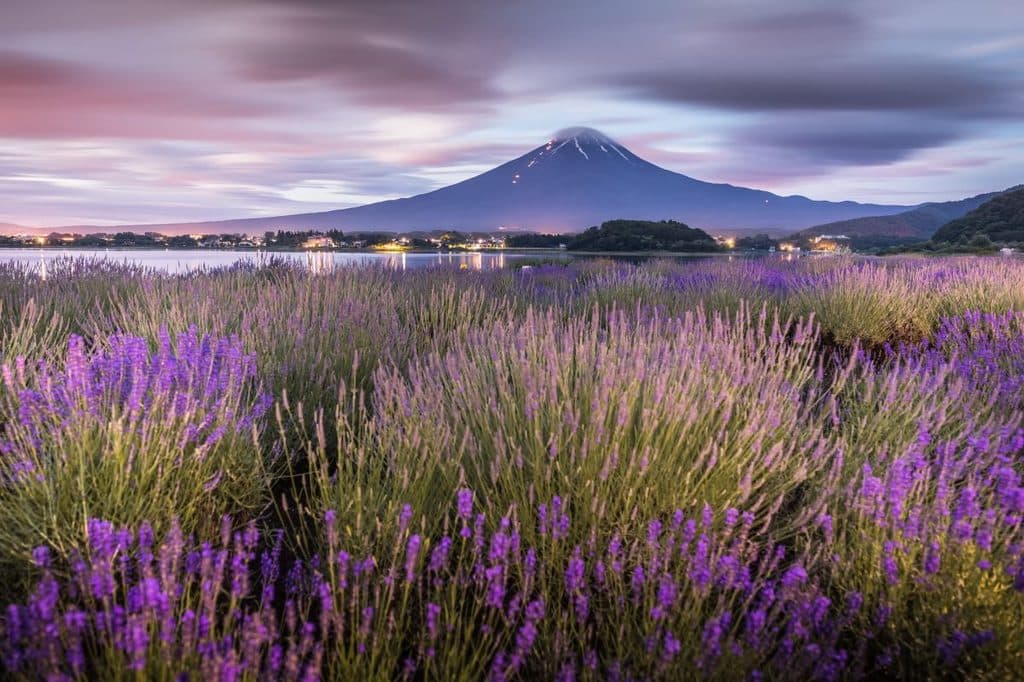
Sadly, the last Kawaguchiko Lavender Festival took place in 2025. The reasoning was that the park, and the lavender were so well known they didn’t need a special festival to bring people to town.
This doesn’t mean you won’t see the lavender though – the fields are still going to be in full bloom giving Mount Fuji it’s perfect carpet of purple at the base, but, there won’t be food stands or festival stages at the site any more.
How Crowded Is Oishi Park?
This was my big worry about visiting here. It’s on every single influencer’s must-see list, plus, it’s on the itinerary for many of the Mount Fuji day tours from Tokyo – I was actually dreading it! But, I was pleasantly surprised.
I arrived at 3 pm and, while the area was busy, the layout means you can easily take pictures without people in them. Most people are concentrated around the area where you walk up toward the shores of the lake, but away from there you can easily find a spot without people in it.
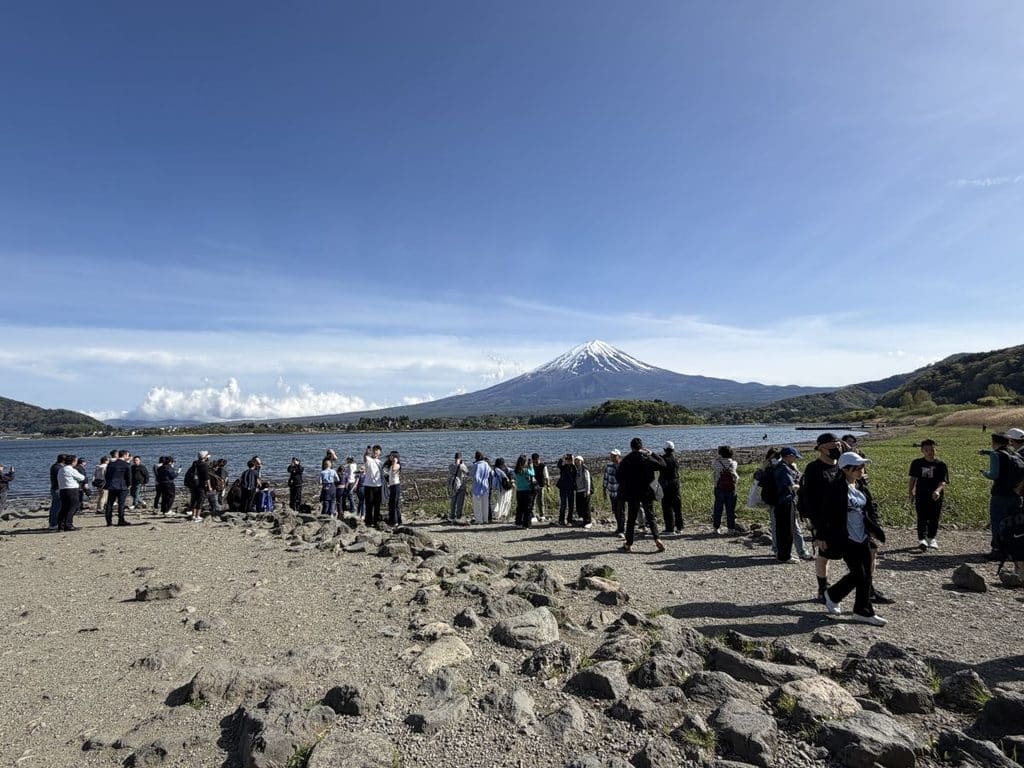
The only thing that I didn’t get to try was the famous (infamous) lavender ice cream. The queue for that was about 30 people deep and it wasn’t something I thought I was going to like (I don’t like parma violet sweets) and so I decided to give that a miss. This might have been a mistake though as they actually sell other flavours including seasonal ones like apple – now, apple ice cream I would like to try.
Upstairs of the cafe is the Kitchen Fujiyama, which was fairly quiet and there’s a gorgeous view including a fun spot by the window which has this cute Godzilla statue and a torii gate that you can use to create false perspective pictures with Mount Fuji, which was kind of fun.
They have a different menu to downstairs and you can buy cute Mount Fuji-themed ice pops – without a queue!
Don’t Forget the Essentials
Travel Insurance: Japan is generally very safe but it’s still a bad idea to travel without insurance. Covermore is one brand to consider.
eSim: Get online for translation, maps, and uploading all of your pictures! I use Ubigi.
Powerbank: All of the above drains batteries, bring a powerbank. I have an Anker one.
Tours and Tickets: Many popular places in Japan need advance bookings. I use Klook in Japan.
When is Oishi Park Open?
The park is open 24-7, so if you have your own transport you could get here before the crowds or stay after they leave – there is free parking at the Natural Living Centre.
If you’re wondering about car hire, check rates here.
If you are coming by public transport and want to see it at its least busy, then try and be on the first bus out of Kawaguchiko at 9 am. That will see you arrive around 9.30 am. According to Google crowd data, the crowds start building at 10 am and are busy until 5 pm.
Another reason to arrive early is that there is a slightly higher chance of seeing the mountain in the morning before clouds roll in.
The cafes and Kitchen Fujiyama do have specific opening hours. They open at 9.15 am and close at 4.45 pm in Summer, 4.15 pm between November and February.
How Long Do You Need to Spend Here?
I was here about 40 minutes and I took a lot of pictures so I’d say that’s about long enough.
If you want to try the ice cream then I’d say you’re going to need an hour or more here to allow time for queuing and eating your treat. Allow ten minutes more if you want to shop at the Natural Living Centre.
How to Get to Oishi Park
The park is the last stop on the Red Line, the sightseeing bus that is the easiest way to get around Lake Kawaguchiko. The name of the stop is the Natural Living Centre.
The first bus leaves Kawaguchiko Station at 9 am. The last bus back from the park leaves at 6.27 pm.
The buses do get full so allow a bit of time to get to the stop so you don’t end up funnelled onto the next one which might be 15-20 minutes away.
The P line also stops here. This doesn’t run as regularly as the Red Line, but is an option.
It takes about 30 minutes to get to and from Kawaguchiko Station and the journey costs ¥520 each way – half that for children. The route is covered by the Mount Fuji North Area pass which costs ¥1,500 for one day or ¥2,000 for two. Buy this at Kawaguchiko Station or, you can get a digital version in advance here.
If you haven’t yet planned how to get to Kawaguchiko from Tokyo, read our guide on whether the train or the bus is the best option for you.
Tours That Include Oishi Park
It’s one of the most popular inclusions for Mount Fuji tours so you will find it on most of them – the difference is more where else the tours visit.
This mini table shows the difference between three of the most popular tours.
They all include Oishi Park at the time of writing, but double check before you book as itineraries can change, also some tours swap to see cherry blossoms in spring and the Maple Corridor in autumn.
| Tour Booking Link | Chureito Pagoda | Oshino Hakkai | Lawson | Healing Village |
| 6 Spots Tour | Yes | Yes | Yes | Yes |
| 3 Spots Tour | Yes | No | No | Yes |
| 4 Spots Tour | Yes | Yes | No | Yes |
A Few Extra Questions
Is It Worth Visiting in Winter?
As I said, there are no official flower listings for the park in winter and while I haven’t been personally, I have seen pictures of the park at that time – and, it still has a level of beauty about it. But I would only bother coming here during winter if Mount Fuji is completely visible.
This picture gives you an idea of what to expect if you visit in winter.
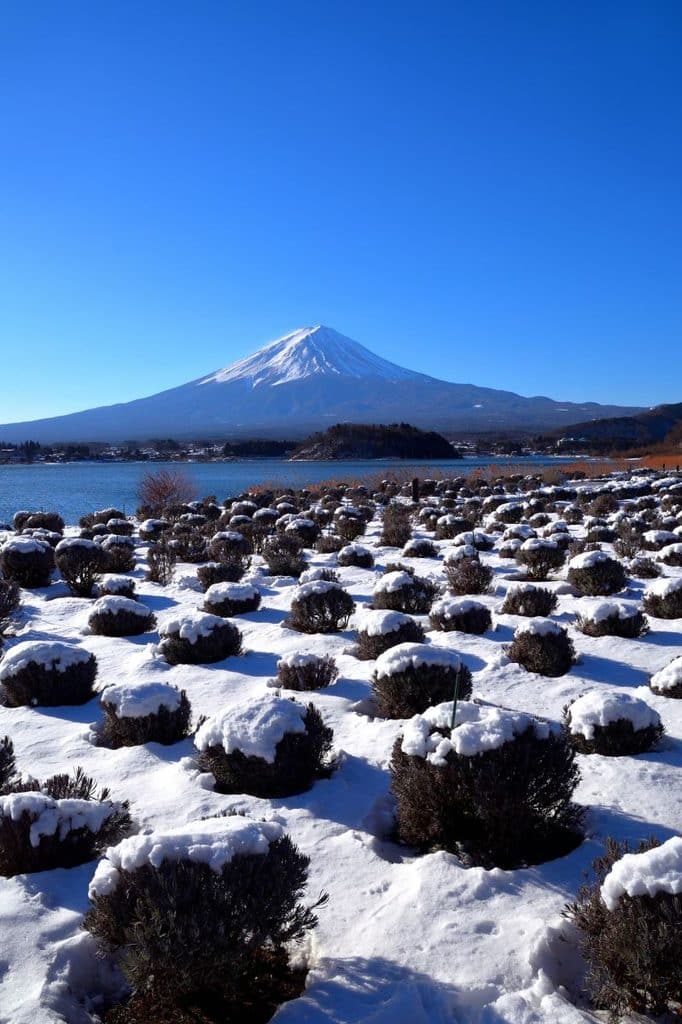
If you are here during flower season and it’s just a cloudy day though, the flowers are still pretty enough to warrant a visit – and the queues for the ice cream will be less! See more ideas on what to do in Mount Fuji on a cloudy day here.
What Else is Nearby?
The incredibly beautiful Kubota Itchiku Art Museum – which actually displays an incredible set of kimono – should not be missed and is just a few stops back toward to Kawaguchiko on the bus.
If you are here in Autumn, the famous yellow maple corridor is also nearby.
A few more stops south on the Red Line also brings you to the Kawaguchiko Music Forest Museum.
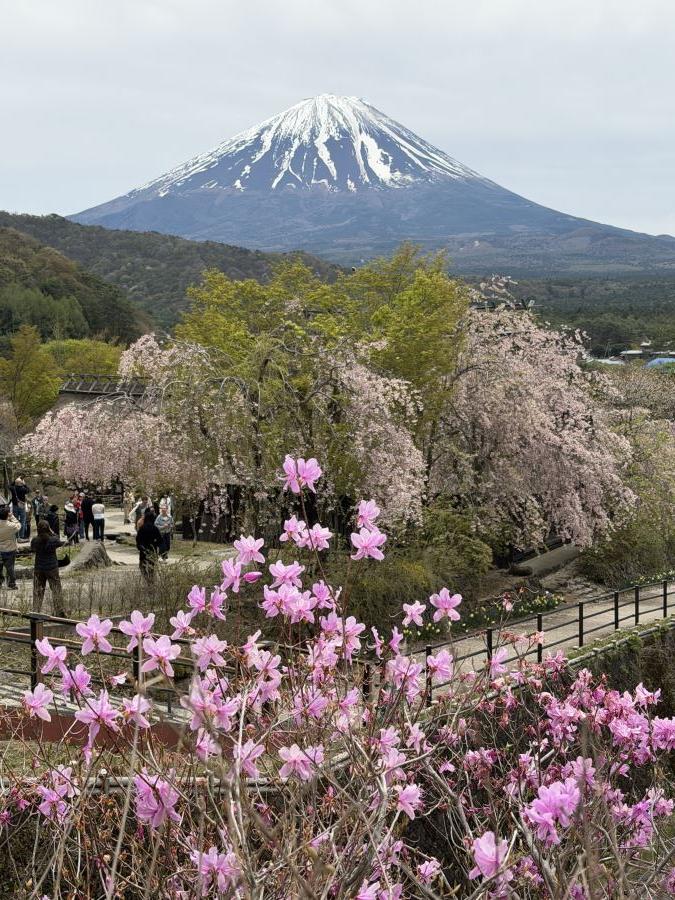
If you are driving, you are also relatively close to the very pretty Saiko Iyashi-no-Sato Nenba village (also known as the Healing Village) pictured above.
This is a reconstructed traditional village that’s full of craft shops and craft workshops – it also has a great view of Mount Fuji. It’s only a 20-minute drive from here. The village is accessible by public transport, but you have to take the long way from Oishi Park. See more in our guide to Saiko Iyashi-no-Sato Nenba.
Are There Shibazakura at Oishi Park?
No. Shibazakura, also known as moss phlox, are vibrant pink flowers and if you’ve seen pictures of Mount Fuji with a carpet of them in front of it, you were probably looking at images of the Fuji Shibazakura Festival that takes place between mid April and through May.
You can get to the festival on buses from Kawaguchiko Station, but it’s not at Oishi Park. It’s actually held at Fuji Motosuko Reort about 30 minutes drive away.
And that’s all I think you need to know about visiting Oishi Park near Kawaguchiko. While I wasn’t looking forward to coming here, I enjoyed it far more than I thought I would, and the flowers are absolutely beautiful.
Get Personalised Planning Advice
Why not book one of our personalised planning calls? You can book 30 or 60-minute calls to discuss your itinerary, ask questions or clear up any concerns.
Click here if you’d like more details, or, go straight our booking page if you’re ready to check availability. It could save you time, money and stress.

Who Writes This Blog?
My name is Helen Foster, and I’m a journalist and author. My travel articles have appeared in publications including The Australian, Escape, RAC Horizons, Jetstar Magazine, Sainsbury’s Magazine, and more.
I’ve travelled to Japan nine times before – solo and with my partner and visited over 50 towns and cities. My last visit was in April 2026, so everything here is pretty up to date.