
- 11 Day Trips from Kyoto - 3 September 2026
- How to Spend One Day in Kyoto’s Sake District - 31 August 2026
- 10 Affordable Souvenirs to Bring Home from Japan - 24 August 2026
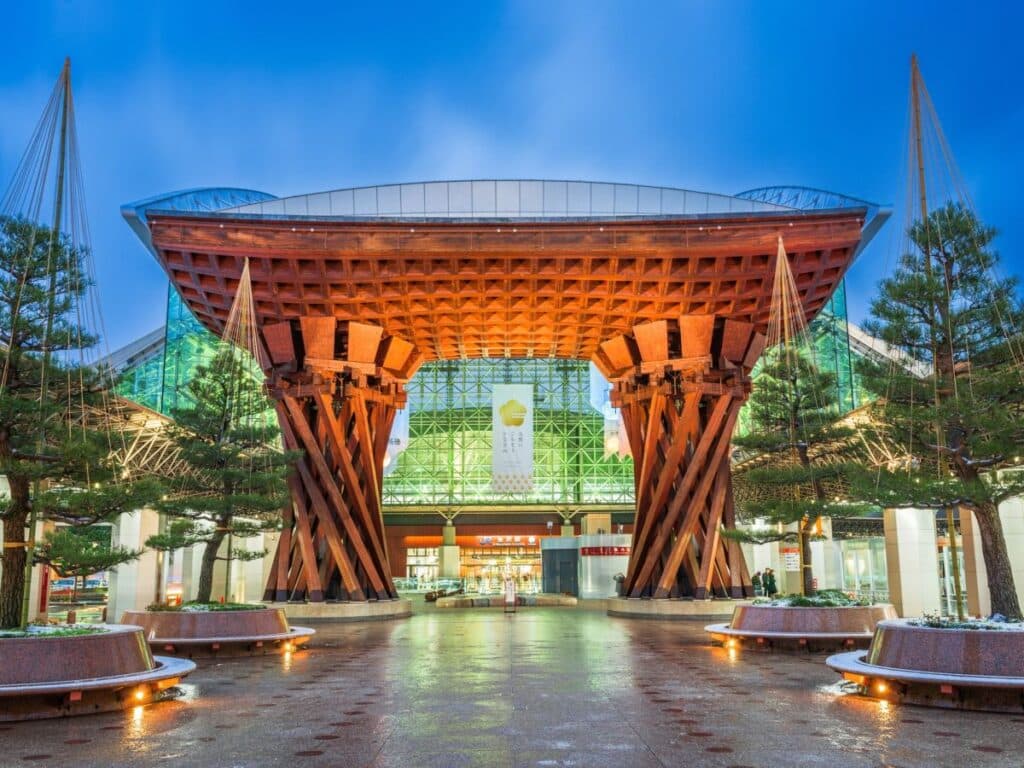
Two days is the perfect amount of time to see all the main sights in Kanazawa – and a few you might not have heard of before. But how should you organise your days to fit it all in? Our two-day Kanazawa itinerary can help.
Article by Helen Foster. Disclosure: Some links in this post are affiliate links. See our Affiliate Disclosure.
Arriving in Kanazawa
Chances are you’ll arrive at the Kanazawa Station area – even buses from nearby towns like Shirakawago or Takayama stop here.
From the station, head to your hotel and drop off your bags – assuming you haven’t shipped them via a luggage service and then either walk or use Kanazawa’s excellent bus service to get to our first stop on your two-day tour – Omicho Market.

The timings below assume you are arriving in Kanazawa by 10 am, but they are only rough guidelines – if you arrive a little later, follow the same route, but adjust the timings a little to fit around the closing times of your last sight.
10-11.30 ish – Omicho Market
Perfect for breakfast or an early lunch, Omicho Market is a mix of stalls selling fresh fish and other food goods, and restaurants serving up the day’s catch.
I suggest starting here, firstly because it will fuel you up for the busy day ahead, but you may also see somewhere else you want to come back to at another time for breakfast, lunch, or, for some restaurants, dinner.

You can enjoy a sit-down meal here (I visited Mori Mori Sushi Omicho at the back of the market and picked the chef’s selection for 2000 yen) or, if you’re itching to get moving, there are takeaway sushi stalls that you can stand at and eat in for less than 1000 yen.
The croquettes here are also really good, and if you go to Musbi, a stall facing onto the main road (marked むすび近江町市場店 on the map), they come in a cute heart shape.
Save Money with Klook & Japlanease
If you plan on buying tickets or tours from Klook for when you’re in Japan, you could save up to 10 per cent by using the code JAPLANEASEKLOOK at the checkout. Click here to see what’s on offer.
T&Cs apply. Some items, including Tokyo Disney and USJ tickets, are not available for discounts.
11.30 – 12.30 ish – Kazauemachi Chaya
It will take about 15 minutes to walk to Kazauemachi Chaya from Omicho Market.
The old geisha district of Kazauemachi Chaya isn’t large, just a few winding streets, but it’s beautiful and, because it has a fraction of the tourists of nearby Higashi Chaya, it’s usually more peaceful.

The whole place is photogenic, but the must-see points are the two staircases that lead down into the area. When you’re putting in your route from Omicho, make sure you set your destination as either Kuragarizaka orあかり坂, both of which are marked on the map with purple circles, to ensure you find these.
Kuragarizaka is easier to spell, but it’s a bit harder to find as it requires walking around the side of a shrine to find the footpath. I got a bit lost, so I’d suggest using あかり坂 if you can (it’s also slightly prettier – that’s it above) – then walk up to Kuragarizaka from within Kazuemachi Chaya.
Depending on how many photos you take, you’ll need 20-45 minutes here.
Once you’ve finished exploring, cross the river and head to Kanazawa’s most famous sight – the old geisha district of Higashi Chaya.
12.30-3 ish – Higashi Chaya
Lined with wooden buildings that used to be old teahouses, this is probably what you came to Kanazawa for. Some teahouses are still active, some contain geisha museums, but many now house shops, restaurants, and cafes.
This area also has many shops selling gold leaf-related goods, some of which must be seen to be believed – like the amazing teahouse at Hakuza Hikari-gura – the outside is platinum leaf, and the inside is coated in gold leaf.

And with a two-day trip, you have time to spend making your own gold-leaf-covered souvenir here. I went to Bikazari Asano, owned by gold leaf company Hakuichi, which is right in the middle of Higashi-chaya, and came out with a very cute box topped with a gold waving cat.
See our longer review of the Hakuichi Gold Leaf Experience to learn what’s involved and how to book.
Our guide to Higashi Chaya pinpoints some of the shrines and museums not to miss while you are here.
To wander around all the sights of Higashi Chaya, and make your box will take 2-4 hours, depending on how many of the shops you decide to explore! If you’re a shopper and want to stop off at our next stops, check the closing and last entry times carefully.
3-5 pm – Head to a Museum
One reason I enjoyed Kanazawa so much was the variety of things to do here – it’s not just shrine, temple, pretty street, repeat, but even with two days in Kanazawa, you probably won’t get to all the museums on offer in Kanazawa, although do check, as some, like the art museum, are open until 8 pm some nights.
For most of these, it will be best to get a bus from Higashi Chaya – the 金沢周遊バス[右回りルート]service goes to all of them.
The 21st Century Museum of Contemporary Art
If you like modern art, this space with permanent exhibits from artists including James Turrell and Anish Kapoor and regular temporary exhibitions will be on your must-do list.

When I visited, the building was being repaired from damage from the Noto Peninsula earthquake, so I haven’t seen it all, but the quirky art I did see more than made up for that. And I really like James Turrell, so just sitting in the peaceful Blue Planet Sky was enough for me.
Possibly the most famous exhibit is Leandro Erlich’s Swimming Pool. If you want to go inside this, you will need to make a timed booking on the museum website. Slots can run out, so I’d advise making this in the morning to ensure you don’t miss out. Make the booking from here.
DT Suzuki Museum
Daisetsu Teitaro Suzuki is the man credited with bringing the understanding of Zen Buddhism to the West.
If you are interested in the spiritual side of Japan, this is going to be a big draw for you as the museum explains his philosophies. There are also many spaces to sit and relax with your thoughts. Not being a fan of my own thoughts, I hurried through much of the interior but then reached the area with the small pond, and time pretty much stopped.

There’s something in the pond that creates ripples. One minute, it’s still, and then there’s a ‘blurp’ and a bubble, and ripples start spreading across the pond from that bubble.
It’s a lovely place to sit and stop all the stress and busyness that can be involved with a trip to Japan and get back to the quiet, calm, spiritual place that it actually is.
The DT Suzuki Museum is open six days a week from 9.30 am to 5 pm. It’s closed on a Monday, except for public holidays. It costs 310 yen for adults, children are free.
The Sweet Mold Museum
This was such a surprise and one of the highlights of my Kanazawa trip.
Sweet maker Morihachi has been making wagashi (traditional Japanese sweets) for over 400 years. These sweets come in many different shapes and sizes, made via wooden molds, hundreds of which are displayed in this exhibit. It’s fascinating.

The best bit is the tunnel. As you go from one room of the museum to another, you go through a corridor lined with displays of the molds, but someone with a sense of drama has set this to the music of 2001: A Space Odyssey, and it’s just epic.
Don’t forget to pick up some sweets on the ground floor before you leave. Their bar-shaped sweet Choseiden, a Japanese hard candy, is one of the three most famous sweets in Japan.
The Museum is open from 9 am to 5 pm and costs 200 yen at the time of writing. Children go for half price. There is an English audio tour.
To find the museum, find Morihachi main store on the map (the correct address is 10-15 Otemachi, Kanazawa, Ishikawa 920-0912, Japan). It’s located upstairs from the main shop.
Kaga Yuzen Kimono Center
This comes up time and time again as a big surprise in Kanazawa. People in my Japan trip planning group on Facebook who have stumbled upon this have loved it.
Kaga Yuzen is a traditional way to dye silk, and this museum and handicraft centre has displays of traditionally dyed kimono using it.
It also offers the chance for visitors to create their own hand-dyed products or to paint fabric gifts like tote bags. They also offer a kimono-rental service if you want to have pictures taken in Kanazawa. See more on their website.
It’s open from 9 am to 5 pm, closed on Wednesday.
Related Read: If you do like the idea of making things on your trip, check out our guide to hands-on experiences in Kanazawa.
Dinner
There’s no shortage of places to eat in Kanazawa – my guide on where to eat in Kanazawa pinpoints some of my favourite spots, with a bowl of the spicy, brothless ramen at Aburaya being my top pick, but you won’t have any difficulty finding somewhere near your hotel.

Where I Stayed in Kanazawa
I stayed at the Hotel Forza, which is a short walk from Kanazawa Station, but also walking distance from Omochi Market, Higashi Chaya and well situated for bus routes for getting around the rest of the city. It’s also surrounded by great restaurants.
You’ll find a list of other suggestions in our guide to where to stay in Kanazawa.
Day Two
This is a jam-packed day if you decide to do everything.
7-8 am to 9.30 ish – Kerouken Garden
This is one of Japan’s three best gardens – and a great place to start your day, as it opens very early.
From March 1 to October 15, it’s open from 7 am to 6 pm. During the rest of the year, it opens from 8 am to 5 pm.
Arriving first thing beats the tour groups who arrive in droves. When I got there mid-afternoon, the famous lantern in the park had a queue of people waiting to have their photo taken.

The garden is pretty large, so depending on how much you love nature, you might want to spend 1-2 hours here. Try to be on the move by 10 am, though, or you will need to squish up the rest of the day.
It’s a 20-minute walk to our next stop from the garden, or you can take the 53 or 96 buses from the north of the park, which will take about 12 minutes.
10-11.30 ish – Ninja Temple
This was hands down the best thing I did in Kanazawa.
It’s no ordinary temple. Built by the local samurai lord, it was as much a place to hide from attack as a place of worship. You’ll find hidden rooms, some with very gruesome uses, and even an entire concealed floor.
I nearly didn’t come here on my trip as I had read you have to book a tour in advance, and you can’t do it online – but, in reality, ‘booking a tour’ can be as simple as arriving, heading to the intercom and asking when the next one with a spot is. I got on within 15 minutes.

If you want a guaranteed spot at a set time though, ask your hotel to call them on 076-241-0888 to make a booking.
The tour is in Japanese, although there is an English booklet, but it’s still well worth it. See my longer review on the Ninja Temple for an idea of what to expect.
You’ll need at least an hour here. If you get here without a booking and have some time to wait, the nearby temples of Saihoji, Kourinji and Gyokuruji have some fun touches. See more details in our guide to interesting Kanazawa shrines. If you want to explore these as well while you are here, add another 30-60 minutes to your schedule.
Need Extra Planning Help?
Our Japan trip planners can help. You might like our First-Timers Japan Planner, which will help you plan your trip to Tokyo, Kyoto and Osaka step-by-step, including tips on everything from picking hotels to sightseeing and dining. Or our super-duper Tokyo Disney Planner makes arranging your park trip MUCH easier. Find them in our Planners store – printable and digital versions are available.
11.30-1ish – Nishi Chaya
You saw two of Kanazawa’s geisha districts yesterday; the third, Nishi Chaya, is just a five-minute walk from the Ninja Temple.

It’s much smaller than Highashi Chaya – just one small road, but it’s pretty, and you’ll also find two interesting museums on the road – the Doll Museum is home to hundreds of Japanese and international dolls, while the Ninja Weapons Museum next door has a display of Ninja fighting tools and offers you the chance to practise your own skills throwing Ninja stars.
Our guide to Nishi Chaya has more details on the main sights. You probably won’t spend more than an hour here unless you visit both museums or stop for lunch – if you’re just walking through it will only take 5-10 minutes.
1-3 pm – Nagamachi
So far, the places you’ve seen in Kanazawa are the reason why people call Kanazawa ‘Little Kyoto’ – pretty, streets lined with two-storey wooden buildings often decorated with lanterns; this next area is totally different.
Nagamachi is the old Samurai District of Kanazawa, and so instead of being inviting and cosy like the teahouses of the old geisha districts, here the buildings are meant to keep people out!
Start first at the Kanazawa Shinise Memorial Hall, which shows a snapshot of Kanazawa life. It has displays of everything from old shops to a pretty Japanese garden. You’ll find kimono, masks, more dolls and even a tree made of candy. There’s something to please everyone.
Skip the Samurai Museum opposite; the name is a little deceptive, it’s mostly a display of letters and literature, but you may want to stop at Nomura-ke Samurai Heritage Residence.
This preserved home with a lovely garden shows how the middle-ranking samurai lived in this area.

From here, wind your way east through the old district, noting how the architecture changes once you head inside the area itself. The buildings today house shops, cafes and restaurants – and if you’re interested in pottery, you’ll want to spend a little while here as the area sells some great examples of Kutani-yaki, a brightly painted style of ceramics.
If you didn’t eat in Nisha Chaya, Nagamachi is a good place to try a bowl of Kaga Jibune, a traditional duck or chicken hotpot, at nearby Gyohan. See more about this, and some other sights not to miss as you wander in our guide to the Nagamachi Samurai district).
3-4.30ish – Kanazawa Castle and Garden
Kanazawa Castle is not original; the original was damaged by a few different fires, but, it’s still worth appreciating for its traditional-looking white keep.
Viewing the castle from outside is free, but if you want to go inside, it costs 320 yen for adults.

The grounds open 7:00–18:00 (8:00–17:00 from October 16th to the end of February.), the inside of the castle is open from 9 am to 4.30 pm.
The garden here, Gyokusen-inmaru, is also very pretty – and far less crowded than Kenrouken. The original was the private garden of the ruling lord of the time and was destroyed at the end of the feudal era in Japan, but it was reconstructed using the original footprint and documents, and reopened in 2015. The garden also offers a light-up viewing on Saturdays from sunset to 9 pm.
4.30 – 5.30 – Omaya Shrine
Finish your day at this interesting shrine.
It was designed by a Dutch architect and built in 1875. Initially, the glazed area right at the top housed a lantern that used to light the whole city of Kanazawa – and could even be seen as far as the Sea of Japan. The lightning rod on the top is said to be the oldest lightning rod in Japan.

There is also a small garden and some pretty sculptures.
The shrine is open from 9 am to 5 pm, although you can enter the grounds outside of these hours.
And there you have it – two busy, but rewarding days in Kanazawa. I actually stayed here for three nights and explored for two and a half days, and I think that’s the perfect amount of time for a more relaxing pace. If you’re not sure how long you should stay for, take a look at our guide to how long to stay in Kanazawa.

Who Writes This Blog?
My name is Helen Foster, and I’m a journalist and author. My travel articles have appeared in publications including The Australian, Escape, RAC Horizons, Jetstar Magazine, Sainsbury’s Magazine, and more.
I’ve travelled to Japan nine times before – solo and with my partner and visited over 50 towns and cities. My last visit was in April 2026, so everything here is pretty up to date.

