
- What to Do (or Not Do) When Meeting Nara’s Famous Deer - 18 February 2026
- How Long Should You Spend in Nara? - 12 February 2026
- Where to Stay in Hiroshima - 10 February 2026
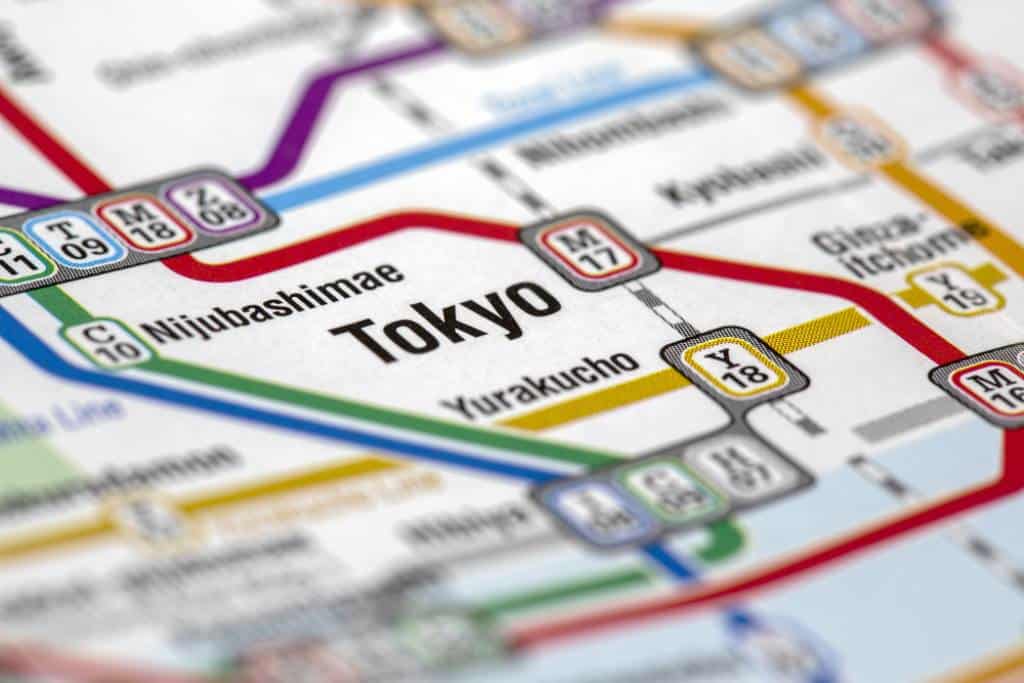
The Tokyo Subway Ticket lets you travel around Tokyo for one fee for up to 72 hours – but, is it worth buying? here’s what you need to know about using it and how to decide if it’s going to save you money or the best way to get around Tokyo on your trip.
Quick Summary
This Tokyo subway pass covers the nine lines of the Tokyo Metro and four Toei Subway lines for 24, 48, or 72 hours. You only need to take between 3-5 trips a day on the lines the pass covers to make it pay.
However, some popular tourist destinations like Haneda Airport, Narita Airport, and Tokyo Disney Resort aren’t on those lines, so you need to look at our itinerary to ensure you’re using the lines it covers.
In the rest of the post, I explain exactly how to tell whether the pass is going to work for you.
Article by Helen Foster. Disclosure: Some links in this post are affiliate links. See our Affiliate Disclosure.
Lots of people say Japan is expensive. I don’t always find that to be the case – if you know where to stay, where to eat, where to shop etc, you can actually get around pretty cheaply, but there’s one thing that always shocks me in the first few days of my trip – how much I spend on the metro!
I get there. Load up my Suica card – the Japanese equivalent of London’s Oyster or Sydney’s Opal cards – and tap my way around for the day. But the next thing I know, it’s empty way before I think it should be.
It’s particularly galling when I know that there’s a Tokyo metro pass for tourists that means you just pay a flat fee for up to 72 hours of travel on the metro, meaning I’d have no surprises, yet I never think to buy it.
This post should, therefore, really be called ‘the ticket I always forget to buy, so I’m writing a blog post about it so I might actually remember on my next trip’, but that’s not very user-friendly, is it?
So, here we go…
How Much is the Tokyo Subway Ticket?
At the time of writing it costs the following amounts…
24 Hours – 800 yen for adults, 400 yen for children
48 Hours – 1200 yen for adults, 600 yen for children
72 Hours – 1500 yen for adults, 750 yen for children
Sounds like a bargain doesn’t it – but hold on…
One reason traveling around Tokyo can empty your Suica card so quickly is that many different companies run transport in the city, and if you swap between them, you end up buying two tickets rather than one.
This also means that the Tokyo Subway pass doesn’t work on every line in Tokyo, just those owned by the Tokyo Metro and the Toei Subway.

Are the Lines You Need Included in the Tokyo Subway Pass?
This is the key point of ensuring the pass is worth it for you.
What Lines Are on The Tokyo Metro?
Tokyo Metro runs nine of the metro lines in Tokyo including the…
Ginza Line – the orange one on the map
Maranouchi Line – the red one on the map
Hibaya Line lines – the silver one on the map
Tozia Line – the sky blue one
Chiyoda Line – the green one
Yarakucho Line – the gold/beige one
Hanzomon Line – the purple one
Namboko Line – the emerald green one
Fukotoshin Line – the brown one
Basically, if the station nearest your hotel has a blue logo with a swirly M on it, that’s a Tokyo Metro station. You can also find the map here.

What Lines are on the Toei Subway Line?
There are four lines on the Toei Subway Line
Asakusa Line – the rose pink one
Mita Line – the darker blue one
Shinjuku Line – the leaf/pale green one
Oedo Line – the magenta-pink one
Between them, you’ve got a LOT of Tokyo covered under this pass – basically all of the thick, solid, colored lines on the map, but not everything.
So, let’s look at what lines you can’t use the pass on…
What Isn’t Included on the Tokyo Subway Ticket?
Lines run by the JR company aren’t included in the Subway ticket. This means you can’t use it on…
The Yamanote Line that runs in a big loop around the middle of Tokyo – marked in grey and white on the map
The Tokyo Monorail from Haneda airport
The Tokyo Monorail around Odaiba
The Narita Express that gets you from Narita Airport to the city
The Narita Sky Access line that takes you to Asakusa
Nor are lines run by private railways, which are the thin colored lines on the subway map. Some of these you might want to use are…
The Keiyo Line to the Disney parks
The Tobu Skytree Line from Skytree to Asakusa
There are a few others, but those two are the most touristy ones.
So, in a nutshell, if you booked your hotel on the Yamanote Line and plan to use that to get you around Tokyo 90 percent of the time, or you’re planning a Disney and Odaiba extravaganza, this pass isn’t the best choice for you.
If like me, you can’t bear the Yamanote Line as it’s really, really busy and prefer to use the metro, it might work – but, you need to be doing enough metro journeys in a day to make it viable.

When Does the Pass Become Cost-Effective?
I did the maths using the Navitime app (the process is the same as in this post, you can filter by Tokyo Subway Ticket) and worked out that if you buy a 24-hour ticket (800 yen), you’ll need to take at least 3-4 longer Metro trips or five short ones to make the pass pay for itself
A short journey would be something like from Shinjuku Station to Shibuya on the Metro which costs 170 yen (it’s ever so slightly cheaper on the Yamanote Line)
A longer trip would be something like Shinjuku Station to Akihabara or Tsukiji Outer Market which will cost 200-220 yen, depending on what route you take.
Or, I actually did remember to buy the pass on my May 2023 trip. I was going to the Warner Bros Harry Potter Studio Tour, which you can reach via the Oedo line to Toshimaen Station. From my hotel that was a 660 yen round trip. I therefore spent the morning hopping on and off the metro to see a few sights, and the pass definitely paid for itself that day. So, if you’re going on the Studio Tour it could be a good choice for you.
If you’re not sure which stations are close to the stops on your itinerary, have a look at our guide to Tokyo’s top attractions, as we include the nearest station to most of the big sights.
If you buy a 48-hour ticket (which works out at 600 yen a day), you’ll need to take four shorter Metro trips or three longer ones each day (8-6 over 48 hours) to make it pay for itself.
If you buy a 72-hour ticket (500 yen a day), you only need to make three short or long trips each day (or 8-9 total trips in 72 hours) for it to pay for itself.
That’s doable if you’re traveling from one side to Tokyo to the other and back to your hotel – and making at least one other trip that day.
Need Extra Planning Help?
Our Japan trip planners can help. You might like our First-Timers Japan Planner, which will help you plan your trip to Tokyo, Kyoto and Osaka step-by-step, including tips on everything from picking hotels to sightseeing and dining. Or our super-duper Tokyo Disney Planner makes arranging your park trip MUCH easier. Find them in our Planners store – printable and digital versions are available.
If you don’t want to do the maths, my feeling is, that the longer passes are more likely to pay off than the 24-hour one unless you’ve got a really busy day, and it’s also more likely to be a good investment if you’re only in Tokyo for 2-3 days and want to see all of the main sites in that time.
It might not be the best option if you’re focusing on one area a day and not going out again by train in the evening.
It’s also a very good idea if you’re traveling with smaller kids or don’t want to walk everywhere. You might take shorter hops on the metro than someone who wants to wander around more.
Save Money with Klook & Japlanease
If you plan on buying tickets or tours from Klook for when you’re in Japan, you could save up to 10 per cent by using the code JAPLANEASEKLOOK at the checkout. Click here to see what’s on offer.
T&Cs apply. Some items, including Tokyo Disney and USJ tickets, are not available for discounts.
The Subway Ticket vs Suica or Pasmo
Suica and Pasmo are the two main ‘tap and go’ cards you can use to get you around Tokyo, so you might wonder which is better. Well, the cards have some benefits – and some disadvantages – over the Tokyo Subway Pass.
Benefits of Suica Over the Subway Ticket
You don’t have to think about what company you’re on – they work on everything including the monorail and Yamanote Line.
You can use them on buses. Catching buses is a lot easier than you might think and really does help keep your steps down each day if you do need to try and limit your walking for some reason.
You can use them to pay for things in some shops and some vending machines which is great if you don’t want to carry much cash.
You get a tiny discount on fares – but it’s like 2 yen a journey so it’s probably not a deciding factor on the average holiday.
Disadvantages
If you do a lot of short trips in a day the costs on Suica do mount up – with the set tickets you know what you’re spending on transport for three days making budgeting easier.
You have to pay for the card in the first place, which costs 500 yen (although you can now add them to your phone). This is refundable if you return the card at the end of the trip, but if you don’t plan to do that and are only in town for a few days, the ticket becomes even more cost-effective.
You could end up with cash left on it. You can get this back at the end of your trip, but there is a refund fee.
It’s currently quite hard to buy the normal IC cards in Tokyo – you have to buy the tourist-orientated cards which you can’t get refunds on.
You can run out of funds without realizing which makes for much apologizing to all the people behind you when the barrier won’t let you through!
Note – you can always buy a single ticket on the metro with cash. You don’t have to have a card or a ticket, they’re just both far more convenient options.

So, if you have considered all of that and decided that one of the Subway Tickets is worth it…
Need Extra Planning Help?
Our Japan trip planners can help. You might like our First-Timers Japan Planner, which will help you plan your trip to Tokyo, Kyoto and Osaka step-by-step, including tips on everything from picking hotels to sightseeing and dining. Or our super-duper Tokyo Disney Planner makes arranging your park trip MUCH easier. Find them in our Planners store – printable and digital versions are available.
Where Do You Buy the Pass?
It’s available in heaps of places including offices at Haneda and Narita airport, Bic Camera stores in Tokyo, Metro offices – and even some hotels sell it.
Find a full list of locations here.
They sell the Tokyo Subway pass for tourists, so it’s only available to non-residents of Tokyo and some surrounding regions, so, you will need to show your passport to buy it.
If you prefer to have all your ducks in a row before you travel you can buy the pass in advance via Klook.
The pass gets electronically stamped the first time you run it through a barrier – and from then, you have 24. 48 or 72 hours to use it.
So, if you use it at 7pm on a Monday, it’s valid until 6.59pm on Tuesday. Ditto, the 48 and 72-hour passes.
This might sound kind of obvious, but the Japan Rail Pass only works on calendar days (so if you first use a 7-Day pass at 7pm Monday it runs out at midnight on Sunday) and so you might have assumed these timings would be the same, but it’s not.
How Do You Use It?
It’s a paper ticket and you just put it into the barriers as you pass through. Remember, the first time you go through the barrier is when the clock starts ticking.
If you buy the ticket in advance from Klook, you get a voucher containing a QR code. You then just scan this at the correct ticket machines at one of the selected stations (there are a lot of them including Shinjuku, Asakusa, Shibuya, Ginza, Shimbashi, and Ueno) to get your actual ticket. All the details are on your voucher.
So there you have it. Our guide to the Tokyo Subway Pass – let us know if you have any further questions and we’ll do our best to answer them.
Oh, if you’re also traveling to Osaka, you might want to check out our guides to some similar tickets there – starting with the Osaka Amazing Pass.

If you’re looking for somewhere to write all your Japan plans check out our Japan-themed notepads on Amazon.
With 120 lined pages they are perfect for planning all the elements of your Japan visit.

Who Writes This Blog?
My name is Helen Foster, and I’m a journalist and author. My travel articles have appeared in publications including The Australian, Escape, RAC Horizons, Jetstar Magazine, Sainsbury’s Magazine, and more.
I’ve traveled to Japan eight times before – solo and with my partner and visited over 25 towns and cities. My last visit was November 2024 so, everything here is pretty up to date.

