- How to Spend One Day in Nara - 29 September 2026
- 12 Things That Seem Easy – Until You Try Them in Japan - 23 September 2026
- Is it Worth Paying Extra at Tofuku-Ji? - 16 September 2026
Explore Miyajima Island’s highlights, from the iconic torii to local cuisine and friendly deer, in just one day.
Whether you’re staying for a few days in Hiroshima and visiting Miyajima on a day trip, or staying on Miyajima overnight and wondering how to fill your time once you arrive, our one-day plan shows you the best the island has to offer.
First up, some housekeeping – if you’re hoping to combine visiting both Hiroshima city and Miyajima Island together in one day, this isn’t the best post for you. You won’t fit all of the below in half a day. Have a look at our guide to visiting both Hiroshima and Miyajima in one day instead.
Article by Helen Foster. Disclosure: Some links in this post are affiliate links. See our Affiliate Disclosure.
Timing Your Visit
Miyajima is not a late-opening town. Most sights, shops and many restaurants close at 5 pm, perhaps an hour later in summer, so don’t get here too late in the day.
If you’re coming from Hiroshima, I would aim to be on the ferry by 8 am to make the most of the day. If you are coming from further afield, that’s okay, but you’ll need to spend a little less time than I suggest below if you don’t want to miss out on some of the later stops.
Getting to Miyajima
There are two ways to get to Miyajima from Hiroshima.
You can take the Sanyo Line train from Hiroshima Station and other stops in the city to Miyajima-guchi Station (25 minutes), where two different ferries can take you across to the island in another 10 minutes. Or, if you are staying near the Peace Park, you can take the Aquanet ferry to Miyajima. This takes around 45 minutes.

For full details on the different ferries, their costs, plus a guide as to which might be best for you, take a look at our guide to Miyajima ferries.
Both ferries come into the same area of the island – although at slightly different jetties – so the following plan works no matter how you arrive.
8-9ish – Itsukushima Shrine and Torii Gate
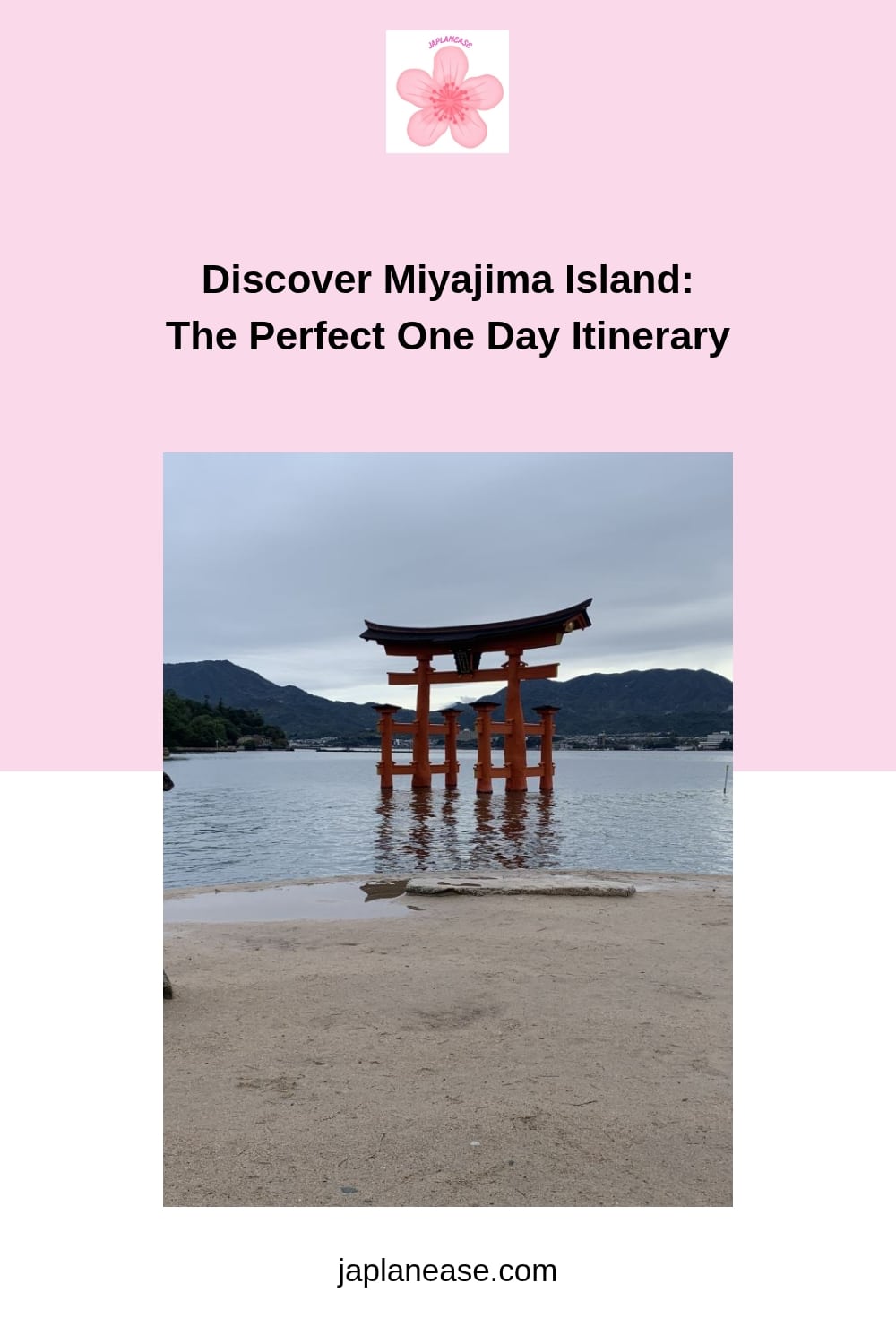
The primary reason most people visit Miyajima is to see the floating torii gate associated with Itsukushima Shrine. This is best seen around high tide, so if the tide is up when you arrive on the island, visit this first and take all the pictures, as it might look very different in a few hours’ time.
Conversely, if you arrive in the morning and the tide is out, don’t worry – as you’re here all day, at some point you will get a view of it ‘floating.’
You can view the torii gate from the shoreline or get direct views from inside the shrine.

The shrine is open from 6.30 am until at least 5 pm – the exact closing time varies by season. Check them here for the time of your visit. If you are here before about 8.30 am, go into the shrine now. If you arrive after this, head to the next stop to beat the crowds – you can come back to the shrine later.
If it’s low tide when you arrive, you can walk out to the torii gate, which gives a very different perspective of it – you can’t really gauge its size from the shore, but you will if you’re standing under it.
Related Read: To check tide times to make sure you see the gate float, read our post on Tides in Miyajima.
9-11ish -Catch the Ropeway
If you arrive on Miyajima early, then I’d suggest heading straight to the ropeway to beat the crowds, which can develop throughout the day.
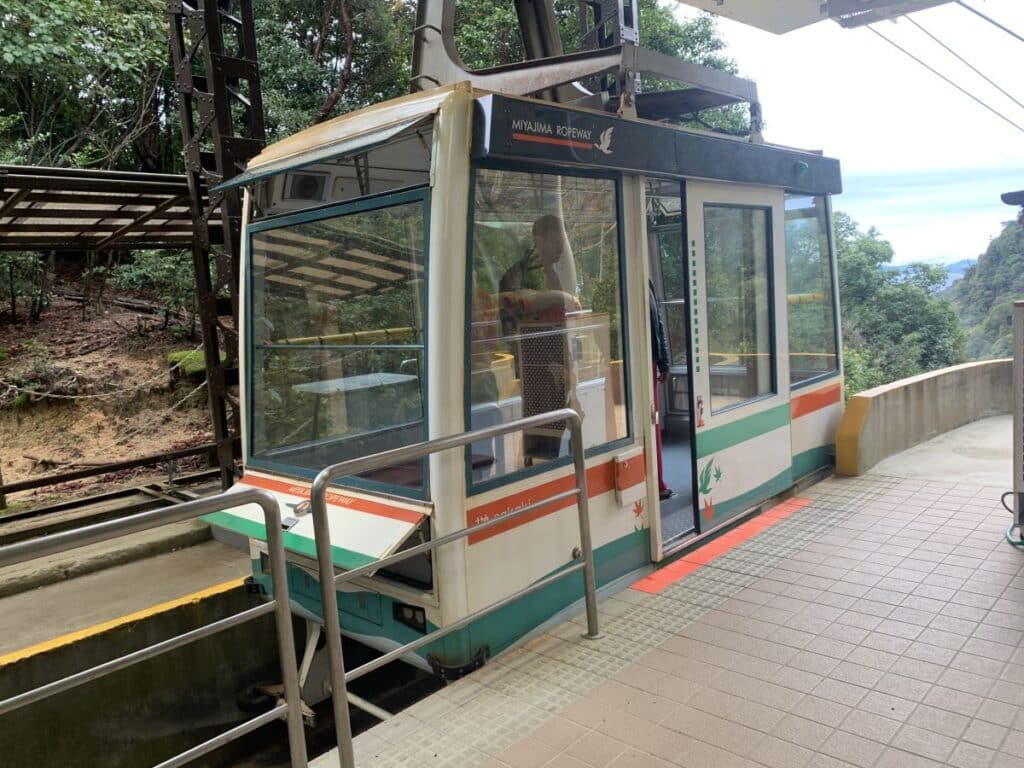
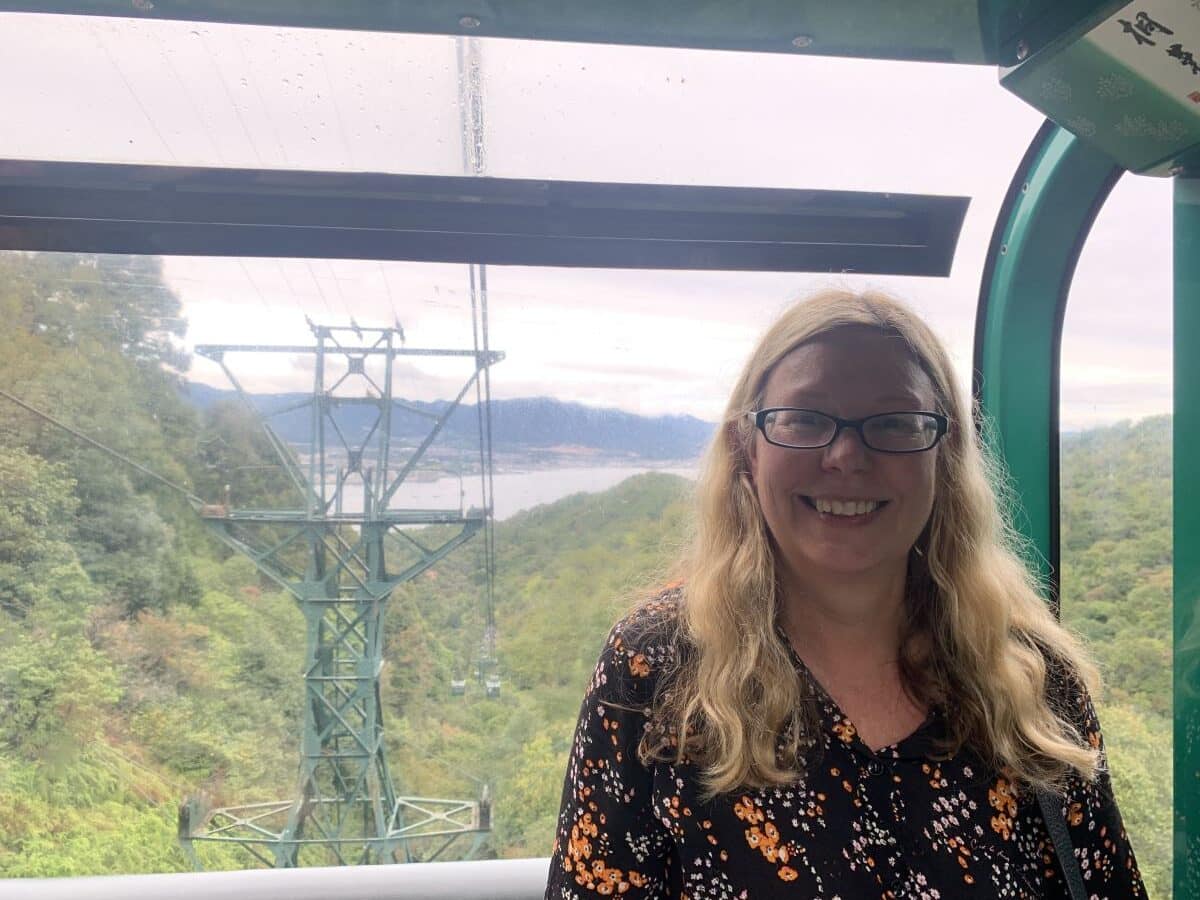
The ropeway takes you to the top of Mount Misen, 530 metres above sea level, where there are beautiful views around the island, but it’s also home to a shrine containing the ever-burning fire.
This was lit 1200 years ago by the monk Kukai, and it’s said that it has never gone out; a kettle above the flame boils water that it’s said can cure any illness.
The flame was also used to light the eternal flame that burns in the Peace Park in Hiroshima. The shrine complex also includes a few other interesting buildings.
Catching the Ropeway
- To catch the ropeway, you can either walk through town and then through Momijidani Park – which takes about 10 minutes, or catch the shuttle bus to reach the first station.
- If you are less mobile, definitely catch the bus. The schedule for it is here.
- There can be a queue, but they ask other guests to give priority to those who need a little more support. Wheelchairs cannot be accommodated on the ropeway. You also can’t carry strollers on board.
- The ropeway is in two parts. You take the small ropeway up to Kayadani Station, then a bigger car that takes you to the summit station, Shisiiwa. This alone has pretty views.
- If you want to reach the eternal fire, it’s about a one-kilometre walk around the summit. Note that this route isn’t paved and is uneven in places. I had to give up as my leg wasn’t strong enough to climb over even small rocks at this time. I’m still disappointed. If you’re not (literally) two weeks away from a hip replacement, though, you should be fine!
- From here, you either reverse and catch the ropeway back down, or you can walk down, which takes around an hour.
- Tickets cost 2000 yen per adult for a return fare. Children cost 1000 yen. You can buy a ticket at the ticket office or use an IC card like Suica.
- The ropeway runs from 9 am to 4 pm seven days a week. Queues can get long, so make sure you get there as early as you can. If you are traveling on Japanese holidays, or other busy days, advance reservations may be required. Check the website to see if your date is a reservation-only date.
Stroll the Backstreets
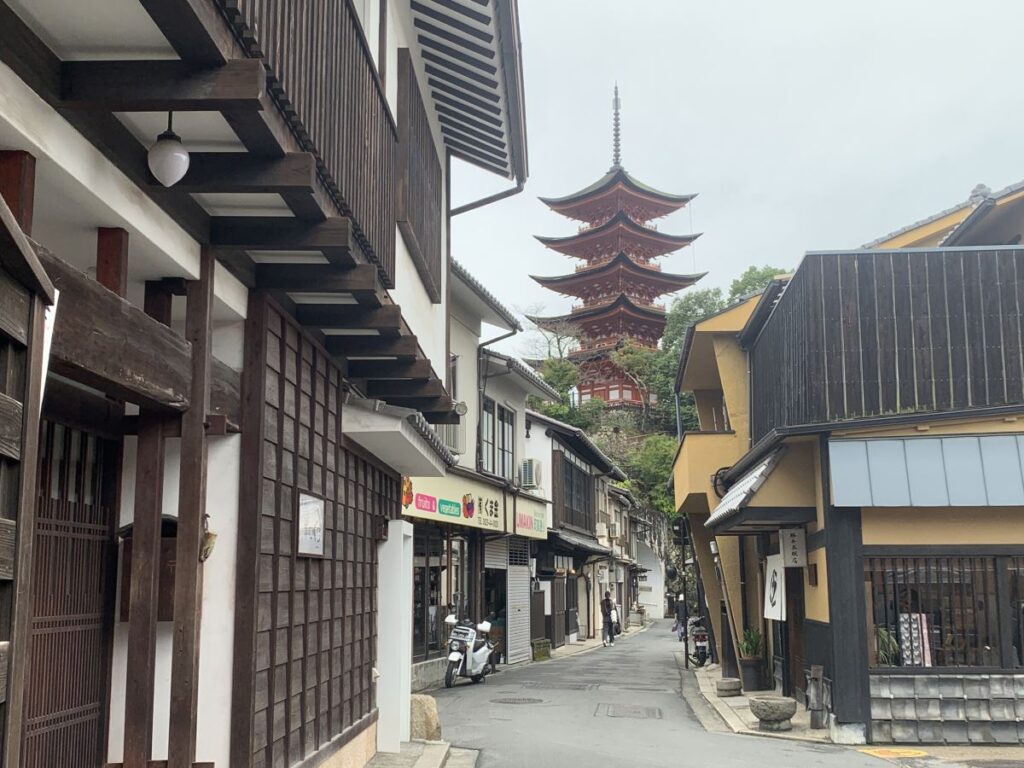
You exit the ropeway the same way as you came in – and again, there is the option to walk or take the bus to the main street. Once here, take your time peeking in the shops, looking at the wood carvings – and keeping your eyes peeled for Miyajima’s cutest residents – the deer.
Like Nara, Miyajima has a herd of wild deer that make the island their home. They are a bit less ‘friendly’ than the Nara deer, as it’s not encouraged to feed them here, and you can’t buy deer cookies like you can in Nara.
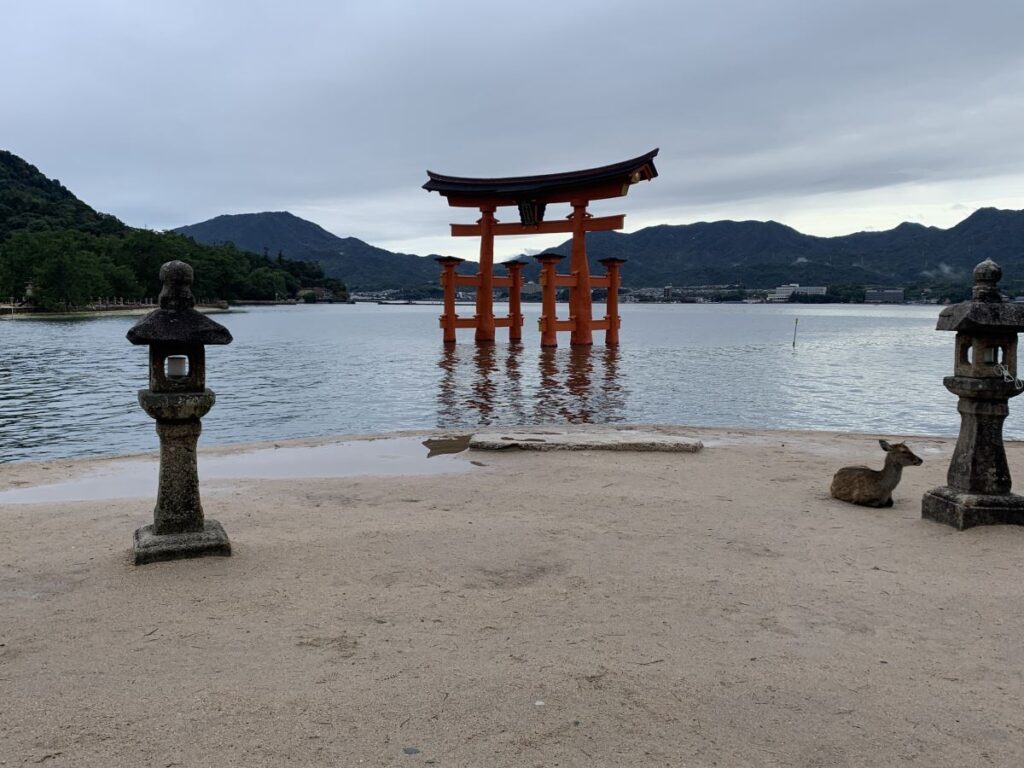
They will, however, try to eat anything that looks like paper – so, keep things like maps, guidesheets out of sight. They’re still cute, though – and, if they decide to pose in the right places, they definitely add to your photographs!
Talking of food…
12-ish – Lunch: Try a Miyajima Delicacy
There are two famous foods in Miyajima – oysters and anago (eel).
Let’s start with the oysters. Miyajima’s special local oysters are made to be cooked, so you’ll find them boiled, breaded or served with egg in many of the restaurants.
You can also buy freshly shucked raw oysters from stalls along the waterfront walk, but these aren’t strictly Miyajima oysters.

I chose to have mine breaded with curry from a restaurant called Torrii close to the Itsukushima Shrine, and they were delicious. They also sell a combo dish of oysters and Miyajima’s other famous dish – Anago.
Anago is a different type of eel than the unagi you usually see served in Japan. For starters, it’s a sea eel (unagi is freshwater), its flesh is whiter, and it tends to be served steamed or simmered, then grilled, while unagi has a sauce. Anago is served on a bed of rice that has been cooked in a broth with the eel bones and trimmings, so it infuses the taste.
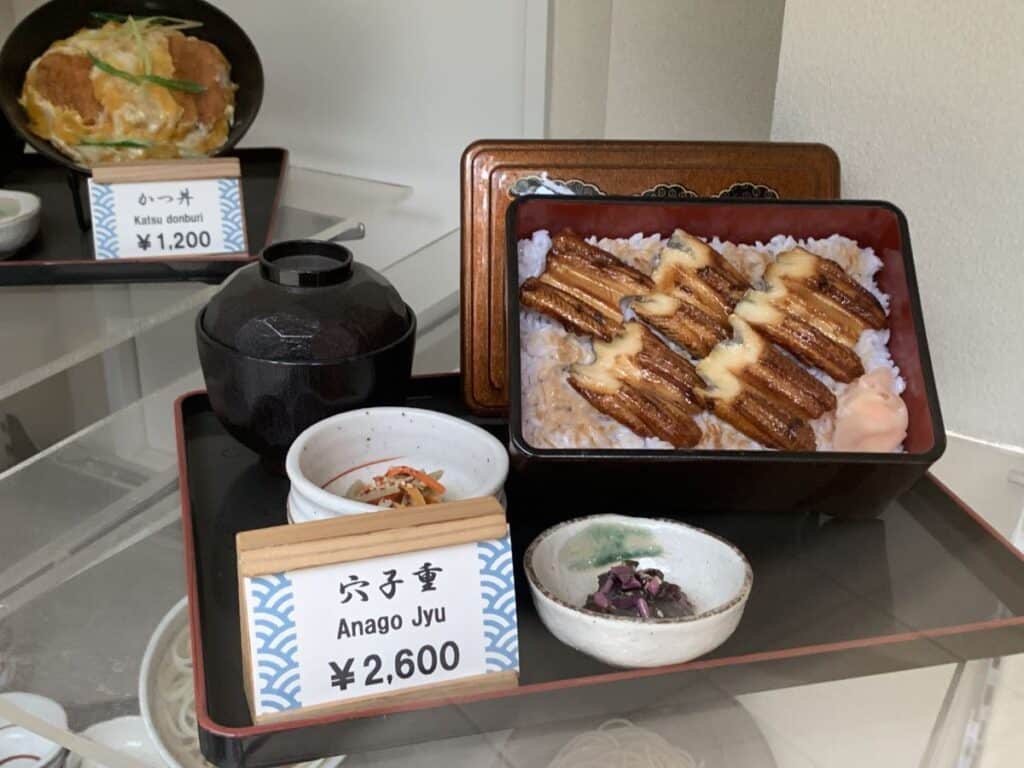
You’ll find restaurants serving anago all over Miyajima, but one of the best restaurants, Fuji-taya, is on the way to our next stop – you might have to wait a little while for a table during peak hours. They are open from 11 am to 4 pm, seven days a week.
The most famous restaurant for serving Anago is actually off the island. It’s called Anago Meshi Ueno, and it’s located on the main road between Miyajima-guchi ferry port and the station. If you want to try both oysters and anago, you could easily finish your day by dining here after you leave the island. They are open from 9 am to 6.30 pm seven days a week – last orders will be earlier than that, though, so don’t leave it too late to arrive.
1-3 ish -Visit Daishoin Temple
Built in 806 AD, this shrine complex is huge, and it’s so full of quirky touches I had to write an entire Daishoin Guide about all the things you can spot here. Three highlights are …
Kaiden Meguri: A dark underground tunnel that claims to bring you enlightenment if you locate and touch the key hidden within.

Henjokutsu Cave: The cave is located right at the back of the shrine. Walk in, and you’ll see a lot of statues – now look down. You’ll see the floor has glass panels embedded in it, and within each of them is sand. This sand represents the 88 shrines of the Shikoku pilgrimage, and it’s said that stepping on them is equivalent to visiting all the shrines and completing the pilgrimage.
The Rakan: These are 500 carved figures with different faces. If you’ve read a few other posts on this site, you’ll know that these figures are something I love finding in Japan -you’ll also see them at Otagi Nenbutsu-ji in Kyoto and Choanji in Hakone. It’s fun to walk around and spot the different facial expressions and postures of the statues.
There are cute statues all over Daishoin – the guy below is there to listen to your complaints.

Daishoin Temple is open 8 am to 5 pm seven days a week. There are a lot more big and small details to see at Daishoin, so take your time – I’d allow an hour at least to wander around here, two if you’re trying to spot everything. Watch how time is going, though, as there are still a few things to do, and they can close earlier than you might think.
Need Extra Planning Help?
Our Japan trip planners can help. You might like our First-Timers Japan Planner, which will help you plan your trip to Tokyo, Kyoto and Osaka step-by-step, including tips on everything from picking hotels to sightseeing and dining. Or our super-duper Tokyo Disney Planner makes arranging your park trip MUCH easier. Find them in our Planners store – printable and digital versions are available.
3-3.30 ish – Head to Hokoku Jinja
From Daishoin, you’re going to start making your way back to the port, but the sights don’t stop yet.
Climb up the steps to Hokoku Jinja – this was the other place on Miyajima that left me in awe. This massive wooden structure overlooks the island.
It was commissioned by the samurai lord Toyotomi Hideyoshi as a place to pray for fallen soldiers, but he died before it was completed, and the next lord to take power didn’t complete it.
That’s why it’s so open – and so interesting.
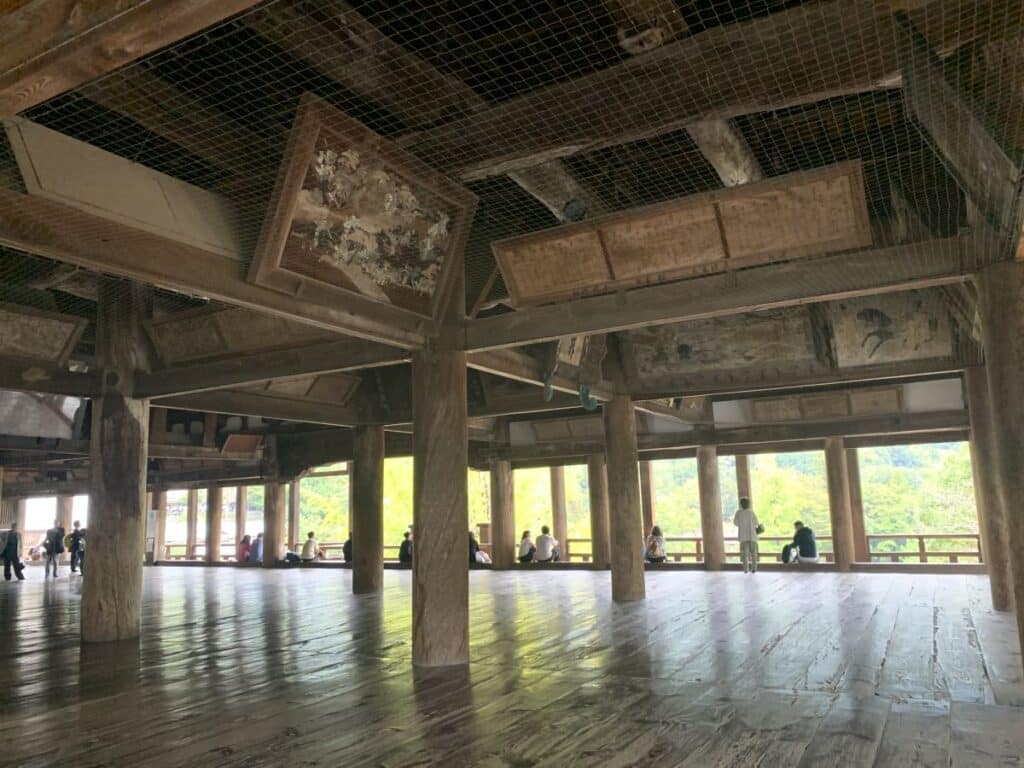
The space is the size of 1000 tatami mats, which gives it its other name, Senjokaku Hall. The ceiling is lined with old paintings and artworks.
It’s nice to just sit on the deck and watch the island from above.
It’s open from 8.30 to 5.30 and costs 100 yen to get in. This is one area in Miyajima where you will need to remove your shoes. They give you a bag to carry them with you.
3.30-4.00 ish – Visit the Big Rice Scoop
If you love the quirky side of Japan, this stop is for you.
Tucked away in the local community centre on Miyajima is what’s believed to be the World’s Biggest Rice Scoop – a behemoth that weighs 25 tonnes and measures 7.7 metres in length.
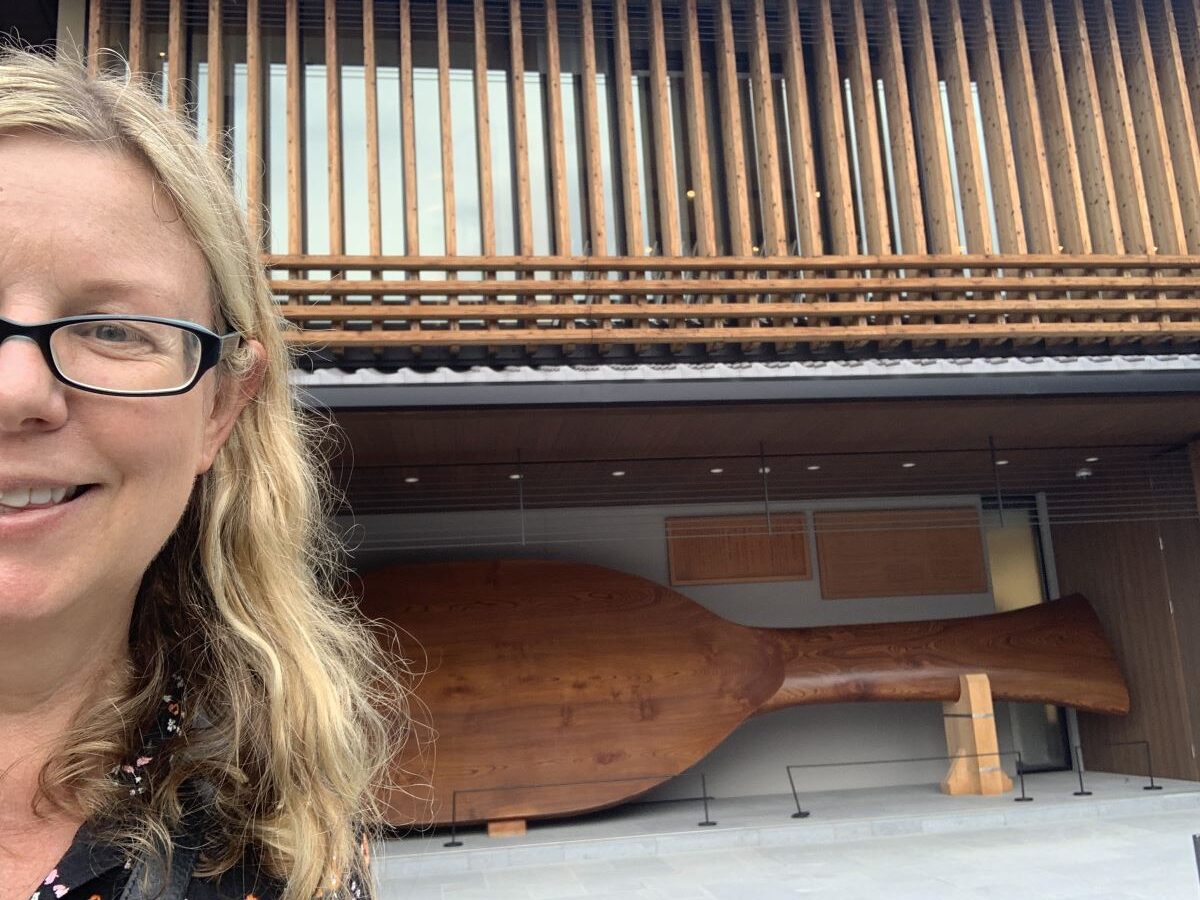
I love how it’s just tucked away on a back street. To find it, look for the Etto Miyajima Community Centre on the map.
4.00-4.30ish – Take Another Look at the Torii
If you didn’t get a chance to visit Itsukushima Shrine on the way to the ropeway, you might want to visit now – if it’s getting late in the day, the shrine is likely to be nearly empty, which means no queue for the famous lantern picture with the torii gate in the background.
Again, notice how different the torii looks depending on the height of the tide.
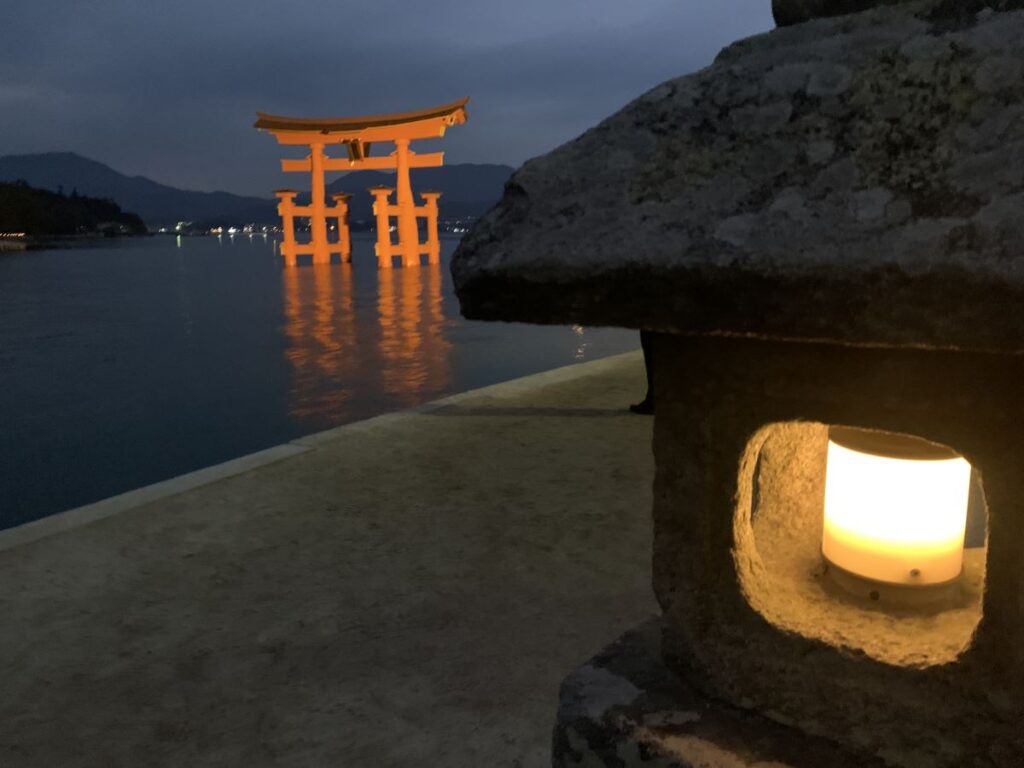
If you’re here in winter when it gets dark early, it’s worth hanging around a little while to see the gate lit up. Stop off for a glass of Miyajima beer somewhere like Kura Vitto and wait for night to fall.
4.00-5.00 ish – Pick Up Some Souvenirs
You can walk back to the ferry port via the sea road, but running parallel to this is Miyajima Ometosando, the main shopping street, giving you the chance to pick up some last-minute souvenirs of Miyajima.
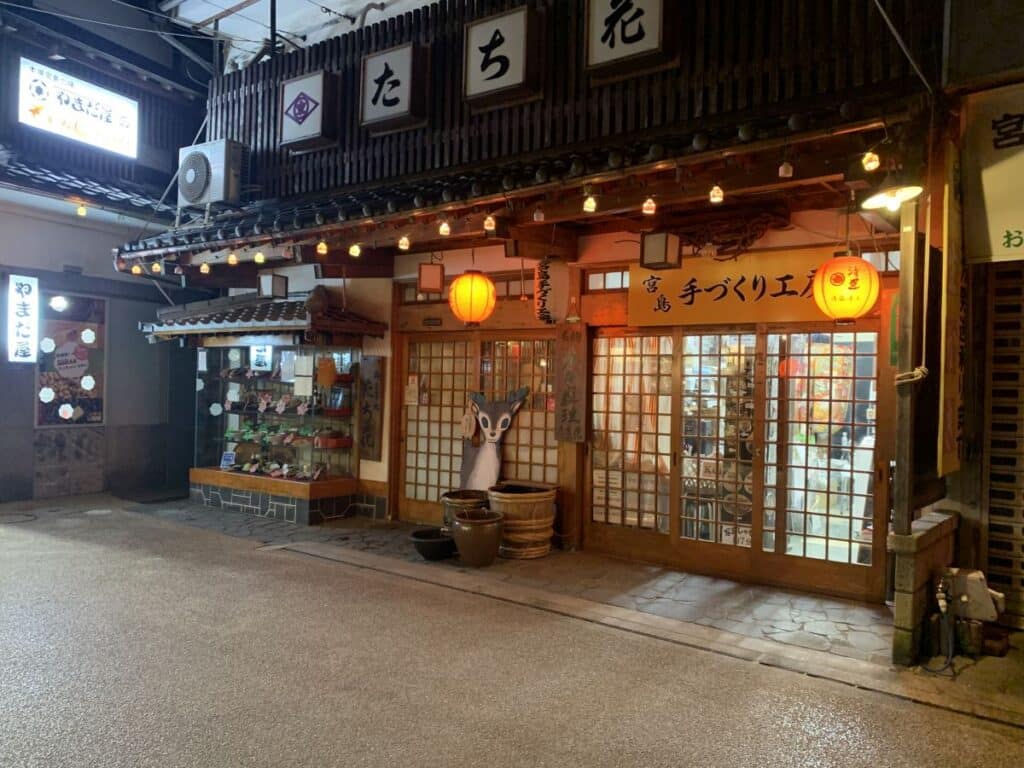
You’ll see a lot of the shops selling souvenir rice scoops – and now you know why, but also look out for Mamiji Manju. These are cakes shaped like maple leaves filled with red bean paste, chocolate cream or custard.
Most shops close at 5 pm. If you definitely want to shop and time is getting tight, then aim to get here by around 4 pm – then go back to the torii gate after you have shopped. It’s a bit of backtracking, but distances aren’t large on Miyajima.
If you want to dine on Miyajima before you leave, be aware that many restaurants also close once the day trippers leave – if you’re hoping to eat after about 5 pm, check out our guide to where to eat on Miyajima at night so you don’t end up wandering around and just finding closed doors.
And I think that’s it, everything you need for exploring Miyajima as a day trip.
Related Read: Should you spend the night on Miyajima?

Who Writes This Blog?
My name is Helen Foster, and I’m a journalist and author. My travel articles have appeared in publications including The Australian, Escape, RAC Horizons, Jetstar Magazine, Sainsbury’s Magazine, and more.
I’ve travelled to Japan nine times before – solo and with my partner and visited over 50 towns and cities. My last visit was in April 2026, so everything here is pretty up to date.