- How to Watch the Oiran Parade at Edo Wonderland, Nikko - 15 October 2026
- 8 Mistakes Not to Make in Autumn Leaf Season in Japan - 10 October 2026
- How to Spend One Day in Nara - 29 September 2026
Nagano city is home to a vast temple, that’s also one of the most important in Japan, a cool retro area, some interesting art – and more. Here’s how to fit the best sights into one day.
While most people come to Nagano as a jumping-off point to the Snow Monkeys, the city should not be ignored. Whether you’re coming on a day trip from Tokyo, a stop off while exploring Central Japan, or before or after your excursion to see the Snow Monkeys, here’s how to spend the whole day exploring…
Article by Helen Foster. Disclosure: Some links in this post are affiliate links. See our Affiliate Disclosure.
1. Attend O-saji at Sunrise
Okay, so if you’re coming in from Tokyo, ignore this – but if you’re waking up after staying the night in Nagano, then starting your day at literally the crack of dawn will allow you to experience something special.
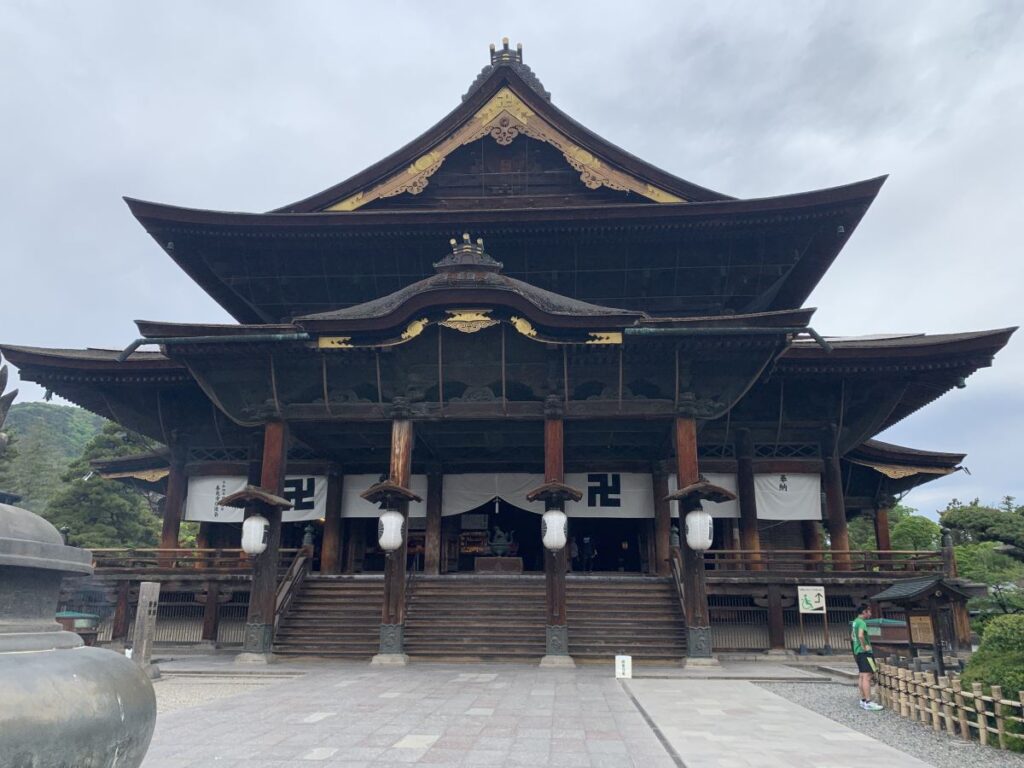
O-asaji is a prayer ritual held every morning at the famous Zenko-ji temple at sunrise. It’s hypnotic chanting hopes to send the dead safely to the afterlife.
If you’re staying at one of the many shukubo (temple lodgings) around Zenko-ji, you’ll be invited to the ritual, but it is also generally open to members of the public.
The service’s time changes by 1 minute each day, as it is timed to the sunrise. A chart showing the timings is on the main Zenko-ji webpage.
To attend, you need a ticket to the inner sanctuary. The above link also explains how to get one and when to arrive for the service.
2. Pick up a Stamp Sheet
If you haven’t stayed overnight in Nagano and, instead, are arriving by train from Tokyo this morning, or if you did stay here but decided sunrise was too early to get up on your vacation, this is where your day begins.
You’re going to need at least 5-6 hours to see everything on the list, so try and get started by 10 am. And handily, your first stop is in the main Nagano Station.

Here, you can visit the Tourist Information Office (open from 9 am), buy a Seven Lucky Gods stamp sheet for 800 yen, and follow the Lucky Gods walk around town.
This sees you visiting seven shrines and temples around Nagano, collecting a stamp at each (a small fee of 100-200 yen per stamp applies).
Once you’ve got them all, you can collect your final stamp at Seson-ji (below), one of the sub-temples near Zenkoji, Nagano’s most famous site.
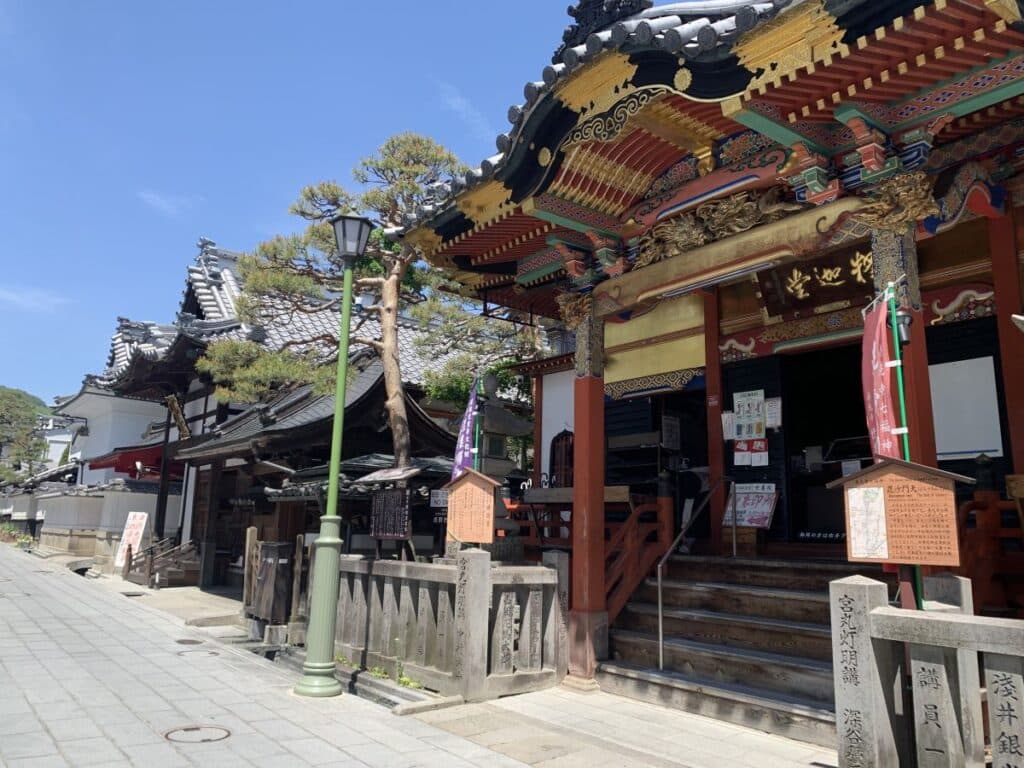
Collecting the stamps lets you see more of the city that you might otherwise along the route which spans a little over 2km.
Check out our full guide to the Nagano Seven Lucky Gods walk for more details and background on each of the temples you see and the gods celebrated within them.
If you follow the route suggested in that guide to all seven shrines/temples, you’ll go past the other sites in this guide en route in order – but, I’ve also referenced some of the shrines/temples below so you know where you are.
3. Try Some Oyaki
These grilled round dumplings are one of the must-eat dishes in Nagano.
You’ll find a number of Oyaki shops on Chuo Dori, the main street leading to Zenkoji, but the top for atmosphere is Ogawanoshodaimonten.
Don’t miss this. They’ll cook the dumplings in front of you over an open fire. Not only does this mean it’s piping hot, the experience itself is wonderful – and far more personal than buying from one of the roadside stalls closer to Zenkoji.
If you’re following the stamp map, you’ll come across this after collecting the stamp at Oujo-in.
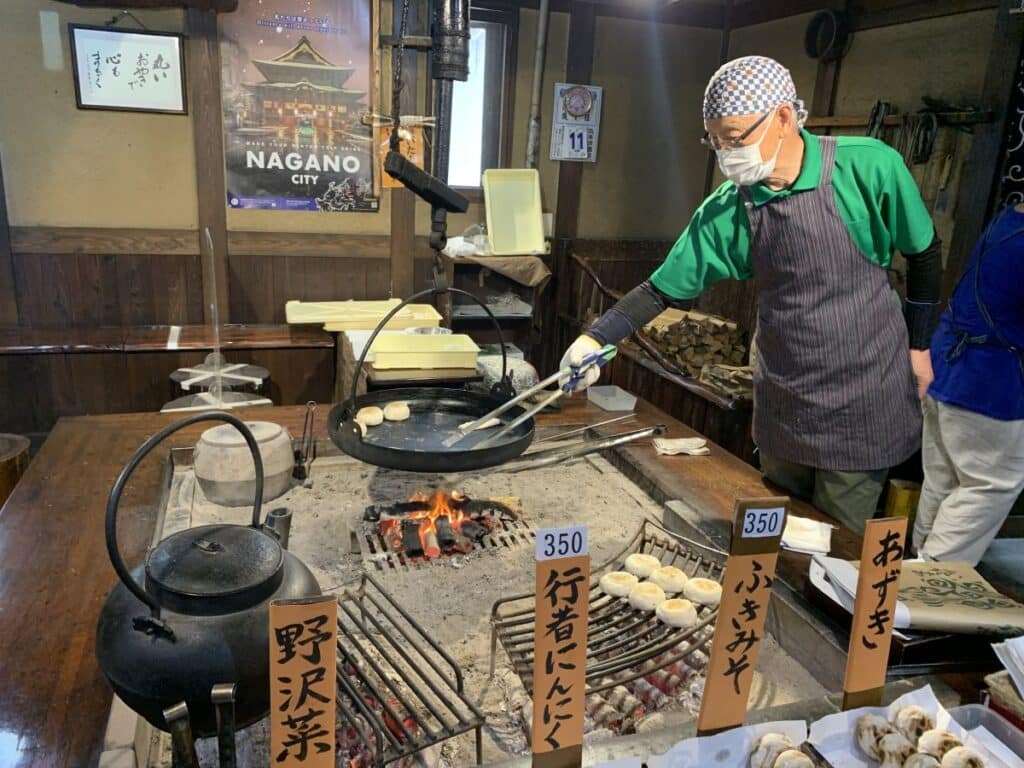
They are open between 9 am and 5 pm, six days a week. They close on Wednesday. The dumplings cost around 350 yen each – and it’s fine if you just want to order one, they are quite large. They explain the flavours to you while you’re there – I had one with mushrooms and it was delicious.
After Ogawanoshodaimonten, keep walking north and collect your stamp of Hotei at The Fujiya Gohonjin restaurant.
4. Get Rich at Nishinomiya Shrine
At this point, you’re going to see the main street and gate of Zenkoji ahead of you – and as tempting as it might be to power forward, if you are collecting the shrine stamps, at this point, head to Nishinomiya Shrine, which is just a 5-minute walk off to your right.
Even if you aren’t collecting them, this is a fun little detour.

Nishinomiya Shrine is dedicated to the god Ebisu, the god of business success. When you arrive, you’ll see this statue of him, sitting above a pool of water with a picture of a fish on it.
The pool is for washing money. It’s said that if you wash your money in the water and ask Ebisu for help, once you spend that money, it will multiply.
6. It’s Time for Zenko-ji
Retrace your steps back to the main road – it’s time for the main event in Nagano. Zenko-ji.
This is Nagano’s best-known sight. Founded in 642 AD, this is one of the most important temples in Japan as it is home to what’s believed to be the first statue of Buddha to enter Japan. However, don’t expect to see that as it’s so important that it’s hidden deep inside the temple. Even the head priest doesn’t get a looksy!
The temple does show a replica every seven years, though. If you are visiting at this point, expect large crowds. The next showing is from April to June 2027.
There’s plenty to see at Zenko-ji. I didn’t actually realise this until I arrived – everything I’d read just talked about visiting the main hall, which frankly was busy and annoying when I arrived on a Saturday afternoon – but do not be deceived; that is only part of this vast complex.
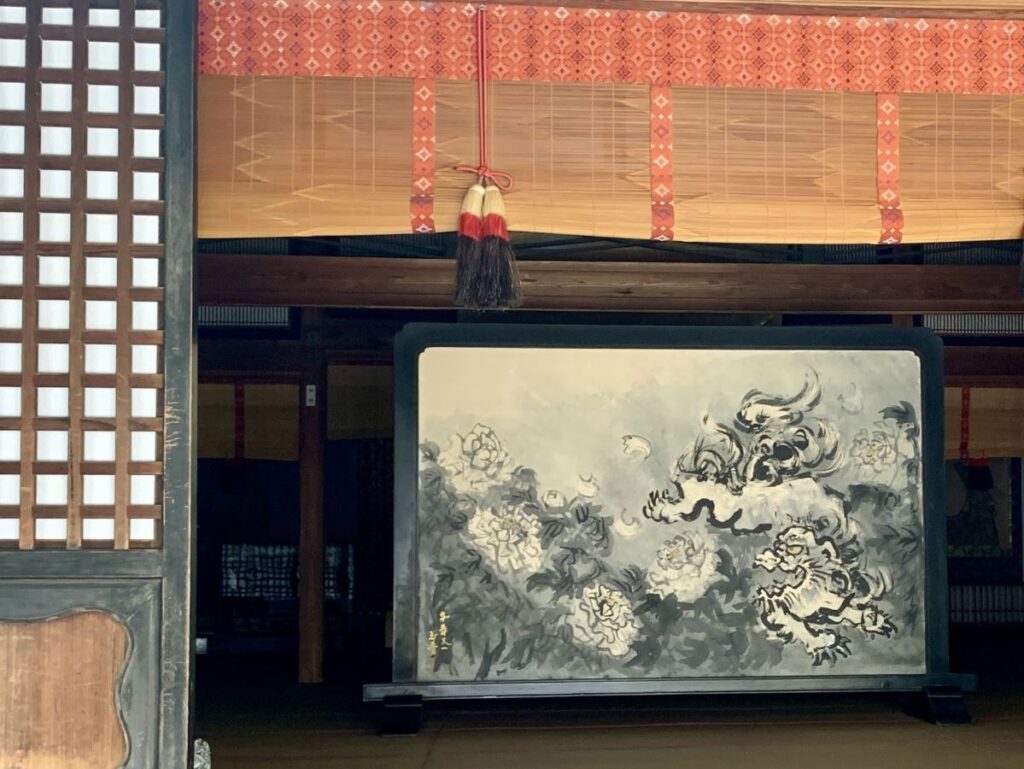
There are sub-temples with statues, paintings and traditional stories to seek out, gardens, and fascinating memorials, to the souls of flowers used in traditional Japanese flower arranging or lost letters, hidden around the grounds.
It’s a place to wander, to translate signs (though there are many English explanations), and to see what you can spot. Allow 2-3 hours to do it all properly. I didn’t even venture into the main hall in the end, and I still loved it here.
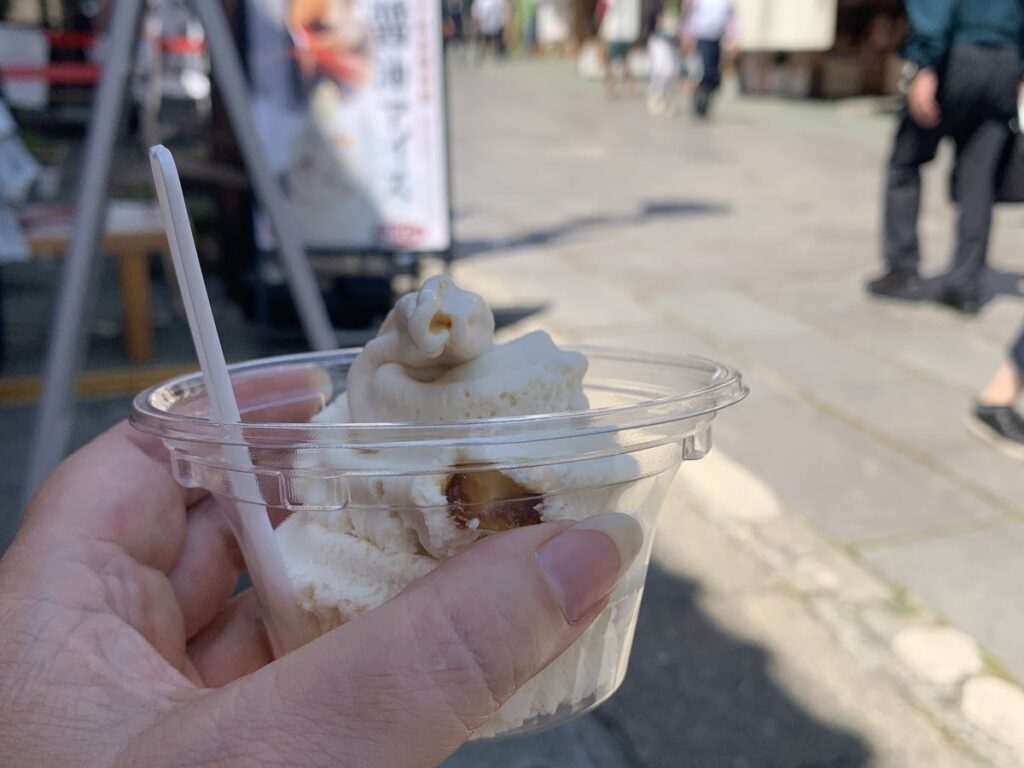
Just past the main gate with its intimidating-looking guardians, you’ll also walk past shops selling souvenirs and treats like soy sauce ice cream, which is much better than it might sound. If you like salted caramel ice cream, you’ll want to try this.
Eventually, you’ll reach the main hall of Zenko-ji. To enter here requires a ticket. It costs 500 yen to enter the main hall. A ticket for the main hall and history museum costs 600 yen; entry to the Sutra Hall is 300. Or, you can also buy a combination ticket that includes them all for 1200 yen.
Once you’ve been inside, don’t think that’s the end of it – the sprawling complex has grounds behind the main hall full of smaller temples and an entire road of sub-temples to the east. This is also where you’ll find Seson-in the last temple on the Lucky Gods stamp quest, and the place you can get the final stamp in the middle of your sheet.
For a better idea of specific things to look out for, check out the Zenkoji and Zenkoji sub-temple section in our guide to the top 10 Nagano sights, which has more details.
The grounds of Zenko-ji are open 24 hours. The main hall is open from 6 am to 4 pm. The different sub-temples will have their own hours, but will likely also close around 4 pm.
7. Get Arty
The Nagano Prefectural Art Gallery contains over 4000 pieces of art inspired mainly by the beautiful landscapes around Nagano Prefecture, or, by artists with a connection to the region. Proper art lovers will want to head inside, but I was here to see the outside exhibit called Fog Sculpture.
This interactive exhibit is by artist Fujiko Nakaya and is one of 80 similar installations by her around the world. It sees an artificial mist made from water vapor, spilling around the exterior of the museum, enveloping everyone in its path and making them part of the art.
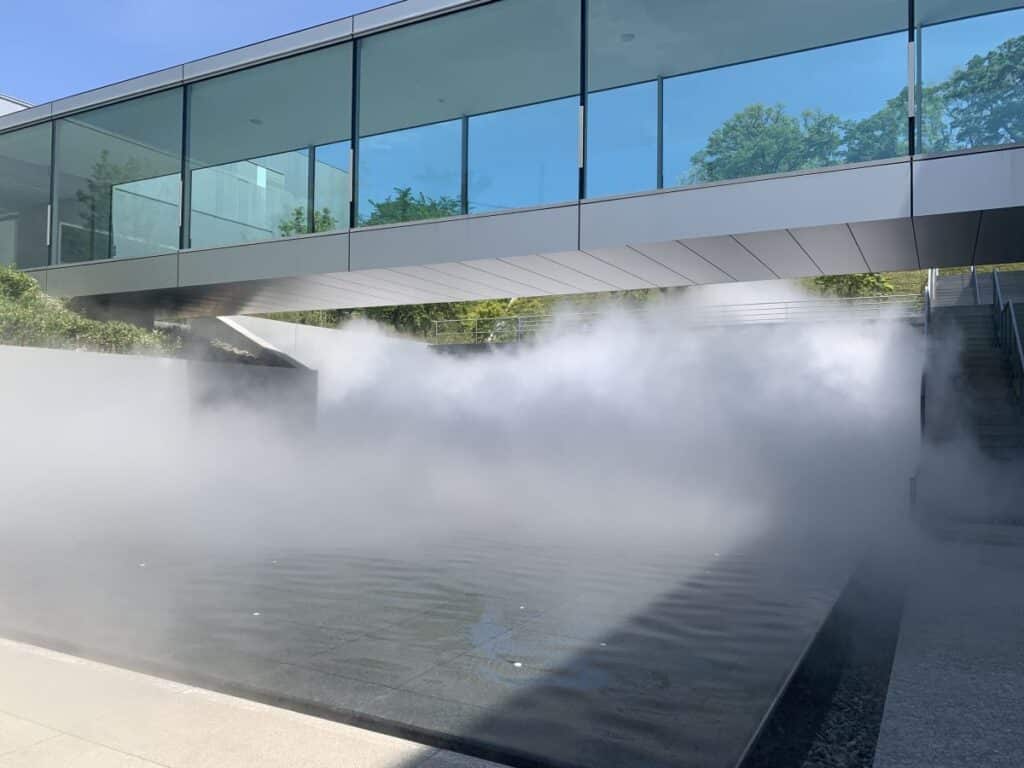
The museum is open 9 am to 5 pm six days a week. It is closed on Wednesdays.
The museum building costs 700 yen to enter, the fog exhibit is free and runs six times a day between 10.30 and 3.30 on the half hour (confirm the schedule here before you visit). It only lasts five minutes, so don’t be late!
Because the fog in the exhibit is made from water droplets, it can be closed in bad weather. It also doesn’t run during the cold season of late November to early April.
8. Gondo Shopping Street
Gondo shopping street is a great example of a shotengai – a covered Japanese shopping street. It opened in 1961, and it still has that ‘Showa era’ feel that people use to describe things built in Japan between 1926 and 1989.
My big regret from Nagano is that I didn’t have time to explore this properly.
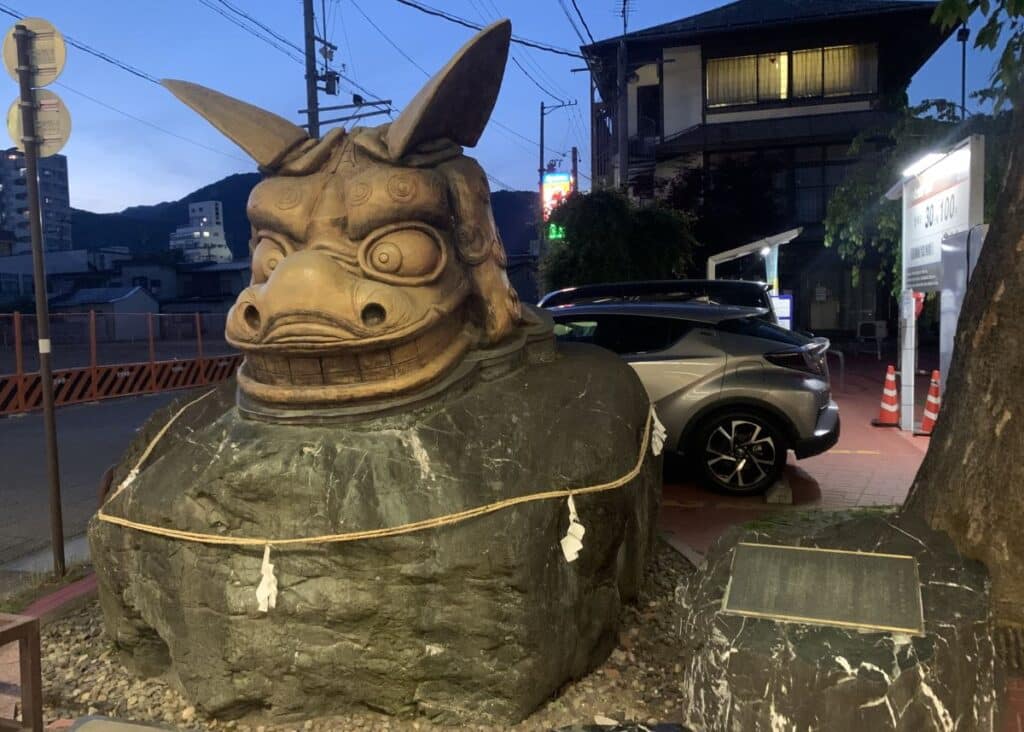
It’s gloriously retro, so photographers will love it, and it’s full of small local shops, bars, and restaurants.
The shops have very varied opening hours – some close at 5 pm, others open well into the evening to catch trade from the many restaurants and bars around here. You’ll probably admire their quaintness more than spend a fortune, but it’s a fantastic slice of old Japan.
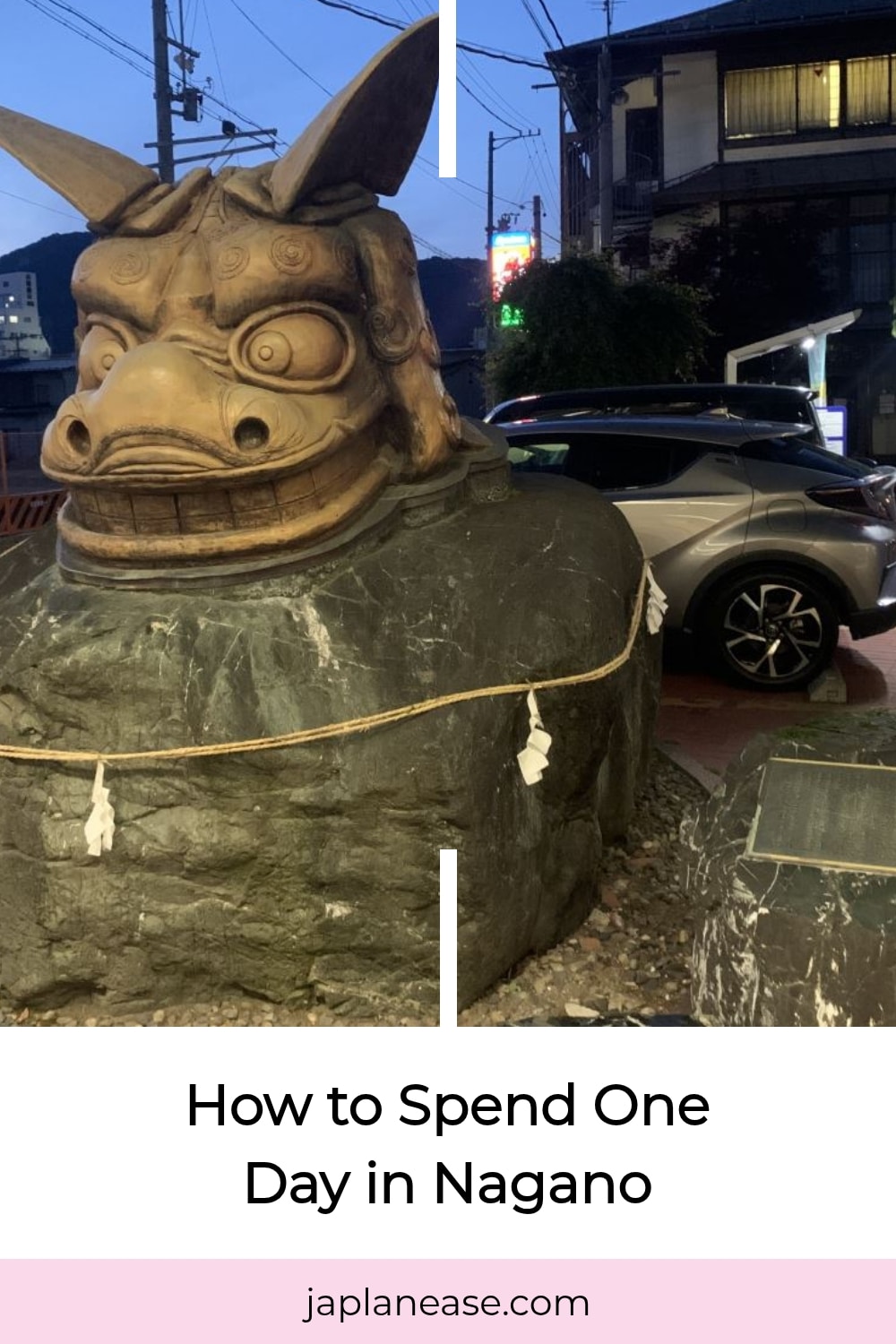
The bull/minotaur above can be found at the eastern end of the street in Gondo Park. This is also the end closest to Gonzo Station if you’re not staying within walking distance.
Where to Spend the Evening
Gondo is also one of the best places in Nagano to dine at night – restaurants will often open for lunch between 11-2ish, and then open up again in the evening from 5-8ish.
Despite its reputation as a party spot in Nagano, many places do close early in the main shopping street. I was here on a Saturday night and quite surprised at how quiet it was.

If you want to kick things up a notch or dine later, you’re better off heading south a bit. Use Hotel Yama as your guide on the maps, as places around here stay open a little later.
And that’s it – how to spend a day exploring Nagano City from sunrise to sunset. If you’re here a little longer, you might want to check out our guide to spending two days in Nagano, coming soon – this includes trips to the Snow Monkeys, Obuse and/or Matsumoto in the mix. If you’re still not quite sure if you SHOULD stay longer our guide to how long to stay in Nagano might help you decide.
Who Writes This Blog?
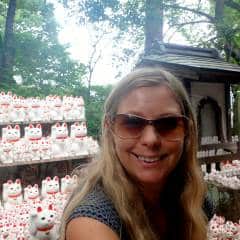
My name is Helen Foster, and I’m a journalist and author. My travel articles have appeared in publications including The Australian, Escape, RAC Horizons, Jetstar Magazine, Sainsbury’s Magazine, and more.
I’ve travelled to Japan nine times before – solo and with my partner and visited over 50 towns and cities. My last visit was in April 2026, so everything here is pretty up to date.