
- Tokyo to Kawaguchiko: Is the Train or Bus Better? - 23 July 2026
- How to Try Kintsugi on Your Japan Trip - 21 July 2026
- 12 Places to Stop Between Tokyo and Kyoto/Osaka - 19 July 2026
Japan has a reputation as an expensive destination – but it doesn’t have to be. Here are a few tips and tricks to help you save money on your trip.

Article by Helen Foster. Disclosure: Some links in this post are affiliate links. See our Affiliate Disclosure.
Booking Flights
Flights are one of the biggest expenses on any trip, but book them wisely, and not only can you save money on your fare, but they can also save you money elsewhere on your trip.
Use Technology
Flight comparison websites like Skyscanner can help you find the cheapest flight on the day you’re booking, but also sign up for Hopper.
This app utilises algorithm analysis to predict the most cost-effective time to book your flights, hotels, and other trip components. And they claim they do it with 95 per cent accuracy.
Fly to and From Different Airports
It won’t work for everyone’s plans, but if you get the chance to fly into Tokyo and out of Osaka – or vice versa, you’ll save yourself a one-way journey on the bullet train, which costs at least 13,000 yen.
Book an Internal Flight with Your International Ticket
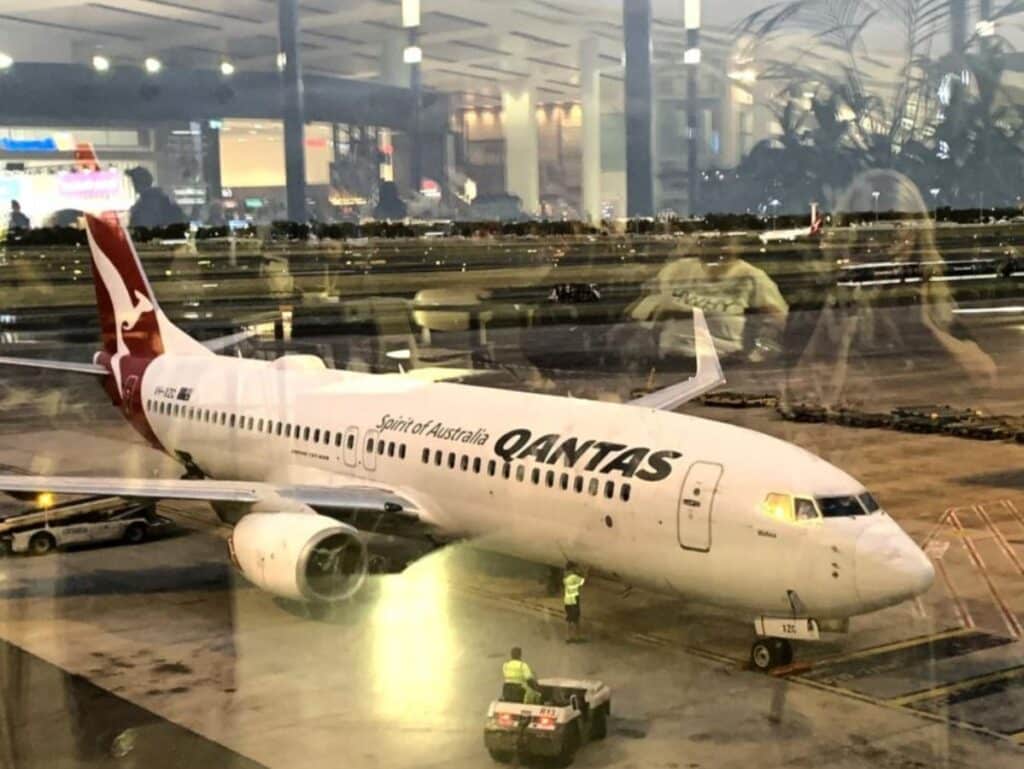
If you can’t do the above, this is the next best thing. If you’re planning to visit more than one region of Japan – Tokyo and Osaka, maybe or even further afield like Okinawa or Hokkaido, see how much it costs to add a domestic flight when you book your international ticket. It can be much cheaper than booking it afterwards.
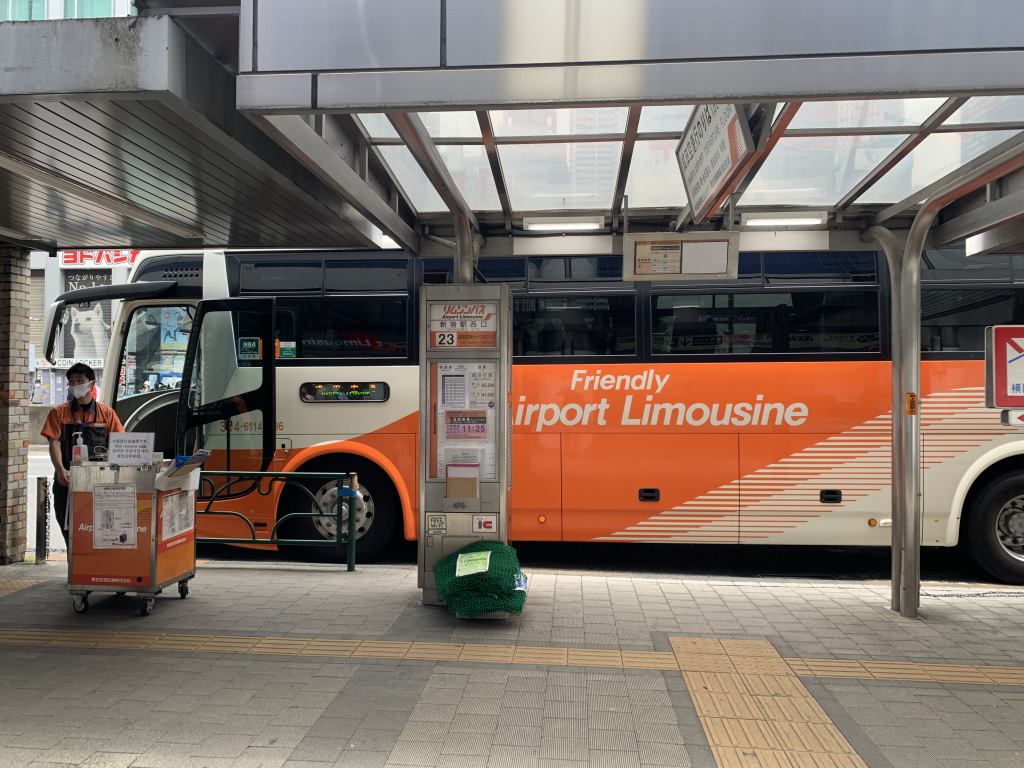
I did this on my last trip when I needed to get to Kyoto – it cost me about ¥5,000 to add a flight to Osaka, then ¥2,800 for the Limousine Bus; the bullet train would have cost me around ¥13,080.
Personally, I prefer to book the internal flight attached to my inbound, rather than fly to meet my departure, as, if something does go wrong and you arrive late, there are more internal flights than international ones.
Another benefit of booking tickets as part of your international itinerary rather than booking a separate flight yourself is that if your first flight is delayed, the airline is responsible for arranging an alternative flight.
Check Your Onward Transport
Japan’s transport does not run 24/7. If your flight arrives – or departs – between 10 pm and about 5 am, you could find yourself with a large taxi bill to get into town.
Ways to avoid this include booking flights that arrive and depart when trains are running, or if that’s not feasible from where you live, booking hotels near the airport for the night you arrive or the night before you depart can work out cheaper than booking a hotel in town and a taxi to get you there.
Unlike some cities, hotels at Narita are often cheaper than staying in town. I used to stay at the Nikko Narita when I arrived in the evening, and it usually comes at a great price point.
Haneda hotels within walking distance to the airport can be a bit more expensive, but Villa Fontaine comes highly recommended – and it features an onsen, allowing you to start or end your trip with a unique Japanese experience. Our guide to using an onsen like a pro can help you avoid any etiquette mistakes.
If you want to save money, you could look at hotels that are a short taxi ride away, but also close to stations, so you can get from Tokyo (or into it) cheaply. Hotel Metropolitan is right next to Tenkubashi Station or Hotel JAL City Haneda, has two properties a short walk from Anamori-Inari Station. These are a ten-minute drive, or less, from Haneda.
Book Skylets
Arriving in Japan after a long flight can feel a bit intimidating; for that reason, some companies offer meet and greet services that will meet you at immigration, help you pick up train tickets, SIM cards and walk you through getting on the right transport to your destination. It’s a great idea, but if you want to save money on the service, there’s another way to do it.
Skylets is a group of volunteers working out of Haneda and Narita airports who will help ensure you get out of the airport safely with all the necessary items. If you have a connecting flight, they can also help you check in, drop your bags and get to the appropriate terminal without stress.
Skylets charges 3000 yen per guide to cover time and expenses. View the exact details and book here.
Related Read: Check our guide to arriving in Japan so you don’t forget anything important.
Need Extra Planning Help?
Our Japan trip planners can help. You might like our First-Timers Japan Planner, which will help you plan your trip to Tokyo, Kyoto and Osaka step-by-step, including tips on everything from picking hotels to sightseeing and dining. Or our super-duper Tokyo Disney Planner makes arranging your park trip MUCH easier. Find them in our Planners store – printable and digital versions are available.
Booking Hotels
Japanese hotels can be pricey, especially if you need a larger room for a family, but there are still a few tricks you can use to get the lowest price possible.
Stay in Local Chains
This is how I manage to bring in my trips with an average hotel bill of under US$100 a night – without having to stay in hostels. These hotels cater mainly to local business travellers, so rooms are small (if you’re a couple, expect to share a small bed), but they’re clean, efficient, and surprisingly affordable. Prices can start as little as ¥6,000 – ¥9,000 per night for a double room.

Popular chains include APA Hotel, Toyoko Inn, Smile and Super Hotel. The Sotetsu, Dormy Inn, and Daiwa Roynet chains are a bit more upmarket, offering slightly larger rooms and beds,and sometimes in-house onsen, but still run at a relatively low price point.
Related Read: What to know about booking a business hotel in Japan
Book Hotels 3-6 Months Out
While you should look for hotels as early as possible, many Japanese hotels don’t release their rooms until six months in advance, which can cause prices to drop at the other offerings as well. Some smaller, budget hotels may wait until three months beforehand.
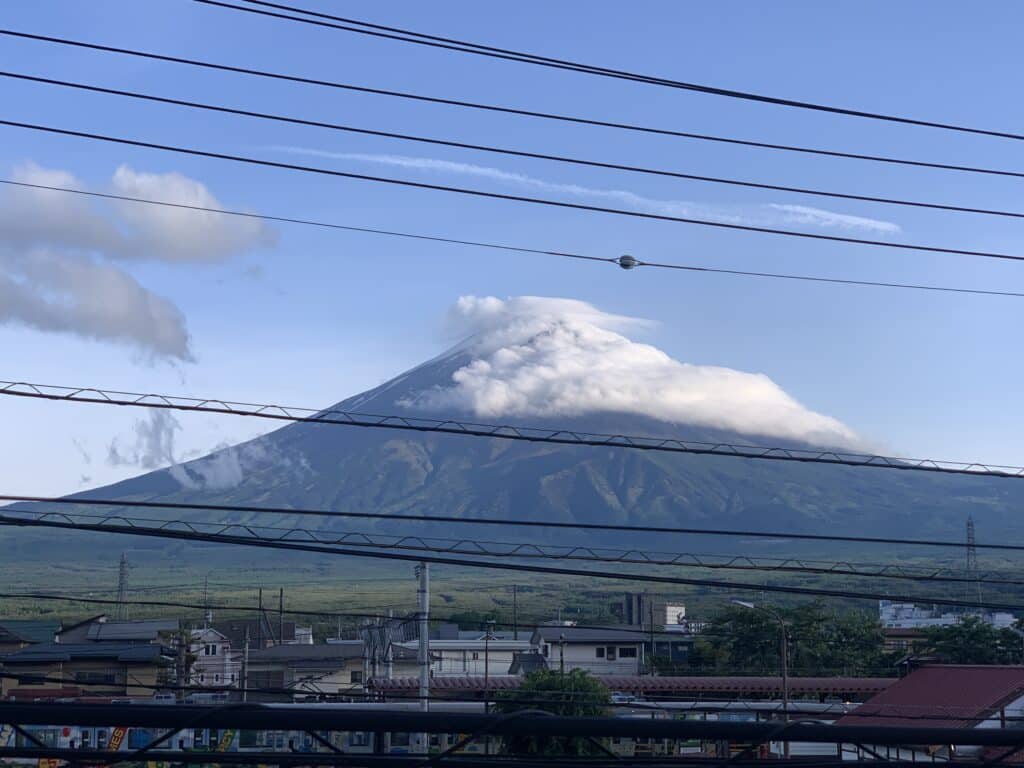
If I find a smaller budget hotel that I like the look of, I mark it in my calendar and book it the day it goes on sale – that’s how I got a room with the Mount Fuji view in the picture below for ¥5000 in Lake Kawaguchiko.
It’s the Kawaguchiko Station Hotel if you want to book it for yourself.
If I see a hotel I like at a rate that fits my budget, I will book it at a cancellable rate. I then check prices about once a month to see if any of them are cheaper. Sometimes they are, but I rarely see prices go down as I get very close to the trip.
Book Twin Beds
It might not be romantic, but if you’re a couple who need space to sleep, it’s often cheaper to book a twin than trying to find a room with a king-sized bed.

If I’m travelling with Mr Japlanease, we almost always book a twin room like the one above in the Hotel Monday Asakusa.
I think the only exception to this rule is the Citadines Shinjuku, which tends to be a little cheaper as it’s not right in the middle of the action. I’ve stayed here four times, though, so that obviously isn’t an issue! They have a decent-sized bed.
Forgo the Bathroom
If you’re staying at a smaller Japanese guesthouse, you might find rooms that say ‘shared bathroom.’ This means that your room doesn’t have a full-service bathroom with a shower and/or bath, and instead, you’ll use the public bath area. They usually do have their own toilet, though.
If you’re going to use the onsen anyway, this can be a great way to bag a cheaper room. Sakuraya, the hotel I stayed in in Miyajima, operated on this basis – as did the Mount View Hotel in Hakone. Both were significantly cheaper than their neighbours – and, as I would use the onsen anyway, it really didn’t matter.
Other rooms say ‘shared toilet’. This means the room has no facilities in it at all, and the whole bathroom experience will be in an outside, shared bathroom. These can be the cheapest rooms of all, but it just depends on whether you’re happy with schlepping out of your room every time you need the loo.
Getting Around Japan
Transport is likely to be your third-largest expense on any trip to Japan. The Shinkansen is not cheap, and even daily metro journeys can add up. But try these tips…
Do NOT Buy the Japan Rail Pass
Not without doing maths anyway – it rarely pays off any more, and even if you think it does, there’s usually a cheaper way of doing it using a mix of single tickets and a regional pass.
For example, if you’re going from Tokyo to Osaka, doing a day trip to Hiroshima and then going back to Tokyo, in seven days, the Rail Pass looks like it pays for itself, as that journey costs around ¥51,000 yen, and the seven-day pass costs ¥50,000 – BUT, the Hiroshima Area Pass costs ¥17,000 yen and lasts five days. Add that to the ¥29,500 for two single tickets to Tokyo – and that’s just ¥46,500 – and you can use the faster Nozomi train on this, which you can’t on the Whole JR Pass.
If you like the convenience of one ticket, though, you’ll find the Whole Japan Rail Pass here.

And Check The Other Passes
Japan offers a variety of rail passes, ranging from 24-hour Subway passes to Shinkansen passes that allow you to explore different regions. Some of these can save you money – others not so much.
For example, when I was writing my Seven-Day Hokuriku Arch Pass itinerary, which uses the Hokuriku Arch Pass to travel along this alternative route between Tokyo and Kyoto, that pass only broke even if you were using it one way. It does offer a significant saving if you’re heading back to Tokyo, though.
So, never assume that a train pass is going to pay off – do the maths first. I use the Navitime app to do this, as it displays all the routes. The JR Calculators you see online only show you the JR routes, and sometimes that can make things look more expensive than they actually are.
Our guide to using the Navitime app shows you what to do. We also have a whole step-by-step guide to this, plus sheets for you to fill in, in our Japan planner.
I’ve also done the maths on some of the passes for you. Check out our transport section to see reviews of the Tokyo Subway Pass, the Osaka Amazing Pass, the Hakone Free Pass and more.
Let Me Do The Work For You
If maths makes your head hurt and you have an itinerary planned and would like to determine specifically if the JR Pass pays off for you – and maybe find a cheaper option, I can review your plans for US$15. Email me at helen@japlanease.com to discuss.
Consider Buses
If you’re really on a budget, buses can cost far less than the bullet train. Travelling from Tokyo to Osaka, for example, can cost as little as ¥4,000 on the bus compared to ¥15,000 for a reserved seat on the train. The downside is that they take a lot longer. The journey time increases to nine hours or more, compared to around three hours on the bullet train.
If you have plenty of time on your trip, though, you might not mind. And, if you can sleep anywhere, overnight buses also save you money on a night’s hotel.
Look at the Willer Express website to find connections that work for your trip.

Don’t Reserve Seats
Reserved seats incur an additional fee of a few hundred yen for your journey.
If you’re not too concerned about where you sit, booking an unreserved seat can save you some money, especially if you’re getting on a train at its first stop, so you know seats will be available. Just make sure you know which trains have reserved seats only, so you don’t get caught off guard.
Drinking and Dining
I proclaim myself the queen of cheap dining in Japan – I usually get by on around ¥2500 a day if I’m on my own, and that includes a beer in the evening. Here’s how I keep the costs down
Stand Up
Some bars in Japan charge a cover charge known as a seat fee when you visit. The cost is usually only a few hundred yen, but it can add up if you plan to bar hop.
Standing bars, which literally don’t have seats, don’t charge this fee, saving you enough cash to buy another round. Standing bars are also a great way to start conversations with Japanese people – without the barrier of a table in the way, people tend to chat more.
See our guide to using standing bars – and standing bar etiquette here.
You can also find standing sushi bars and standing noodle restaurants that offer meals at budget prices.
Related Read: Don’t forget, you don’t tip in restaurants in Japan, which saves more money, but who should you tip in Japan?

Know Your Chains
Chain restaurants in Japan can offer very affordable meals. For example, at the Italian chain Saizeriya, you can have a plate of spaghetti carbonara and a small glass of wine for ¥540, while Kura Sushi has dishes for as little as ¥115 per plate. I can set myself a limit of ¥1000 in there and leave very happy.
Our guide to Japan’s top chain restaurants highlights the names to look out for. If you’re also looking for familiar foods, look at Family Restaurants, which also offer good deals.
Be Savvy at Ichiran
It’s world-famous, but if you blindly order their Ichiran-5 offering, which is the main option you see on the ordering machine, it will cost you around ¥1850 (¥2030 with eat-in tax) – however, it’s enormous!
If you just want the Ichiran experience, the basic bowl costing ¥1080 (¥1190 eat in) will let you taste the famous broth and spicy sauce without overdoing it. That’s it below.
Or, skip Ichiran and go to a local ramen shop. There’s an unwritten rule in Japan that says most places won’t charge more than 1000 yen for a bowl of ramen, so you can pretty much always eat cheaply if you pick ramen, which I do, a lot!
Related Read: How to order at Ichiran

Look for Shokudo and Teishoku Restaurants
Shokudo is the word that more casual – and therefore usually more wallet-friendly – restaurants in Japan use to describe themselves.
Teishoku are a type of Japanese set meal. They contain a main dish – like grilled fish, tonkatsu or fried pork in ginger, rice, miso soup and usually some vegetables and/or pickles.
The combination of words in a restaurant description means you’re going to find an inexpensive restaurant with very filling meals. It’s one of the main things I look for when planning where to eat in the evening.
Related Read: Our guide to where to eat in Japan for under US$10 lists other types of cuisine that won’t bust your budget – and some great places to find them.
Go to More Expensive Restaurants for Lunch
There’s usually a far cheaper rate for lunchtime dining than in the evening – the famous Tosho, in Hiroshima, for example, costs around ¥5000 for lunch, but ¥12,000 in the evening.

Eat at Supermarkets and Depachika
Having a konbini picnic of iconic Japanese foods from the convenience store is one of the fun, small things to do in Japan, and it can be cheaper than heading out for dinner. However, even convenience stores aren’t the cheapest place to shop; supermarkets are. Look for brands like Aeon and Seiyu, or search for the shopping trolley logo on Google Maps.
If you’re looking for something for dinner, also consider department store food halls (depachika). These are full of delicious food, but shortly before closing, they can start to discount unsold fresh dishes by up to 50 per cent, making it the perfect time to grab sushi or bento boxes for dinner.
If your hotel has a microwave in the communal areas to warm things up, this can be a great way to save some money.
Save Money Sightseeing
While must-do experiences, such as visiting teamLab Borderless, participating in a tea ceremony with a maiko, or attending the incredibly fun Samurai Restaurant show, will come at a cost, there are still a few ways to save some money.
Use Our Klook Code
Okay, it’s a bit self-promotional, but if you have a tour or attraction that you are buying from Klook, try adding the code JAPLANEASEKLOOK at checkout – and it could save you up to 10 per cent. T&Cs apply, and sadly, USJ and Disney tickets are not discounted.
Try a Free Walking Tour
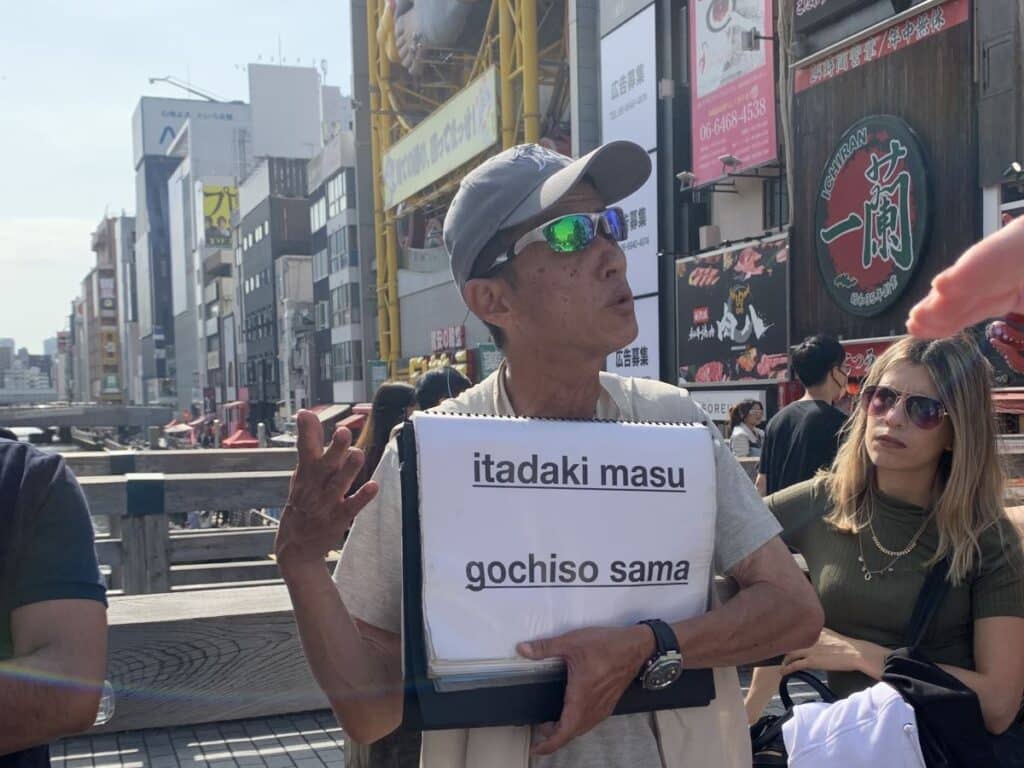
There are a few of these available around Japan – I did the Osaka one with Free Walking Tours on my last trip, and it was a great introduction to the city. You give the guide a tip at the end of the day, based on what you thought the tour was worth. You’ll also find the same company offering free Kyoto walking tours.
There are also some free walking tours in Tokyo. TFWT offer a few different options exploring major sights like Senso-ji or Harajuku’s Meiji Shrine. Tokyo Localised also offer several free walking tours – including night tours of Shinjuku. You’ll also find a great selection on Guru Walk. Use the free walk map to find only the free options; otherwise, you’ll get a confusing mix of free and paid tours.
Note. You may have heard that tipping is not necessary in Japan. That’s generally true, but not in the case of the Free Walking Tours, where tips are very much welcomed.
Book a Tokyo Greeter
The free walking tours tend to be a good introduction to the cities, offering a whistlestop visit of all the main sights. However, if you want something a bit more personal and in-depth, consider booking a tour with a Tokyo Greeter. These volunteers will show you around the main sights, or more local areas, and give you a personal insight into what makes Tokyo special.
The service is free, but they do request a donation to cover the greeter’s time and expenses, which you pay upfront when booking the service. See more on the Tokyo Greeters webpage.

Walk, Wander, Explore
One of the best things to do in Japan is simply wandering around a single area and seeing what you find – and it’s completely free.
Tokyo is full of areas with different vibes. As well as the touristy areas you might have on your list, like Asakusa, Shinjuku and Shibuya, you could head to Shimokitazawa for vintage shops, Sugamo for a traditional old shopping street, Jinbocho for old bookshops or Kagurazaka for cobbled streets and the chance to spot a geisha.
Kyoto was made for wandering, throw a stick in areas like Gion. Higashiyama or Shinkyogoku shopping street, and you’ll find something worth photographing. You can also easily spend an afternoon in Osaka’s Shinsekai area or, in Umeda, walking around the old retro alleys. The same applies to almost every other place in Japan.
In the Theme Parks
Okay, the very idea of trying to save money in a theme park doesn’t compute; they were put on the earth to separate you from cash in large quantities – but there are two things I see people spending a lot of money on that, perhaps, aren’t quite as essential as they might think.
Fantasy Springs Access
When Tokyo DisneySea opened its Fantasy Springs area, it was, frankly, a stressful nightmare, as you had to purchase an extra ticket called a DPA to enter. They would be sold out within minutes of the gates opening. As a result, I still see people buying Tokyo Disney Vacation Packages, which allow you to book everything in advance, to ensure they ride the rides in Fantasy Springs.
Vacation Packages cost a lot more than staying in a Disney Hotel and buying tickets – and a heck of a lot more than staying in one of the cheaper hotels nearby (like the Grand Nikko Tokyo Bay Maihama, or the very budget Mystays Maihama) and doing the same thing.

However, much of the stress about visiting Fantasy Springs has abated. Today, you can walk into the area and queue for any ride – or buy DPAs (Tokyo Disney’s version of Lightning Lane) and skip the lines. Most DPA passes are available until at least mid-morning. The exception is Frozen; this is usually gone by 9.00 am. However, while I love Frozen, I’m not willing to pay an extra $600 to ride it!
So, my advice for saving money at Disney is to pretend Frozen isn’t there. If you get there and a DPA opens up, grab it; otherwise, there are plenty of other rides in the park. You won’t be bored.
Related Read: How Much Does it Cost to Visit Tokyo Disney
Don’t Forget to Buy Your Disney Tickets
If you’re within two months of your trip, why not order them now so it’s done? Unlike the Disney site, Klook takes all foreign credit cards. Plus, if you’re buying other tours or tickets, add the code JAPLANEASEKLOOK at checkout and you could save up to 10 per cent.
T&Cs apply; Tokyo Disney tickets and USJ tickets are not available for discounts.
Get to USJ Early
The same overspend panic can happen with Super Nintendo World at Universal Studios Japan. To control crowds in this area, you need a Timed Entry Ticket to gain entry. You can obtain these in advance via the USJ Express Passes, but these are not cheap.
However, there are two free ways to get into SNW – you can either get to the park early and go straight to the area, as there’s a brief moment before they switch on the timed entry system where anyone can get in, or you can apply for a free timed entry slot on the app once you get inside.

Every time I’ve gone, I’ve had an Express Pass, but I’ve also tested the system to get into SNW, and every time I have got a slot, so if that’s why you’re buying an Express Pass, you might be able to save some money by just getting in early.
This advice does come with a proviso, though. The queues at USJ can be brutal – a 2-3 hour wait for a ride like Mine Cart Madness or Mario Kart: Koopa’s Challenge is not uncommon, so I suggest at least an Express Pass 4 that covers your must-do rides to make the most of your day. Then try to use single-rider queues on other rides, which can save a bit of time.
Don’t Forget to Buy Your Studio Pass
Everyone who visits USJ needs to buy a Studio Pass. You can buy a simple one that lets you into the park, or, if you buy them early, you might find the Klook special that also includes Super Nintendo World. Tickets are now released two months before the date you want to enter the park, so, check if they’re available now for your dates.
Okay, that’s everything I’ve come up with so far. Do you have any other suggestions? Let me know over at our Japan planning Facebook group if you do.

