- How to Watch the Oiran Parade at Edo Wonderland, Nikko - 15 October 2026
- 8 Mistakes Not to Make in Autumn Leaf Season in Japan - 10 October 2026
- How to Spend One Day in Nara - 29 September 2026
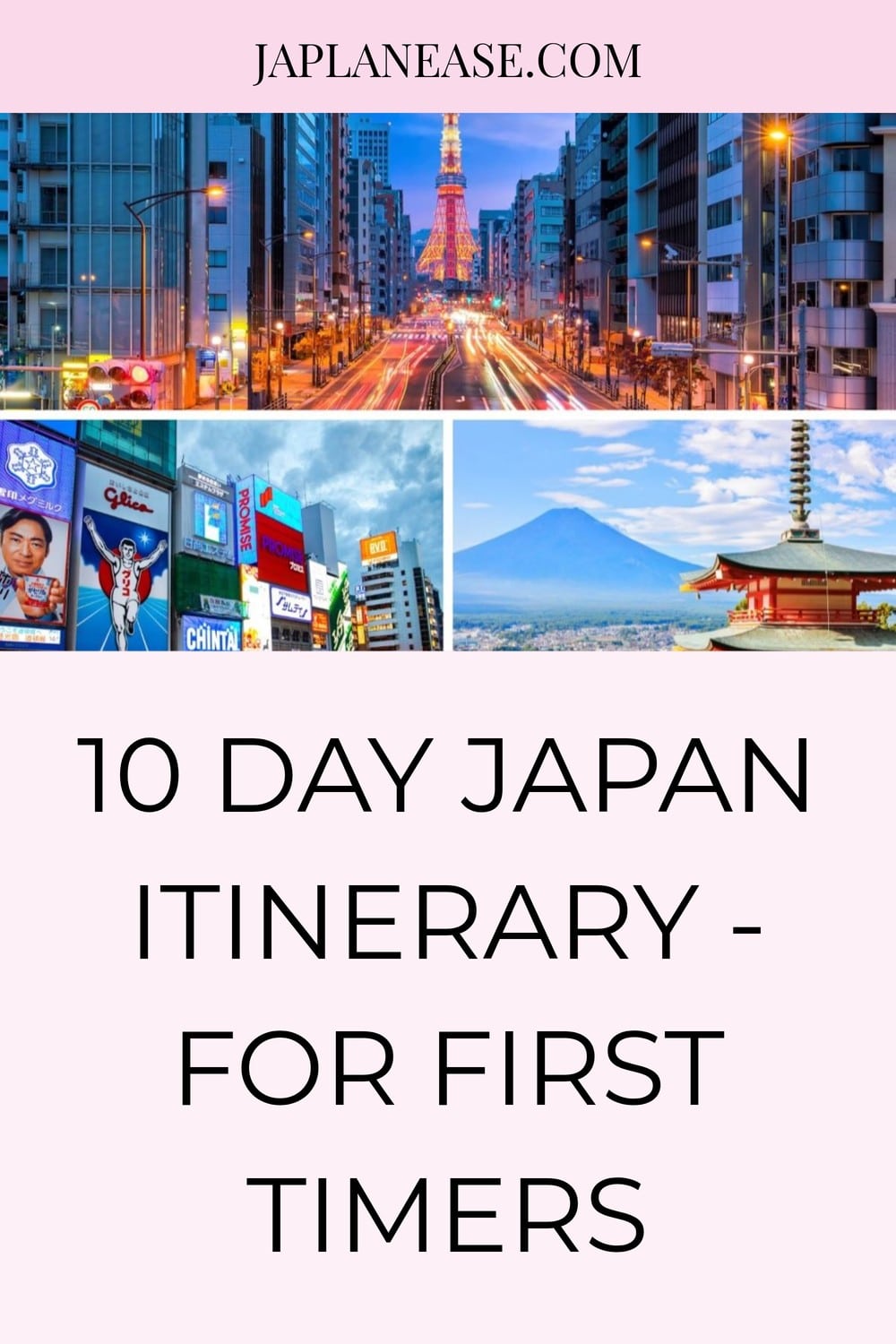
If you’re visiting Japan for the first time and have 10 days to see the sights, how should you spend your time? Here’s a simple 10-day plan that hits the spots most first-time travellers want to see.
Ten days is a good start for a first-time trip to Japan. It’s just enough time to take in many of the big sites you probably want to tick off on your first visit.

Article by Helen Foster. Disclosure: Some links in this post are affiliate links. See our Affiliate Disclosure.
Our guide below aims to take in as many of them as possible without being too rushed – although it’s not a relaxing trip! However, no law says you have to do everything on it – drop some, swap some, do whatever it takes to make the plan work for your interests and energy level.
I suggest staying in three spots on the plan – Tokyo, Kyoto and Osaka – but, if you prefer to base yourself in just two spots, it’s easy to do Days 5-9 from one hotel base in Kyoto or Osaka.
If you aren’t sure which to stay in, our Kyoto vs Osaka decision guide should be your next read.
If you haven’t already booked your flights, and you have the option, flying into Tokyo and out of Osaka will buy you a little more time – if you do this, you add an extra day to the Tokyo part of your trip and use it to take in some extra city sites or try another day trip. Then move to Kyoto or Osaka on day 6 instead.
At a Glance
Day 1: Arrive in Tokyo – evening in Shinjuku
Day 2: Tokyo – Asakusa and nearby
Day 3: Tokyo – Day trip
Day 4: Tokyo – Toyosu, Odaiba, Ginza
Day 5: Osaka – City sights
Day 6: Day trip: Hiroshima and Miyajima
Day 7: Kyoto – Nara and Gion
Day 8: Kyoto – Arashiyama and Higashiyama
Day 9: Kyoto – Fushimi Inari Taisha, back to Tokyo, evening in Shibuya
Day 10: Last sights – fly home
Day 1: Welcome to Tokyo
Landing at Narita or Haneda? Jetlagged or wide awake? Doesn’t matter – this plan can be adapted to start wherever your day actually starts.
Most hotels in Japan have a 3 pm check-in, and they rarely budge on that, but most hotels will hold your bags before check-in, so ease into things by dropping your bags and exploring around your hotel. One year when I did this, I came across a local festival in the backstreets behind my hotel – it was an amazing first few hours in the city.

A few low-stress, but very Japanese things to do…
- Head to the local ramen shop and play ‘ramen roulette’ when you order via a ticket machine by pushing the top left button – it’s normally the most popular dish.
- Buy a hot tea (or something weird) from a vending machine
- Duck into a quiet backstreet shrine and some local shops.
- Or if you need reviving after your trip, jump into a local sento (public bath) and kick off your trip Japanese-style – naked, with strangers.
- Get some more ideas in our guide to small things in Japan not to miss
What’s the difference between a sento and an onsen? The source of the water. Onsen use water from hot springs infused with minerals, while sento are just big baths of hot water. The etiquette is the same though, so read our guide to onsen etiquette and bathe like a local.

Late Afternoon/Evening: Head to Shinjuku
You eased into Tokyo during the day, so let’s jump in at the deep end for your first night.
Shinjuku is a bit dingy by day – but transforms like Cinderella once the sun goes down. Neon signs flicker, the giant Godzilla head roars from the top of the Toho Cinema building and the famous 3D cat purrs near the station. It’s exactly the jolt of energy you need to stay awake till bedtime.
Some of the must-see sights to take in are…
Kabukicho: Tokyo’s entertainment district. I love walking around here taking in the neon and buzz (the St James pub is great for people-watching). Kabukicho is a red light district, but not like its Western equivalents – but see what to expect here if you’re travelling with teenagers or are a bit concerned.
The Samurai Restaurant: This took over from the old Robot Restaurant, and it’s definitely an ‘Only-in-Japan’ opener to your trip. I watched the whole thing with my mouth open as I had no idea what was coming next! Note: the show is not risque (full review here), but it’s in a venue that only allows over-18s, so sadly no kids allowed. Buy tickets here.

Shinjuku Sumo Show: It’s not a serious bout, but it will give you a glimpse into the world of Sumo. Two retired wrestlers and their compere explain the sport, show you how wrestlers train, and you’ll see a few bouts. There’s also a chance to ask questions of the wrestlers – or even wrestle one yourself. Buy tickets here.
Enjoy Some Tech: Visit the famous 3D cat and/or head over to the free Tokyo Metropolitan Building observatory for skyline views (including Mount Fuji on a clear day) and catch the building’s projection show after 7:30 pm.
Eat and Drink: Both sides of Shinjuku are packed with options (our Shinjuku guide has favourites). Feeling adventurous? Dive into the tiny izakaya of Omoide Yokocho or the bar-lined alleys of Golden Gai – just know many charge a small seat fee, so read up about otoshi first to avoid a first-night scam scare.
Day 2: Asakusa and Around
Last night you saw modern Tokyo; today begins in one of its more traditional areas.
Morning: Explore Asakusa
Get there well before 9 am to have Senso-ji Temple’s stunning complex mostly to yourself – after 9 am when the shops open, crowds build up quickly, and there can be queues for the famous giant red lantern picture.
Once you’ve seen it all, explore the wider area – some things not to miss include…

Shop and Dine: Spend the morning exploring Asakusa’s backstreets where you’ll find small independent shops, restaurants and bakeries.
Make Something: If you want to make your own souvenir, Zen Japanese Craft Studio in the centre of Asakusa offers chopstick-making classes, kintsugi classes and even the chance to craft your own knife.
Small Fun Shrines: Senso-ji is the most important temple around here, but it’s not the only one. You’ll also find some small fun shrines in the area – Chingodo is a shrine to tanuki, Honryuin sees people offer daikon radishes as an offering for good health, while Imado Shrine is famous as a love shrine.
But even just wandering around is rewarding here.

Afternoon: Choose your Own Adventure
While you could spend all day wandering Asakusa, time is short, so after lunch, pick from one of these nearby attractions.
- Walk to Kappabashi Dori: Tokyo’s ‘Kitchen Street,’ where you can buy everything from top-quality knives to hyper-realistic plastic food models.
- Tokyo Skytree: Cross the Sumida River and visit Tokyo Skytree for panoramic views – the Solamachi Mall underneath is great for first-trip shopping, and if you want to try a sushi train, the branch of Kura Sushi here is the biggest in the world.
- Explore Ueno Park and Ameyoko Market: Ueno Park is home to everything from a small zoo to an amazing gold leaf-covered shrine – taking in everything here is a half-day attraction, and you also have Ameyoko Market on the doorstep.
- Visit Akihabara: Tokyo’s pop-culture capital. Even if manga and anime aren’t your thing, the bright buildings make for iconic photos. Stop by Kanda Myojin shrine to bless your gadgets, write a wish on an anime-style prayer plaque and say hi to Akita, the shrine’s resident pony.

Evening: Enjoy the Buzz
- Stay in Akihabara and enjoy a themed cafe or Maid Cafe experience.
- Head back to Asakusa and visit the row of izakaya on Hoppy Street – don’t forget to try its namesake drink.
- Spend the evening at the fun underground Ninja Bar near Asakusa Station – and pop into Senso-ji and do some night photography afterwards.
- Or walk into Ueno Ameyoko for a dense stretch of shops, bars, and restaurants. If this feels a bit full-on for your second night – as a solo traveller, I find it too busy – the noodles at Fukushin offer an easy option, or try The God Diner. It’s an American menu, but you enter via a fake vending machine, giving it a unique Japanese touch.
Day 3: Take a Day Trip
While there’s still a lot left to do in Tokyo, taking a day trip allows you to experience more sides of Japan than just city hustle and bustle. Pick from catching glimpses of Mount Fuji to seeing some amazing UNESCO World Heritage sights. Here are the most popular day trips to consider…
- Hakone – About two hours away. The big draw here is The Loop – a circular route that takes in shrines with pretty torii gates, a sail on a pirate ship, a cable car across an amazing steaming volcanic area and if you’re lucky, a view of Mount Fuji. Our guide explains how to dodge the crowds.
- Lake Kawaguchiko – Around two hours away. If you want to see Mount Fuji, this is the best option for jaw-dropping views. Take the train or bus to Kawaguchiko station, then circle the lake by bike or loop bus. Note though – Fuji is only visible for about 70 days a year – check the visibility forecast before you head all the way there. If you’d prefer someone else do the driving, Klook offer a selection of day tours.

- Tokyo Disneyland or DisneySea – 40 minutes away. The Disney you love with a unique Japanese touch. If you’re not sure which park to visit, our decision guide can help. Note: You can’t buy tickets at the gate, so get them online first. Make sure you also read our queue-skipping guide so you can make the most of your day.
- Nikko – Just under three hours away. Visit the UNESCO-listed Toshogu Shrine plus the natural beauty of Kegon Falls and Lake Chuzenji. Catch the train or book an organised tour and skip the logistics entirely.
- Kamakura – 60 minutes away: Home to one of Japan’s most famous Buddhas, it’s full of shrines and temples – and a bamboo forest with considerably fewer crowds than the one in Kyoto!
Return to Tokyo by evening and dine near your hotel.
Need Extra Planning Help?
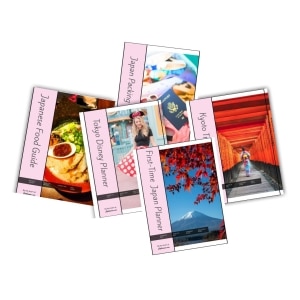
Our Japan trip planners can help. You might like our First-Timers Japan Planner, which will help you plan your trip to Tokyo, Kyoto and Osaka step-by-step, including tips on everything from picking hotels to sightseeing and dining. Or our super-duper Tokyo Disney Planner makes arranging your park trip MUCH easier. Find them in our Planners store – printable and digital versions are available.
Day 4: Toyosu, Odaiba & Ginza
Morning: Toyosu Market
Tokyo’s modern fish market. The market view itself won’t wow you, but the restaurants will – and with a fraction of the crowds now piling into Tsukiji. Proper foodies flock to Sushi Dai and Sushi Daiwa – queues start before they open at 6 am – but I don’t think you can go wrong here. My favourite spot is Oedo as I like the Itadaki Don.

From here, you could head to teamLab Planets (although there is time for another teamLab later in the trip). If you do, book ahead to lock in an early slot – Planets can sell out, so book in advance.
Afternoon: Odaiba
There is so much to do in Odaiba it could be a whole-day visit, but with just one afternoon you’ll need to pick 1 or 2 of the below.
- Head to one of the mega malls
- See the tech at the Miraikan Science Museum
- Visit a mini Legoland
- Or my pick is the quietly brilliant Small Worlds Tokyo. I loved it so much, I even got myself made into a tiny person that lives in the exhibit.

Evening: Ginza
Ginza is a shoppers’ paradise – and the shops stay open late, meaning you can head here after Odaiba for some retail therapy.
At first glance, you might not think Ginza is an obvious dining destination, but follow the salarymen to nearby Yurakucho or Shinbashi, and you’ll see a different story. A good tourist-friendly spot is Andy’s Shin Hinomoto – but note it’s cash-only.
Day 5: Osaka – City Sights
Take an early train to Osaka – the journey takes about 2 and a half hours. Drop your bags at your hotel and head out to explore. If you haven’t decided where to stay yet, check out this guide to the best spots in Osaka for first-time visitors.
Usually I say three days is the ideal amount of time to do a deep dive on Osaka, but because the city is quite compact, you can cover 3-4 of the main sites in a day…
Morning
Make the fantastic Yasaka Namba shrine your first stop in Osaka – the giant lion’s head has to be seen to be believed. From here it’s a short walk to Kuromon Market where you can try some of Osaka’s famous Takoyaki.

If you didn’t get the chance to go to Kappabashi Dori in Tokyo, a short detour will bring you to Osaka’s Kitchen Street, where you can buy chef’s necessities, while Den Den town is a mini Akihabara.
Afternoon – Make a Choice
Like Tokyo, you aren’t going to fit everything to do in Osaka in a day. But this afternoon you could…
- See Osaka Castle: It’s one of the iconic images of Osaka, but Osaka Castle is not an original keep – the original was destroyed by war and struck by lightning! This one was built in the 1930s, but if you don’t have time to visit Himeji, the nearest original castle, exploring this one should be on your Osaka itinerary.
- Note: If you have decided to stay in Kyoto, and want to go to Osaka Castle, catch the train from Kyoto to Umeda and go here first, then head to Namba Shrine.
- Vintage shop in Amerika Mura: This is Osaka’s second-hand shopping paradise, and if you’re a shopper you’ll easily fill a few hours here.
- Go to Shinsekai: This is my favourite area in Osaka – it’s a bit retro and old school. I love its mix of kitsch statues and old alleyways, and you should spend at least an hour wandering around here.

Highlights are the Eiffel-esque Tsutenkaku Tower, which was built in 1956 and is just over 100 meters tall. It has an observation tower at the top and a slide to come down it! Also keep an eye out for the cute Billiken statues that appear all over the area.
Shinsekai is a place for wandering the old alleyways and backstreets and just seeing what you see – if you can, stay here until after dark when it all lights up and looks fantastic.
Evening
Talking of lighting things up. The most famous sight in Osaka is the neon billboards around Dotonbori, including the famous Glico Man sign. Get great views from the Dotonbori and Ebisubashi bridges. Like Shinjuku, this is best seen at night.
For a different view, take a ride on the Ebisu Ferris Wheel located on top of the Don Quixote shop.

For dining, head to the Dotonbori Riverside Grill, which has seats by the canal, or spend the rest of your evening wandering Dotonbori, checking out the thousands of tiny bars and restaurants in the backstreets. Take a detour to see the moss-covered god at Hozenji Shrine.
Kama Sutra, my favourite karaoke bar in the world, is also near here, but warning: it’s so much fun you might not get up for tomorrow’s early train!
Save Money with Klook & Japlanease
If you plan on buying tickets or tours from Klook for when you’re in Japan, you could save up to 10 per cent by using the code JAPLANEASEKLOOK at the checkout. Click here to see what’s on offer.
T&Cs apply. Some items, including Tokyo Disney and USJ tickets, are not available for discounts.
Day 6: Day Trip – Hiroshima and Miyajima
It’s going to be a long day today, so start early. Aim to catch a Shinkansen leaving Osaka at around 7.30 am. This will see you arrive in Hiroshima for 9 am.
The cheapest way to do this journey is with the Kansai Hiroshima Area Pass – it pays for itself on this journey alone, and will give you free travel to Nara and Kyoto – and around some spots in Kyoto for the next four days.
Morning: Visit Hiroshima’s Atomic Bomb Sights
From here, catch the tram down to the Atomic Bomb Dome and explore it, the Peace Museum and the memorials of the Peace Park.
From here, you can catch the Aquanet ferry directly to the island of Miyajima

Afternoon: Explore Miyajima
The most famous site on the island is the ‘floating’ red torii gate that sits in the sea just offshore, but it’s definitely not the only thing to see here.
- Also make sure you visit the amazing Daishoin Temple (my favourite place on the island)
- Take in the views from Hokoku Jinja
- Eat a maple leaf-shaped cake or try Miyajima oysters
- Keep an eye out for Miyajima’s cute deer while you wander.
For much more detail on all of these stops, read our guide to spending one day in Hiroshima and Miyajima.
Head back to Osaka on a train about 6 pm and either relax close to your hotel – or, if you didn’t see Shinsekai lit up last night, head there for the evening to see it at its best.
Important Note: The torii gate in Miyajima only looks like it’s floating around high tide. If this is why you are going, you might need to swap your day around to suit the tide. Our guide to visiting Miyajima at low tide explains how to check it and other important things to know.
Day 7: Nara to Kyoto
If you’re swapping hotels to stay in Kyoto, today is the day. However, rather than carrying your bags. I would send your luggage via Japan’s fantastic luggage shipping service and just take what you need with you overnight. This makes it easy to visit Nara on your way to Kyoto.
Morning: Nara
It takes about an hour to get to Nara from Osaka, and there are two ways to do it: the JR Nara Line (included in the Kansai Hiroshima Area Pass) or the Kintetsu Line. The Kintetsu Line station is closer to the deer park, but there’s a great bus service from the JR Station, so choose whichever is easiest.
Again, with so little time, you won’t be able to explore all of Nara, but you’ll be able to see the main spots…
- Nara Deer Park: if meeting the friendly deer is your goal, go here first as they are calmer before hoards of tourists appear. The cookie sellers set up shop around 9.30 so you can buy the deer crackers they can safely eat. Read our guide to meeting the Nara deer, so you know how to interact with them safely.

- Todaiji Temple: This is most famous for the giant Buddha housed inside. Fifteen metres high and weighing 500 tonnes, you don’t really get a sense of its scale when standing in front of it, but, outside the Todai-ji Museum, you’ll find a life-size model of the Buddha’s hand that does give you an idea of how big the statue actually is. The gate to the shrine is also awe-inspiring in its size.
- Kasuga Taisha: In my opinion, this is the most beautiful sight in Nara – and one of the prettiest shrines in all Japan. It’s also the oldest shrine in Nara, built at the same time as the city was established. Walking up the pathway to the shrine and spotting deer peeping out from between the 2,000 stone, moss-covered lanterns is just magical. Try and do this early in the morning as it’s better without crowds.
If you do want to spend more time in Nara, check out our guide to the top 10 sights in Nara for some more ideas.
Afternoon
Leave Nara around 2-3 pm, and you’ll arrive in your Kyoto hotel ready to check straight in.
Again, there are a couple of ways to do this, but the one included on the Hiroshima Area Pass is from JR Nara Station
Once settled, head straight back out (I did tell you this wasn’t a relaxing plan!) – again there is a choice of things to do.
- If you didn’t go to teamLab Planets in Tokyo, this is the perfect time to head to their newest offering, teamLab Biovortex. It’s open until 9.30 pm every evening. It’s the biggest teamLab in Japan and combines the best of teamLab Borderless and teamLab Planets alongside some new artworks. Buy tickets here.

- Or, take an evening wander around Gion. This is the geisha area of Kyoto and wandering here at night gives the best chance of seeing one. If you’re interested in geisha culture, the evening tours are a must-do; I did this one (which is an absolute bargain), and I learned so much.
- If you want to guarantee seeing a geiko or maiko, you could also spend your first evening in an experience with one. These might involve watching a dance performance, or a one-to-one dinner.

Confused or overwhelmed with your planning? Book a one-to-one call to make things clearer.
Whether it’s fine-tuning your itinerary, answering questions or navigating Tokyo Disney or USJ, one hour on the phone can save hours of time online.
Click here to see more details and make a booking.
Day 8: Kyoto
Today you’re going to visit two very popular areas in Kyoto. They are must-sees for most tourists, but this also makes them very crowded – if you’d prefer to break away from the crowds, take a look at our guide to 22 quiet places in Kyoto and pick a few of those instead.
Morning: Head to Arashiyama
The image of the bamboo forest in Arashiyama has become synonymous with Kyoto, but there are actually a few bamboo forests to choose from in the area.
- Want the classic Instagram shot? Head to the main Arashiyama Bamboo Grove.
- Want fewer crowds? Visit Adashino Nenbutsuji shrine. This is actually the grove that’s on Kyoto’s tourism posters. The secret is out on it now, but do note the shrine includes a graveyard for those who died alone: keep noise down, skip the outfit-change photoshoots, and respect no-photo zones.
- Prefer to skip the crowds entirely? Visit Jizoin (Take no Dera) Bamboo Temple, which has a smaller grove – and smaller crowds to go with it.

From here, head up into the hills to visit the incredible carved statues of Otagi-Nenbutsu-ji (our personal favourite spot in all of Kyoto), and, if time allows, take a trip on the Sagano Romantic Train. If you’re here in Autumn leaf season, this is stunning – but you do need to book well in advance.
Afternoon: Explore Higashiyama
One of the busiest areas in Kyoto, the crowds here flock to Kiyomizudera temple and the main shopping streets of Nizenzaka and Sannenzaka. If you want to see the big sights in Kyoto, you need to do the same, but if it gets too much, simply dart into one of the side streets, and you’ll find space.
Some of the quieter spots here include
- Yasaka Koshida – the brightly coloured pom-pom temple
- Ryoken Kannon – peaceful and with a giant white kannon
- Yasaka Pagoda – the famous wooden pagoda
- Kennin-ji – temple with gardens and a quiet bamboo grove.
Just note that many of the smaller shrines close at 4 pm, so don’t leave it too late if you want to visit.

The joy of walking around Higashiyama is taking it slow, letting the crowds wash over you, poking your nose into small shrines and gardens, and seeing what’s in shops. If you rush, rush, rush, you’ll end up over it very soon – not least, as there are a lot of hills, steps, and cobbles that can take it out of you!
You’ll find a lot more detail on all these Kyoto spots, and more in our four-day guide to Kyoto
Day 9: Fushimi Inari, Take Tea and Head Back to Tokyo, Evening in Shibuya
While Japan’s trains are famous for their punctuality, I still wouldn’t risk heading back from Kyoto to Tokyo on the day I fly home just in case – especially if you are travelling during typhoon season when wild weather can affect transport. So, head back to Tokyo this afternoon and check into a hotel for one last night in Tokyo – but before you do, there are two final Kyoto experiences to try.
Morning at Fushimi Inari
Set your alarm early – this is another iconic view in Kyoto, and it gets mobbed by about 10 am. However, it’s open 24 hours a day so you can arrive here early to see the famous red gates with fewer people.

Just want the classic shot? Walk to the Yotsutsuji intersection through the first stretch of red torii gates, take in the view over the city, then head back down (turnaround point is near the toilets at the end of the first loop).
Got a couple of hours to spare? Follow the full loop to the top and back down; the smaller shrines along the way are just as worth seeing as the famous gates themselves.
Finish Up With a Tea Ceremony
It’s the perfect relaxing way to say goodbye to Kyoto. The job of the tea ceremony is to relax you, to take your mind off the worries of the world, and I think it’s better to do one at the end of your trip as you’re not sitting there thinking ‘but we’ve still got five temples and a forest to visit’ instead of relaxing.

With everything ticked off your list – and probably aching feet – you’ll appreciate sitting down and chilling out a lot more than if you did this first thing on your trip.
I tried the Ju An Tea Ceremony at Jotokuji Temple, which mixes learning about the ceremony with the chance to make your own cup of matcha – which is harder than you might think (see our post on the tea ceremony for more details). I enjoyed it because it wasn’t too formal and was also on the budget end of the spectrum.
Aim to be on a train back to Tokyo by around 3 pm – this will get you back to the city for just after 5 pm. Check into your hotel and then head out for a fun final night.
Evening: Shibuya
While there’s a lot to occupy you in Shibuya during the day, it’s at night that I love it most – it’s just so buzzy. And the famous crossing looks best when hundreds of commuters, nighttime revellers and tourists are making their way across.
If you didn’t go to Tokyo Skytree, you might also want to book evening tickets to see the city from above. While sunset tickets sell out in minutes, once the sun goes down and the lights twinkle, there are fewer visitors. Book tickets here.
And don’t forget to pay your respects to Hachiko, Tokyo’s most loyal dog.
Day 10: Last Sights – Fly Home
What you do today will be determined by the time of your flight home. You might just want to do some last-minute shopping now you don’t have to carry it around, or if you have an evening flight, you could…
- Choose one of the things you couldn’t do on day two
- Visit Gotoku-ji, the temple of the waving cats
- Visit the WB Harry Potter Studio Tour
- Snag a booking at the Pokémon Cafe
- Head to the Dawn Avatar robot cafe
- Wander around Harajuku
- Go to the Edo-Museum and explore the Sumo area
- Or, visit our Tokyo page for other ideas.
So, there you have it, my suggestions for a 10-Day Tokyo itinerary – it is only a suggestion, though. What you actually end up doing will depend on your likes and dislikes, so feel free to adapt it.
If you have any questions, join our Japan planning Facebook group to ask them, or consider booking a planning call with me, and we can help adapt the plan to work for what you like to do.